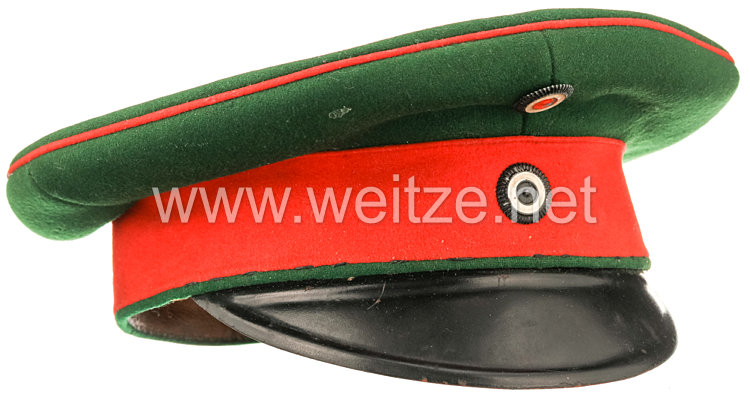
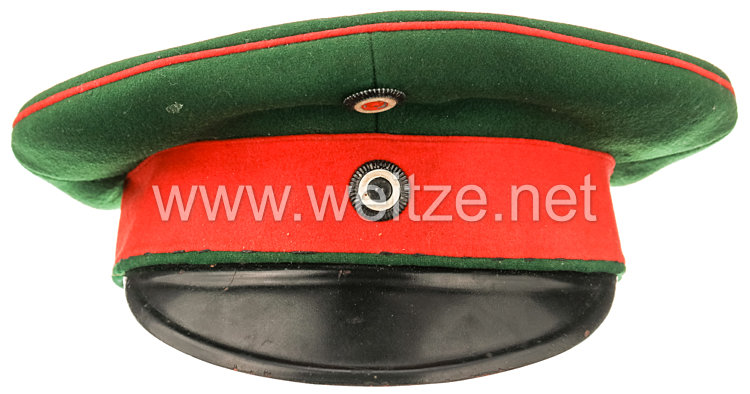
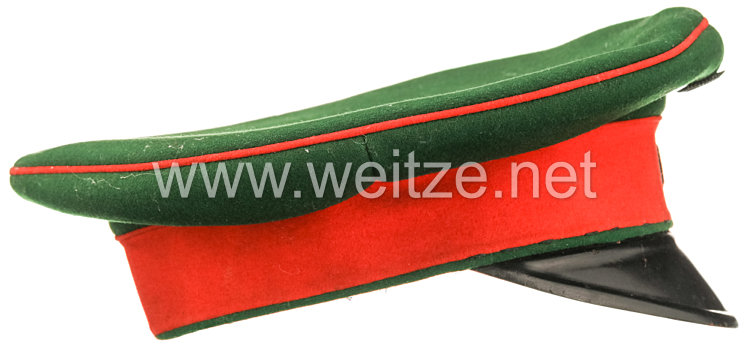
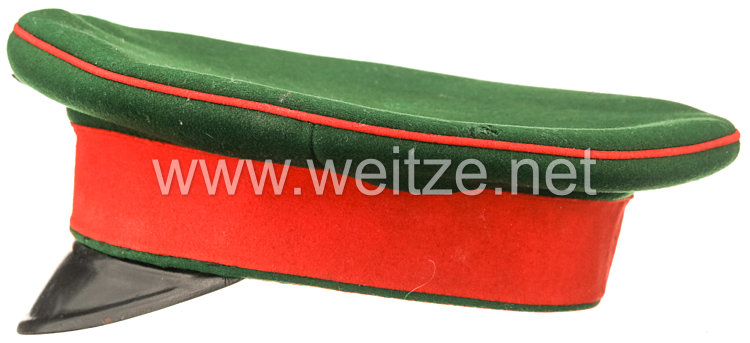
Prussia Visor Cap for Enlisted Men and Non-Commissioned Officers of the Jäger Battalions

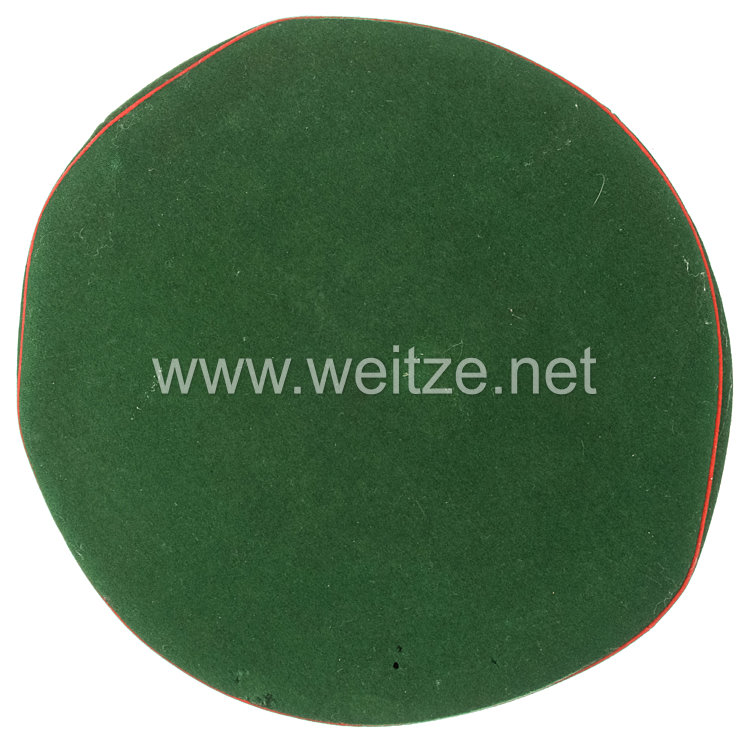
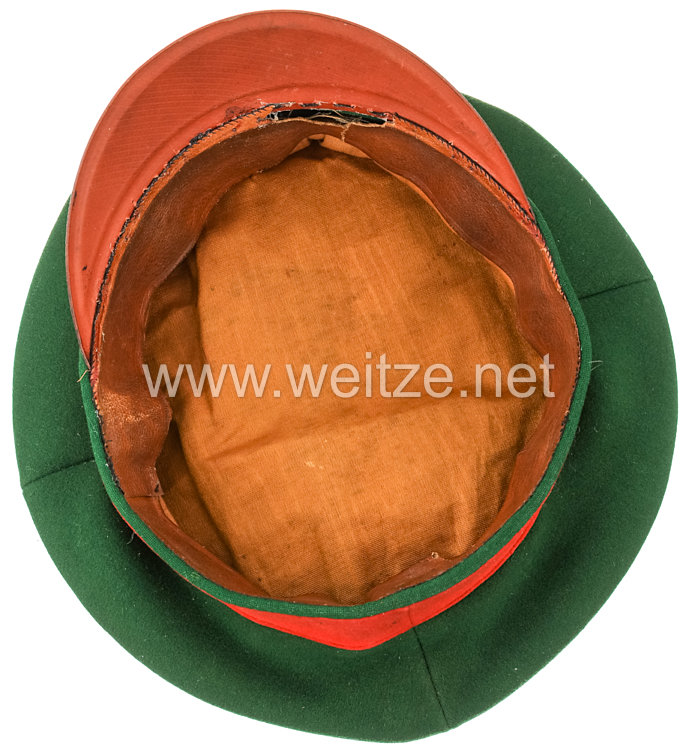
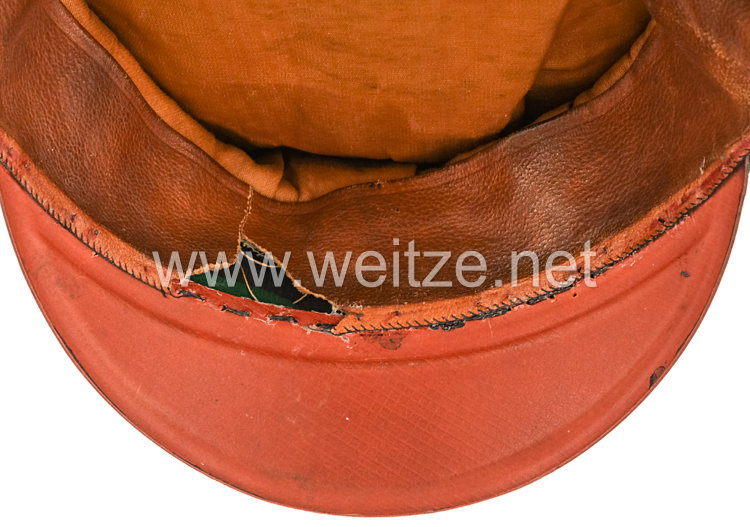
Private purchase item, circa 1910. Jäger green with red piping and cap band, complete with both cockades in enlisted pattern. Interior with brown sweatband and honey-colored silk lining. Size 53. Worn condition, sweatband with loss. Condition 2.
358468
400,00

Prussia Visor Cap for Enlisted Men and Non-Commissioned Officers of the Jäger Battalions

The visor cap of the Prussian Jäger battalions represents an important component of German military history in the early 20th century. This specific example from around 1910 embodies the characteristic uniform of the Prussian Jäger, an elite infantry formation known for its special training and tactical flexibility.

The Jäger battalions of the Prussian Army had their roots in the Freikorps of the Wars of Liberation against Napoleon. Throughout the 19th century, they evolved into highly specialized units deployed in reconnaissance, skirmishing, and as light infantry. Their special position within the army was reflected in their distinctive uniforms, particularly in the characteristic Jäger green color, which clearly distinguished them from the dark blue uniformed line infantry.

The visor cap described here displays the typical features of the enlisted men's and non-commissioned officers' version. The Jäger green base color was accentuated by red piping and a red cap band. This color combination was precisely defined according to the dress regulations for the Royal Prussian Army. Red was the traditional branch color of the Jäger and riflemen and was consistently used in all uniform elements, from collar patches to shoulder straps to cap trim.

The two cockades in enlisted version are of particular significance. The larger cockade in black, white, and red represented the German Empire, while the smaller one in black and white indicated allegiance to the Kingdom of Prussia. This double cockade had been prescribed since the founding of the Empire in 1871 and symbolized the connection between the individual federal state and the entire Reich. In the enlisted version, these cockades were made of pressed metal, in contrast to the more elaborate variants for officers.

The honey-colored silk lining inside the cap was a characteristic feature of caps of this quality level. It indicates that this was a privately purchased item, meaning a cap that the wearer had acquired at his own expense from a court supplier or qualified military equipment dealer. This was common among non-commissioned officers and wealthier enlisted ranks who valued higher quality versions than the standard issue provided by the state. The brown leather sweatband provided comfort and hygiene.

The indicated size 53 corresponds to the German head circumference measurement system, measured in centimeters and still in use today. This relatively small size was quite typical for that time, as the average height and head circumference of the population in the early 20th century was smaller than today.

The period around 1910 was for the Prussian Army a time between the major reforms after 1871 and the beginning of World War I in 1914. Uniforming had largely stabilized, and the Jäger battalions had found their firm position in the army structure. In Prussia at this time, there were several Jäger battalions, including the Garde-Jäger-Bataillon in Potsdam and numbered Jäger battalions in various army corps areas.

The visor cap itself had largely replaced the older shako headgear during the 19th century, at least for duty and walking-out dress. For parades and special occasions, however, the Jäger continued to wear the characteristic shako with plume. The visor cap offered practical advantages: it was lighter, more comfortable to wear, and better suited for modern military service.

The mentioned condition with signs of wear and a gap in the sweatband testifies to the actual use of this cap in military everyday life. Such signs of wear are of particular value to collectors and historians, as they document authentic use and make the object not merely a museum piece, but rather a testimony to lived military history.

This cap represents an era in which tradition and modernization met in the Prussian-German Army. The Jäger battalions themselves would play an important role in World War I, with their traditional function as light infantry fundamentally changed by the realities of trench warfare. Many of these units were later converted into storm battalions or served as the core for the formation of specialized assault formations.

The preservation of such items provides invaluable insights into the material culture of the Imperial German Army and helps us understand the daily lives of the soldiers who served in these elite formations. Each detail, from the precise shade of green to the quality of the silk lining, tells a story about military regulations, social hierarchies within the army, and the craftsmanship of the period.