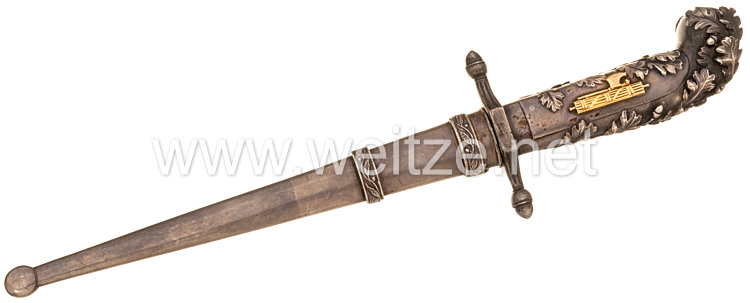
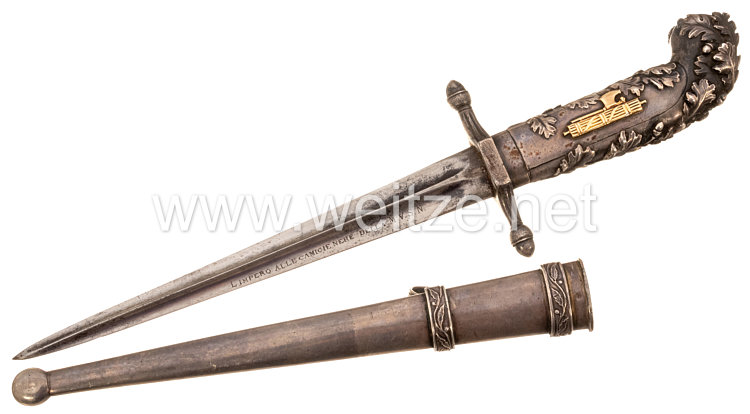
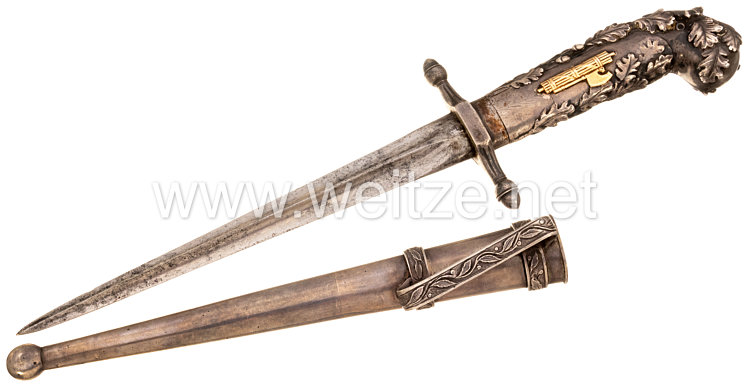
Italien Silberner Ehrendolch M 1925 für Generale der Faschistischen Miliz MVSN als persönliches Geschenk an den Duce Benito Mussolini
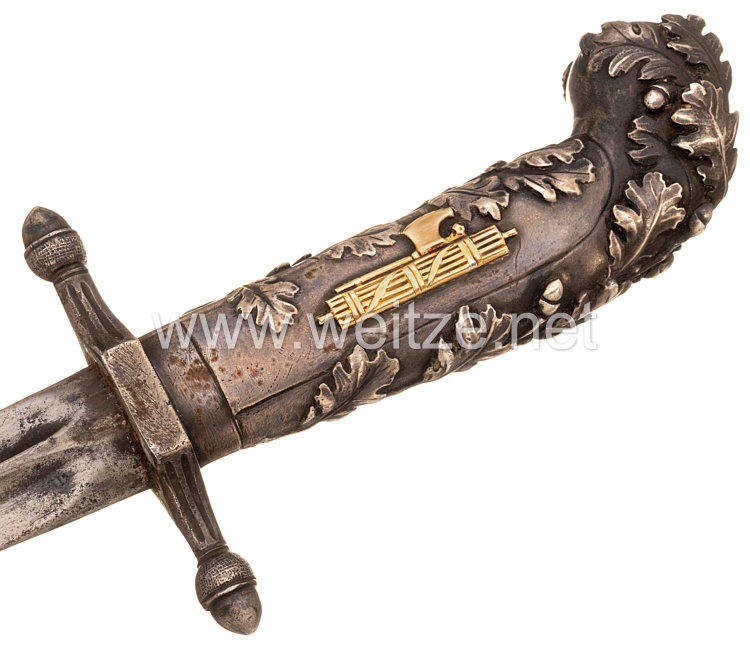
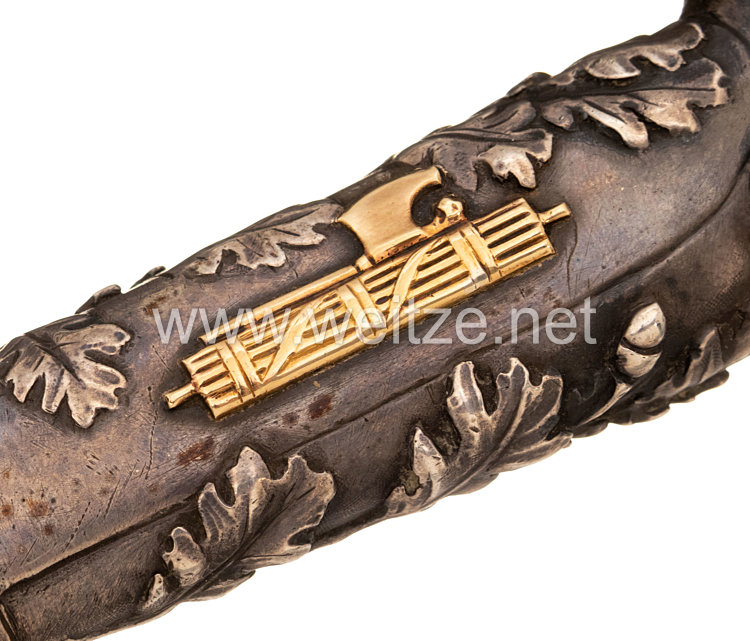
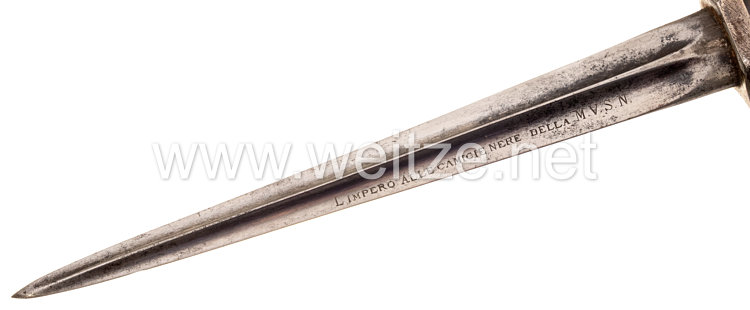
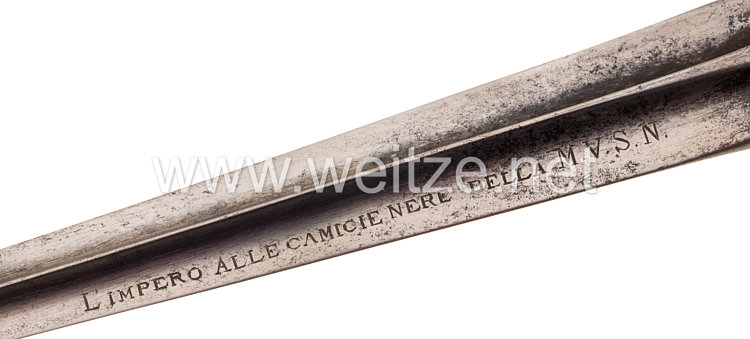
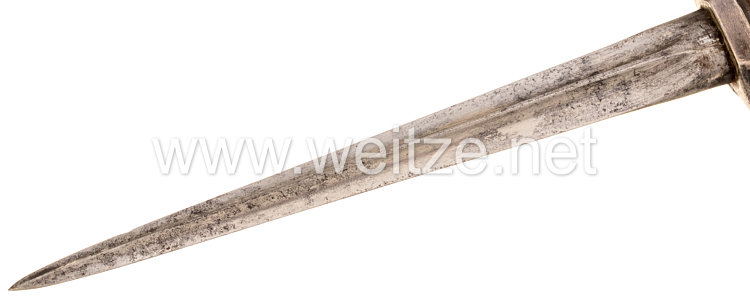
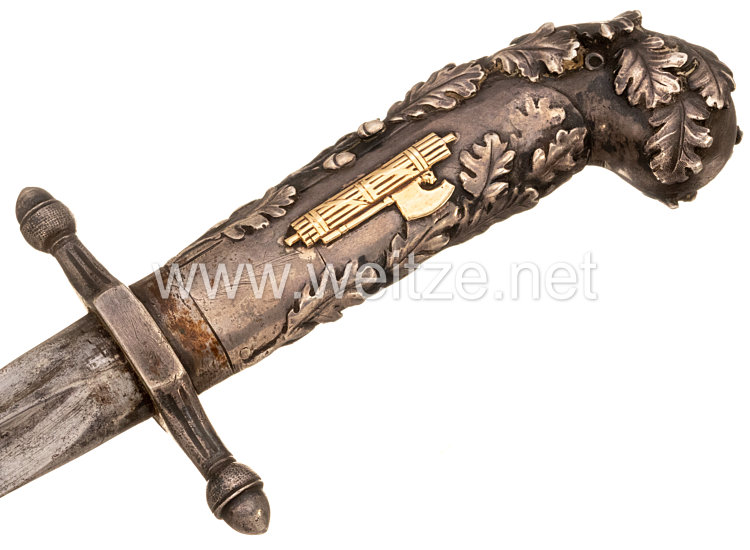
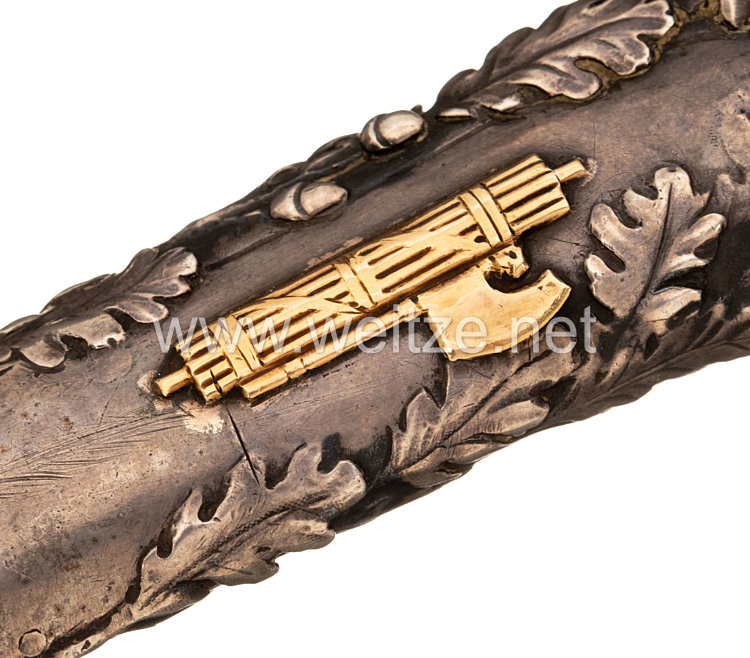
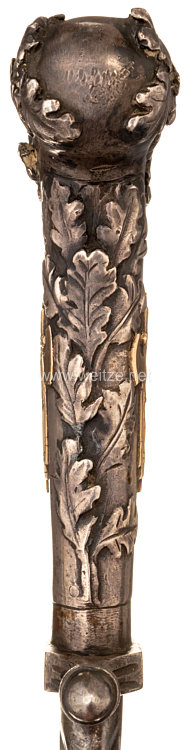
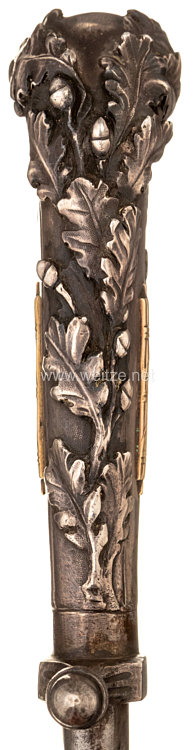
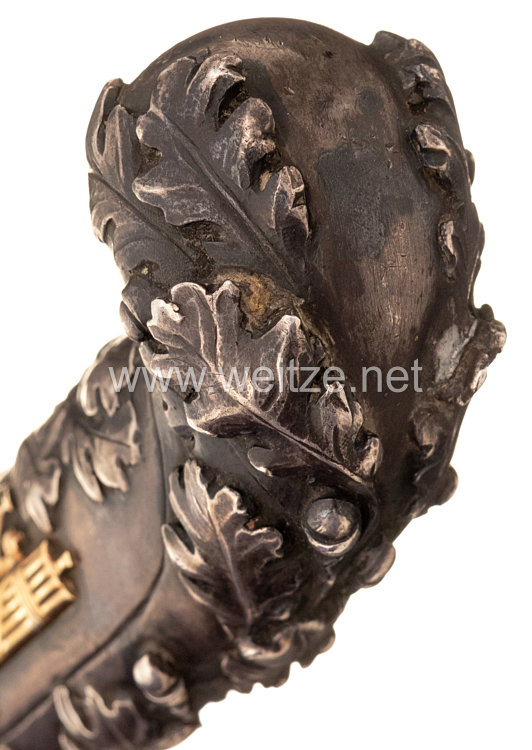
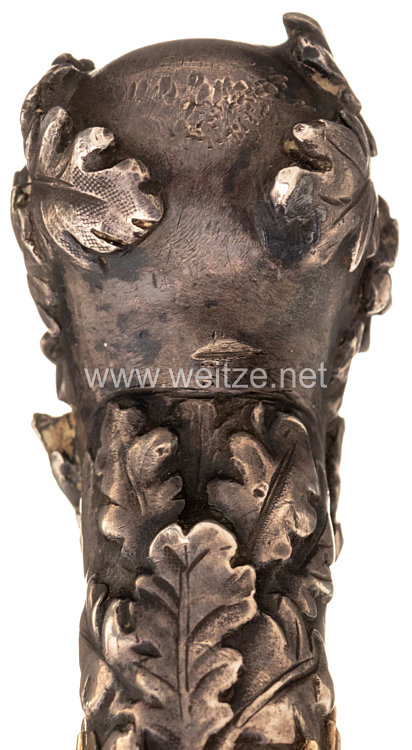
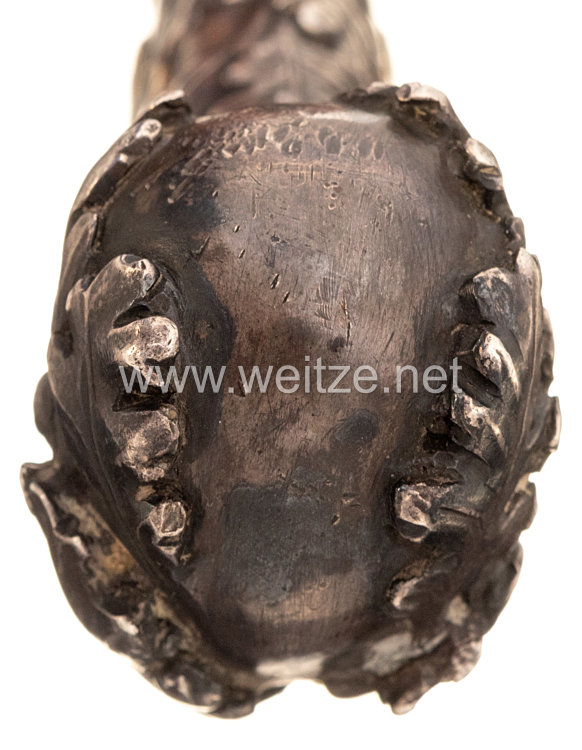
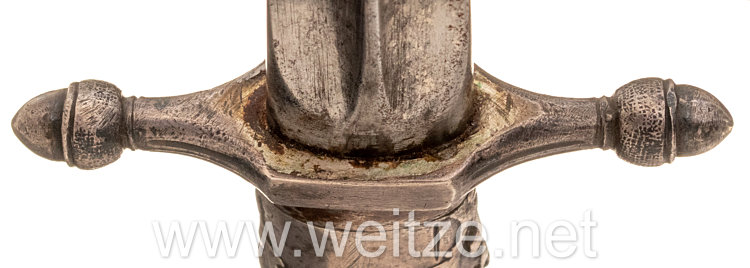
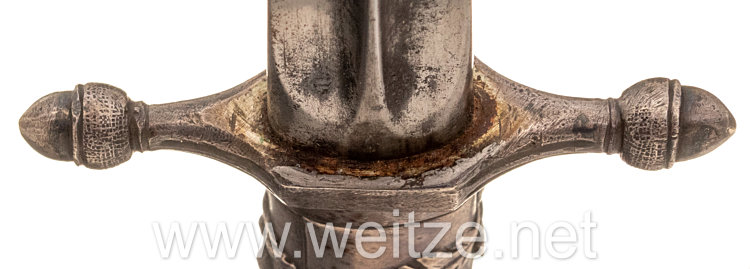
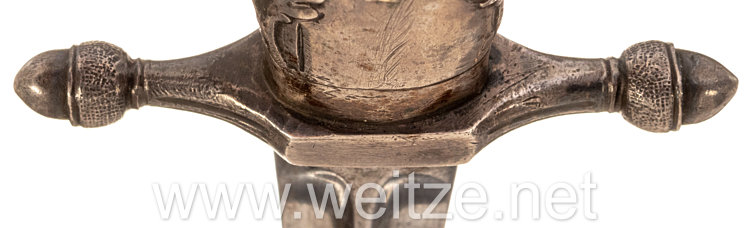
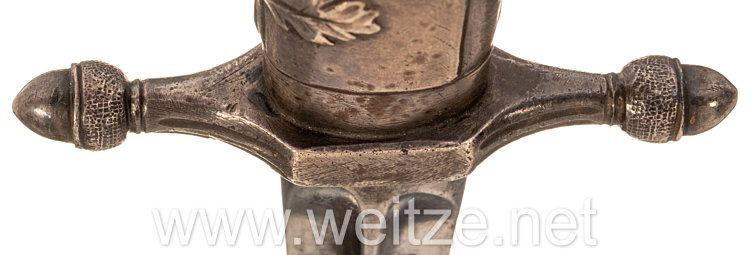
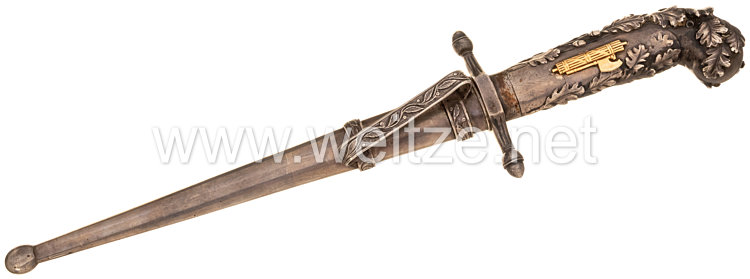
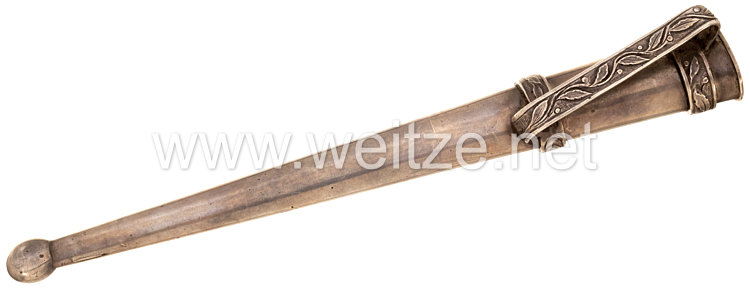
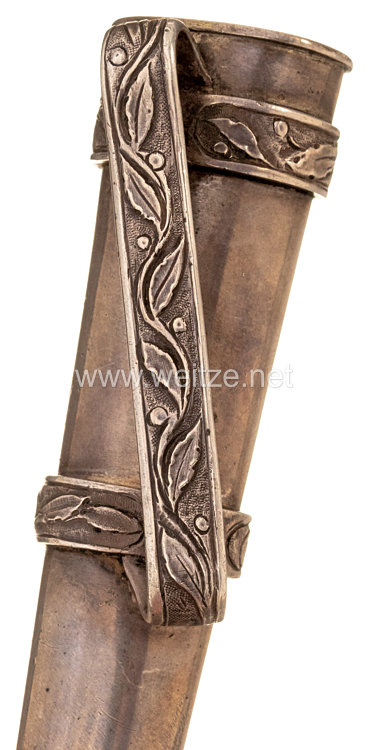
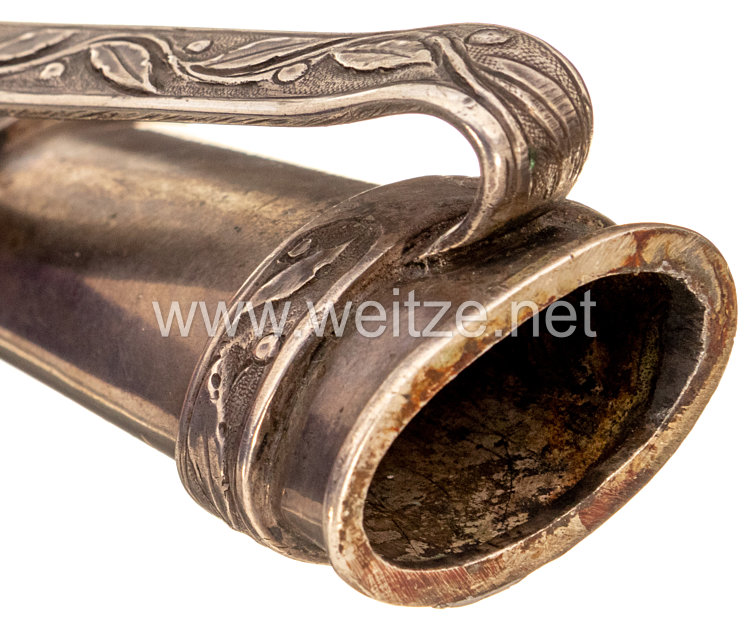
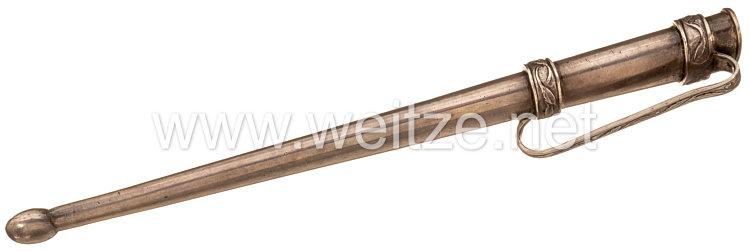
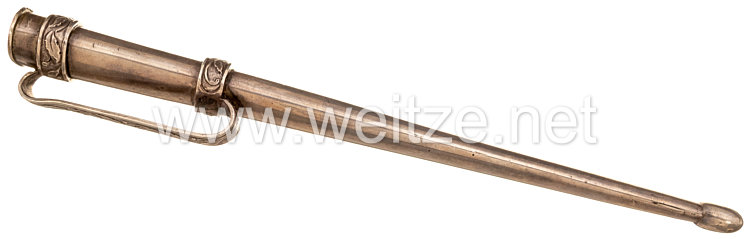
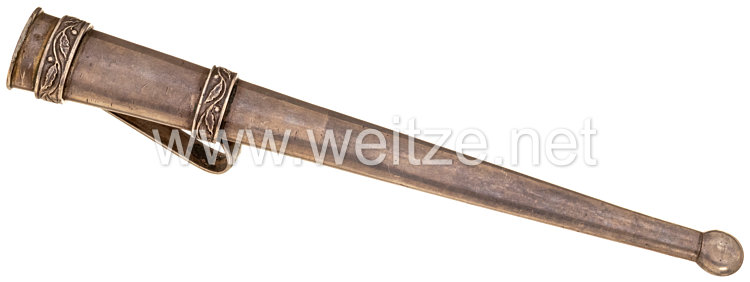
Es handelt sich hierbei um ein persönliches Geschenk der Schwarzhemden der M.V.S.N. an Benito Mussolini, um 1937. Mächtiger Dolch im Design des Dolch Modell 1925 der MVSN, welcher ab 1935 von den Moschettieri del Duce, der Leibgarde Mussolinis übernommen wurde. Das Griffstück aus Silber gefertigt, auf dem Griffrücken bis zum Knauf laufend sowie vorn auf dem Griffstück ein sich nach oben rankender plastischer Eichenlaubdekor. Auf dem Griffstück das beidseitig aufgelegte Liktorenbündel in echt Gold. Die Parierstange in 2 Eicheln auslaufend. Mächtige Vierkantklinge aus Stahl, auf der Vorderseite mit Widmungsgravur "L´Impero Alle Camice Nere Della Nella M.V.S.N. " (= Das Reich den Schwarzhemden der M.V.S.N.). Die Scheide ist ebenfalls aus Silber gefertigt, die beiden umlaufenden Scheidenbänder sowie die rückseitige Gürtelschlaufe mit einem Lorbeerblattdekor verziert.
Gesamtlänge ca. 34,7 cm. Der Dolch ist leicht getragen mit typischen Alters- und Tragespuren, Zustand 2.
Benito Amilcare Andrea Mussolini (* 29. Juli 1883 in Dovia di Predappio, Provinz Forlì; † 28. April 1945 in Giulino di Mezzegra, Provinz Como) war ein italienischer Politiker. Er war von 1922 bis 1943 Ministerpräsident des Königreiches Italien. Als Duce del Fascismo („Führer des Faschismus“) und Capo del Governo („Chef der Regierung“) stand er ab 1925 als Diktator an der Spitze des faschistischen Regimes in Italien. Im Oktober 1922 berief König Viktor Emanuel III. Mussolini nach dem Marsch auf Rom an die Spitze eines Mitte-Rechts-Koalitionskabinetts. Mussolinis Außenpolitik zielte auf eine Vormachtstellung im Mittelmeerraum und auf dem Balkan. 1929 beendete Mussolini mit den Lateranverträgen den Konflikt des Nationalstaats mit dem Papsttum. Ab 1938 erhielt Mussolini neben König Victor Emanuel III. den höchsten militärischen Rang in der Königlich Italienischen Armee als Erster Marschall des Reiches (ital. Primo maresciallo dell'Impero). Am 10. Juni 1940 trat Mussolini auf deutscher Seite in den Zweiten Weltkrieg ein. Die italienischen Angriffe im Mittelmeer und in Ostafrika scheiterten jedoch ebenso wie der Angriff auf Griechenland. Ab Herbst 1942 spitzte sich die politische, soziale und militärische Krise des Regimes rasch zu und untergrub Mussolinis persönliche Diktatur. Im Juli 1943 wurde er von oppositionellen Faschisten und Monarchisten gestürzt, die das Bündnis mit Deutschland lösen und einer antifaschistischen Massenbewegung zuvorkommen wollten. Aus der Haft befreit, stand er bis 1945 an der Spitze des deutschen Marionettenstaates Repubblica Sociale Italiana. In den letzten Kriegstagen 1945 wurde Mussolini von kommunistischen Partisanen festgenommen und hingerichtet.
Der MSVN Geschenkdolch repräsentiert auch eines der bedeutensten Stücke aus dem persönlichen Besitz des Duce dar.
Ex-Sammlung Vitetti, Rom.
MVSN. Bereits am 1. Februar 1923 wurde die "Milizia Volontaria pro La Sicurezza Nazionale" (MVSN) gegründet, die bis zu ihrer Auflösung im Zuge der italienischen Waffenstillstandsbedingungen 1943 existierte. In der Italienischen Sozialrepublik fand dann eine Überführung in die Guardia Nazionale Repubblicana (GNR) statt.
Nominell war Benito Mussolini Oberbefehlshaber, tatsächlich wurden die Schwarzhemden jedoch vom Stabschef im vergleichbaren Rang eines Armeegeneral geführt. Insbesondere in der MVSN wurde die Struktur der historischen römischen Armee nachgebildet. Die Bezeichnungen der Dienstgrade und der Gliederung hatte man dem römischen Heer entnommen.
Die MVSN war an jedem Kriegsschauplatz der Italiener als freiwillige Eliteverbände und Spezialkommandos beteiligt.
1940 stellte die MVSN drei Divisionen mit insgesamt 34.000 Mann bereit, 1942 wurde eine vierte Division gebildet, die jeder Armee-Division als Gruppo di Assalto zugeteilt wurde.
Später wurden 41 mobile Einheiten gebildet, aus denen das dritte Regiment in italienischen Armeedivisionen entstehen sollte. Aufgrund von Unterbesetzung, fehlender Ausrüstung und unzureichender Ausbildung erlitten diese mobilen Einheiten schwere Verluste. Die drei Divisionen wurden in Nordafrika im Kampf vollständig aufgerieben.
Gesamtlänge ca. 34,7 cm. Der Dolch ist leicht getragen mit typischen Alters- und Tragespuren, Zustand 2.
Benito Amilcare Andrea Mussolini (* 29. Juli 1883 in Dovia di Predappio, Provinz Forlì; † 28. April 1945 in Giulino di Mezzegra, Provinz Como) war ein italienischer Politiker. Er war von 1922 bis 1943 Ministerpräsident des Königreiches Italien. Als Duce del Fascismo („Führer des Faschismus“) und Capo del Governo („Chef der Regierung“) stand er ab 1925 als Diktator an der Spitze des faschistischen Regimes in Italien. Im Oktober 1922 berief König Viktor Emanuel III. Mussolini nach dem Marsch auf Rom an die Spitze eines Mitte-Rechts-Koalitionskabinetts. Mussolinis Außenpolitik zielte auf eine Vormachtstellung im Mittelmeerraum und auf dem Balkan. 1929 beendete Mussolini mit den Lateranverträgen den Konflikt des Nationalstaats mit dem Papsttum. Ab 1938 erhielt Mussolini neben König Victor Emanuel III. den höchsten militärischen Rang in der Königlich Italienischen Armee als Erster Marschall des Reiches (ital. Primo maresciallo dell'Impero). Am 10. Juni 1940 trat Mussolini auf deutscher Seite in den Zweiten Weltkrieg ein. Die italienischen Angriffe im Mittelmeer und in Ostafrika scheiterten jedoch ebenso wie der Angriff auf Griechenland. Ab Herbst 1942 spitzte sich die politische, soziale und militärische Krise des Regimes rasch zu und untergrub Mussolinis persönliche Diktatur. Im Juli 1943 wurde er von oppositionellen Faschisten und Monarchisten gestürzt, die das Bündnis mit Deutschland lösen und einer antifaschistischen Massenbewegung zuvorkommen wollten. Aus der Haft befreit, stand er bis 1945 an der Spitze des deutschen Marionettenstaates Repubblica Sociale Italiana. In den letzten Kriegstagen 1945 wurde Mussolini von kommunistischen Partisanen festgenommen und hingerichtet.
Der MSVN Geschenkdolch repräsentiert auch eines der bedeutensten Stücke aus dem persönlichen Besitz des Duce dar.
Ex-Sammlung Vitetti, Rom.
MVSN. Bereits am 1. Februar 1923 wurde die "Milizia Volontaria pro La Sicurezza Nazionale" (MVSN) gegründet, die bis zu ihrer Auflösung im Zuge der italienischen Waffenstillstandsbedingungen 1943 existierte. In der Italienischen Sozialrepublik fand dann eine Überführung in die Guardia Nazionale Repubblicana (GNR) statt.
Nominell war Benito Mussolini Oberbefehlshaber, tatsächlich wurden die Schwarzhemden jedoch vom Stabschef im vergleichbaren Rang eines Armeegeneral geführt. Insbesondere in der MVSN wurde die Struktur der historischen römischen Armee nachgebildet. Die Bezeichnungen der Dienstgrade und der Gliederung hatte man dem römischen Heer entnommen.
Die MVSN war an jedem Kriegsschauplatz der Italiener als freiwillige Eliteverbände und Spezialkommandos beteiligt.
1940 stellte die MVSN drei Divisionen mit insgesamt 34.000 Mann bereit, 1942 wurde eine vierte Division gebildet, die jeder Armee-Division als Gruppo di Assalto zugeteilt wurde.
Später wurden 41 mobile Einheiten gebildet, aus denen das dritte Regiment in italienischen Armeedivisionen entstehen sollte. Aufgrund von Unterbesetzung, fehlender Ausrüstung und unzureichender Ausbildung erlitten diese mobilen Einheiten schwere Verluste. Die drei Divisionen wurden in Nordafrika im Kampf vollständig aufgerieben.