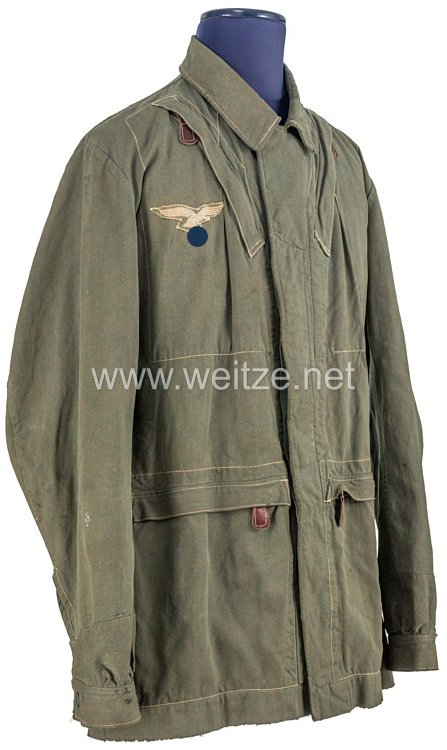
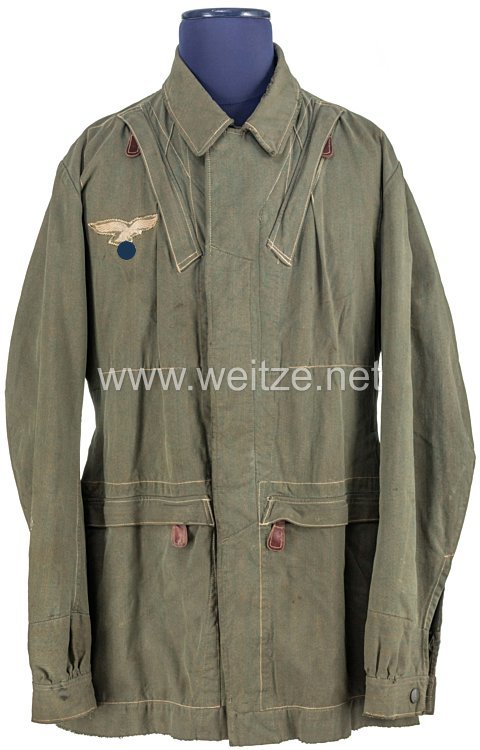
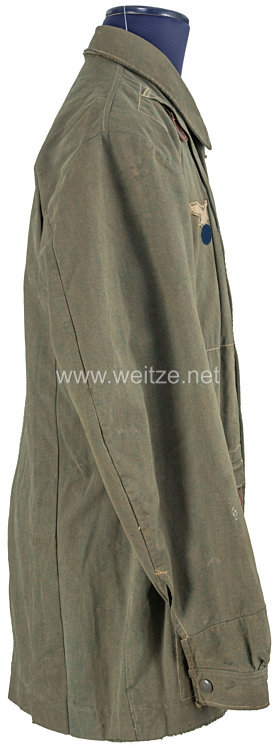
Luftwaffe Jump Smock for Paratroopers 1st Model in Green

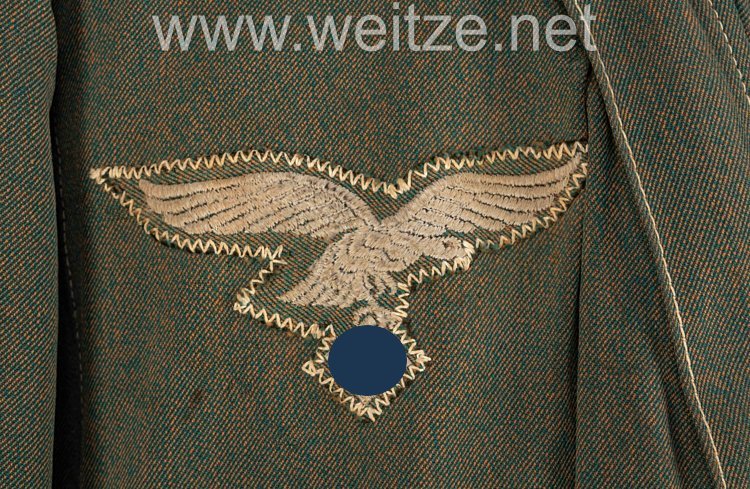
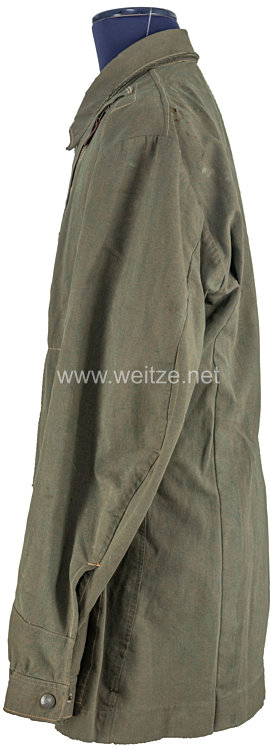
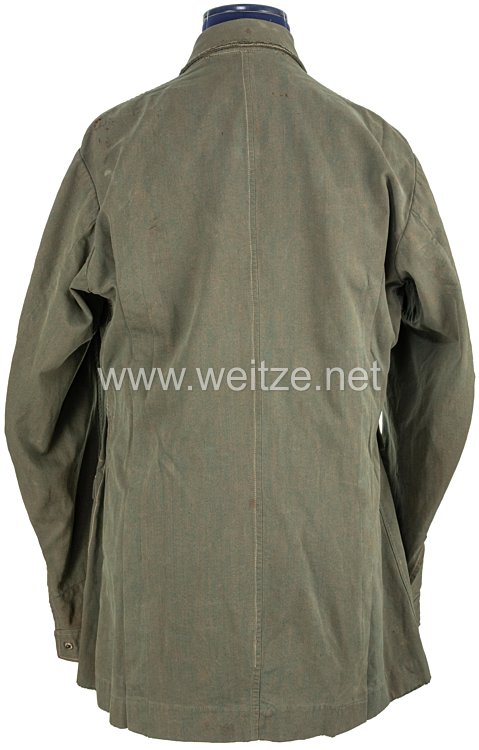
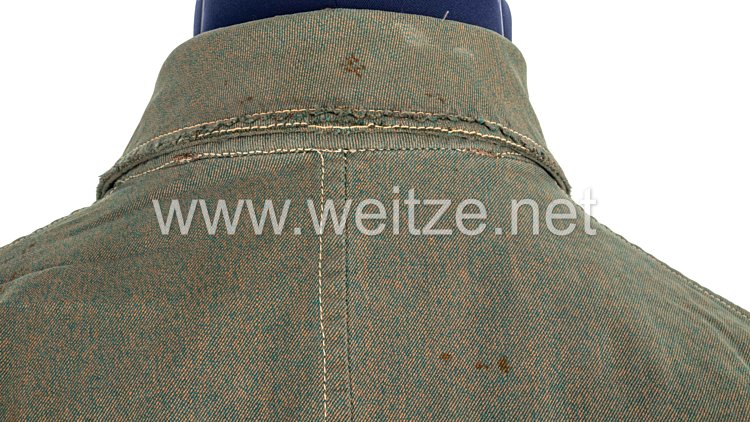
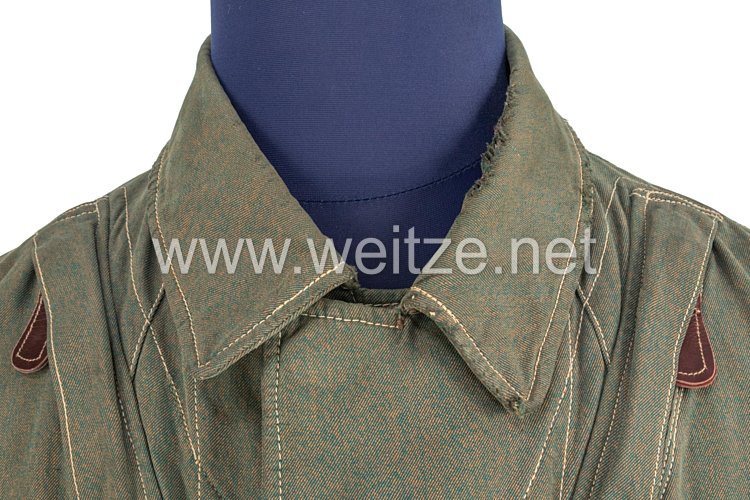
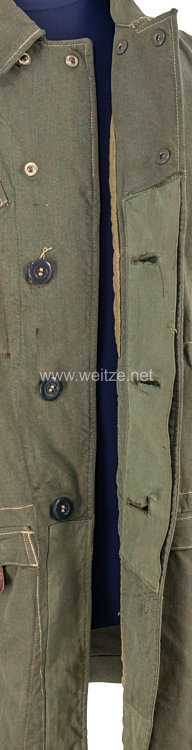
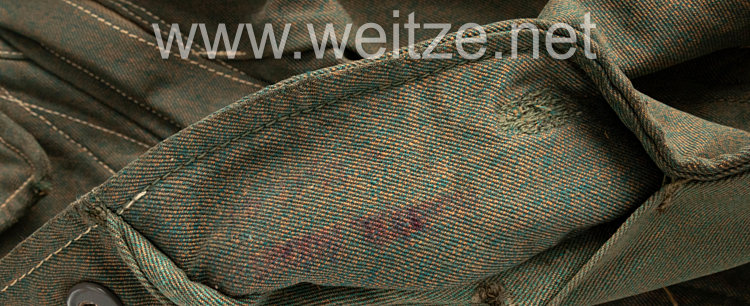
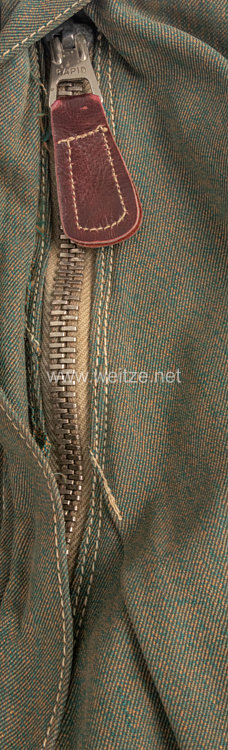
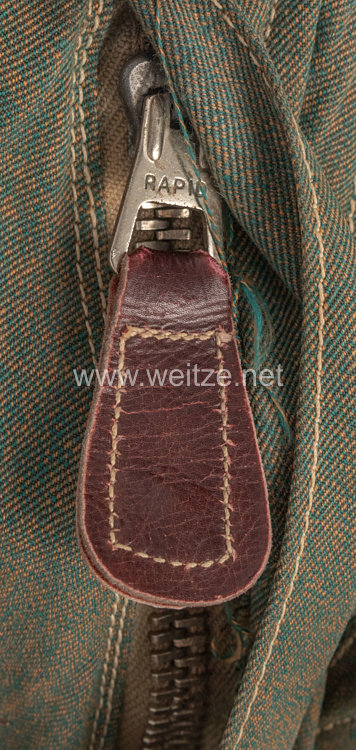
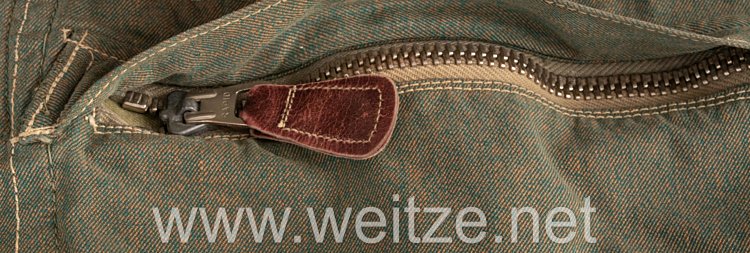
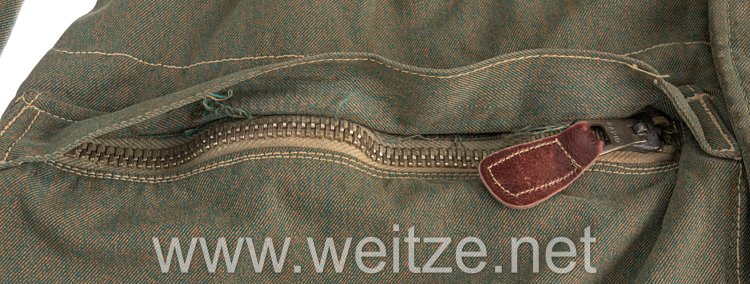
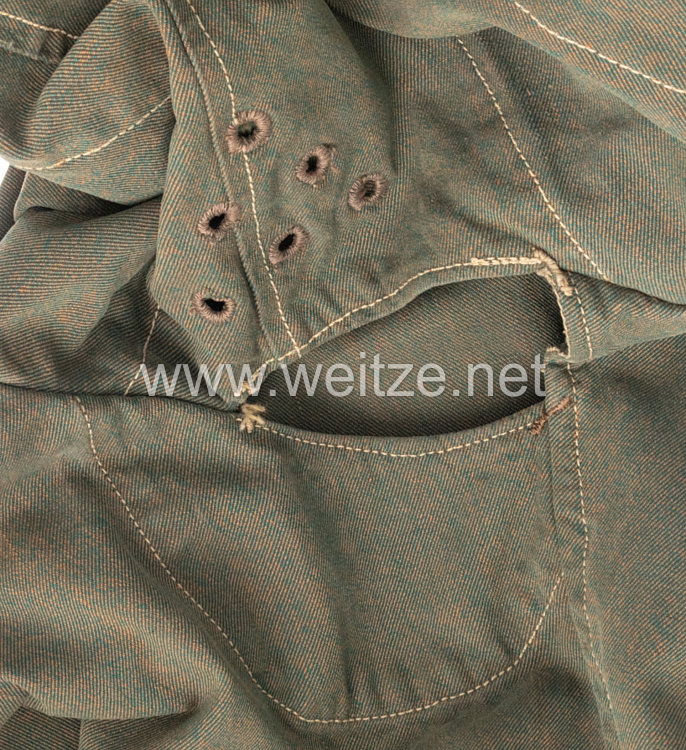
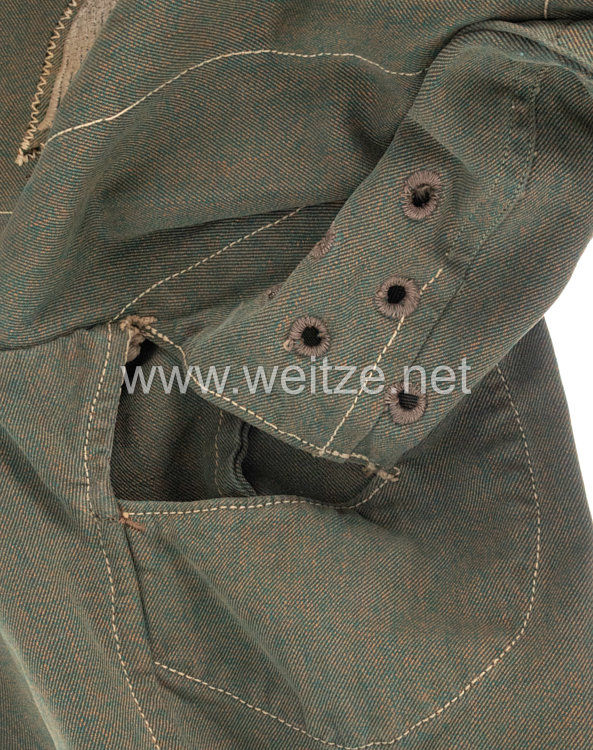
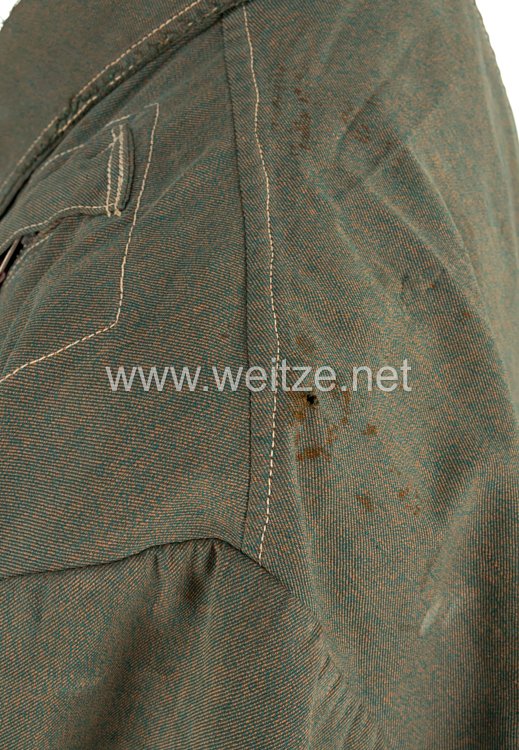
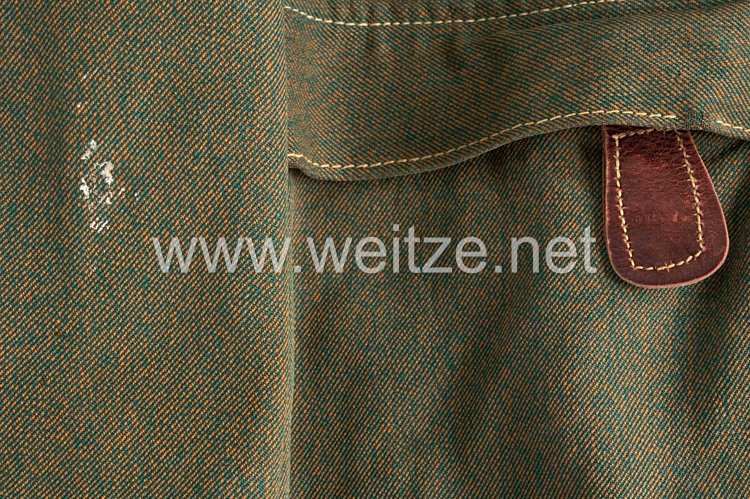
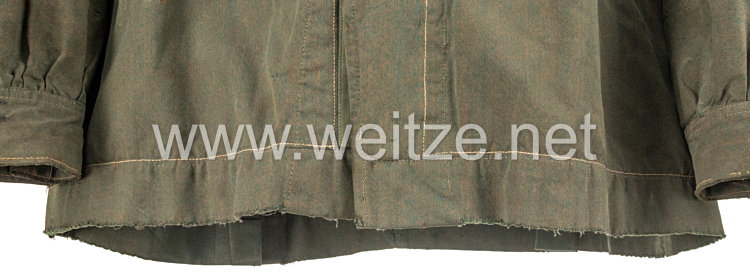
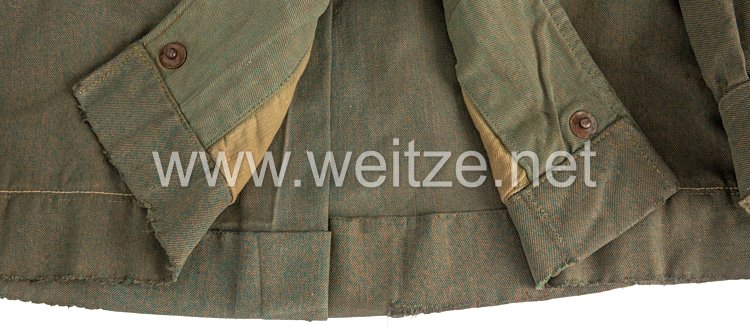
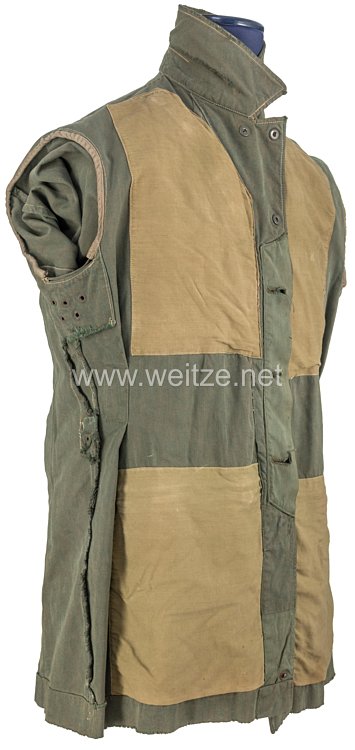
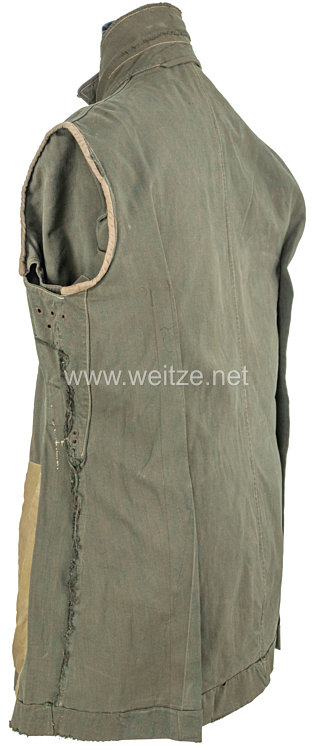
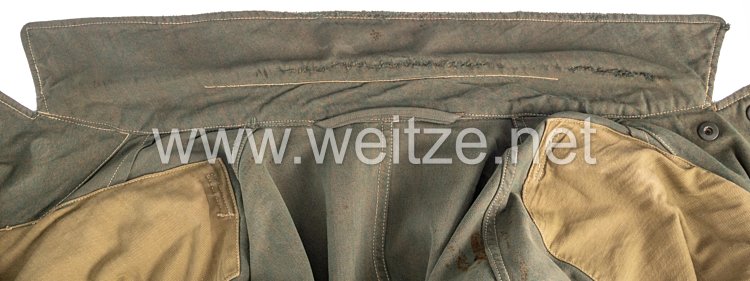
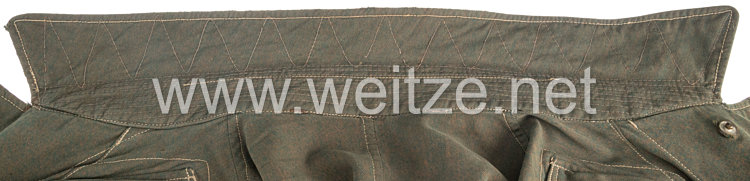
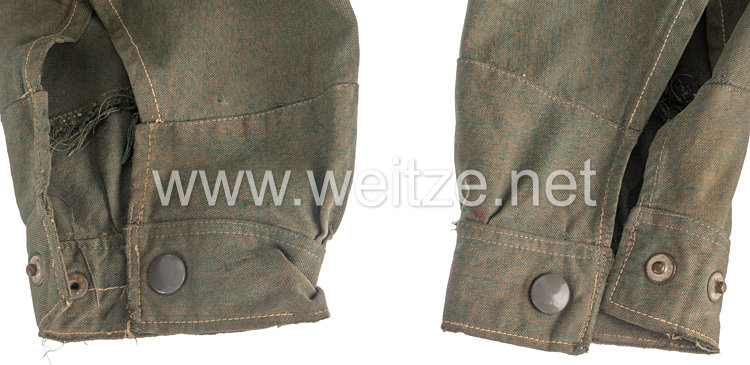
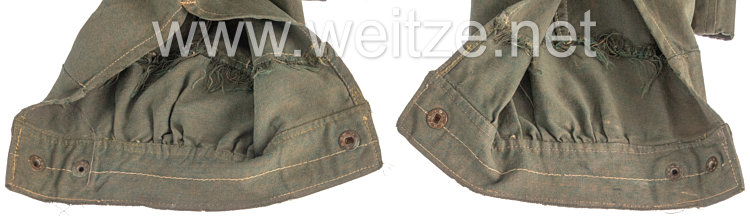
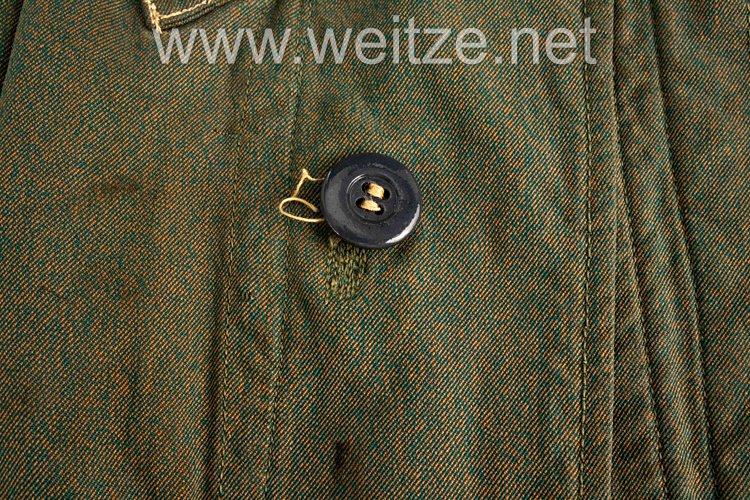
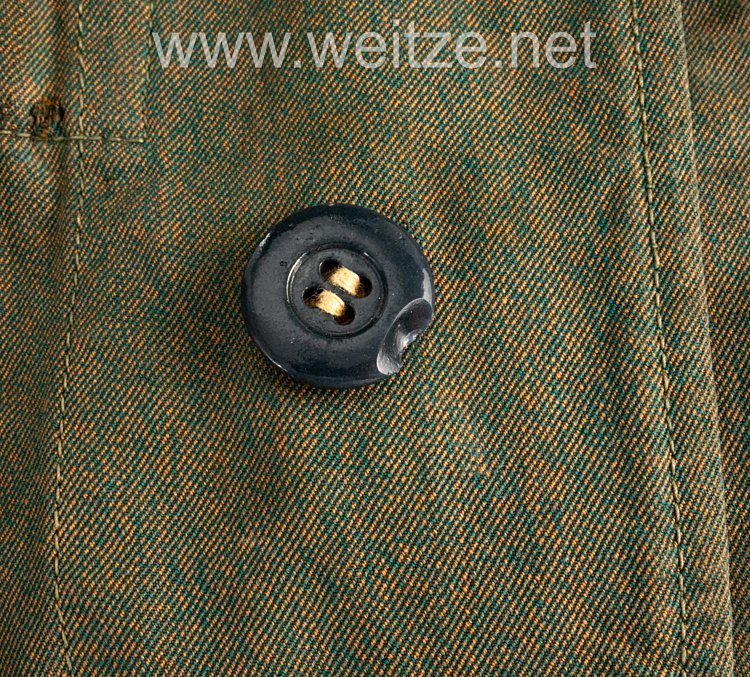
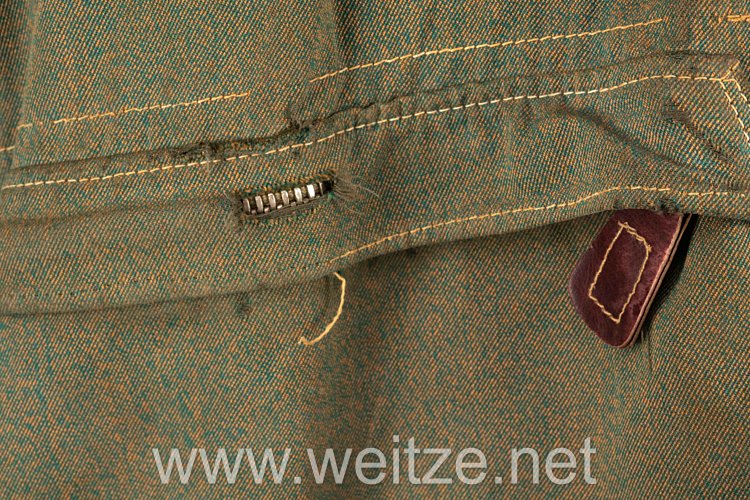
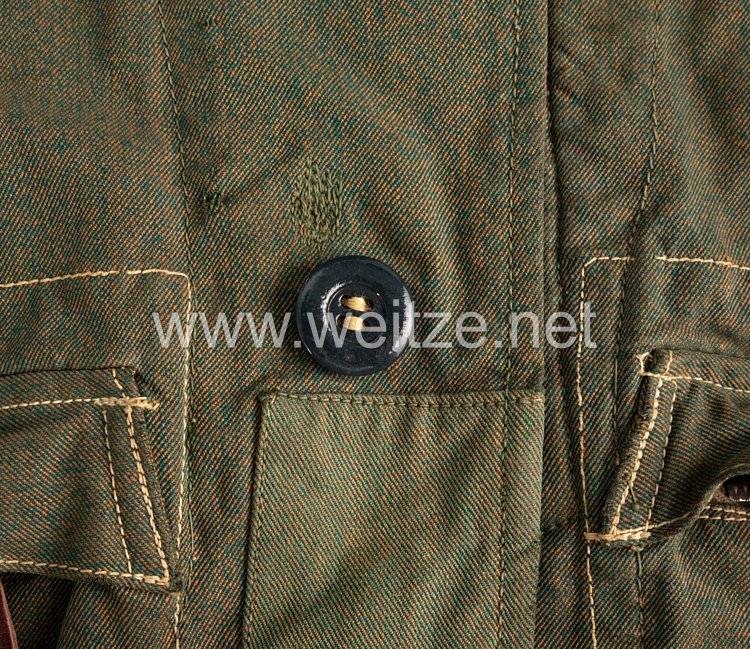
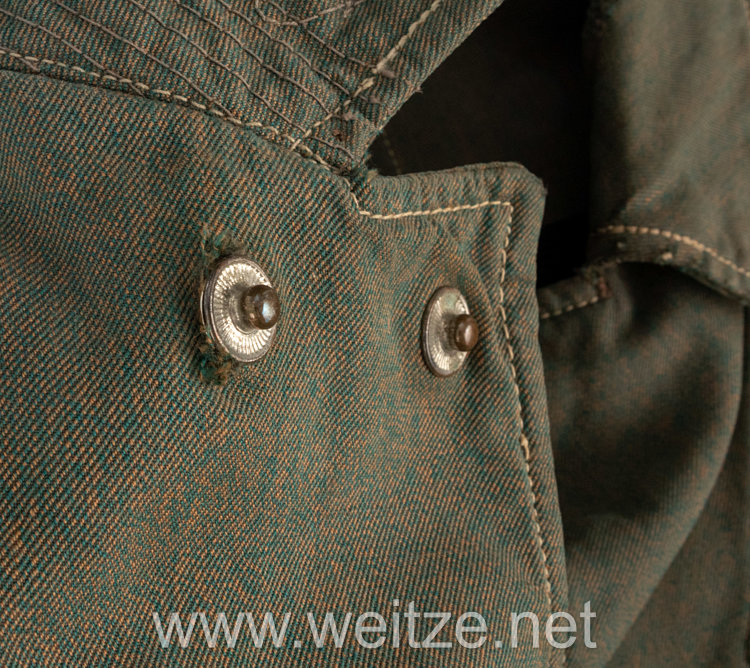
so-called “Knochensack” (bone sack), circa 1938. Constructed from green-mottled cotton fabric, breast eagle on green-mottled ground, machine-sewn. Full-length concealed button placket with snap fasteners and glass buttons, snap fasteners by manufacturer “Prym” at both sleeve ends. On the reverse side still without the sewn-on pistol holster. Interior olive-green lining, chamber stamp no longer visible. Originally the Knochensack had a zipper and trouser legs for stepping into. However, these were officially modified in the clothing depot during the war. Worn piece with clear signs of wear and age, the collar was reinforced with a zigzag stitch to prevent further fraying, lining at both sleeve ends removed, small repair patch on the button placket. Sleeve length 70 cm, chest circumference 96 cm, length 85 cm, condition 3. The typical Knochensack of a German paratrooper. The 1st Model is extremely rare!
380167

Luftwaffe Jump Smock for Paratroopers 1st Model in Green

The German Fallschirmjäger-Kombination of the first model, colloquially known as the Knochensack (bone sack), represents an exceptionally rare piece of German military history from the formative phase of airborne forces. This specialized jump smock was officially introduced on March 15, 1938, marking the beginning of standardized equipment for the Luftwaffe's young paratrooper force.

The German Fallschirmjäger were officially established on January 29, 1936 under Luftwaffe command, following German military observers' study of Soviet airborne exercises in 1935. The initial force comprised 600 volunteers, but by 1940 the troops had expanded considerably, forming multiple regiments that eventually constituted the 7th Air Division, later redesignated as the 1st Parachute Division.

The development of specialized jump clothing occurred during the experimental period from 1936 to 1938, culminating in the introduction of the first standardized pattern in March 1938. The Air Ministry directive of March 15, 1938, recorded in the Besondere Luftwaffen-Bestimmungen (Special Air Force Regulations), established official specifications for paratrooper equipment. The official designation was Fallschirmschützenbluse (parachute shooter's blouse).

The first model was manufactured from green-mottled cotton fabric, a distinctive textile featuring green fibers with scattered interwoven orange fibers creating a speckled effect. The Knochensack received its nickname from the soldiers themselves, referring to the bulky appearance of paratroopers wearing this voluminous garment. The design was conceived as a step-in coverall extending to mid-thigh with short legs. It was worn over the standard Luftwaffe uniform and personal equipment, serving primarily to prevent parachute lines and equipment from becoming entangled during jumps.

Paratrooper training took place principally at Fallschirm-Schule 1 at Stendal-Borstel and Fallschirm-Schule 2 at Wittstock, where the first models were issued. Units wearing this early equipment included the 1st Parachute Regiment, the 2nd Parachute Regiment, and the Fallschirm-Sturm-Regiment. Notable personalities serving in the Fallschirmjäger during this period included boxer Max Schmeling and actor Joachim Fuchsberger.

In combat practice, the step-in design proved cumbersome. Following experiences from Operation Weserübung (the invasion of Norway and Denmark in April 1940) and the Westfeldzug (the invasion of the Low Countries in May 1940), an improved second model was introduced in late 1939. Many original first-model Knochensacks were officially recalled and modified in military clothing depots—the step-in crotch was opened and snap fasteners added to the hem to improve the design. These factory modifications during the war are characteristic of many surviving examples.

The German design profoundly influenced Allied airborne forces. The British directly copied the M38 model for their Denison smock, which was tested during the Bruneval Raid in February 1942. The jump smock design for the USMC Parachute Battalions was also inspired by the Knochensack.

The design evolution continued with a third pattern introduced in mid-1940 featuring a full-length opening and no longer employing the step-in style. Later variants from mid-1940 onward introduced Splinter-B camouflage pattern, followed by tan and water camouflage from mid-1942.

Today, original unmodified first models in green are classified as extremely rare in the collector's market. The historical significance of this early paratrooper equipment and its scarcity make it one of the most sought-after pieces of German militaria from the Second World War.