Kriegsmarine Pair of Epaulettes for a Rear Admiral

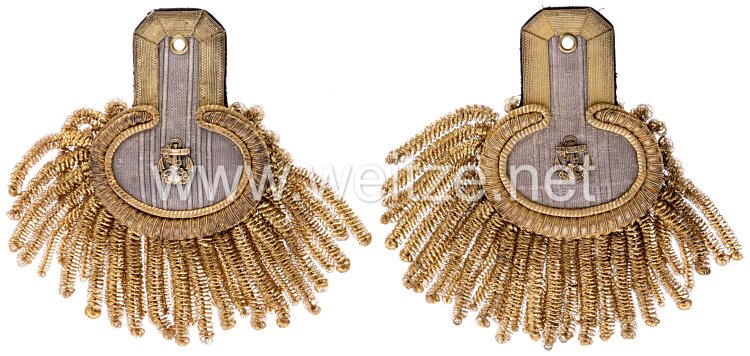
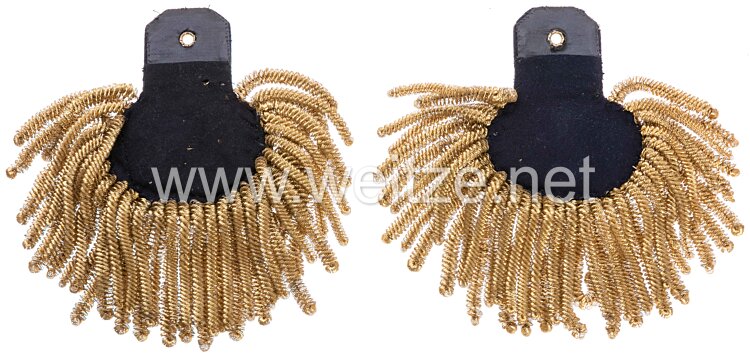
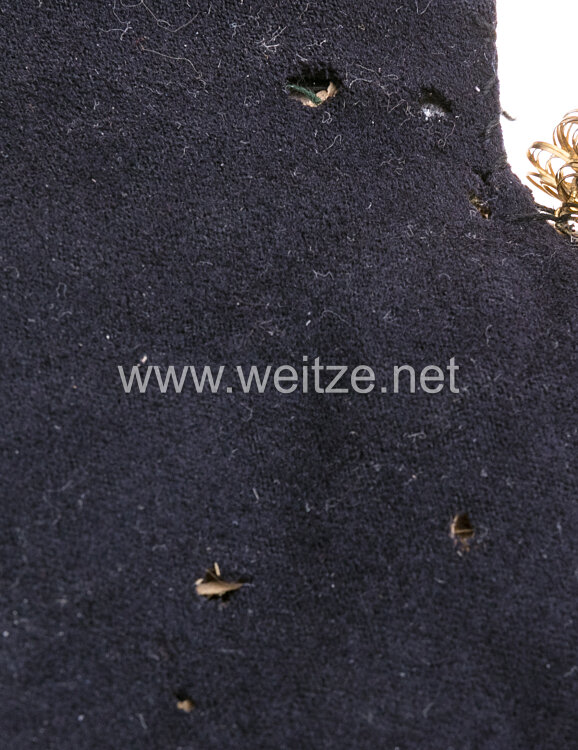
circa 1938. The epaulettes for Rear Admirals, with silver fields, applied gilt anchors with chain, heavy gold bullion. Worn condition, in good state. Very rare!
285667
4.500,00

Kriegsmarine Pair of Epaulettes for a Rear Admiral

The epaulettes of a Rear Admiral of the Kriegsmarine from around 1938 represent a significant chapter in German naval history and the complex rank structure of the National Socialist armed forces. These shoulder boards served not only as practical rank insignia but also symbolized the revival of German sea power after the restrictions of the Treaty of Versailles.

Following the Nazi seizure of power in 1933, the regime systematically began to circumvent and later openly violate the military restrictions imposed by the Treaty of Versailles. The renaming of the Reichsmarine to Kriegsmarine on June 1, 1935, marked a symbolic turning point in this development. With this reorientation, uniform regulations and rank insignia were also revised, drawing on the traditions of the Imperial Navy while adapting them to the new political circumstances.

The epaulettes described here for a Konteradmiral (Rear Admiral) display the characteristic design of higher naval ranks of this era. The silver field formed the foundation upon which the gilt symbols were applied. The gilt anchor with chain was the traditional symbol of admiralty that had already been used in the Imperial Navy. The heavy gold bullion – braided metal cords on the edge of the epaulettes – identified the flag officer rank and clearly distinguished these from the shoulder boards of lower ranks.

A Konteradmiral was the lowest admiral rank in the Kriegsmarine hierarchy but still stood at the pinnacle of the military rank order. This rank was typically awarded to officers who assumed important commands, such as leading squadron formations, directing major naval bases, or holding important staff positions in the Supreme Command of the Navy. Promotion to Konteradmiral was made by the Commander-in-Chief of the Kriegsmarine and required confirmation by Adolf Hitler as Supreme Commander of the Wehrmacht.

The manufacture of such epaulettes was subject to strict quality standards and was carried out by specialized military insignia manufacturers. Companies such as Erel, C.E. Juncker, or Friedrich Linden in Berlin were well-known producers of high-quality uniform insignia for the Wehrmacht. The materials used – genuine silver for the fields and gilding for the anchors – reflected the high rank and complied with the regulations of the Kriegsmarine dress code.

These epaulettes were worn with the dress and service uniform, not with shipboard uniform or working clothes. At official occasions, parades, and social events, admirals were required to wear these magnificent rank insignia, which unequivocally demonstrated their position in the military and social hierarchy of the Third Reich.

The dating to around 1938 is particularly significant, as this was a phase of intensive rearmament and expansion of the Kriegsmarine. The Z-Plan, approved by Hitler in January 1939, envisioned a massive enlargement of the German fleet. During this period, the number of admiral positions also increased as new formations were established and the naval hierarchy was expanded.

The worn condition of these epaulettes testifies to their actual use by a rear admiral in active service. They are silent witnesses to a time when the German Navy was preparing for the coming conflict and was eventually deployed in World War II. Many rear admirals of this era played significant roles in naval warfare operations, from the Battle of the Atlantic to operations in the Baltic Sea and Norwegian waters.

The rarity of such objects is explained by several factors: First, there were naturally only a limited number of admirals in the Kriegsmarine. Second, many uniform items and rank insignia were destroyed or lost after the war. Third, the preservation of such objects in the immediate post-war period was often problematic. Today, authentic Kriegsmarine admiral epaulettes are highly valued military-historical objects that offer important insights into uniform history and the military culture of the Third Reich.

For collectors and historians, such epaulettes are valuable not only because of their rarity but also as material witnesses to a specific historical epoch, enabling the study and understanding of the structures, hierarchies, and visual codes of the National Socialist Kriegsmarine.

r