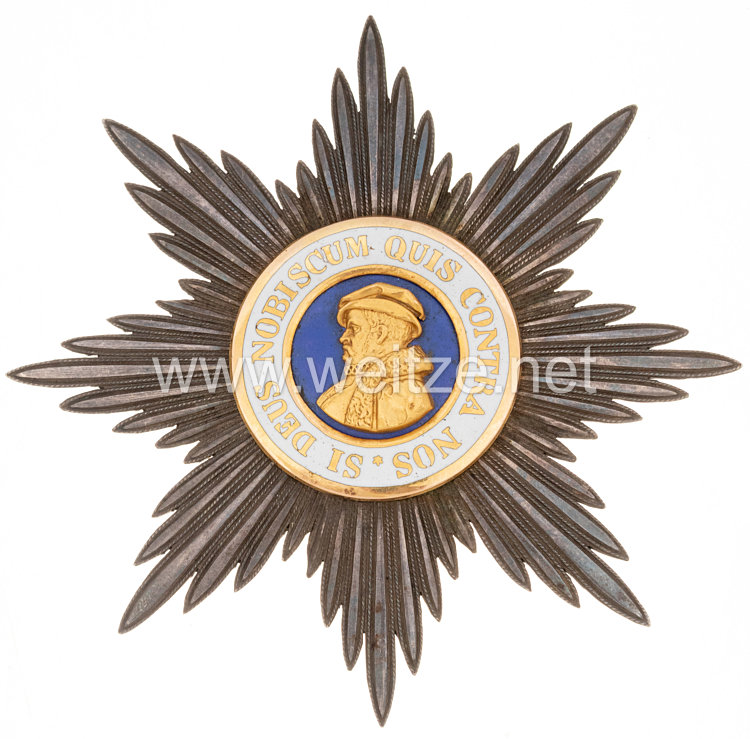
Hesse Grand Ducal Hessian Order of Merit of Philip the Magnanimous Breast Star for the Grand Cross

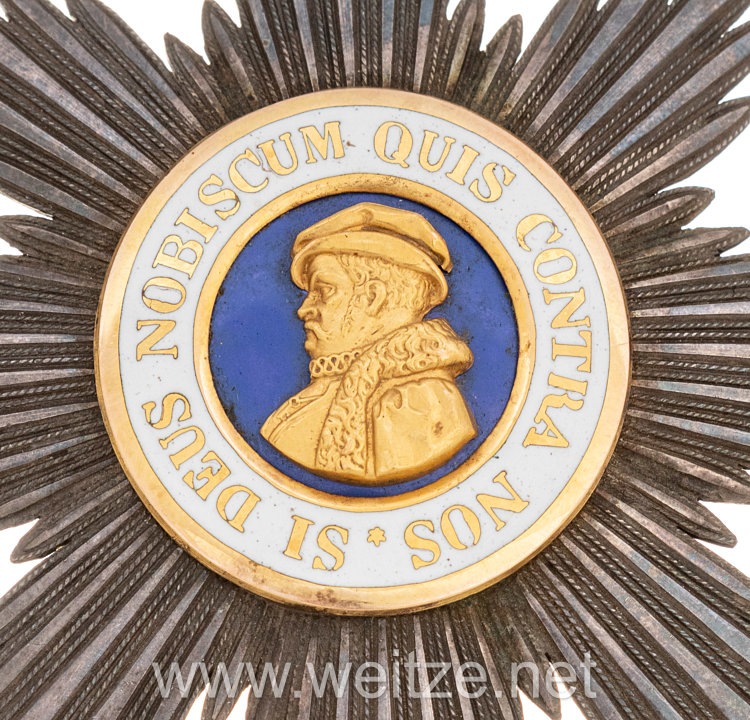
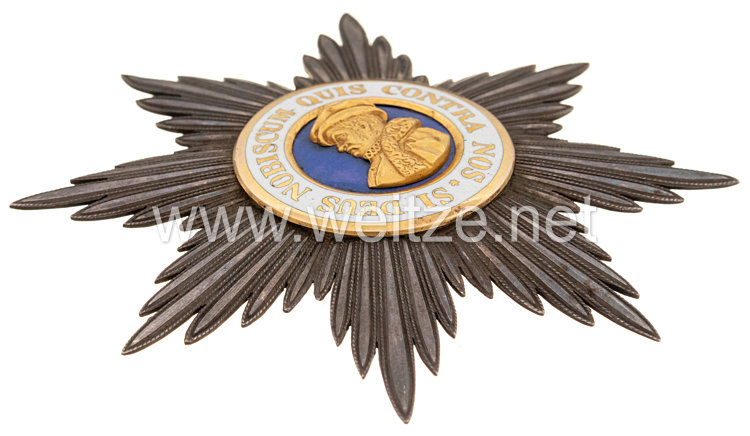
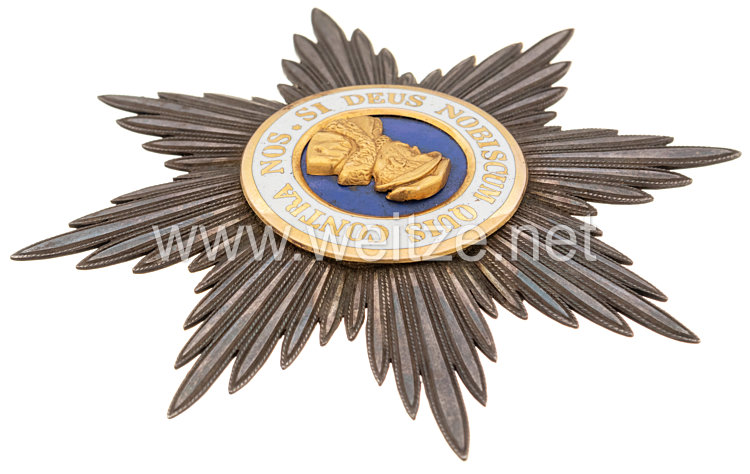
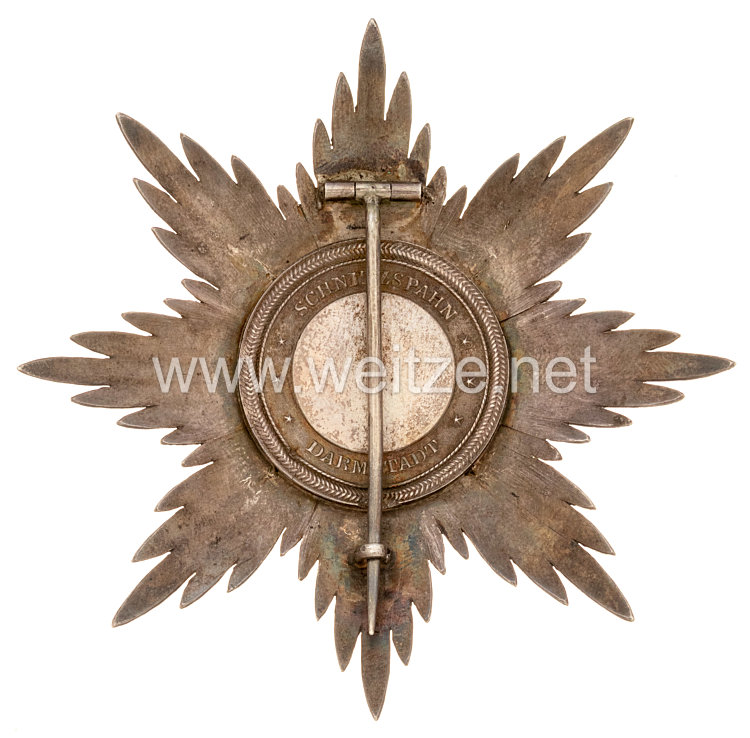
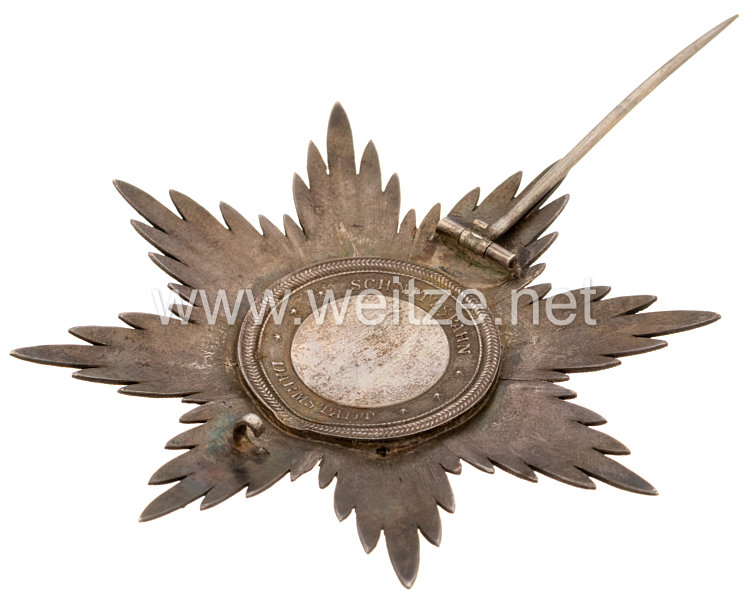
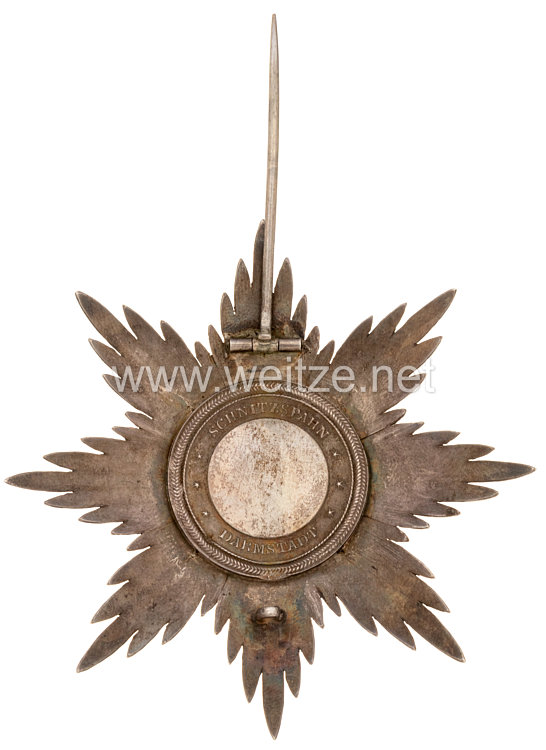
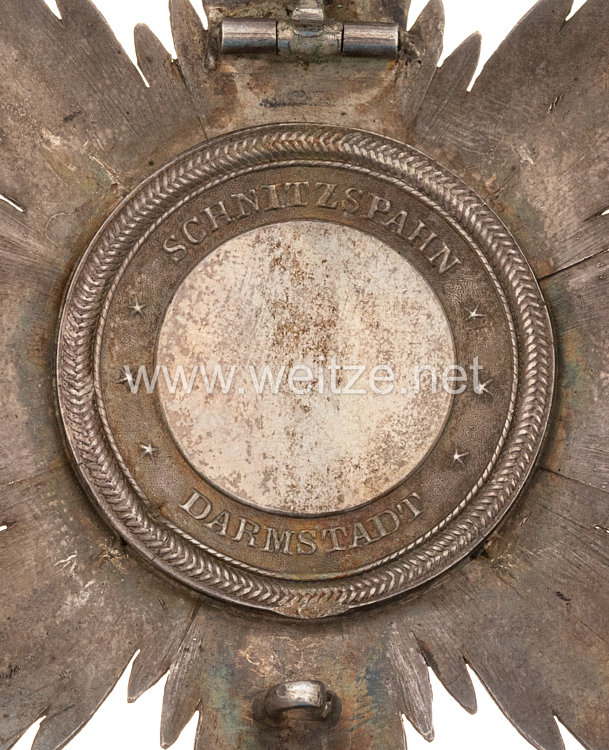
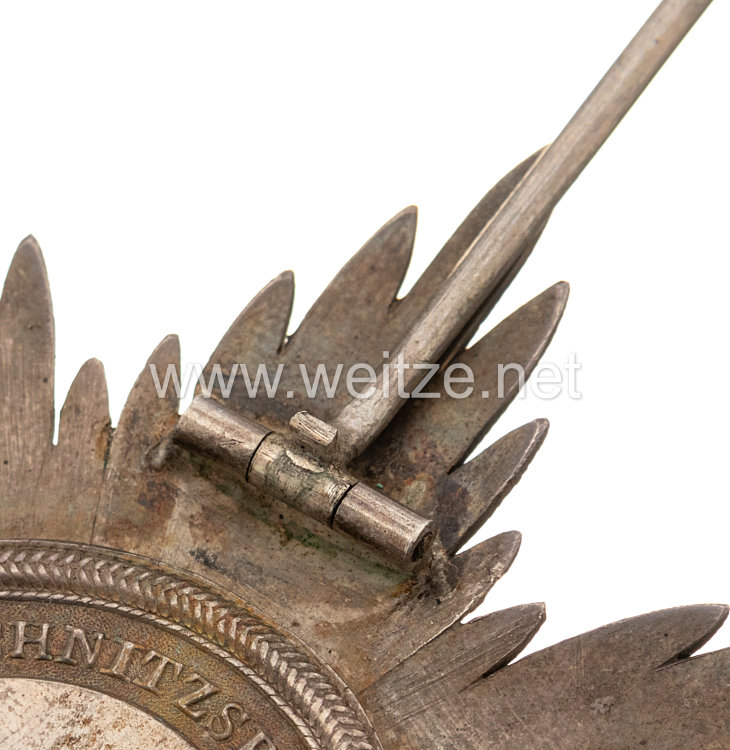
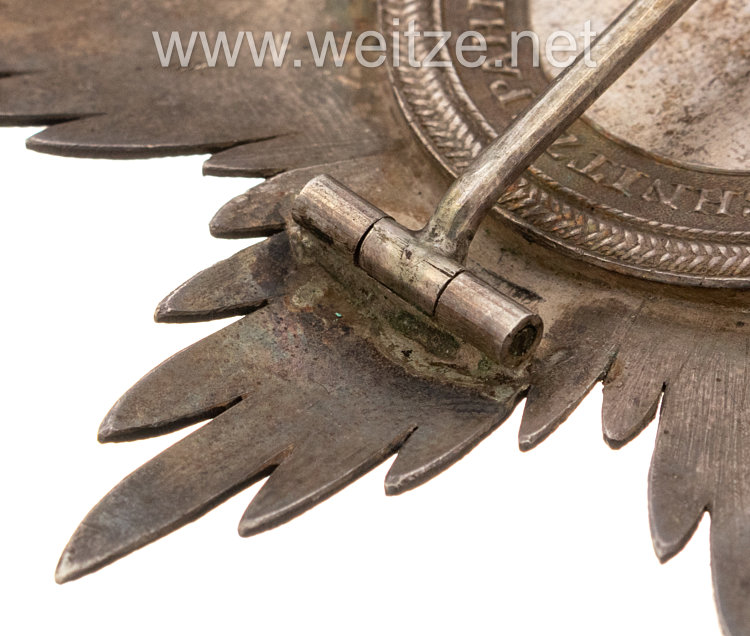
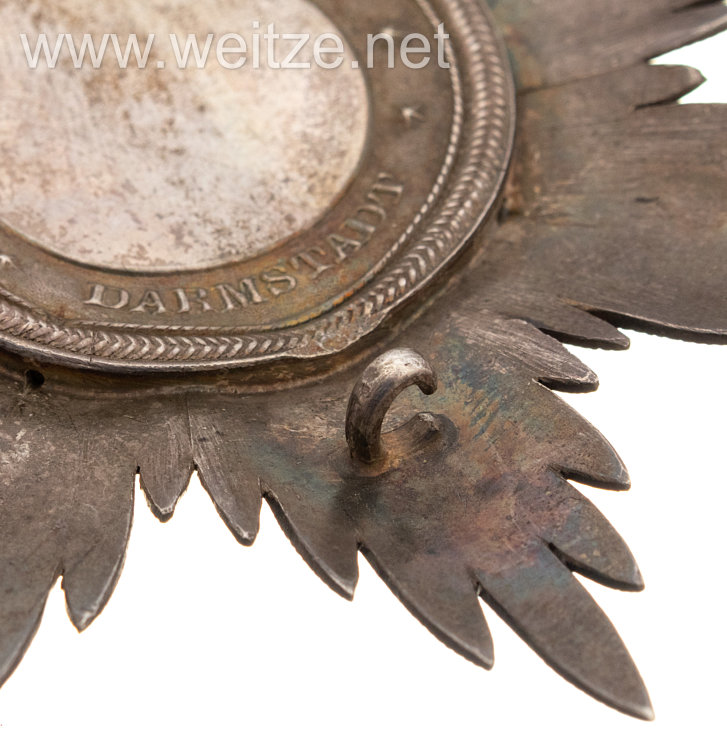
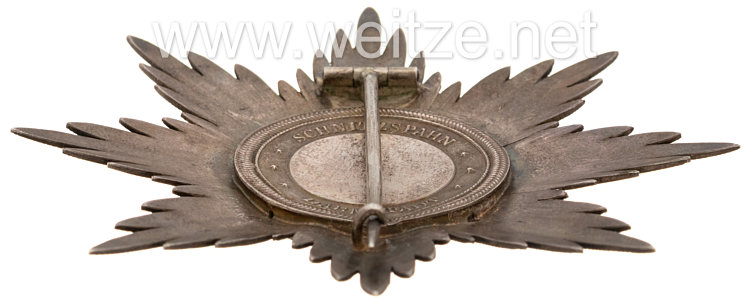
2nd Model from 1849. This piece is a very fine early production circa 1860. Elegant flat-manufactured breast star in silver, the medallion with particularly beautifully executed large portrait in gold and finely enameled. Reverse marked with maker “Schnitzspahn Darmstadt”, on long round pin. Height 85 mm.
321767
4.200,00

Hesse Grand Ducal Hessian Order of Merit of Philip the Magnanimous Breast Star for the Grand Cross

The Grand Ducal Hessian Order of Merit of Philip the Magnanimous ranks among the most significant decorations of the Grand Duchy of Hesse and by Rhine in the 19th century. This prestigious decoration was established to recognize outstanding civil and military merit and bore the name of Hesse's most important ruler, Landgrave Philip I of Hesse (1504-1567), who received the epithet “the Magnanimous” for his tolerance and wisdom.

The order was originally established on May 1, 1840 by Grand Duke Louis II of Hesse and by Rhine. The decoration was intended to honor both military valor and exceptional achievements in civil state service. The order was divided into several classes, with the Grand Cross representing the highest grade, awarded only to high-ranking personalities, princes, generals, and ministers.

The present example represents the second model, introduced from 1849 onwards. This modification occurred after the revolutionary events of 1848/49, which also shook the Grand Duchy of Hesse. The adjustment of the order's statutes and insignia reflected the changed political circumstances, while the order retained its prestigious character.

The breast star of the Grand Cross represents the most elaborate and largest form of the order's decoration. With a height of 85 mm, it belongs to the most imposing order symbols of the German states. The manufacture in silver with a gilded and enameled medallion testifies to the high craftsmanship expected from the distinguished court jewelers of that era.

Particularly noteworthy is the maker's signature “Schnitzspahn Darmstadt” on the reverse. The Schnitzspahn family belonged to the most renowned jewelers and order manufacturers in Darmstadt, the capital city of the Grand Duchy. The Schnitzspahn workshop supplied the grand ducal court over several generations and stood for the highest craftsmanship precision and artistic design. The manufacture around 1860 falls into a period of relative political stability under Grand Duke Louis III (reigned 1848-1877), who pursued a moderate constitutional policy after the turbulent revolutionary years.

The flat construction of the star is characteristic of distinguished order craftsmanship of the mid-19th century. In contrast to earlier, often more sculptural executions, a more elegant style developed, distinguished by fine engravings and precise enamel work. The portrait of Philip the Magnanimous at the center of the star was executed with particular care, combining gold and enamel to create a vivid representation of the historical ruler.

The breast star was worn on the uniform on the left breast and was a widely visible sign of the highest state recognition. The long round pin on the reverse enabled secure attachment to the often heavy uniform fabrics with their braiding and epaulettes. Bearers of the Grand Cross were typically members of ruling houses, field marshals, prime ministers, or foreign ambassadors of high rank.

The order remained one of the most coveted decorations among the German states until the end of the monarchy in 1918. After the abdication of the last Grand Duke Ernst Ludwig in November 1918, the order lost its official function but retained its historical and collector value. The House of Hesse continued the order as a house decoration.

Today, breast stars of the Grand Cross of the Order of Merit of Philip the Magnanimous, especially in such outstanding condition and with verifiable maker's signature, are sought-after collector's items. They document not only the order history of a significant German state but also the high art of goldsmithing and enamel technique of the 19th century. Examples from the Schnitzspahn workshop are considered particularly valuable, as they represent the highest quality standards of their time.