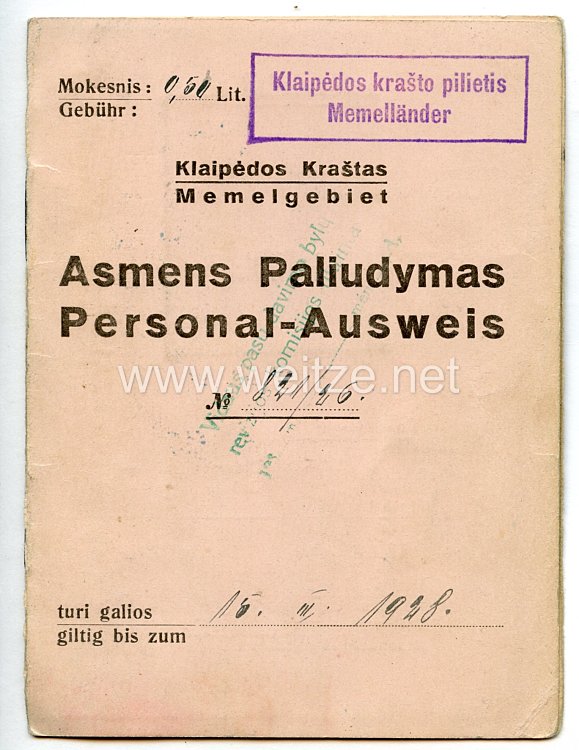
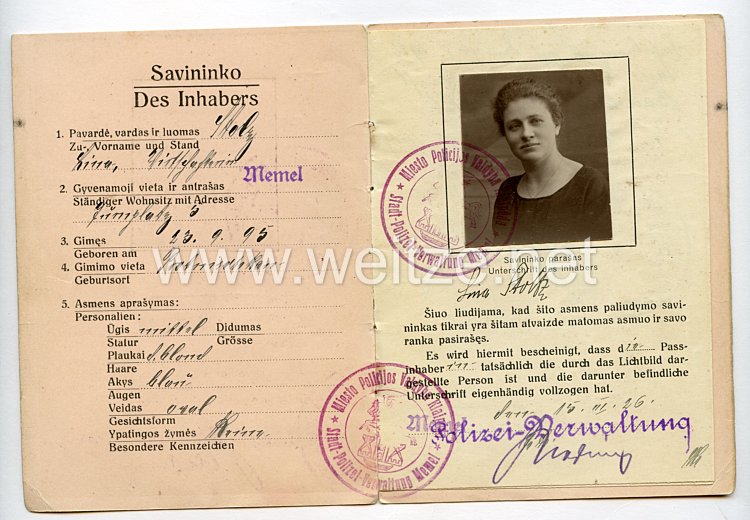
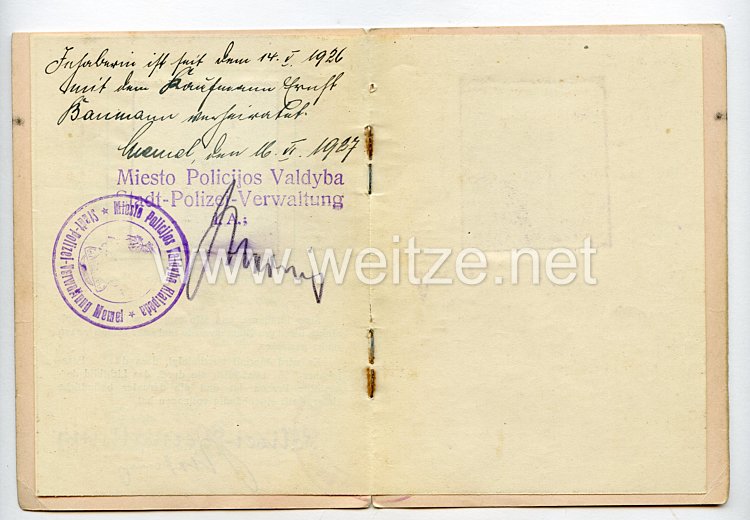
Weimar Republic - Memel Territory Identity Card of the City of “Memel” for a Woman Born in 1895

issued on March 15, 1926, with photograph, used condition.

410366
90,00

Weimar Republic - Memel Territory Identity Card of the City of “Memel” for a Woman Born in 1895

Personal Identity Card from the Memel Territory of the Weimar Republic (1926)

This personal identity card from the city of Memel, issued on March 15, 1926, for a woman born in 1895, represents a fascinating chapter of European history and documents the complex political situation of the Memel Territory in the interwar period.

The Memel Territory: Historical Background

The Memel Territory (Lithuanian: Klaipėdos kraštas) encompassed approximately 2,657 square kilometers on the Baltic Sea coast and was part of East Prussia until the end of World War I. The region, with the port city of Memel (today Klaipėda), held strategic and economic importance. Following the Treaty of Versailles in 1919, the territory was separated from the German Reich and placed under League of Nations administration, represented by French occupation forces.

In January 1923, the so-called Memel Revolt occurred, when Lithuanian irregulars occupied the territory. The international community eventually accepted Lithuanian rule, and in May 1924, the Memel Convention was signed, granting the territory autonomous status within Lithuania.

The Situation in 1926

The year of issuance, 1926, was a time of political consolidation in the Memel Territory. The region had a Memel Statute that guaranteed extensive autonomous rights, including its own parliament (Landtag) and regional government. The population was predominantly German-speaking, while the administration became increasingly Lithuanized.

The identity card from this period documents the administrative reality of this transitional period. The city of Memel continued German administrative practices while formally existing under Lithuanian sovereignty. Such documents were not merely identification papers but also symbols of the complex national affiliations of the inhabitants.

Significance of Identity Cards in the Weimar Era

In the Weimar Republic and adjacent territories with German populations, personal identity cards gained special significance. After World War I and the territorial changes, identity documents became essential for travel, administrative matters, and proof of citizenship. The introduction of photo identity cards with photography became increasingly standard in the 1920s to prevent identity fraud.

For women like the holder of this card, born in 1895, the document represented an important step toward individual administrative registration, independent of husband or father – a development that accompanied post-war emancipation efforts.

Structure and Features of Contemporary Identity Cards

Identity cards of the 1920s were typically small, folded documents or booklets. They contained:

  • Personal information: Name, date and place of birth, occupation
  • Photograph: A pasted photo of the holder
  • Physical description: Height, eye color, distinguishing marks
  • Signatures: Of the holder and issuing authority
  • Official seal: Of the municipal administration

The Fate of the Memel Territory

The relative stability of the mid-1920s ended with increasing national tensions. German parties dominated the parliament, while the Lithuanian central government attempted to strengthen its influence. In 1939, Nazi Germany annexed the Memel Territory following an ultimatum to Lithuania. After World War II, it became part of the Soviet Union and today belongs to Lithuania.

Collector Value and Historical Significance

Documents from the Memel Territory are rare today and of high interest to collectors. They document a past Central European border region whose history was shaped by changing rulers. For research, such identity cards offer valuable insights into:

  • Administrative practices of the interwar period
  • Demographic data of the region
  • The lived reality of populations in border areas
  • Identity questions in ethnically mixed territories

The used condition of this identity card underscores its authenticity as an actually utilized document that accompanied a real person through a turbulent historical epoch.