Kaiserliche Marine 1. Weltkrieg: Ehrenpreis für Marineflieger
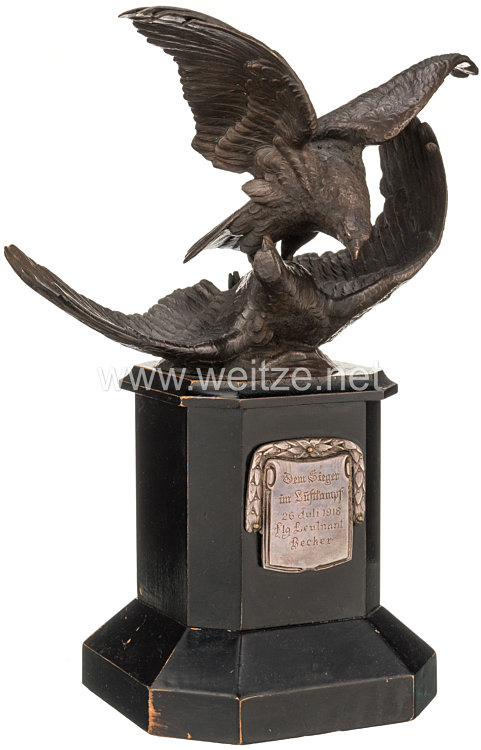
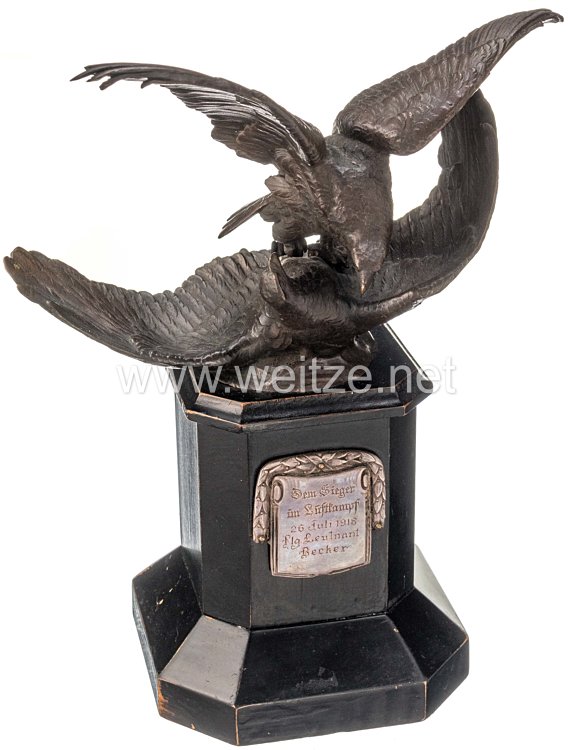
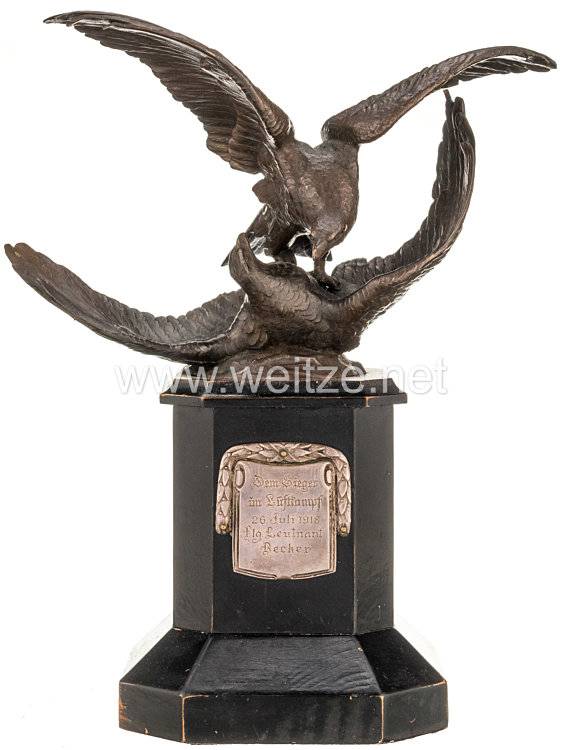
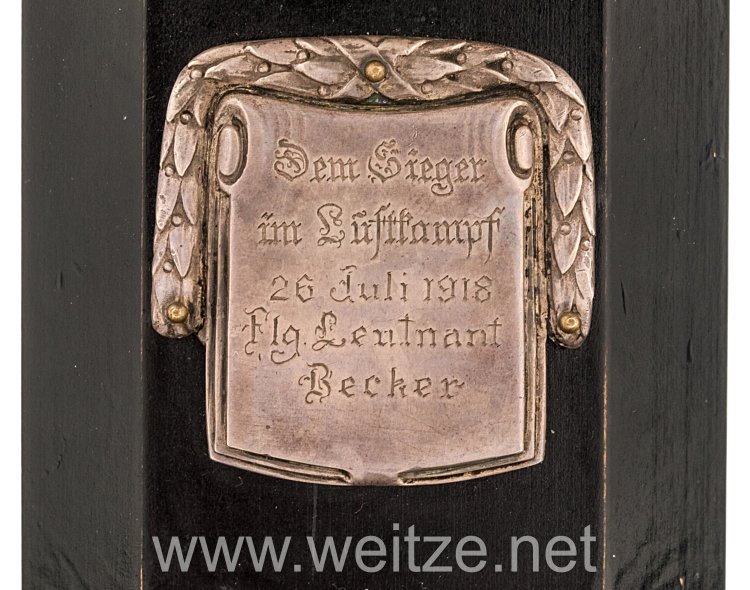
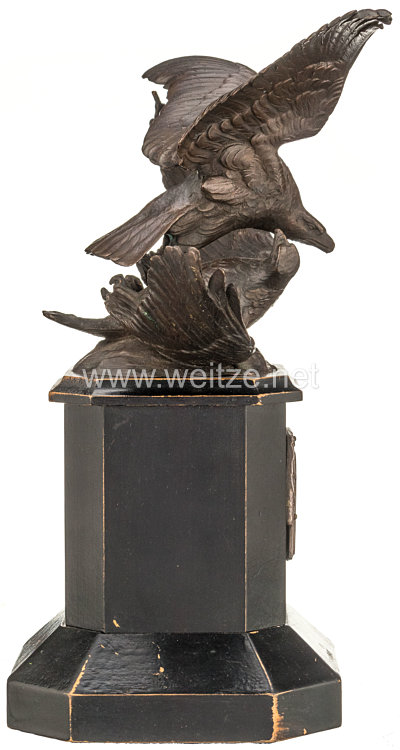
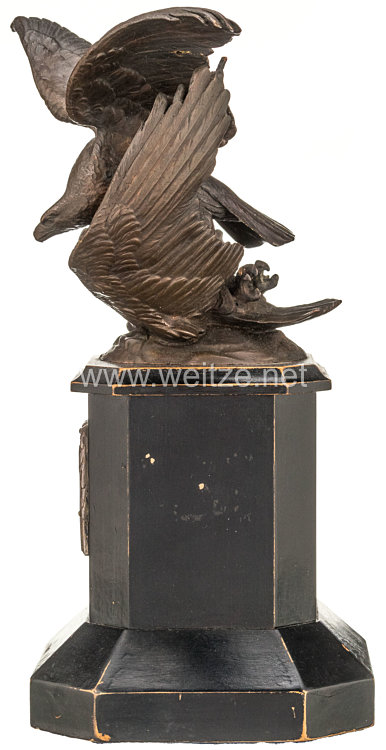
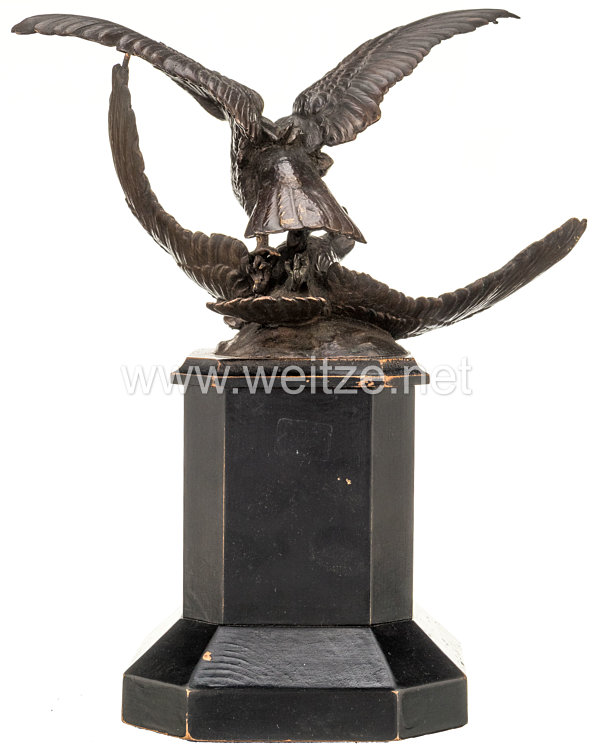
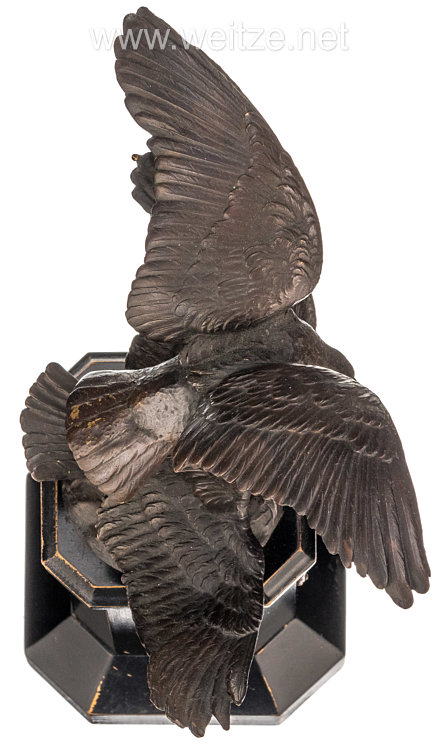
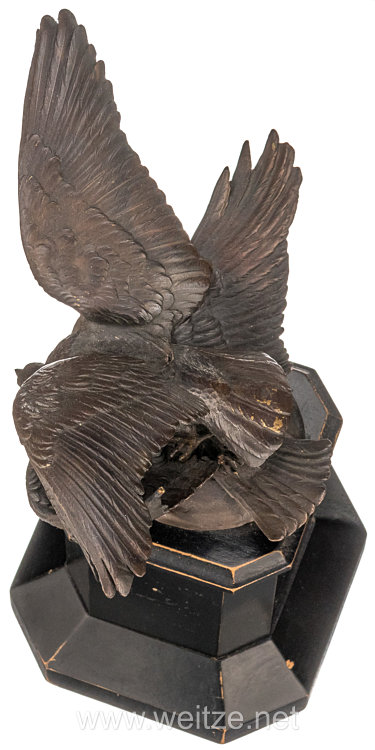
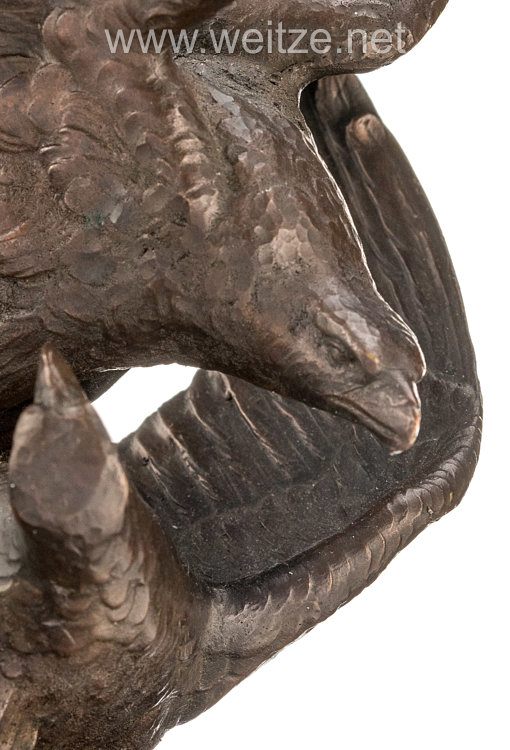
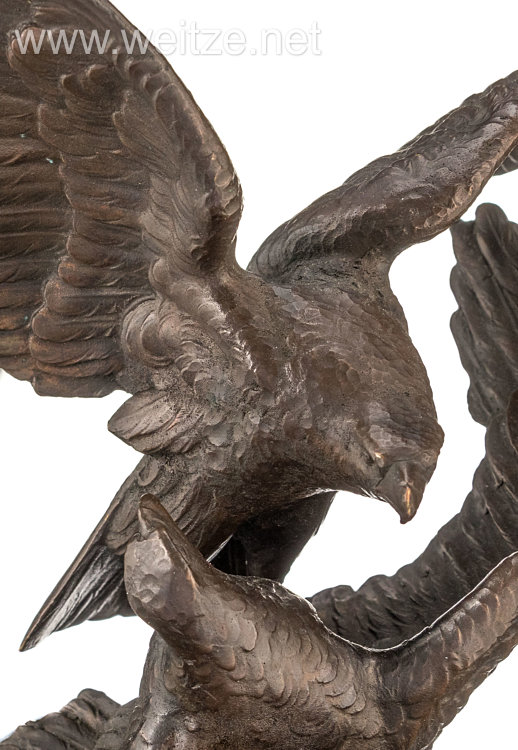
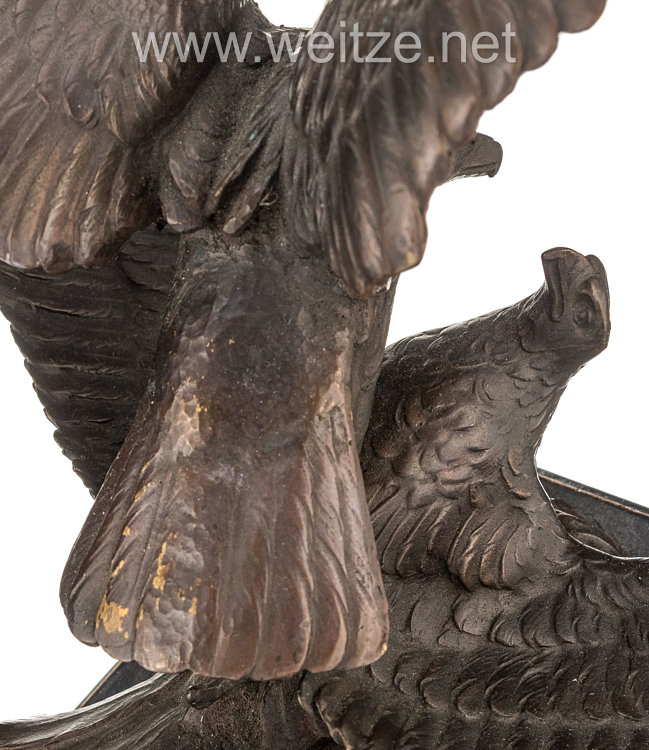
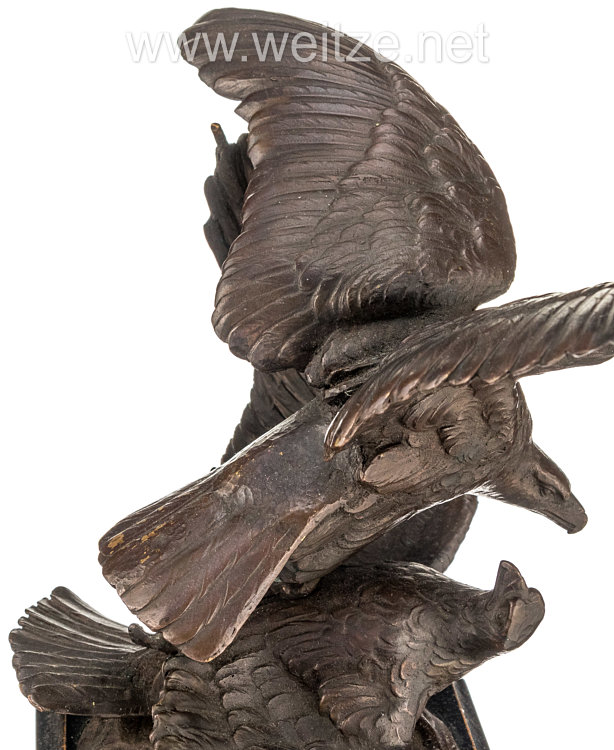
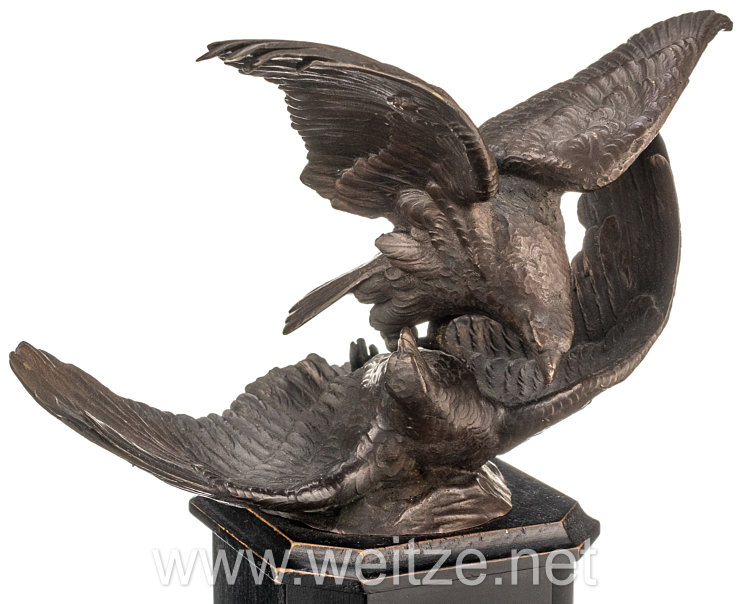
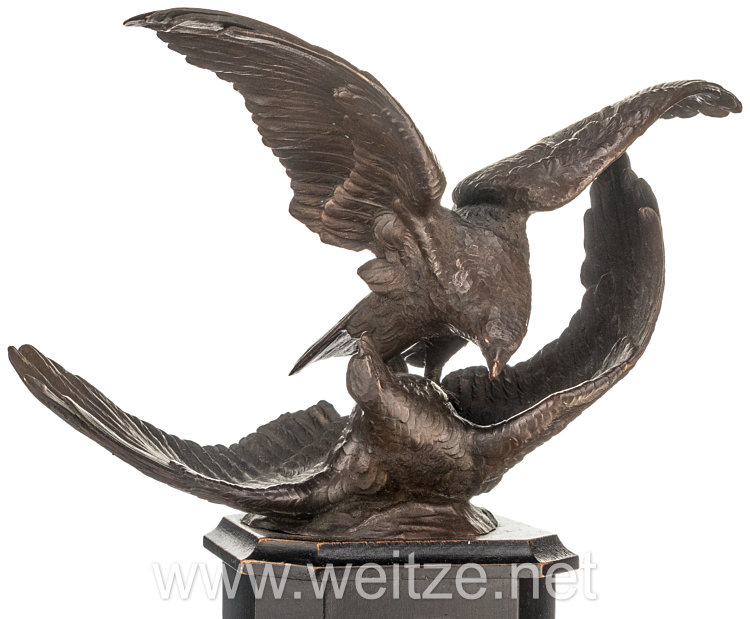
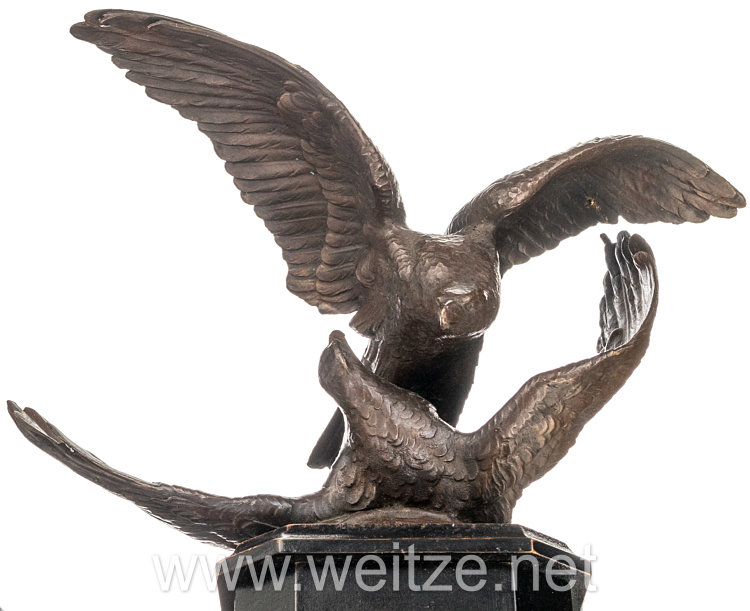
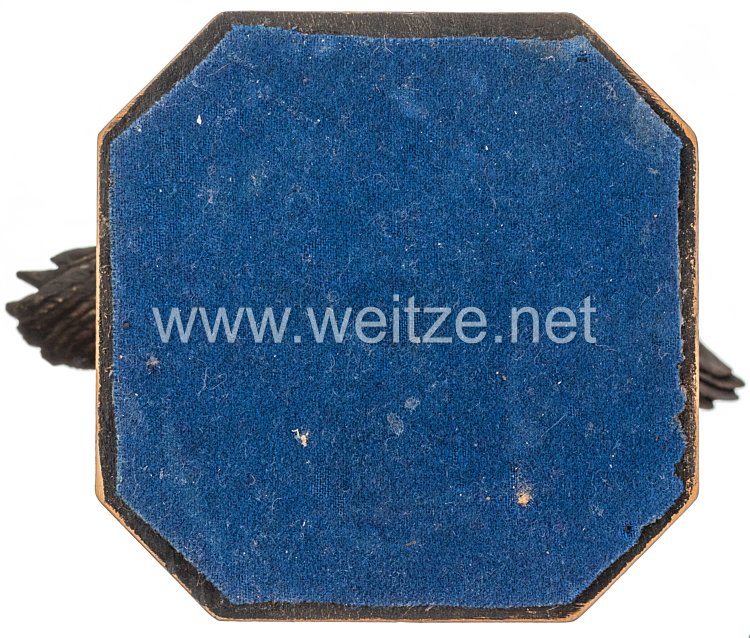
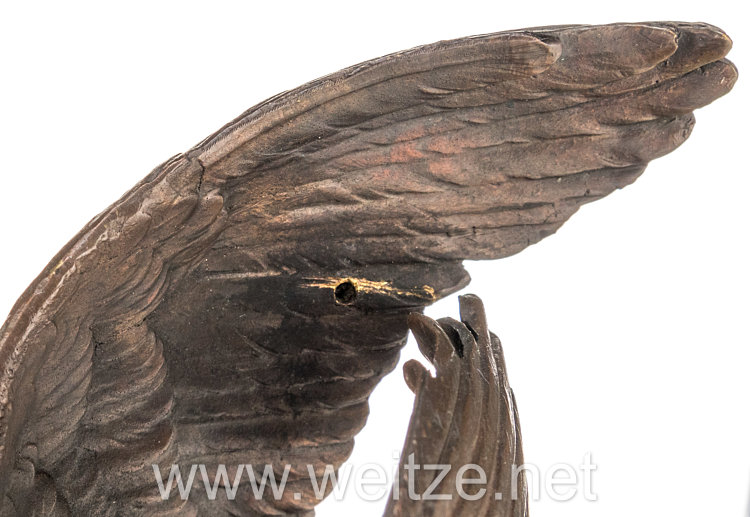
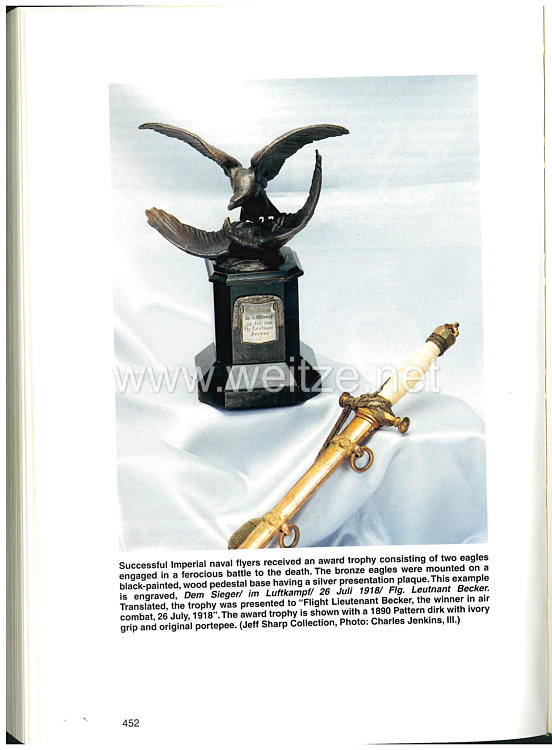
um 1918. Plastische Bronzedarstellung der beiden kämpfenden Adler, wie auch auf dem Ehrenbecher abgebildet. Die 2-teilige Bronze ist montiert auf einem schwarzen 8-eckigen Holzsockel, auf der Vorderseite mit Widmungsplakette "Dem Sieger im Luftkampf 26. Juli 1918 Flg. Leutnant Becker".
Gesamthöhe ca. 24,7 cm. Nur leichte Altersspuren mit schöner Patina, Zustand 2. Extrem selten.
Dieses Stück ist abgebildet im Fachbuch von Thomas Wittmann "Exploring the Dress Daggers of the German Navy" auf Seite 452.
Mit dem Tagesbefehl vom 3. Januar 1917 wurde der Ehrenpreis der Marineflieger gestiftet. Bis Kriegsende wurde von den deutschen Marinefliegern ca. 270 Flugzeuge abgeschossen, darüber hinaus 2 Luftschiffe, 1 Zerstörer 3 U-Boote, 4 Schnellboote und noch weitere Fahrzeuge. Die tatsächliche Zahl der verliehenen Ehrenpreise lag aber mit Sicherheit deutlich unter 100 Stück aufgrund der fehlenden finanziellen Mittel.
Hermann Becker, geb 8. August 1893, trat am 1. April 1912 in die kaiserliche Marine ein. Er absolvierte seine Grundausbildung an Bord des Großen Kreuzers SMS "Victoria Louise" und wurde anschließend auf die Marineschule Mürwik kommandiert, wo er am 12. April 1913 zum Fähnrich zur See befördert wurde. Bei Ausbruch des Ersten Weltkrieges wurde Hermann Becker am 5. August 1914 Offizier-Diensttuender an Bord des Linienschiffs SMS "Kaiser Wilhelm II". Ab Februar 1915 absolvierte er eine Ausbildung zum Flugzeugführer bei der Seefliegerstation Norderney. Am 22. März 1915 zum Leutnant zur See befördert, wurde er nach Abschluss seiner Ausbildung als Flugzeugführer bei den Seefliegerstationen Norderney, Borkum und List eingesetzt. Ab Dezember 1916 war er Torpedo- und Kampfflieger bei der Seefliegerstation Zeebrügge. Aus der britischen Gefangenschaft wurde er nach Kriegsende entlassen. Nach seiner Rückkehr nach Deutschland schloss er sich einem Freiwilligenverband an. Am 17. November 1919 zum Oberleutnant befördert, wurde Hermann Becker am 9. September 1920 aus dem Militärdienst entlassen. Zwischen dem 1. Januar 1925 bis zum 31. Dezember 1933 war er als Lehrer und Schulleiter der Deutschen Verkehrsfliegerschule in Warnemünde. Am 1. Januar 1934 trat er in die Luftwaffe ein und wurde Kommandeur der Flugzeugführerschule Warnemünde. Am 1. August 1934 wurde er dann Kommandeur des Luftkreis-Flugparks See in Kiel-Holtenau und am 1. November 1934 zum Major befördert. Gleichzeitig mit der Beförderung wurde er zum Kommandeur der Fliegergruppe Kiel und zum Fliegerhorst-Kommandanten Kiel ernannt. Am 1. Dezember 1935 zum Oberstleutnant befördert, wurde Becker am 1. März 1936 Kommandeur der Flugzeugführer-Schule See in Püttnitz und zugleich Seefliegerhorst-Kommandant Püttnitz. Am 1. März 1938 folgte die Beförderung zum Oberst und einen Monat später die Ernennung zum Kommandant der Luftdienstverbände See. Ab dem 18. Dezember 1939 diente Hermann Becker als Inspizient der Luftdienstverbände im Reichsluftfahrtministerium. Am 1. November 1940 wurde er zum Generalmajor und am 1. November 1942 zum Generalleutnant befördert. Am 1. Oktober 1943 wurde er in die Führerreserve versetzt. Am 7. August 1944 wurde er verhaftet und vor ein Kriegsgericht gestellt. Am 1. Dezember 1944 wurde er dann wegen Wehrkraftzersetzung und Verleitung zum Meineid in zwei Fällen zum Tode verurteilt. Gleichzeitig wurden ihm die Wehrwürdigkeit und die bürgerlichen Ehrenrechte auf Lebenszeit entzogen. Am 6. Februar 1945 wurde er im Wehrmachtsgefängnis Torgau standrechtlich erschossen.
Die Ehrenpreise für Flugzeugführer der Kaiserliche Marine sind extrem selten, in über 30 Jahren ist dies erst das 5. Stück, welches wir anbieten können. Preis auf Anfrage.
Gesamthöhe ca. 24,7 cm. Nur leichte Altersspuren mit schöner Patina, Zustand 2. Extrem selten.
Dieses Stück ist abgebildet im Fachbuch von Thomas Wittmann "Exploring the Dress Daggers of the German Navy" auf Seite 452.
Mit dem Tagesbefehl vom 3. Januar 1917 wurde der Ehrenpreis der Marineflieger gestiftet. Bis Kriegsende wurde von den deutschen Marinefliegern ca. 270 Flugzeuge abgeschossen, darüber hinaus 2 Luftschiffe, 1 Zerstörer 3 U-Boote, 4 Schnellboote und noch weitere Fahrzeuge. Die tatsächliche Zahl der verliehenen Ehrenpreise lag aber mit Sicherheit deutlich unter 100 Stück aufgrund der fehlenden finanziellen Mittel.
Hermann Becker, geb 8. August 1893, trat am 1. April 1912 in die kaiserliche Marine ein. Er absolvierte seine Grundausbildung an Bord des Großen Kreuzers SMS "Victoria Louise" und wurde anschließend auf die Marineschule Mürwik kommandiert, wo er am 12. April 1913 zum Fähnrich zur See befördert wurde. Bei Ausbruch des Ersten Weltkrieges wurde Hermann Becker am 5. August 1914 Offizier-Diensttuender an Bord des Linienschiffs SMS "Kaiser Wilhelm II". Ab Februar 1915 absolvierte er eine Ausbildung zum Flugzeugführer bei der Seefliegerstation Norderney. Am 22. März 1915 zum Leutnant zur See befördert, wurde er nach Abschluss seiner Ausbildung als Flugzeugführer bei den Seefliegerstationen Norderney, Borkum und List eingesetzt. Ab Dezember 1916 war er Torpedo- und Kampfflieger bei der Seefliegerstation Zeebrügge. Aus der britischen Gefangenschaft wurde er nach Kriegsende entlassen. Nach seiner Rückkehr nach Deutschland schloss er sich einem Freiwilligenverband an. Am 17. November 1919 zum Oberleutnant befördert, wurde Hermann Becker am 9. September 1920 aus dem Militärdienst entlassen. Zwischen dem 1. Januar 1925 bis zum 31. Dezember 1933 war er als Lehrer und Schulleiter der Deutschen Verkehrsfliegerschule in Warnemünde. Am 1. Januar 1934 trat er in die Luftwaffe ein und wurde Kommandeur der Flugzeugführerschule Warnemünde. Am 1. August 1934 wurde er dann Kommandeur des Luftkreis-Flugparks See in Kiel-Holtenau und am 1. November 1934 zum Major befördert. Gleichzeitig mit der Beförderung wurde er zum Kommandeur der Fliegergruppe Kiel und zum Fliegerhorst-Kommandanten Kiel ernannt. Am 1. Dezember 1935 zum Oberstleutnant befördert, wurde Becker am 1. März 1936 Kommandeur der Flugzeugführer-Schule See in Püttnitz und zugleich Seefliegerhorst-Kommandant Püttnitz. Am 1. März 1938 folgte die Beförderung zum Oberst und einen Monat später die Ernennung zum Kommandant der Luftdienstverbände See. Ab dem 18. Dezember 1939 diente Hermann Becker als Inspizient der Luftdienstverbände im Reichsluftfahrtministerium. Am 1. November 1940 wurde er zum Generalmajor und am 1. November 1942 zum Generalleutnant befördert. Am 1. Oktober 1943 wurde er in die Führerreserve versetzt. Am 7. August 1944 wurde er verhaftet und vor ein Kriegsgericht gestellt. Am 1. Dezember 1944 wurde er dann wegen Wehrkraftzersetzung und Verleitung zum Meineid in zwei Fällen zum Tode verurteilt. Gleichzeitig wurden ihm die Wehrwürdigkeit und die bürgerlichen Ehrenrechte auf Lebenszeit entzogen. Am 6. Februar 1945 wurde er im Wehrmachtsgefängnis Torgau standrechtlich erschossen.
Die Ehrenpreise für Flugzeugführer der Kaiserliche Marine sind extrem selten, in über 30 Jahren ist dies erst das 5. Stück, welches wir anbieten können. Preis auf Anfrage.