Hannover Fire Brigade Association of the Province of Hannover 1902 - 1918

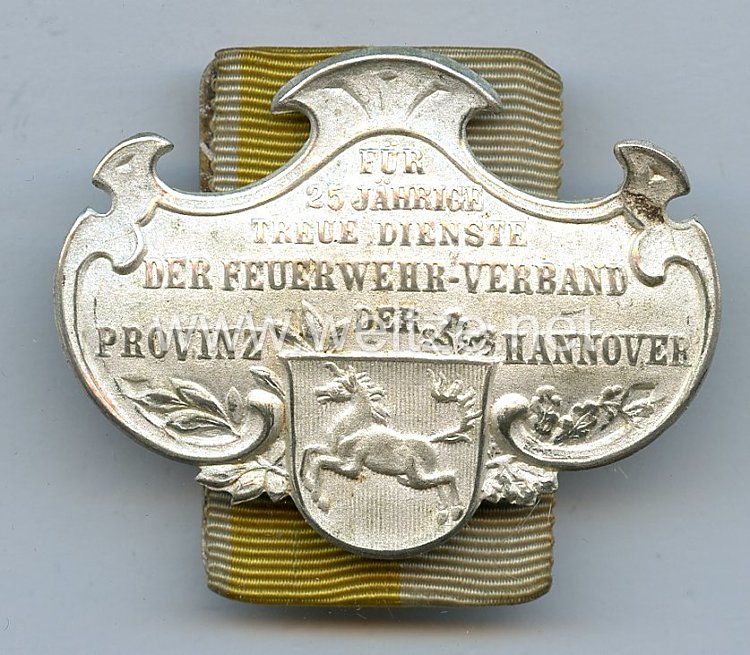
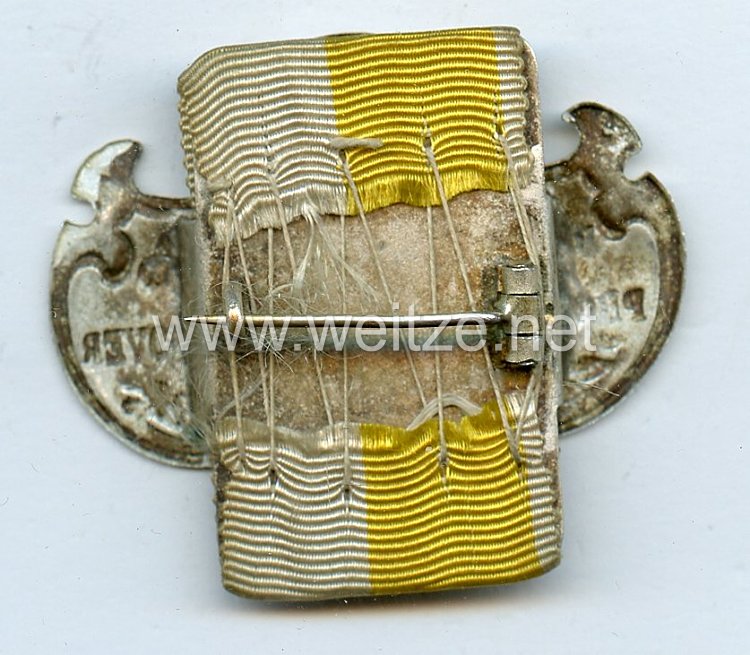
Badge for 25 Years of Faithful Service, silver-plated tin badge on ribbon bar with yellow-white ribbon, pin back, condition 2.
410865
70,00

Hannover Fire Brigade Association of the Province of Hannover 1902 - 1918

The Honorary Badge of the Fire Brigade Association of the Province of Hanover for 25 years of loyal service represents a significant testament to early German firefighting history. This silver-plated tin badge mounted on a ribbon clasp with a yellow-white ribbon was awarded between 1902 and 1918 to deserving firefighters and documents the development of organized fire services in the Kingdom of Prussia.

The Province of Hanover became one of the largest Prussian provinces following the annexation of the Kingdom of Hanover by Prussia in 1866. The Fire Brigade Association was founded in 1902 as a superior organization to coordinate and professionalize the numerous local fire brigades. The establishment of such associations was part of a comprehensive modernization movement in German firefighting that began in the second half of the 19th century.

The service award system for firefighters developed parallel to military decorations. The conferral of honorary badges for long service was intended to recognize the loyalty and dedication of predominantly volunteer firefighters. The required service period of 25 years was considerable and demonstrated extraordinary devotion, especially considering that firefighting involved significant dangers and physical demands.

The yellow-white color combination of the ribbon had special significance. These colors were traditionally associated with Hanover and referenced the region's historical identity, even after integration into the Kingdom of Prussia. The use of regional colors in fire brigade awards was a widespread practice and strengthened the local connection of firefighters.

The silver-plated tin badge itself represents the typical manufacturing method of fire brigade honorary badges of this era. Unlike high-ranking state orders, which were often made of solid silver or gold, fire brigade awards were usually manufactured from more economical materials. This enabled associations to confer a greater number of decorations despite limited financial resources. Nevertheless, the silver plating gave the badge a dignified and representative character.

The organizational structure of firefighting in the German Empire was complex. While large cities had paid professional fire brigades, volunteer fire brigades were the norm in smaller communities and rural areas. The provincial association coordinated training, procured equipment, and organized joint exercises. The awarding of honorary badges was part of a comprehensive system for motivating and recognizing firefighters.

The end date of 1918 marks an important historical turning point. With the end of World War I and the collapse of the German Empire, the era of these awards also ended. Many firefighters had performed important services both at the front and on the home front during the war. In the postwar period, new award systems were established under the Weimar Republic.

The wearing method of the badge was clearly regulated. It was worn on the uniform at official occasions, fire brigade festivals, and parades. The reverse pin allowed secure attachment to the jacket. The ribbon clasp was designed so that it could also be worn separately, for example on everyday clothing.

Today, such historical fire brigade honorary badges are sought-after collectibles. They document not only the history of fire protection but also the social history of volunteerism in Germany. The preservation and scholarly analysis of these objects contributes to understanding the history of municipal organizations. Museums and fire brigade associations preserve such awards as important testimonies to their tradition.