Kriegsmarine Sleeve Insignia Cadet Career Path Engineering
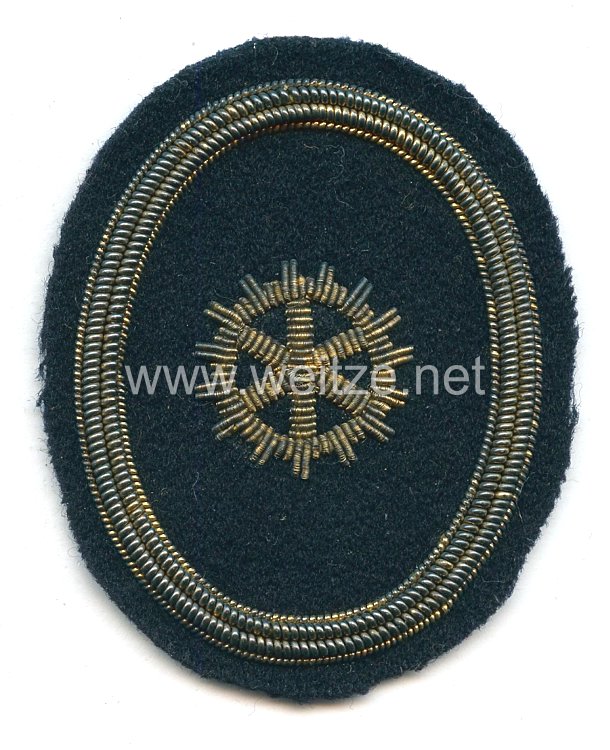
The Kriegsmarine sleeve insignia for engineering career cadets represents a fascinating testimony to the complex rank system and career organization of the German Navy during World War II. This hand-embroidered version with metal threads represents the highest quality level of these uniform insignia and was typical for the officer career path.
The Kriegsmarine, officially founded on June 1, 1935, as the successor to the Reichsmarine, developed a sophisticated system of career insignia to identify the various specializations within the naval forces. The engineering career path (Ingenieurslaufbahn) represented a particularly important branch, as it was responsible for the technical operation and maintenance of increasingly complex warships.
The Kriegsmarine's cadet corps formed the foundation for officer training. Naval cadets underwent intensive multi-year training that included both theoretical and practical elements. Differentiation by career path occurred at an early stage of training, with aspiring engineering officers receiving specialized technical education that prepared them for the challenges of mechanical engineering, electrical engineering, and other technical disciplines aboard ship.
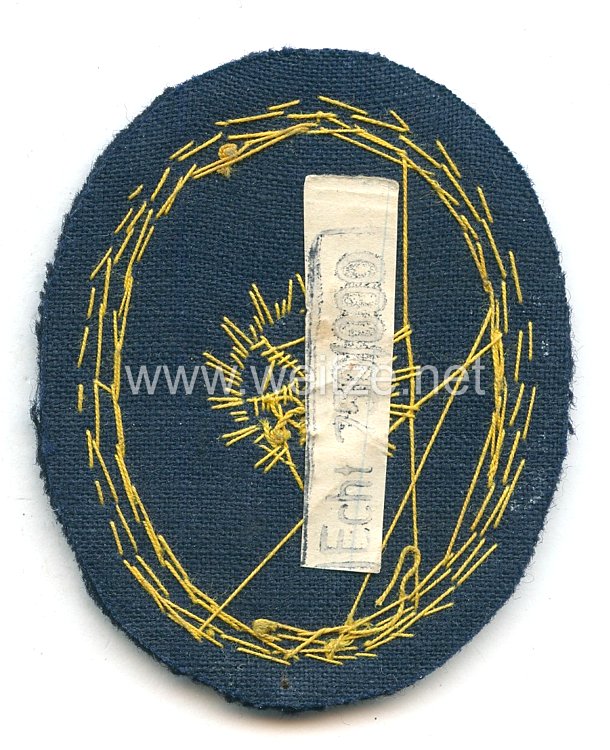
The metal thread hand embroidery of this sleeve insignia is characteristic of the high-quality execution of officer insignia. Unlike the machine-made or woven insignia for enlisted men and non-commissioned officers, officer insignia were traditionally produced with artisanal quality. The metal threads used typically consisted of gold-plated or silver-plated copper wire embroidered on a dark blue cloth background. This manufacturing technique required high craftsmanship and made each insignia unique.
The Kriegsmarine uniform regulations detailed the wearing of these career insignia. They were worn on both upper sleeves of various uniform types and clearly indicated membership in a particular career path. For engineering career cadets, the insignia was an important identifying feature that highlighted their specialized training and future role within the Kriegsmarine.
Training as an engineering officer was particularly demanding and lasted longer than general naval officer training. After basic training as a naval cadet, specialized courses at naval schools and technical universities followed. Aspiring engineering officers had to acquire comprehensive knowledge in mechanical engineering, steam and diesel engine technology, electrical engineering, and naval architecture. This extensive knowledge was essential for operating and maintaining the complex propulsion systems, weapons systems, and technical facilities of modern warships.
Within the organizational structure of the Kriegsmarine, technical officers held a special position. Although they were full officers with corresponding leadership responsibilities, they had specific responsibilities in the technical field. Aboard larger ships, they worked closely with the Chief Engineer and were responsible for various technical departments.
The production of such sleeve insignia was carried out by specialized effects manufacturers, often specialized in military equipment for generations. Companies such as Erel, BeVo, or various gold embroidery workshops produced these high-quality insignia according to strict specifications. The hand-embroidered variant was significantly more expensive than machine-made alternatives and was typically procured by the officer candidates themselves.
The condition 2 rating of this specimen indicates a well-preserved piece with only slight signs of wear. This is remarkable for textiles over 80 years old and indicates careful storage over the decades.
After the end of World War II and the dissolution of the Kriegsmarine in 1945, such uniform components gained historical significance as testimonies of a past military organization. They document the detailed hierarchy and specialization within the German naval forces and are today important study objects for military historians dealing with the organizational structure and uniform studies of the Kriegsmarine.
Research into such insignia contributes to understanding the complex structure of the Kriegsmarine and shows how important technical competence was for operating a modern war fleet. The engineering career path and its specific markings reflect the high value that technical knowledge held in 20th-century maritime warfare.
These insignia serve as tangible reminders of the sophisticated organizational systems employed by the Kriegsmarine and illustrate the navy's recognition of the critical role played by technically trained officers in modern naval operations. The preservation of such artifacts allows contemporary researchers and historians to study the material culture of the German Navy and understand the distinctions that were considered important within its hierarchical structure.