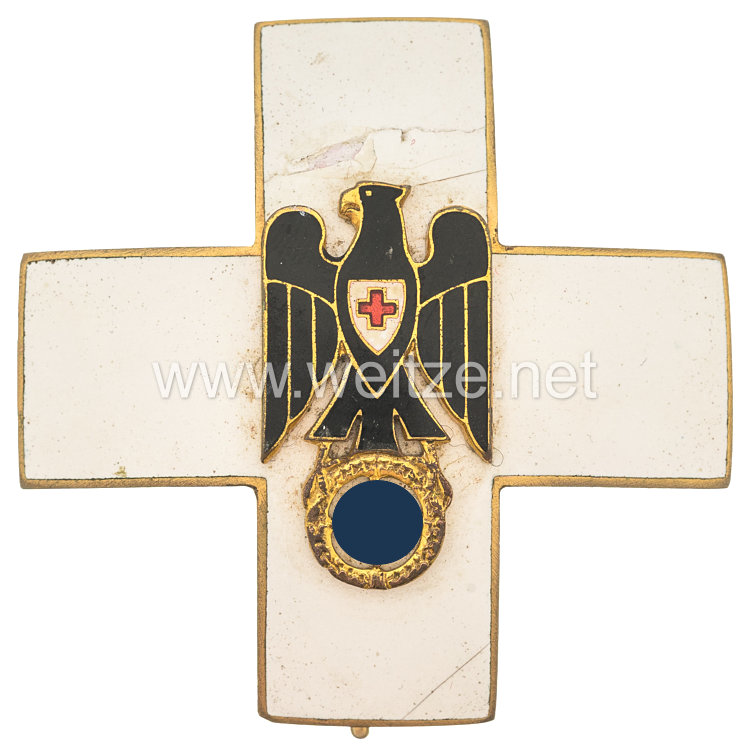
German Red Cross Honor Decoration 1937-1939 2nd Class Merit Cross
The German Red Cross Honor Badge 2nd Class (Merit Cross) from the period 1937-1939 represents a significant collector's piece from the National Socialist era, documenting the complex entanglement of humanitarian organizations with the Nazi regime. This decoration embodies a dark chapter in the history of the German Red Cross.
The reorganization of the German honors system under National Socialist rule completely encompassed the German Red Cross. On May 1, 1937, the DRK was forcibly aligned (Gleichschaltung) and stripped of its independence. The Reichsführer SS Heinrich Himmler assumed patronage, and the organization was transformed into an instrument of Nazi policy. In this context, the DRK honor badges were redesigned and received the swastika as a central element.
The piece described here represents the second level in the system of DRK honor badges, the Merit Cross. The hierarchy comprised several levels, beginning with the Merit Medal, through the Merit Cross, up to higher decorations. The Merit Cross was awarded for long-standing and meritorious service in the German Red Cross, with precise criteria established in the organization's statutes.
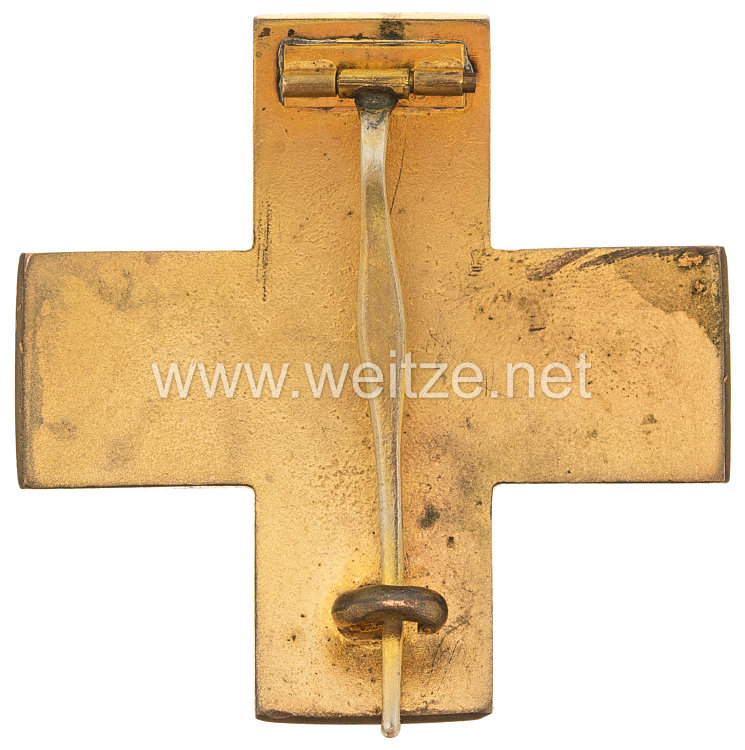
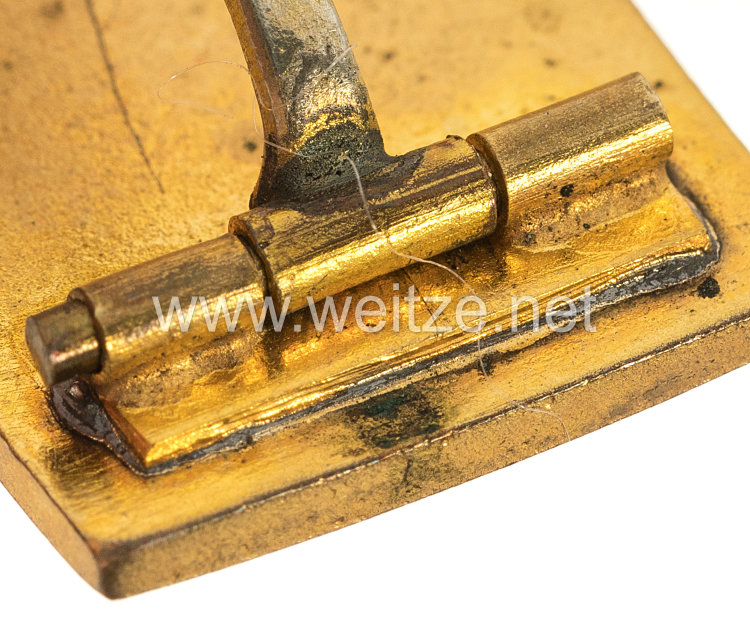
The typical manufacture by the Godet firm points to one of the most prestigious producers of orders and decorations in the Third Reich. The Berlin company Godet & Co. was renowned for the high quality of its products. Interestingly, this specimen bears no manufacturer's marking, which could occur with Godet products for various reasons. Some series were produced without marking, or the identification was located in places that were lost over time.
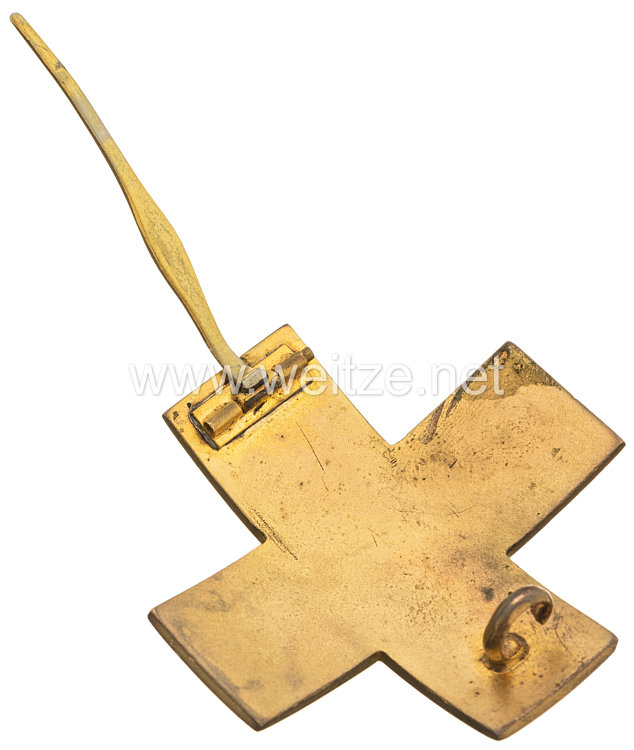
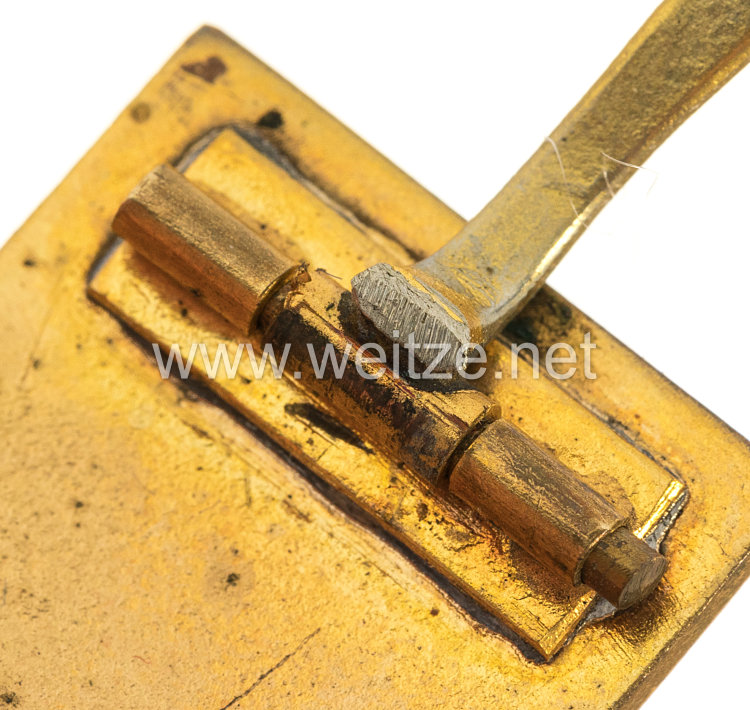
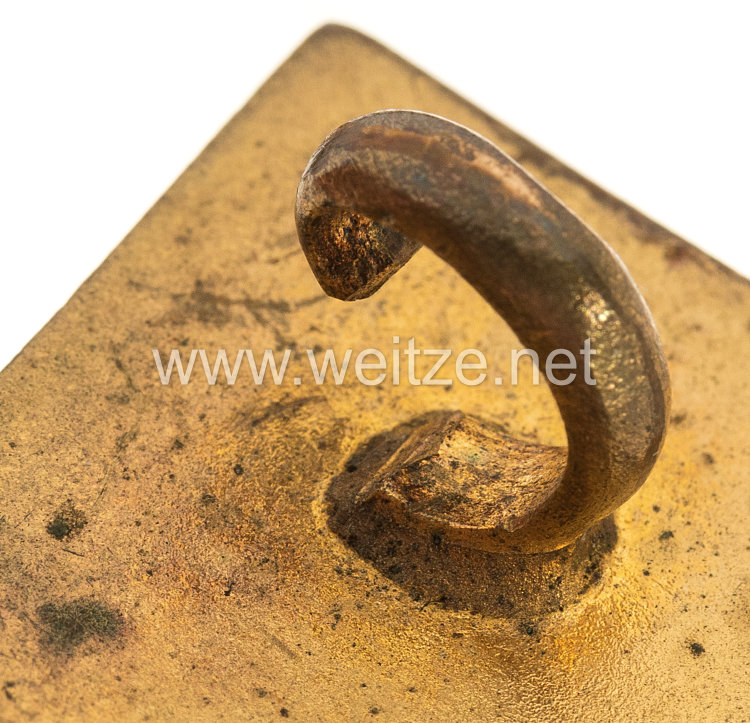
The technical execution of the pin-back cross corresponds to contemporary standards: a slightly convex basic form with an applied eagle holding the swastika in its talons. The use of enamel in red and white, the traditional colors of the Red Cross, gives the decoration its characteristic appearance. The reverse pin served for attachment to uniform or civilian clothing.
The condition with partially damaged enamel is typical for pieces that were actually worn. Enamel work from this period was susceptible to damage from impacts or temperature changes. Such signs of wear paradoxically often increase historical value, as they document authentic use.
The award practice for these decorations followed strict guidelines. Recipients had to distinguish themselves through special merit in medical service, patient care, or organizational work. The badges were presented in ceremonial settings and documented in possession certificates. Bearers were obligated to wear the decoration on special occasions and in uniform.
The year 1939 marks the end of this award period, as new regulations came into force with the outbreak of war. The DRK was fully incorporated into the war machinery, and the awarding of decorations increasingly followed military considerations. Later, additional war merit variants were created.
From a collection-historical perspective, this piece documents the instrumentalization of an originally neutral humanitarian organization. The German Red Cross lost its independence under Nazi rule and became part of the totalitarian system. The honor badges of this period are therefore not only military-historical objects but also testimony to the systematic forced coordination of German society.
For the scholarly evaluation of such objects, historical context is crucial. They document a time when even humanitarian symbols were politically abused. Museums and collections preserve these pieces to document history in its entirety and serve as a warning for future generations.
The Godet manufacture quality is evident in the craftsmanship details: the carefully applied eagle, the precise enameling technique, and the overall construction method. Such pieces were produced with attention to detail that reflected both the technical capabilities of the manufacturer and the importance the regime placed on its honors system.
Today, these decorations serve as historical evidence in understanding how the Nazi regime penetrated every aspect of German society, including organizations that historically stood for humanitarian principles and neutrality. They remain important artifacts for historians, educators, and museums committed to preserving and teaching about this period.