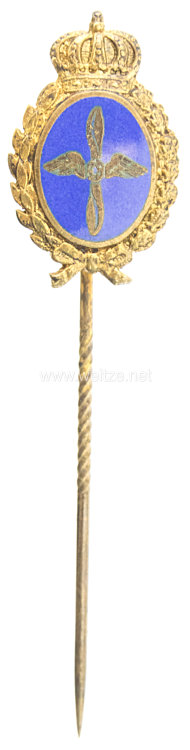
Bavaria Association of Former Bavarian Aviation Troops: Gold Honor Badge

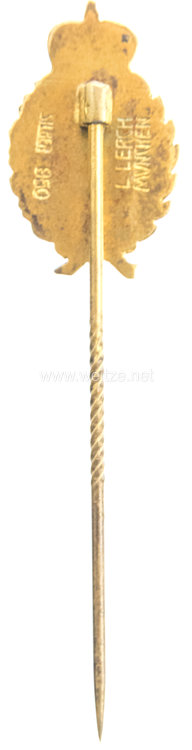
Particularly fine execution in gilt silver. Oval medallion with winged propeller, crowned, with surrounding oak leaf/laurel wreath. Reverse stamped “L. Lerch München” and “Silber 850”. Height 27 mm, on long pin. Only lightly worn, condition 2+.
305363
650,00

Bavaria Association of Former Bavarian Aviation Troops: Gold Honor Badge

The Gold Honorary Badge of the Association of Former Bavarian Air Force Personnel represents a significant artifact of Bavarian military aviation and the veteran culture of the Weimar Republic. This decorative piece exemplifies the special role that Bavaria played in the development of German military aviation during World War I.

The Royal Bavarian Air Force was established in 1912 as part of the Bavarian Army and developed into a formidable air combat unit during the First World War. Bavaria was the only German state besides Prussia to maintain an independent air force within the imperial armed forces. The Bavarian aviation units comprised several field aviation detachments, fighter squadrons, and bomber wings that were deployed on all major fronts of the war.

Following the end of World War I and the dissolution of the imperial armed forces under the Treaty of Versailles of 1919, former members of the air force formed veteran associations. The Association of Former Bavarian Air Force Personnel was founded in the early 1920s to maintain camaraderie, preserve the memory of fallen comrades, and represent the interests of former aviators.

This honorary badge represents a particularly high-quality execution, crafted from gold-plated silver 850. The design displays typical elements of aviation symbolism of that era: the central oval medallion features a winged propeller crowned with a royal crown—a reference to the Royal Bavarian tradition. The surrounding wreath of oak and laurel leaves symbolizes bravery, honor, and victory, classic motifs of military decorations.

The manufacture by L. Lerch Munich indicates a renowned Munich workshop specialized in military decorations and badges. Munich, as the capital of the Kingdom of Bavaria and later the Free State of Bavaria, was a center for the production of high-quality military insignia. The hallmark “Silber 850” confirms the high material value and quality of craftsmanship.

The honorary badge existed in various versions, with the gold version representing the highest grade. It was awarded to deserving members of the association who distinguished themselves through special achievements during the war or through their commitment to the association. The long pin on the reverse allowed wearing on civilian clothing, as wearing military uniforms was restricted in the Weimar Republic.

Veteran associations of the air force played an important social role during the interwar period. They organized meetings, maintained aviation traditions, and supported comrades and survivors in need. Despite the restrictions of the Treaty of Versailles, which prohibited Germany from possessing an air force, these associations kept aviation knowledge and enthusiasm for flight alive.

Among the most famous members of the Bavarian Air Force were several successful fighter pilots of World War I. The Bavarian units participated in numerous significant air battles and contributed substantially to the development of air combat tactics. The memory of this pioneering era of military aviation was preserved through such associations and their decorations.

The honorary badge is also significant in the context of German orders and decorations. During the Weimar Republic, numerous veteran badges and private decorations emerged, as the imperial system of orders had been abolished. These association badges filled a gap and allowed former soldiers to publicly display their military past and camaraderie.

Today, such honorary badges represent important historical documents that provide insight into the veteran culture of the interwar period. They testify to the importance that aviation held in public perception after World War I and the pride that former members of the air force felt in their service. For collectors and historians, they are valuable witnesses to an era of upheaval in German military history.

r