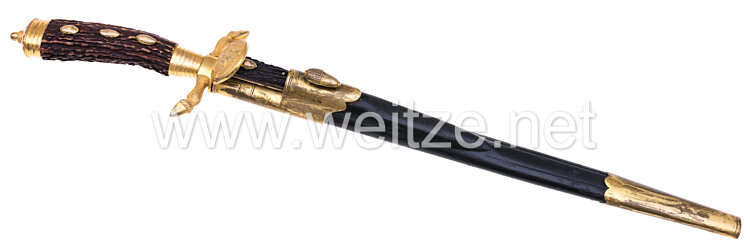
Kaiser Wilhelm II. Geschenk Hirschfänger mit Damastklinge
um 1910. Es handelt bei diesem Hirschfänger um ein persönliches Geschenk von Kaiser Wilhelm II. an einen Gast in seinem privaten Jagdrevier Rominten, Ostpreußen in der Herbstsaison 1910.
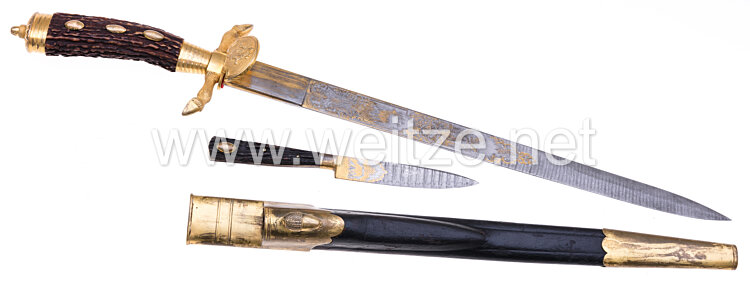
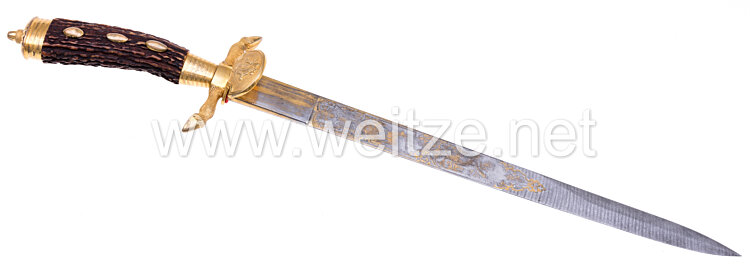
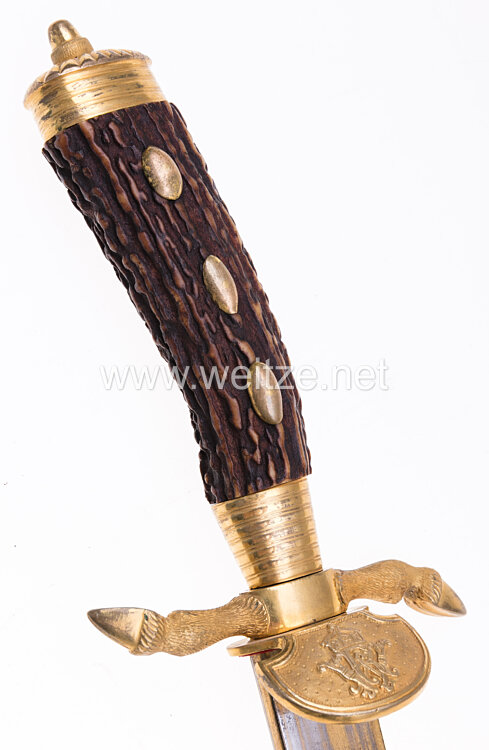
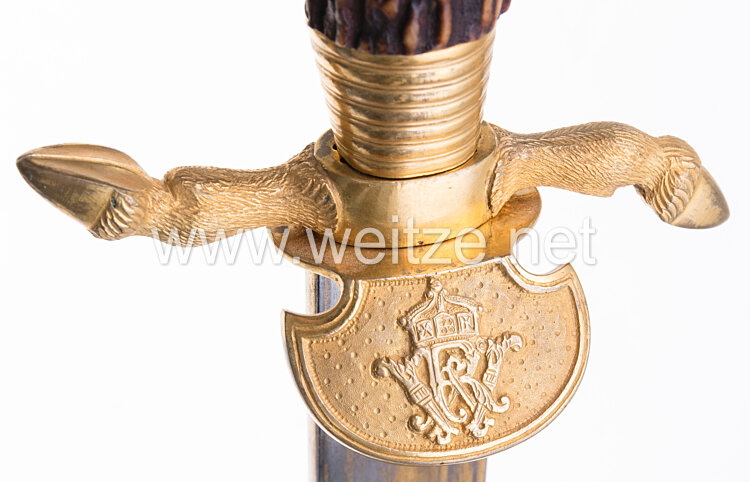
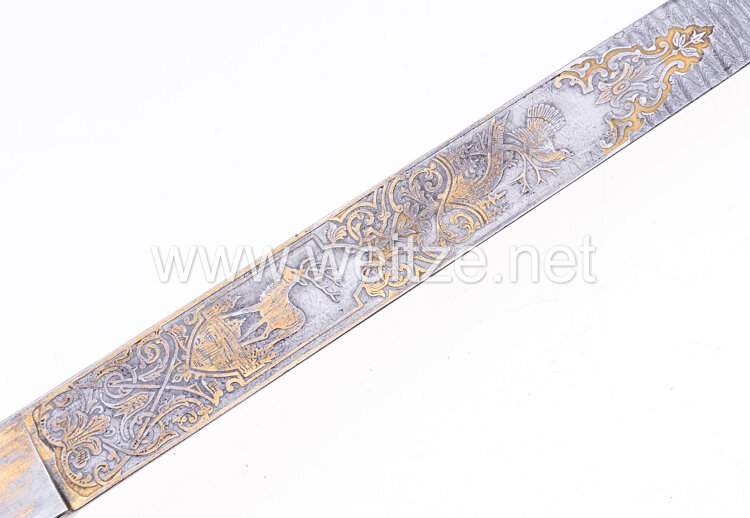
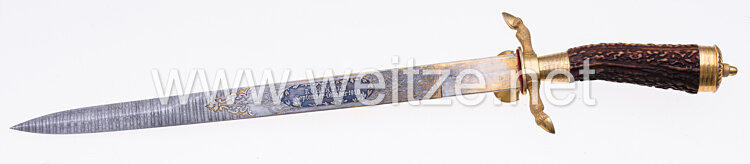
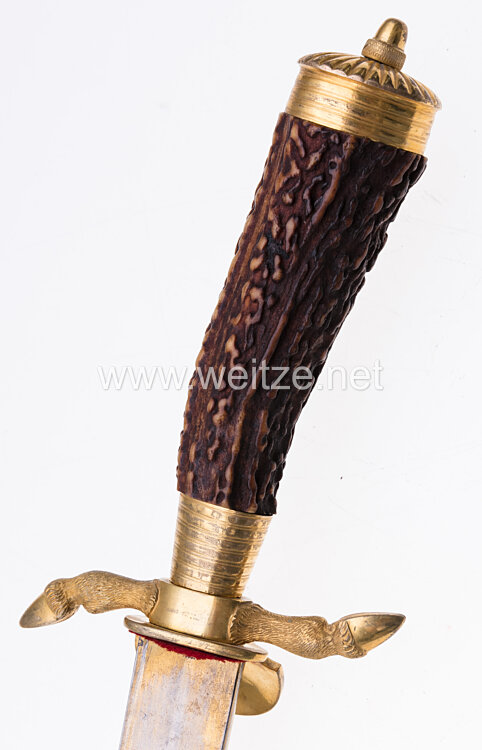
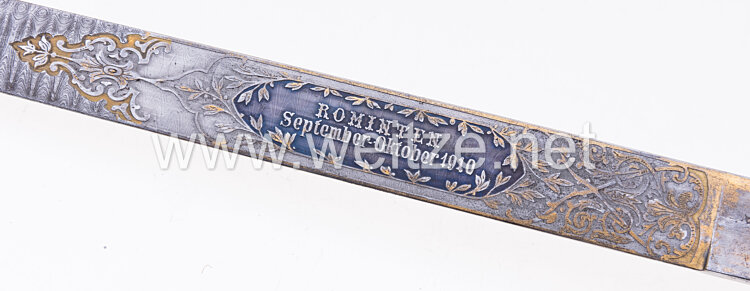
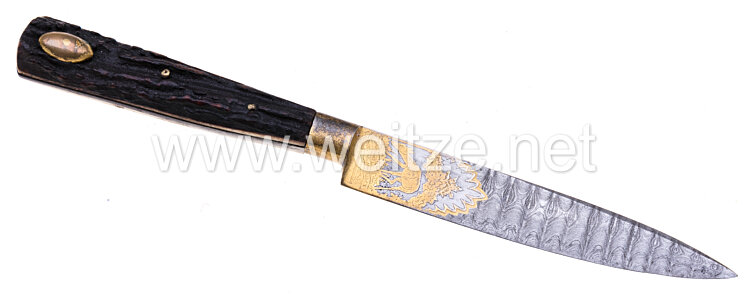
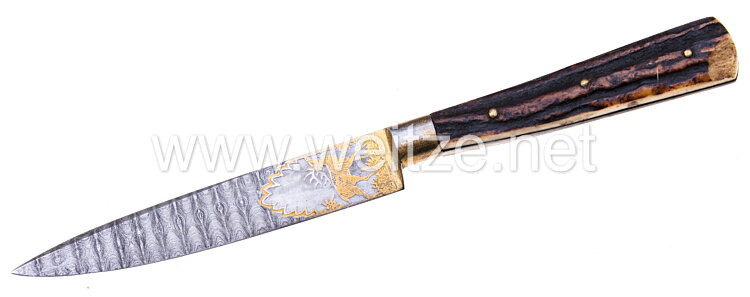
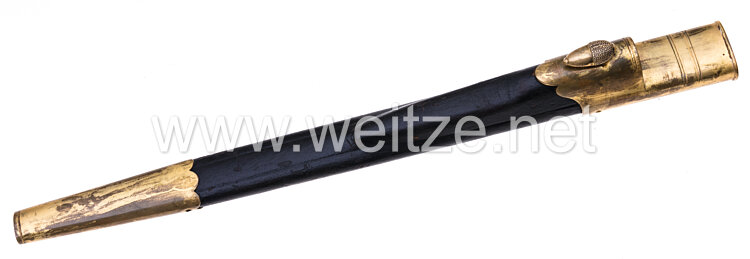
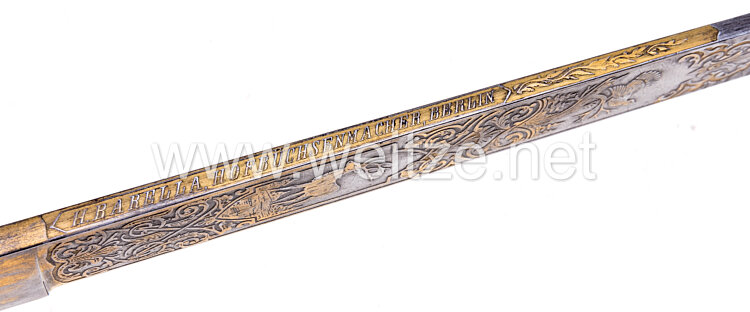
Die Klinge aus feinstem Damaststahl mit beidseitig vergoldeter Zierätzung. Vorderseite mit Auerhahn, Hirsch und Rankenmuster, auf der Rückseite Kartusche mit Widmung "Rominten September-Oktober 1910, der Hintergrund gebläut und vergoldet. Auf dem Klingenrücken mit Lieferanten "H. Barella, Hofbüchsenmacher, Berlin". Die Griffbeschläge aus Buntmetall, per Hand graviert und feuervergoldet. Schwerer Hirschhorngriff mit 3 aufgelegten "Eicheln", die Griffkappe von einer stehenden Eichel bekrönt. Die Parierstange auslaufend in 2 Rehläufe. Auf der Pariermuschel das Kaiserliche Monogramm Kaiserkrone über "WR". Schwarze Lederscheide mit vergoldeten Beschlägen. Das Beimesser passend in der gleichen Ausführung wie der Hirschfänger, die Klinge ebenfalls aus Damaststahl mit beidseitiger vergoldeter Zierätzung. Gesamtlänge 58. Nur leicht getragen in wunderschönem Zustand.
Das Stück ist abgebildet im Fachbuch "Imperial German Edged Weaponry" Vol 3 von Thomas M. Johnson, Seite 213.
Mit Sicherheit einer der schönsten Hirschfänger seiner Zeit und als persönliches Geschenk von Kaiser Wilhelm II. von geschichtlicher Bedeutung !
Die Klinge aus feinstem Damaststahl mit beidseitig vergoldeter Zierätzung. Vorderseite mit Auerhahn, Hirsch und Rankenmuster, auf der Rückseite Kartusche mit Widmung "Rominten September-Oktober 1910, der Hintergrund gebläut und vergoldet. Auf dem Klingenrücken mit Lieferanten "H. Barella, Hofbüchsenmacher, Berlin". Die Griffbeschläge aus Buntmetall, per Hand graviert und feuervergoldet. Schwerer Hirschhorngriff mit 3 aufgelegten "Eicheln", die Griffkappe von einer stehenden Eichel bekrönt. Die Parierstange auslaufend in 2 Rehläufe. Auf der Pariermuschel das Kaiserliche Monogramm Kaiserkrone über "WR". Schwarze Lederscheide mit vergoldeten Beschlägen. Das Beimesser passend in der gleichen Ausführung wie der Hirschfänger, die Klinge ebenfalls aus Damaststahl mit beidseitiger vergoldeter Zierätzung. Gesamtlänge 58. Nur leicht getragen in wunderschönem Zustand.
Das Stück ist abgebildet im Fachbuch "Imperial German Edged Weaponry" Vol 3 von Thomas M. Johnson, Seite 213.
Mit Sicherheit einer der schönsten Hirschfänger seiner Zeit und als persönliches Geschenk von Kaiser Wilhelm II. von geschichtlicher Bedeutung !