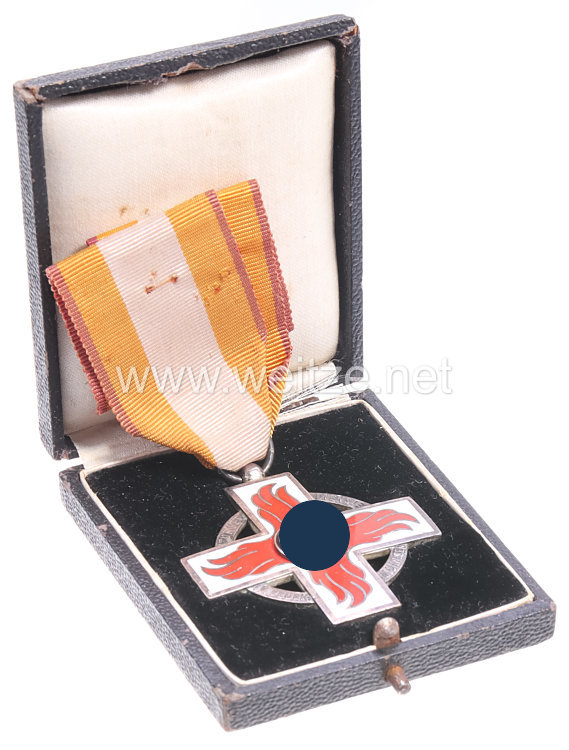
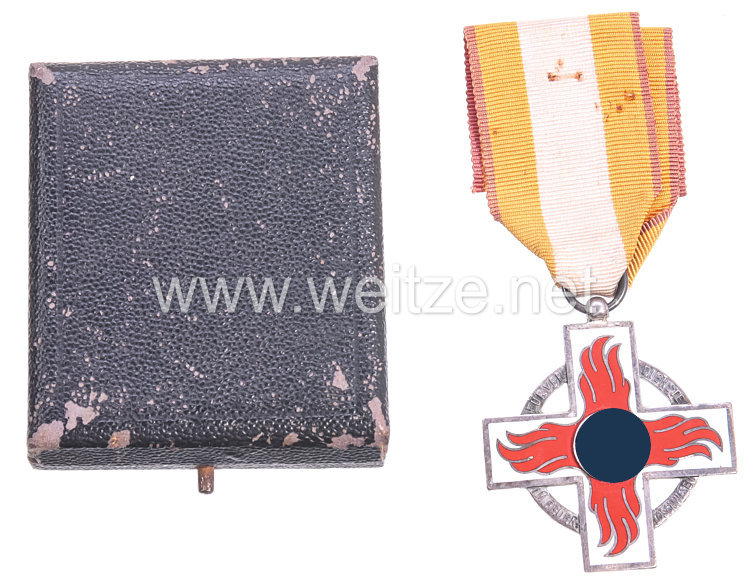
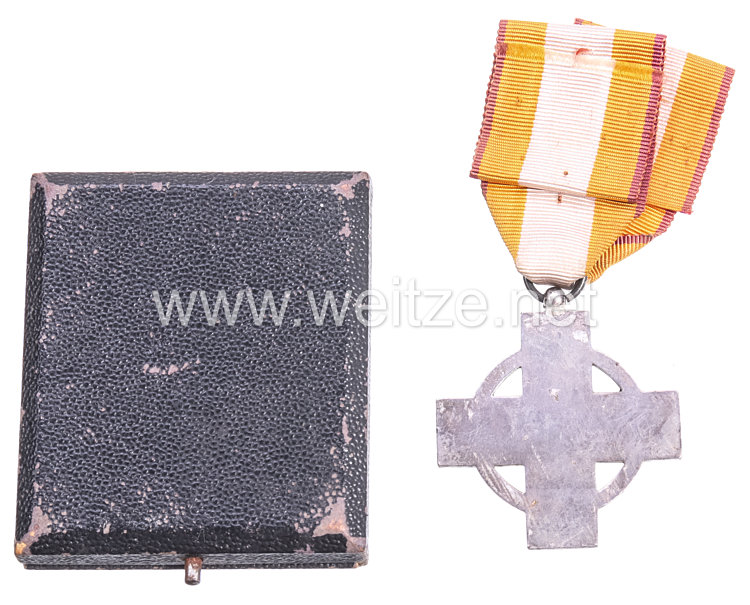
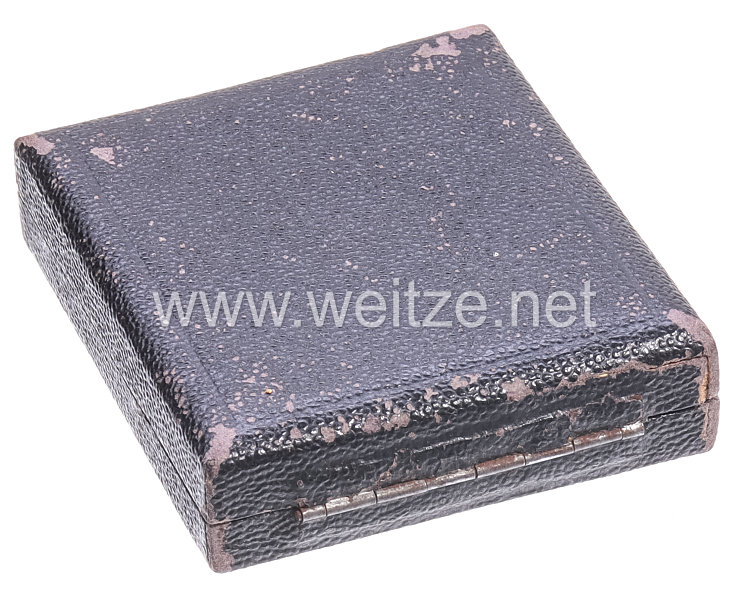
Fire Brigade Honor Badge 2nd Class
Fire Service Honor Badge 2nd Class: Recognition for Bravery and Loyal Service
The Fire Service Honor Badge 2nd Class represents a significant category of military and civilian decorations in the German-speaking regions, serving to honor meritorious members of fire brigades. These badges formed an integral part of the award systems of various German states and later the German Reich.
Historical Context and Development
The systematic decoration of fire service members developed during the 19th century parallel to the professionalization and organization of fire services in the German states. While the earliest fire brigades were organized as civic duties, increasing industrialization and urbanization created the need for well-trained and motivated firefighting forces. The introduction of honor badges served not only to recognize individual achievements but also to foster esprit de corps and ensure long-term retention of qualified members.
Various German states introduced their own fire service honor badges between 1850 and 1900. Prussia, Bavaria, Saxony, Württemberg, and other states each developed their own award systems with different classes and conferment criteria. The second class typically represented a middle tier, awarded after a certain period of service or for special merit.
Materials and Manufacturing
The described specimen exhibits the characteristic manufacturing technique of this period: silver-plated non-precious metal with colored enameling. This combination was typical for second-class decorations, while higher classes were often crafted from more precious materials. The silver plating was usually performed galvanically, a technique that became widespread in the late 19th century and offered a more cost-effective alternative to solid silver.
The enameling required considerable craftsmanship. Colored enamels were fired onto the metal base at temperatures of 750-850 degrees Celsius, with red, white, and black being particularly common colors - often referencing the colors of the respective federal state or the Reich. Manufacturing was carried out by specialized workshops, including renowned firms such as Godet & Sohn in Berlin and various South German medal manufacturers.
Award Criteria and Significance
The conferment of the second class occurred in most German states after a minimum service period of typically 12 to 18 years with simultaneously impeccable service. Alternatively, the decoration could also be awarded for particular bravery during fires or for extraordinary merit in fire service matters. The conferment was usually conducted by the respective sovereign, prime minister, or in municipal fire brigades by the mayor.
The badges were worn with a specific ribbon, whose colors varied according to the state of origin. The ribbon was attached through an eyelet or ring at the upper part of the badge and allowed wearing on the uniform or civilian clothing on special occasions.
The Presentation Case
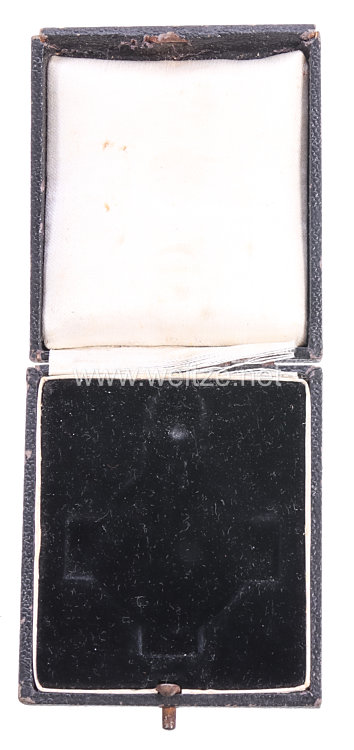
The presence of a presentation case, though slightly damaged, is of considerable historical and collector value. These cases were specially manufactured for the presentation ceremony and were meant to underscore the significance of the decoration. They were typically made of cardboard or wood, lined with velvet or silk, and often bore an embossing or inscription on the lid indicating the type of decoration and sometimes the conferring state.
Collector Value and Historical Importance
Second-class fire service honor badges are today valued collectibles that represent important testimonies of German social and administrative history. They document the high esteem accorded to the fire service as an institution, as well as the development of the German awards system. The condition grade 2 (very good) indicates careful preservation, with only minor signs of wear present.
Preservation with original ribbon and case significantly increases the historical value, as many badges have been separated from their original components over time. For militaria collectors and historians, such objects offer important insights into the decorative culture of the 19th and early 20th centuries, as well as into the social standing of fire brigades during this epoch.
Legacy and Continuation
The tradition of fire service decorations continued through the Weimar Republic and into modern Germany, where federal states still maintain their own systems of fire service honors. These contemporary awards remain directly connected to the historical traditions established in the 19th century, maintaining the principle of recognizing dedication, bravery, and long service in the vital field of fire protection.