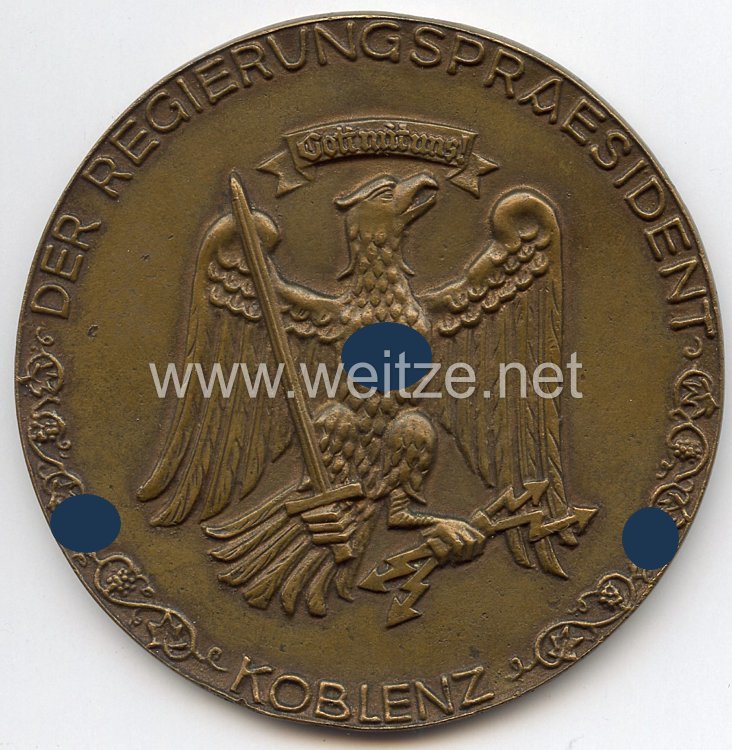
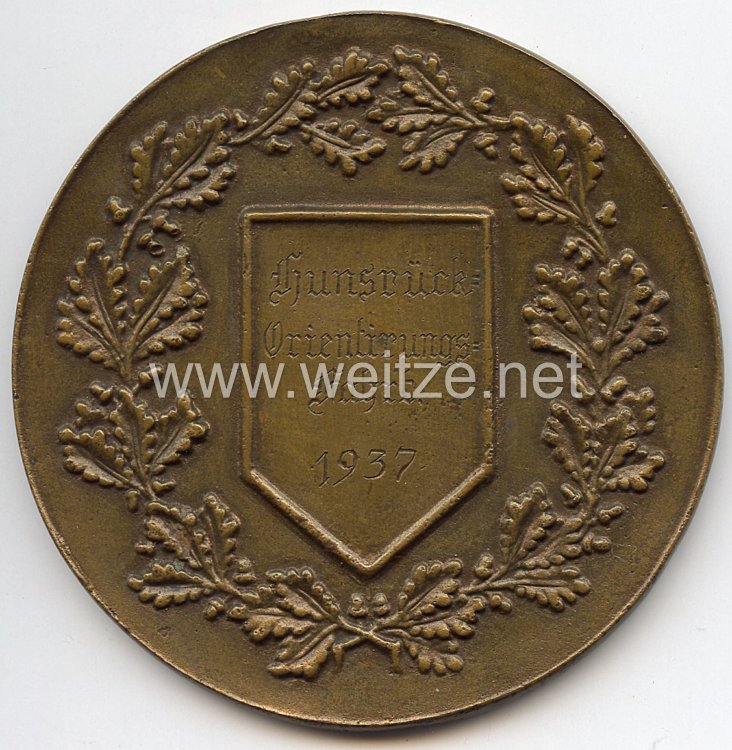
Third Reich - Non-Wearable Participant Plaque "Der Regierungspräsident Koblenz - Hunsrück-Orientierungsfahrt 1937 - Gott mit uns"

Bronze, 92 mm, condition 2.
321959
280,00

Third Reich - Non-Wearable Participant Plaque "Der Regierungspräsident Koblenz - Hunsrück-Orientierungsfahrt 1937 - Gott mit uns"

The Hunsrück Orientation Drive of 1937 was one of many sporting-propaganda events organized during the National Socialist era. This non-wearable participant plaque made of bronze, measuring 92 mm in diameter, documents a regional motorsport event organized by the Government President of Koblenz.

Orientation drives enjoyed great popularity in the 1930s and served multiple purposes simultaneously. On one hand, they promoted the emerging automobile sport and demonstrated the technical capabilities of the German automotive industry. On the other hand, they offered excellent opportunities for displaying National Socialist symbolism and ideology. These events combined sporting challenges with regional patriotism and were intended to strengthen community spirit.

The Government District of Koblenz encompassed large parts of the Rhineland and adjacent areas, including the Hunsrück, a low mountain range region particularly suited for such orientation drives due to its challenging road conditions. Participants had to navigate predetermined routes, reach checkpoints, and demonstrate their driving skills.

The inscription “Gott mit uns” (God with us) on the plaque is noteworthy, as it references a traditional Prussian-German military motto originally used on the belt buckles of the Prussian and later German army. This connection between traditional military elements and civilian sporting events was typical of the Nazi era, which aimed at militarizing society.

Non-wearable plaques of this type were issued as commemorative and award pieces to participants of such events. Unlike wearable medals or ribbon bars, they were intended for display in cabinets or on desks. Their size of 92 mm allowed for detailed representations and extensive inscriptions.

The use of bronze as a material was common for such plaques and represented a compromise between value and production costs. Bronze could be struck well and gave the pieces a dignified appearance, but was less expensive than silver or gold.

The year 1937 marks a phase of intensive National Socialist consolidation. After the Rhineland occupation in 1936 and before the Anschluss of Austria in 1938, the regime used various events to demonstrate its power and mobilize the population. Motorsport events received special attention as they symbolized both Germany's technical modernity and the population's military readiness.

The role of the Government President as organizer underscores the close intertwining between state administration and party organizations in the Nazi state. Government presidents were high-ranking administrative officials who simultaneously functioned as bearers of National Socialist policy in their districts.

Such plaques are today important contemporary historical documents that provide insight into everyday culture and leisure activities during the Third Reich. They show how the Nazi regime instrumentalized even seemingly harmless sporting events for its purposes and charged them with ideological messages.

Collector's items of this type are evaluated today from historical-documentary perspectives. The condition grade 2 indicates a well-preserved specimen that has largely retained its original details. For militaria collectors and historians, such objects are valuable testimonies of a dark epoch in German history that contribute to scholarly examination and historical education.

r