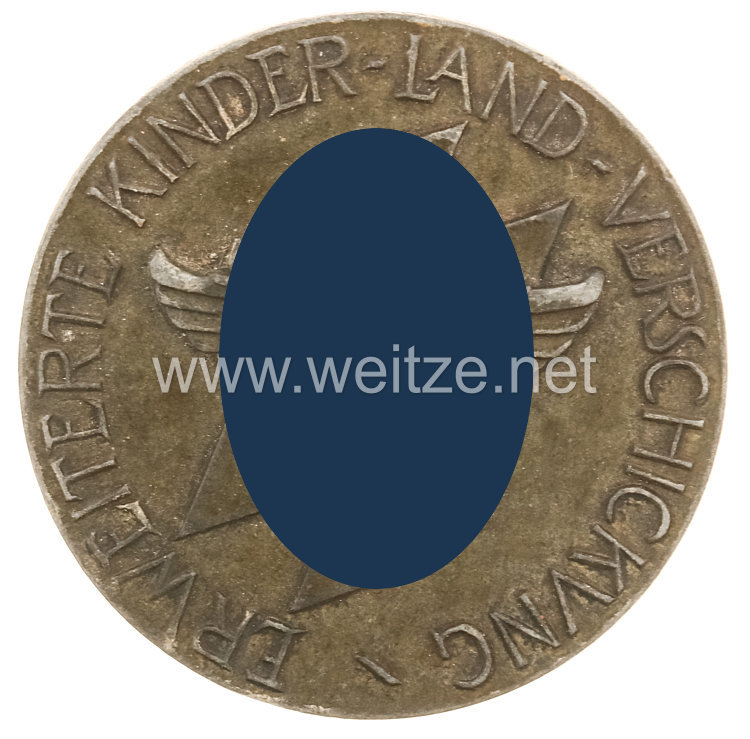
The portable badge of honor for supervisory personnel of the Extended Children's Evacuation Program (Erweiterte Kinder-Land-Verschickung or KLV) of the Hitler Youth represents an extremely rare commemorative piece from the Second World War era. This badge was instituted on December 12, 1942 and was already annulled on April 1, 1943 – an existence of barely four months, making it one of the shortest-lived awards of the Nazi regime.
The Extended Children's Evacuation Program was a wartime measure implemented from 1940 onwards to evacuate children and adolescents from cities threatened by air raids to rural regions. What initially began as a voluntary recreational program developed during the course of the war into a comprehensive evacuation scheme. Millions of children were brought to KLV camps in less endangered areas, mainly in rural regions of the German Reich as well as in occupied territories.
The supervisory personnel of these camps consisted primarily of Hitler Youth leaders and BDM leaders (League of German Girls), as well as teachers who were responsible for the care and education of the evacuated children. The work was physically and psychologically demanding, as the staff often had to provide for the children's sustenance, education, and ideological instruction under difficult conditions.
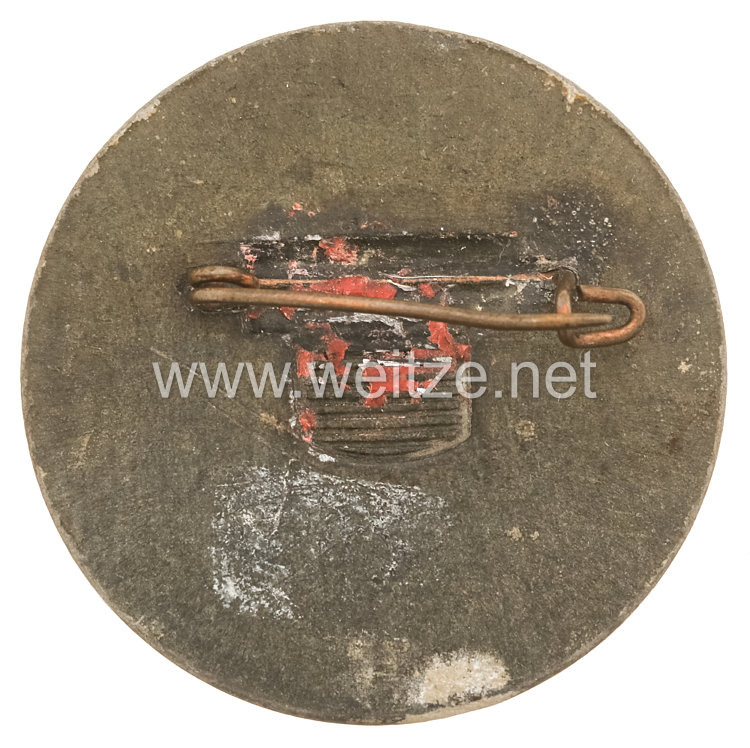
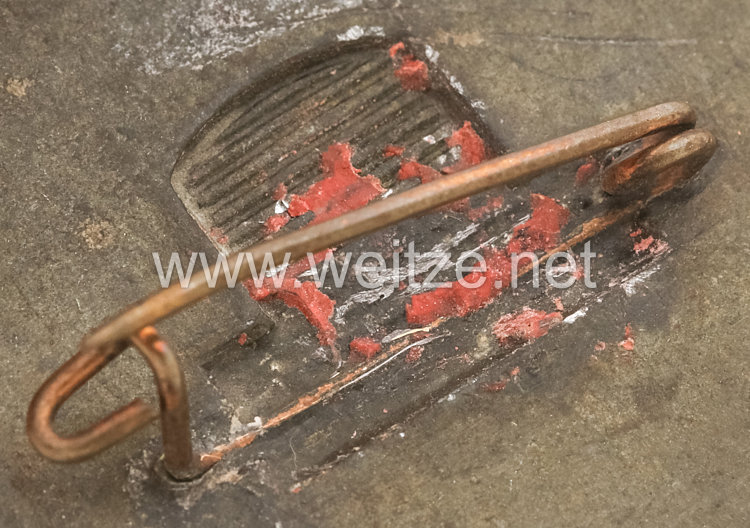
The present badge is a round brooch measuring 38 mm in diameter, manufactured from toned fine zinc. This choice of material was typical for the wartime period, when precious metals were increasingly needed for the armaments industry. Production took place in various facilities, with exact quantities remaining extremely limited due to the short awarding period.
The award regulations stipulated that the badge should be given to young people who had participated in a KLV camp as supervisory personnel for at least four weeks. This relatively short minimum service period was intended to promote motivation and honor the important role of the young supervisors. The rapid annulment of the badge on April 1, 1943, probably occurred for several reasons: on the one hand, the administration of such awards was resource-intensive; on the other hand, the creation of additional badges no longer corresponded to wartime economic priorities.
The rarity of this badge is remarkable. Within the awarding period of only three and a half months, only a few pieces could be manufactured and awarded. This makes the badge one of the rarest HJ-related awards today. Many of the awarded pieces were lost in the chaos of the final war years or were destroyed after the war when Nazi memorabilia was confiscated by the occupying powers.
The preserved specimen shows the typical worn condition, which underlines its authenticity and indicates that it was actually awarded and worn. Badges in unworn condition are even rarer, as the short production period hardly allowed for inventory accumulation.
In historical context, this badge documents a little-known aspect of Nazi youth policy during the war. The KLV was one of the largest evacuation operations in history and affected an estimated two to three million children. The program revealed the ambivalence of Nazi policy: on the one hand, children were to be protected from bombing raids; on the other hand, the KLV offered the opportunity to indoctrinate children more intensively ideologically, away from their parents.
Today, such badges are important testimonies for military historians and collectors who research the organizational structures and award systems of the Third Reich. They document the penetration of all areas of life by Nazi organizations and the instrumentalization of youth for wartime purposes.