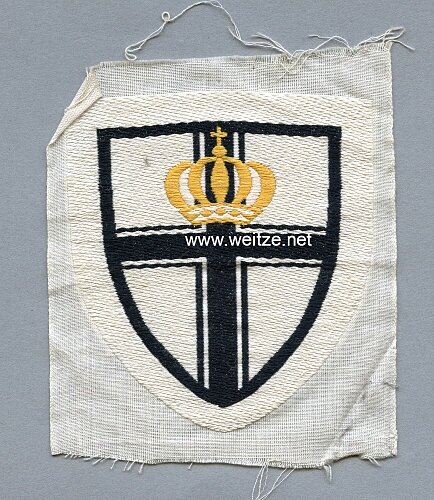
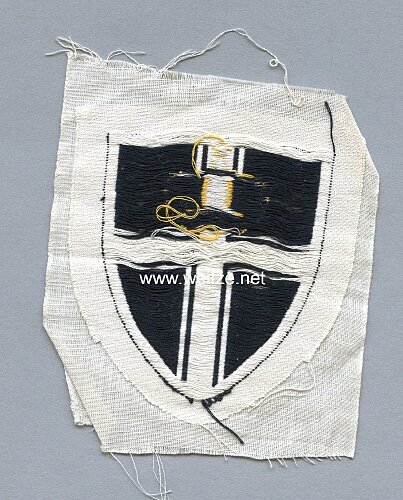
Weimar Republic Sleeve Insignia of the Scharnhorstbund
The sleeve badge of the Scharnhorstbund from the era of the Weimar Republic (1919-1933) represents a fascinating testament to the complex paramilitary landscape of post-war Germany. The Scharnhorstbund, named after the Prussian military reformer Gerhard von Scharnhorst (1755-1813), was one of numerous defense leagues and veterans' organizations that emerged during the turbulent interwar period.
The Weimar Republic was characterized by a multitude of paramilitary organizations originating from various political camps. Following the Treaty of Versailles in 1919, the German Reichswehr was limited to 100,000 men, leading to frustration among many former soldiers and nationally-minded citizens. In this vacuum, numerous defense leagues emerged that understood themselves as guardians of military traditions and national values.
The Scharnhorstbund positioned itself within this landscape as an organization that upheld the memory of Prussian-German military traditions. General von Scharnhorst was a symbolic figure of Prussian military reform following the defeat against Napoleon in 1806 and stood for military renewal and patriotic duty. The choice of this name signaled the claim to exercise a similar renewal function during difficult times.
The present sleeve badge in woven execution displays typical characteristics of textile manufacturing from the 1920s. The mentioned high-set crown references monarchist symbolism that was deliberately cultivated in many defense leagues of the Weimar Republic. These organizations were frequently skeptical to hostile toward the republican form of government and consciously maintained the traditions of the Imperial era.
The production of such badges typically occurred in specialized textile manufactories that focused on military accoutrements. The weaving technique enabled permanent and detailed representation of symbols. The unworn condition of the present specimen suggests that it was either never issued or kept as a reserve badge.
In the context of the Weimar Republic, such organizations and their badges played an ambivalent role. On one hand, they offered former soldiers comradeship and social integration; on the other hand, many of these associations contributed to the destabilization of democratic order. The Black Reichswehr and illegal weapons caches were often connected with such organizations.
The legal situation of these defense leagues was complex. While some operated legally as registered associations, others moved in legal gray zones. The Reich government repeatedly attempted to control the activities of paramilitary groups but often had only limited success due to the federal structure and weak executive power.
Wearing such badges was more than just external identification. It was a political statement and a commitment to certain value systems. Members of these organizations often understood themselves as guardians of German virtues and military honor in a time they perceived as decadent and alienated from national values.
With the Nazi seizure of power in 1933, the era of independent defense leagues largely ended. Many were incorporated into NS organizations or dissolved. The Gleichschaltung (coordination) also affected veterans' associations and paramilitary groups, which were either assigned to SA, SS, or other NS structures, or banned.
From today's perspective, such badges are important historical sources for understanding the Weimar Republic. They document the fragmented society, the longing for military strength, and the rejection of democratic values by significant portions of the population. For collectors and historians, they offer insights into organizational structures, symbolic worlds, and political orientations of the interwar period.
These artifacts remind us of a critical period in German history when democratic institutions struggled against antidemocratic forces. The Scharnhorstbund and similar organizations were products of their time—shaped by the trauma of defeat in World War I, the perceived humiliation of Versailles, and uncertainty about Germany's future direction.