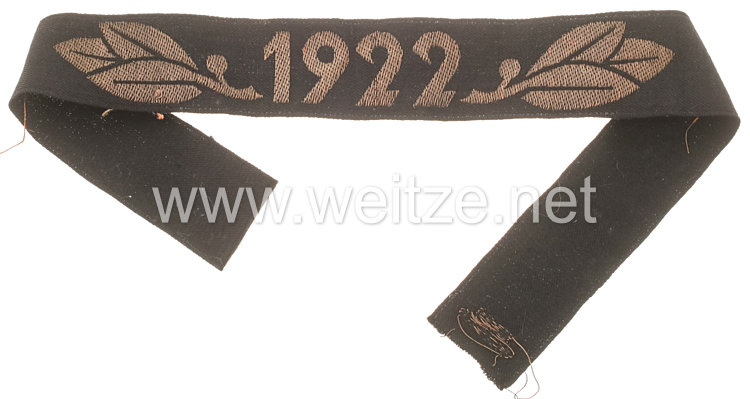
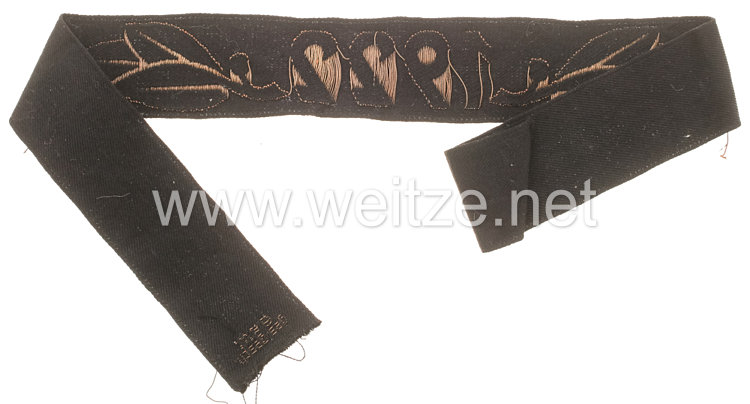
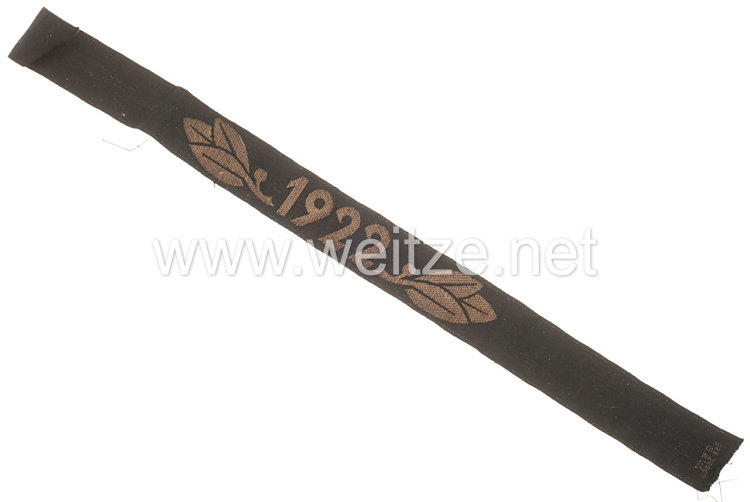
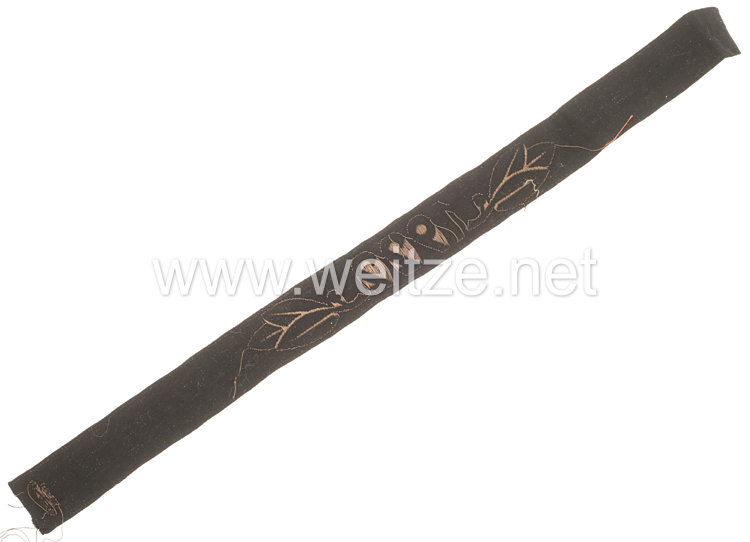
TeNo Traditions Cuff Title "1922"

Metal thread woven construction, gold on black base. Full length, lightly worn, in good condition. Very rare.
372156
400,00

TeNo Traditions Cuff Title "1922"

The Traditions-Ärmelband "1922" (Traditions Armband) of the Technische Nothilfe (TeNo) represents a significant commemorative piece from the history of this paramilitary auxiliary organization of the Weimar Republic and Third Reich. This metal-thread woven execution in gold on black background embodies the connection to the organization's formative year and was worn by members who wished to demonstrate a special historical continuity with the early period of the TeNo.

The Technische Nothilfe (Technical Emergency Service) was founded on September 30, 1919 by decree of Reich Defense Minister Gustav Noske, however the year 1922 refers to important organizational restructuring and the consolidation of the TeNo as an independent institution. In this year, the organization was transferred from direct military control to a civilian structure under the Reich Ministry of the Interior, which solidified its role as a technical aid organization for disaster relief and the maintenance of vital infrastructure.

The armband itself represents the tradition cultivation within the TeNo, which placed great value on the continuity of its history. The use of gold metal thread on black background corresponds to the typical coloring of many armbands of this era and simultaneously symbolizes quality and membership in an elite unit. The craftsmanship of metal-thread weaving indicates high-quality manufacture, typical of official decorations and badges of this period.

The TeNo played a controversial role during the Weimar Republic. Originally conceived as a strike-breaking organization during the revolutionary post-war period, it developed into a technical aid organization with a broad range of tasks. Its members were deployed during floods, technical disasters, and other emergencies. The organization had specialized departments for electricity, water supply, gas, and other technical infrastructure areas.

After the seizure of power in 1933, the TeNo was integrated into the National Socialist system of rule. Under the leadership of Adolf Freiherr von Oven, the organization was militarized and received expanded powers. The wearing of traditions armbands like the present one with the year 1922 served to emphasize a supposedly apolitical technical tradition, although the organization became increasingly integrated into the NS system.

The uniform regulations of the TeNo provided for various armbands to be worn on the right upper arm. Traditions armbands were reserved for special members who could demonstrate long-standing membership or special merits. The metal-thread execution was higher quality than the simpler, machine-embroidered variants and was often privately procured.

During World War II, the TeNo was massively expanded and involved in war-essential tasks. It was responsible for maintaining infrastructure in bombed cities, carried out repair work, and helped clear bomb damage. The organization grew to over 100,000 members and had specialized units for various technical areas.

After the end of the war in 1945, the TeNo was dissolved by the Allies. In the Federal Republic of Germany, its tasks were partially taken over by the Technisches Hilfswerk (THW), founded in 1950. The traditions of the TeNo were deliberately not continued in order to create a clear demarcation from the NS past.

From a collector's perspective, TeNo armbands, particularly traditions versions with dates, are rare and sought after today. The present metal-thread execution in good condition with full length is particularly valuable, as many of these pieces were lost during the war or destroyed after 1945. Today they serve as important historical documents of a complex organization that both provided civilian disaster relief and was integrated into the National Socialist system of rule.

The scholarly examination of such objects requires a differentiated engagement with their history, which neither ignores the technical achievements of the organization nor conceals its integration into the NS system.

r