Wehrmacht Heer Officer's Saber - Model “Höller 21”

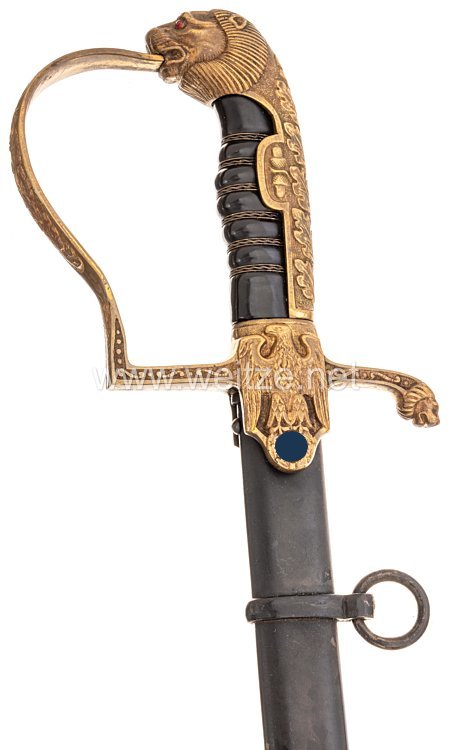
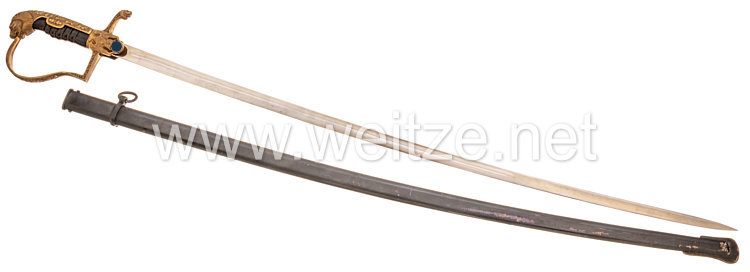
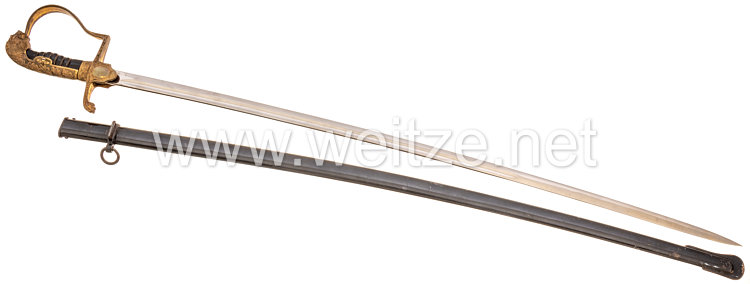
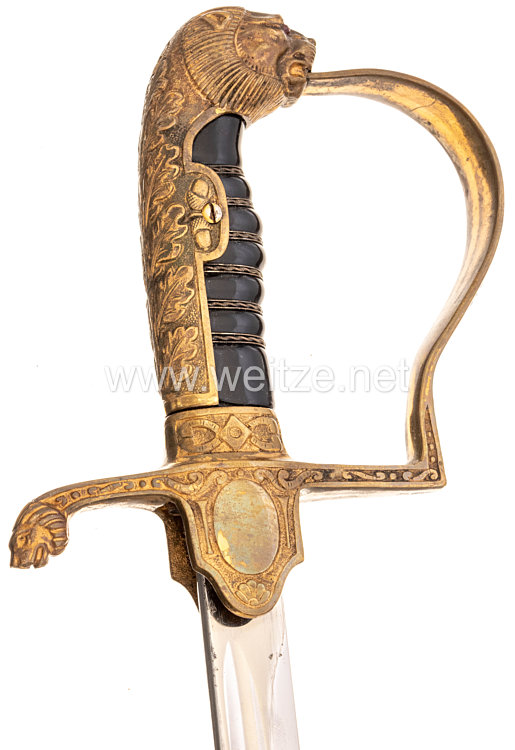
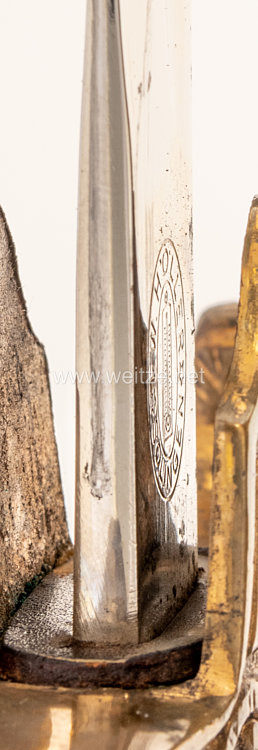
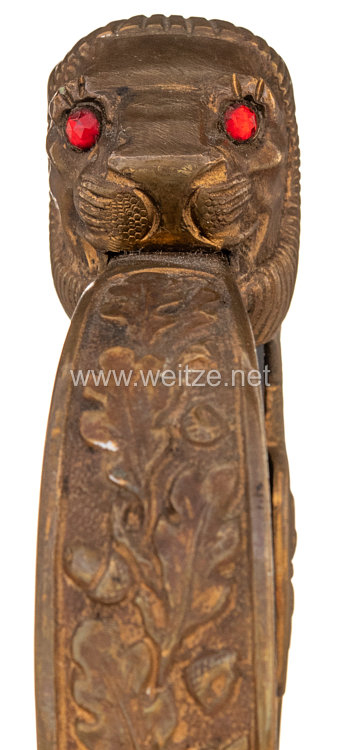
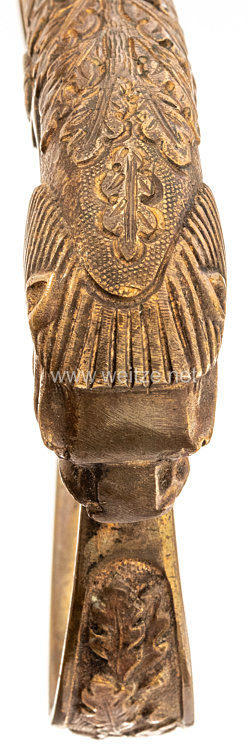
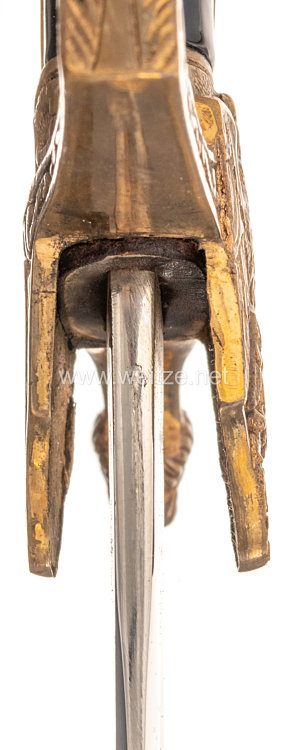
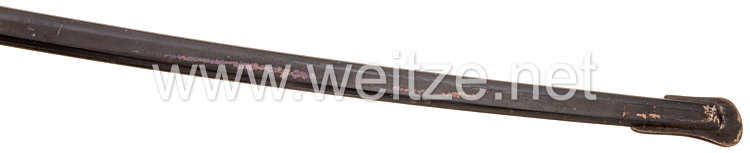
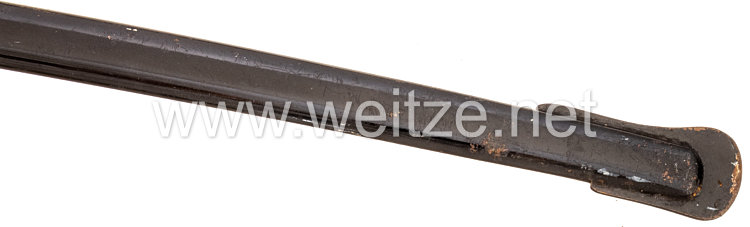
Gilt brass hilt with embossed oak leaf decoration, lion's head pommel with red glass eyes. On the crossguard, the national eagle with drooping wings in particularly large execution, black plastic grip with intact wire wrapping. Bright nickel-plated blade with maker “F.W. Höller Solingen”. The black scabbard retains approximately 85% of original finish. Lightly worn, condition 2. Overall length 97 cm.
441155
2.200,00

Wehrmacht Heer Officer's Saber - Model “Höller 21”

The Wehrmacht Heer officer's sabre, here represented by the “Höller 21” model, exemplifies a significant aspect of military equipment and uniform culture in the German Reich between 1935 and 1945. These edged weapons did not serve as practical combat arms but rather as status symbols and parade weapons for Army officers.

The legal foundation for introducing these sabres was established by the Army Regulation of March 6, 1935, issued after the reintroduction of general conscription and the official establishment of the Wehrmacht. The officer's sabre was part of the full dress uniform and worn during ceremonial occasions, parades, and official receptions. Regulations stipulated that officers from the rank of lieutenant upward were authorized to carry this sabre.

This specimen originates from the renowned Solingen manufacturer F.W. Höller, a firm with a long tradition in blade production. Solingen had established itself as the center of German cutlery industry since the Middle Ages, and companies such as Höller, Eickhorn, WKC, and Carl Eickhorn were among the principal suppliers of military edged weapons to the Wehrmacht. The designation “Model 21” refers to a specific variant in the manufacturer's product range.

The gilt brass hilt displays the typical oak leaf decoration, which had been used in German military tradition since the 19th century as a symbol of strength, steadfastness, and loyalty. Particularly characteristic is the leopard head with red glass eyes on the pommel - a design element that traces back to medieval precedents and was also used on officer sabres of the Imperial Army. The leopard symbolized courage and fighting prowess.

A distinctive feature of this sabre is the national eagle with drooping wings mounted on the crossguard, representing the Wehrmacht's national emblem. The particularly large execution indicates high-quality manufacture. The eagle held a swastika within an oak wreath in its talons - the state symbol of National Socialist Germany. This iconography was mandatory on all Wehrmacht sabres from 1935 onward.

The black plastic grip with intact wire wrapping corresponds to the standard execution of Wehrmacht officer sabres. The wire wrapping, traditionally made of silver-plated or gilt wire, served not only decorative purposes but also provided a non-slip grip. The use of plastic instead of traditional materials such as fishskin or wood was a practical adaptation to modern manufacturing methods and material availability.

The bright nickel-plated blade exhibits the typical craftsmanship of Solingen quality work. Unlike etched or decorated blades common among higher officer ranks, the bright execution shows a simpler yet by no means inferior quality. The manufacturer's marking “F.W. Höller Solingen” was typically applied to the blade forte or the blade itself, guaranteeing origin from an established manufactory.

The black lacquered scabbard with approximately 85% original finish preserved is remarkably well-maintained. Scabbards were typically manufactured from sheet steel and lacquered black, fitted with nickel-plated or gilt mounts. The mounts served for attachment to the uniform by means of carrying rings and straps. The high degree of finish preservation indicates careful storage and limited actual use.

The overall length of 97 cm corresponds to the regular dimensions for Army officer sabres as specified in equipment regulations. This standardized length differed from the shorter naval sabres or the longer cavalry sabres of earlier epochs.

Historically, these sabres stand at the end of a centuries-old tradition of military edged weapons. While sabres remained genuine combat weapons into the 19th century, they retained only ceremonial significance in the age of modern warfare. After 1945, production of these weapons ceased, and preserved specimens became part of military historical collections.

The condition rating “Condition 2” and the description “lightly worn” indicate that this sabre was actually used in service but remained well-maintained. Such pieces are today important testimonies to military history and uniform studies, providing insight into craftsmanship, military tradition, and historical iconography.