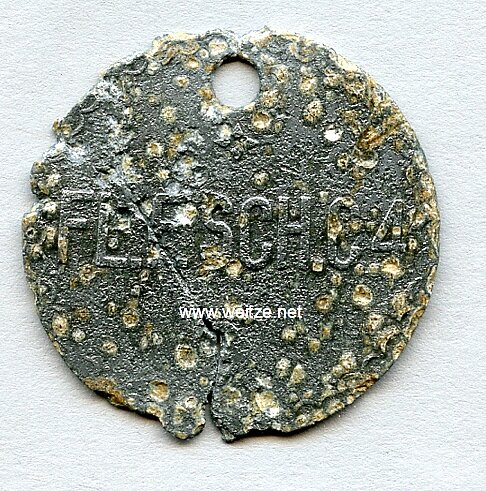
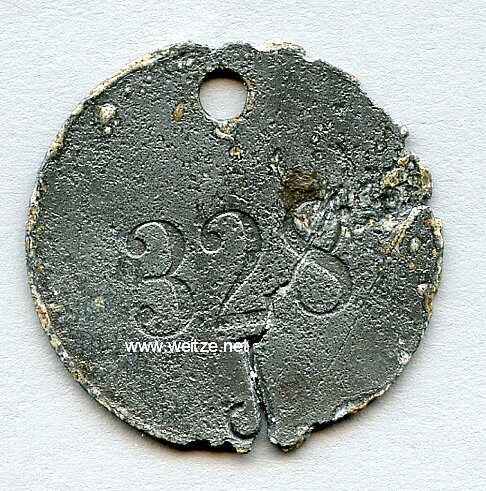
Luftwaffe Badge "Flugzeugführerschule C 4"

Fine zinc, serial number 220F, condition 4
156255
10,00

Luftwaffe Badge "Flugzeugführerschule C 4"

This Luftwaffe identification tag from Flugzeugführerschule C 4 represents a fascinating artifact of German Air Force training during World War II. Made of fine zinc and bearing the serial number 220F, this identification marker documents the complex organizational structure of the Wehrmacht's military flight training system between 1935 and 1945.

The Luftwaffe's Flugzeugführerschulen (pilot training schools) formed the backbone of pilot training in National Socialist Germany. Following the official establishment of the Luftwaffe in 1935, which clearly violated the provisions of the Treaty of Versailles, a comprehensive training system had to be established. The various pilot training schools were categorized by letters, with the designation “C” indicating an advanced training level.

The Luftwaffe's training system was hierarchically structured: A-schools provided basic training, B-schools offered advanced basic training, and C-schools served for specialization and advanced training. C-schools typically focused on specific aircraft types, tactical procedures, or special operational methods such as night flying, instrument flying, or combat operations.

These identification tags served several important functions: they were used for unambiguous personnel identification, access control at military installations, and administration within the complex training system. The serial number enabled precise assignment of the bearer to their training unit and training year. The material fine zinc was a pragmatic choice during the war years, as more valuable metals such as brass or bronze were increasingly needed for war-essential purposes.

The numerical addition “4” in the designation indicates that multiple C-schools existed, which were numbered sequentially. The exact geographical location of individual schools was subject to frequent changes, as training facilities were relocated, dissolved, or newly formed during the course of the war. Many of these schools were initially established in Germany but later moved to occupied territories or into the Reich interior to protect them from Allied air raids.

The training course at a C-school typically comprised several months of intensive training. Flight students had to demonstrate their skills in navigation, aerial combat, formation flying, and specific operational tactics. As the war progressed, however, training time was increasingly shortened, as the dramatic loss of experienced pilots on all fronts required rapid replacement.

The quality and condition of such tags vary considerably. The condition grade 4 indicated here suggests, according to common collector evaluations, an object with significant signs of use but still retaining all essential features. Such authentic wear marks lend historical authenticity to the object and document real operational conditions.

From a military-historical perspective, these tags document the enormous logistical challenge of training thousands of pilots under wartime conditions. The Luftwaffe trained an estimated over 100,000 pilots during World War II, with the loss rate increasing dramatically especially from 1943 onward. The pilot training schools increasingly struggled with fuel shortages, inadequate equipment, and threats from Allied bombing raids.

For collectors and historians, such objects offer valuable insights into the organizational structure and daily life of Luftwaffe training. They complement archival sources and personal accounts, helping to paint a more complete picture of this historical period. The scholarly examination of these objects contributes to understanding the military structures of the Third Reich without glorifying its ideology.

These identification tags also reflect the material constraints of the later war years. The use of zinc instead of more durable metals demonstrates the resource scarcity that increasingly affected all aspects of German military operations. Each such artifact tells a story not only of individual service but also of the broader economic and military challenges facing Nazi Germany as the war progressed.

r