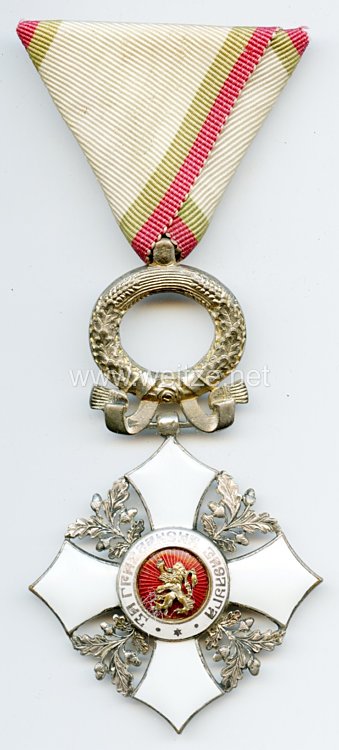
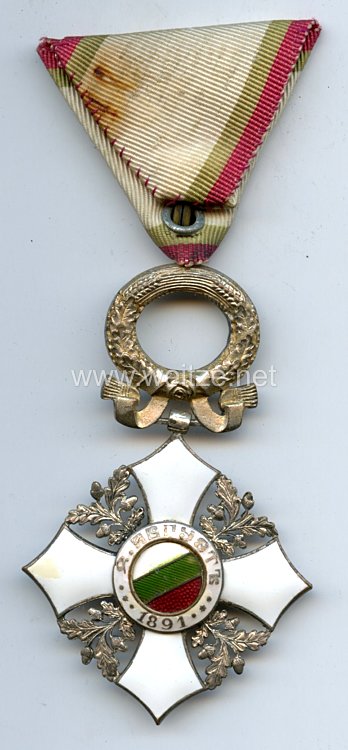
Bulgaria Civil Order of Merit Model (1944-1946) 5th Class with Oak Leaf Wreath

Cross silver-plated and enameled, the medallion with enameled national colors, on triangular ribbon, condition 2.
356755
220,00

Bulgaria Civil Order of Merit Model (1944-1946) 5th Class with Oak Leaf Wreath

The Bulgarian Order of Civil Merit represents a significant decoration in the history of Bulgarian honors. This example of the 5th Class with Oak Leaf Wreath dates from the brief but historically significant period between 1944 and 1946, a transitional era in Bulgarian history between monarchical rule and communist takeover.

The origins of the Order of Civil Merit trace back to the monarchy under Tsar Boris III, but the specific model from 1944-1946 represents a unique phase. Following Boris III's death in August 1943 and the subsequent political upheaval, Bulgaria underwent dramatic changes. In September 1944, the communist coup led to the seizure of power by the Fatherland Front, initiating the end of the monarchy.

The decoration itself displays the classic design of Bulgarian awards from this epoch. The silver-plated and enameled cross exhibits the characteristic craftsmanship that Bulgarian order manufacturers practiced during this period. The central medallion with enameled national colors - white, green, and red - symbolizes Bulgaria's national identity. These colors had their roots in the Bulgarian liberation movement of the 19th century and remained an important national symbol even during the transitional period.

The oak leaf wreath as an additional element to the 5th Class indicates a special category of award. In many European order systems, oak leaves traditionally symbolized bravery, strength, and steadfastness. The use of this motif on a civil decoration underscores the particular significance of the merits being honored.

The 5th Class represented a middle rank in the hierarchical structure of Bulgarian orders. The Bulgarian order system followed the multi-tiered structure common in Europe, with the higher classes (1st and 2nd) usually reserved for high-ranking dignitaries, while the 5th Class could be awarded to a broader stratum of deserving individuals. The triangular ribbon on which the decoration was worn conformed to the award regulations for this order class.

The period 1944-1946 was of enormous significance for Bulgaria. The country was in transition from World War II to the postwar order. After September 9, 1944, Bulgaria switched sides and fought against Germany. This dramatic reversal had far-reaching consequences for Bulgarian society and state structure. Despite these upheavals, the traditional order system was initially maintained, albeit with modifications.

The awarding of the Order of Civil Merit during this period recognized various services to the Bulgarian state. Unlike military decorations, this order honored achievements in administration, culture, economy, and public service. During the turbulent transitional period of 1944-1946, such decorations were often awarded to individuals who contributed to building the new order or who rendered special services during the difficult postwar situation.

The craftsmanship quality of the piece - silver-plated and enameled - corresponds to the standards of Bulgarian order production of the period. The enamel technique, especially for the national colors in the medallion, required specialized craftsmen and was carried out in state or state-authorized workshops. The condition grade “2” indicates a well-preserved example with minor signs of wear.

After 1946, the monarchist order system was gradually replaced by new, communist decorations. The People's Republic of Bulgaria, proclaimed on September 15, 1946, created its own orders and badges of honor that corresponded to socialist ideology. This ended the awarding of traditional orders such as the Order of Civil Merit, making pieces from the transitional period 1944-1946 historically interesting testimonies.

Today, such decorations are important collectibles and historical documents. They represent not only Bulgarian orders and phalерistics but also a decisive epoch in European history. For collectors and historians, they offer insights into material culture, political structures, and the continuities and ruptures in 20th-century Bulgarian history.

r