NPEA Dagger for Course Participants

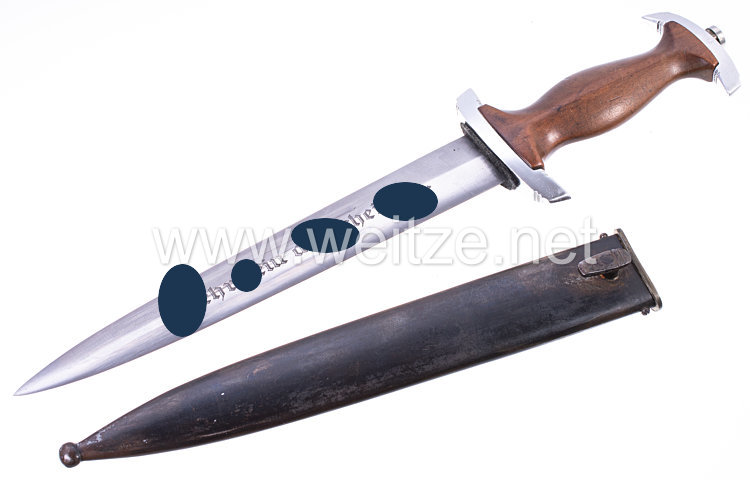
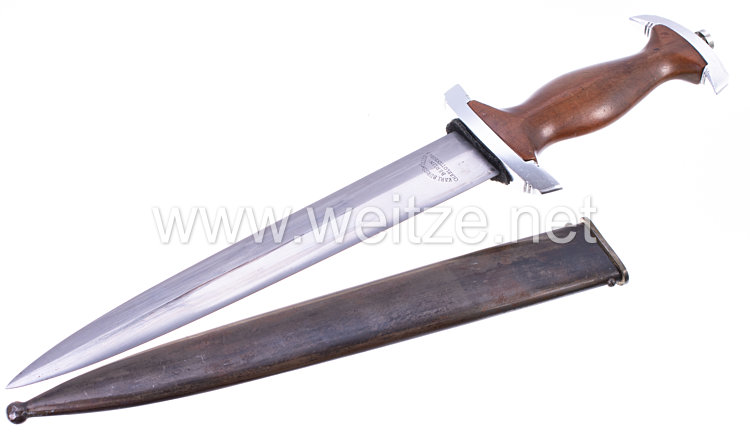
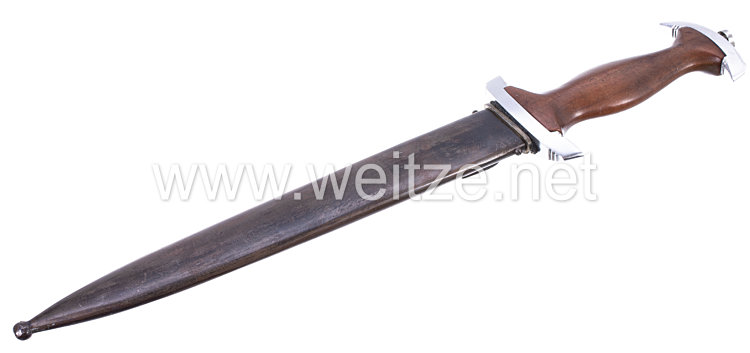
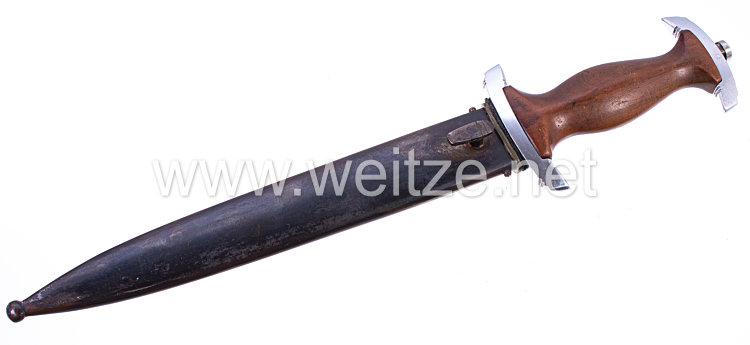
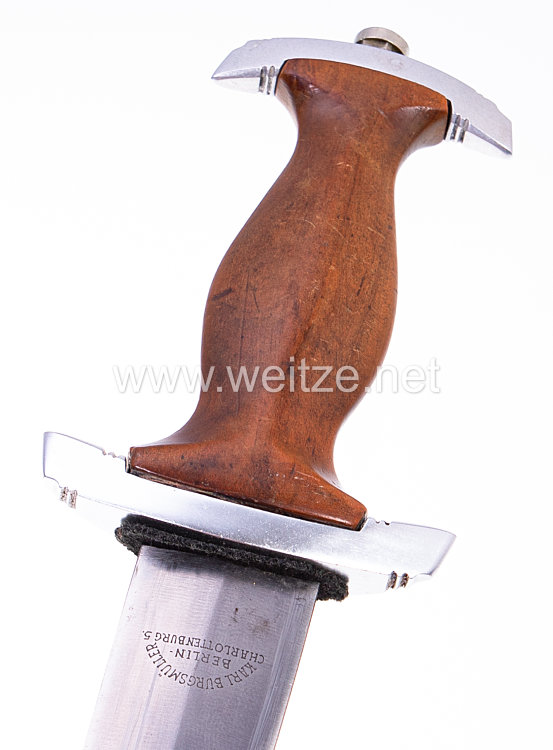
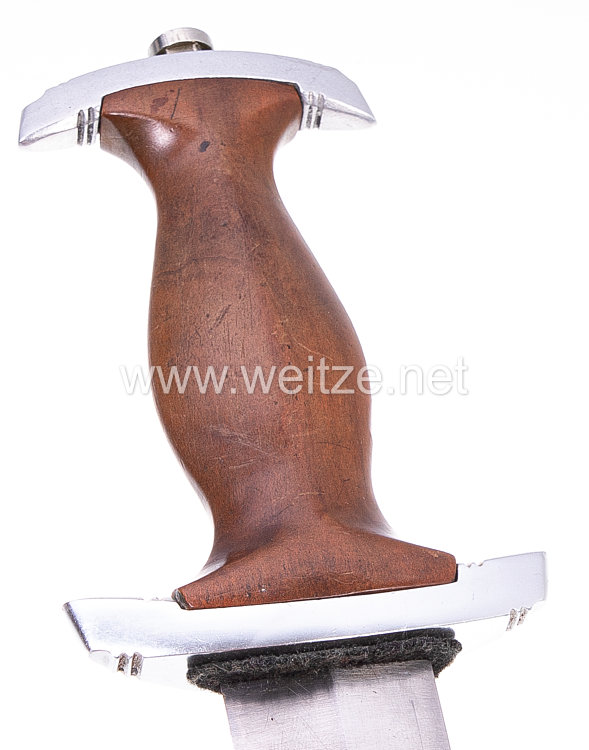
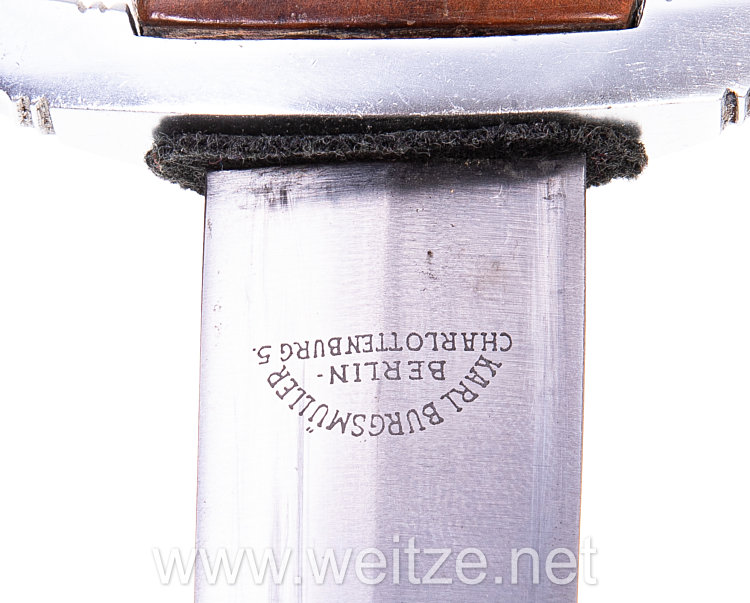
Clean blade with motto “Mehr sein als scheinen” (To be more than to seem) and maker's or supplier's mark “Karl Burgsmüller, Berlin-Charlottenburg 5.”, the pommel and crossguard made of aluminum, brown wooden grip is undamaged, blued scabbard is dent-free, the underside of the suspension hook marked with “753”. Worn but still well-preserved NPEA dagger. Condition 2
390354
5.000,00

NPEA Dagger for Course Participants

The NPEA dagger for instructional participants represents a fascinating testimony to National Socialist educational policy and embodies the ideological penetration of the German education system between 1933 and 1945. The Nationalpolitische Erziehungsanstalten (NPEA), also known as Napolas, were elite schools of the NS regime specifically designed to cultivate the National Socialist leadership cadre.

The NPEA were initially founded in 1933 in Prussia under the direction of Prussian Minister President Hermann Göring and later expanded throughout the Reich. By 1945, approximately 40 such institutions existed throughout the German Reich and occupied territories. These schools combined strictly military education with classical learning and intensive physical training. Admission was selective and intended to unite the “racially valuable” and physically as well as mentally most capable boys of the Reich.

The present dagger bears the motto “Mehr sein als scheinen” (To be more than to seem), which traces back to the Prussian motto “Esse quam videri.” This Latin phrase, already used by Queen Louise of Prussia, emphasized the values of authenticity, inner strength, and modesty over outward appearance. The adoption of this traditional Prussian maxim by the NPEA demonstrates the NS regime's deliberate connection to Prussian virtues and military traditions to legitimize its own rule.

The manufacturer Karl Burgsmüller from Berlin-Charlottenburg was one of several authorized suppliers for NPEA edged weapons. The company belonged to the established Solingen and Berlin manufacturers who received official contracts for daggers, sabers, and other ceremonial weapons during the NS period. The marking with the manufacturer's name corresponds to the then-valid regulations for edged weapons, which required clear identification of producer and supplier.

The construction of the dagger follows a standardized pattern: The pommel and crossguard made of aluminum were typical for NPEA daggers and deliberately differed from other NS organization daggers such as those of the SA, SS, or NSKK, which often featured different materials and designs. The brown wooden grip was likewise characteristic and intended to convey both functionality and a certain simplicity that matched the propagated values of the institutions.

The blued scabbard with its dark surface treatment served not only aesthetic purposes but also practical corrosion protection. The suspension hook with the number “753” suggests an individual inventory system. Such numbering could refer to the respective institution, grade level, or personal allocation, with the exact systems varying by establishment.

The awarding of daggers to NPEA students was part of a comprehensive system of symbols and rituals designed to promote identification with the institution and its values. The dagger was typically worn on special occasions, such as ceremonies, parades, or official events. It symbolized the special status of NPEA students as the future elite of the Reich and was intended to convey pride, honor, and sense of responsibility.

After 1945, the NPEA were dissolved, and their symbols, including the daggers, fell under Allied denazification regulations. Many of these objects were destroyed or confiscated by the occupation forces. The preserved examples are today historical documents providing insight into the ideological educational practices of the NS regime.

From today's perspective, NPEA daggers are significant military-historical objects documenting the instrumentalization of youth and education for totalitarian purposes. They serve as reminders of a dark chapter in German history when even educational institutions were completely placed in the service of an inhumane ideology. The scholarly examination of such objects is important for historical understanding and the processing of this era, whereby the contextual and pedagogical framework must always be considered.

r