Brunswick Officer's Saber for Members of the Jäger Battalion in Infantry Regiment No. 92 (III. Battalion)

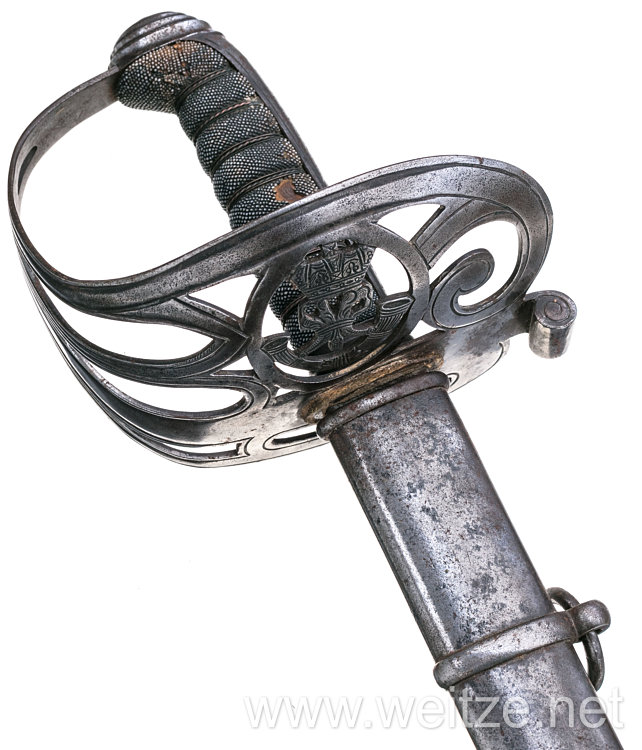
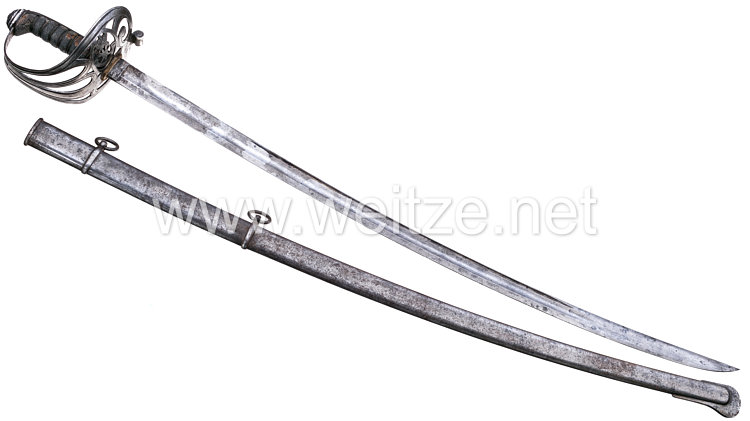
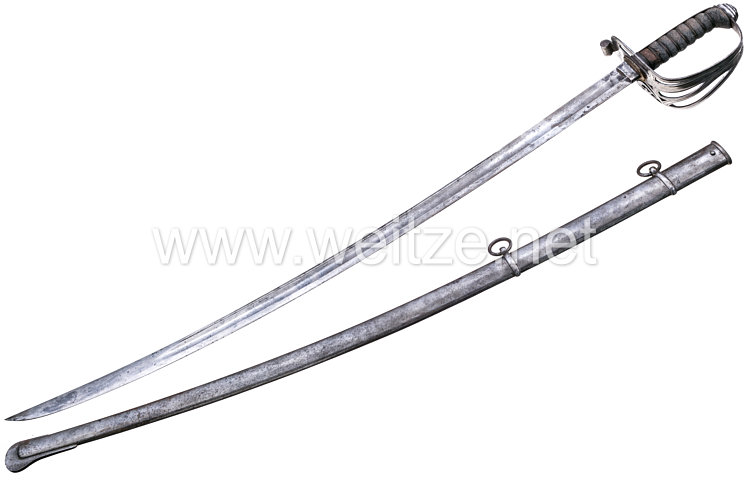
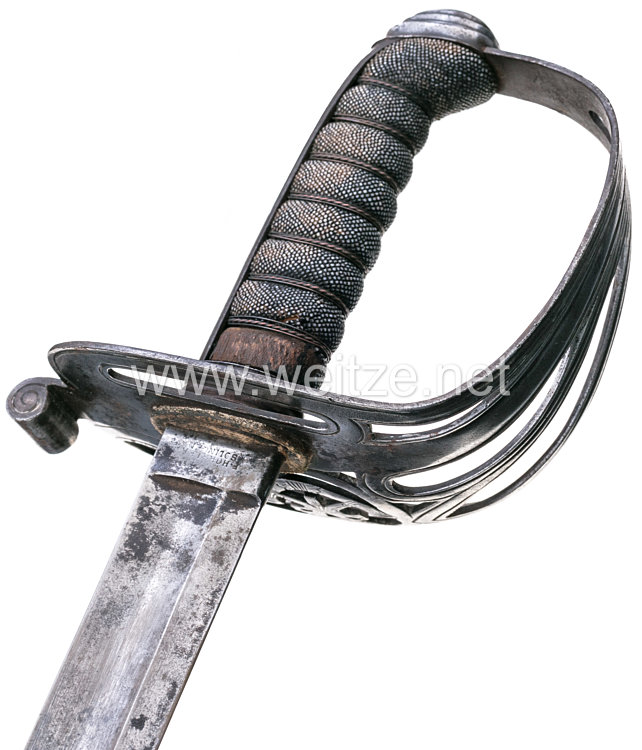
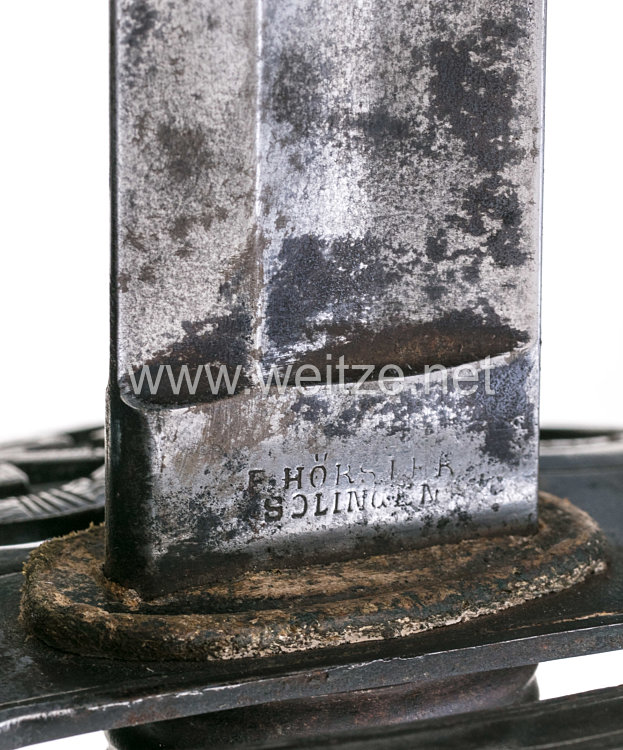
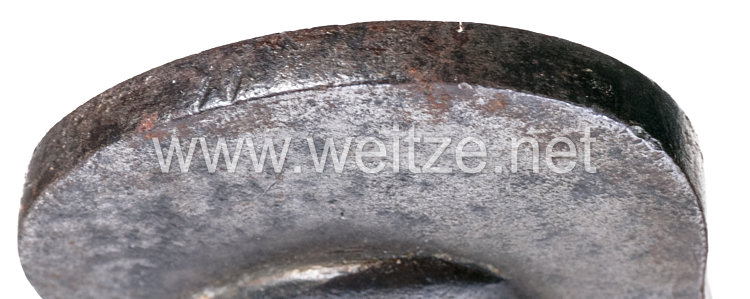
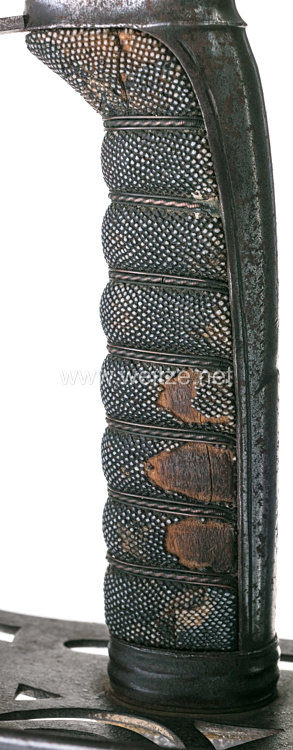
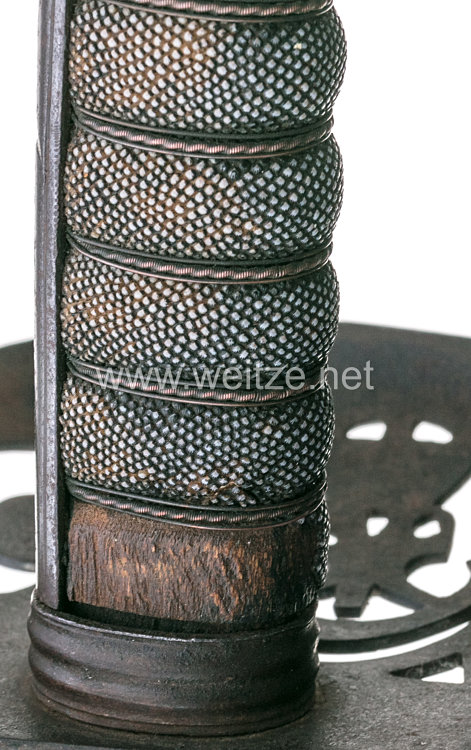
Circa 1890. Spined blade with fullers on both sides and parallel groove in the center of the blade, marked on the obverse ricasso “F. Hörster Solingen”, the blade somewhat spotted, the edge with minor nicks. Bright steel hilt with pierced emblem “crown over hunting horn”, grip with shagreen finish and intact wire wrapping, the shagreen with losses. Bright steel scabbard with two ring mounts and movable suspension rings, light surface rust, condition 2.

Overall length 103.5 cm.
299054
2.300,00

Brunswick Officer's Saber for Members of the Jäger Battalion in Infantry Regiment No. 92 (III. Battalion)

The Officer's Sabre for Members of the Jäger Battalion in Infantry Regiment No. 92 represents a significant chapter in German military history during the late 19th century. This piece, manufactured around 1890, embodies the military tradition of the Duchy of Brunswick in the period following the founding of the German Empire in 1871.

Infantry Regiment No. 92 was officially established on October 1, 1867, as the “Ducal Brunswick Infantry Regiment No. 92” and was part of the Prussian Army within the framework of the North German Confederation and later the German Empire. The third battalion of this regiment was designated as a Jäger Battalion, indicating its special role as light infantry. Jäger units traditionally had specialized tasks in reconnaissance, skirmishing, and flank protection.

The blade of this sabre was manufactured by F. Hörster of Solingen, one of the most renowned centers of German blade production. Solingen had acquired a worldwide reputation for its sword-making craft since the Middle Ages. In the 19th century, Solingen manufactories supplied armies throughout Europe with high-quality edged weapons. The marking on the ricasso served as both a quality guarantee and proof of origin.

The technical execution of the blade corresponds to the standards of the era: A back-edge blade with double fuller and parallel groove in the center of the blade optimized the relationship between stability and weight. This construction was typical for officer's sabres of the 1880s and 1890s and enabled a balanced equilibrium of the weapon.

Particularly noteworthy is the pierced emblem in the steel hilt, displaying a crown above a hunting horn. This symbol was specific to Jäger units and referenced their historical roots in the princely hunting formations. The hunting horn as a military symbol had a long tradition and was already used by light infantry units in the 18th century. The crown refers to the ducal sovereignty of Brunswick.

The grip in ray-skin style with wire wrapping corresponded to the regulations for officer's weapons of this era. The use of ray skin (or its imitation) had been common since the 18th century, as it ensured a secure grip. The wire wrapping, typically made of brass or silver-plated wire, served both practical and decorative purposes.

The bright steel scabbard with two ring bands and movable suspension rings was the standard design for line officer's sabres. Unlike cavalry sabres, which were often carried in steel scabbards with leather covering, the infantry preferred the bright steel version. The movable suspension rings allowed wearing on the waist belt or later on the equipment belt.

Infantry Regiment No. 92 had its garrison in Brunswick and later also in Wolfenbüttel. It participated in the most important military events of the German Empire, including various maneuvers and parades. Officers wore their sabres during service duties, at parades, and during ceremonial occasions.

Around 1890, the period of this sabre's creation, the German Empire was in a phase of relative peace under Emperor Wilhelm II. The army was being modernized, and uniforms and armaments were increasingly standardized. Nevertheless, the various contingents of the Reich – Prussian, Bavarian, Saxon, Württemberg, and Brunswick troops – retained their specific traditions and insignia.

The preservation of such officer's sabres is of great historical significance, as they represent material evidence of the military culture of the Empire. They document not only the craftsmanship quality of Solingen weapon forges but also the complex organizational structure of the German armed forces before World War I.

The Duchy of Brunswick retained a certain autonomy within the German Reich until 1918, and its military units maintained an independent tradition. Infantry Regiment No. 92 was dissolved after World War I, like all German military units as a result of the Treaty of Versailles of 1919.

Today, such officer's sabres are important collector's items and museum objects that provide insights into military history, the craft of weapon manufacturing, and the social standing of the officer corps in Wilhelmine Germany.