Mecklenburg-Strelitz Silver Shooting King Medal of the City of Gransee for Georg Grand Duke of Mecklenburg-Strelitz

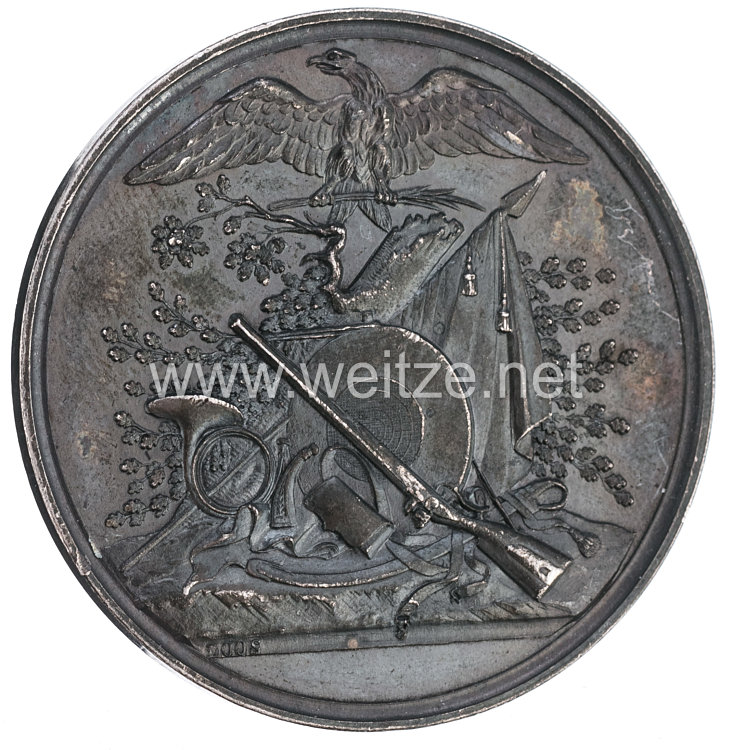
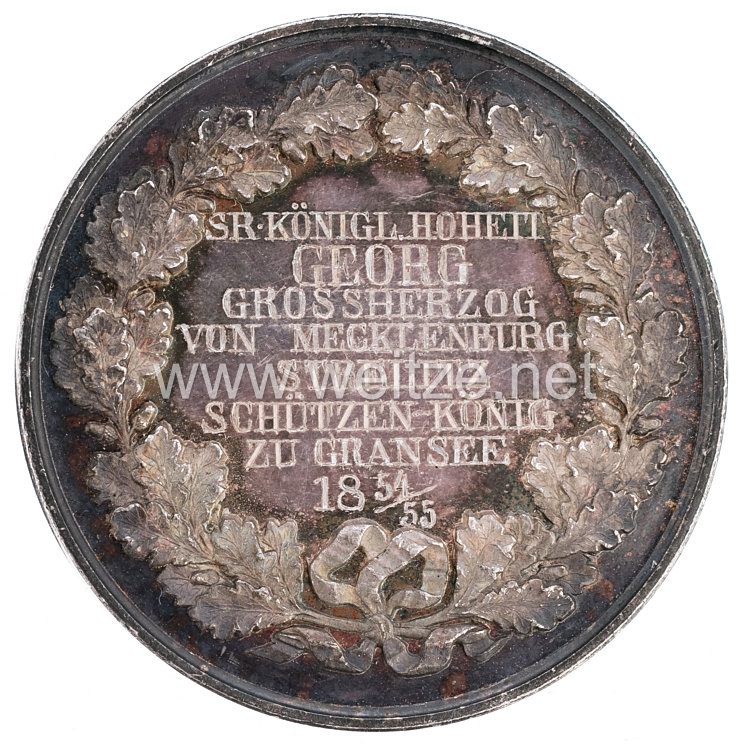
circa 1854. Large finely struck silver medal, diameter 42 mm. Obverse depicts: crossed rifle and saber, powder flask and hunting horn before a shooting target, in the background a flag, above it a standing eagle on a tree stump, lower right with die-cutter signature “Loos”. Reverse with large oak leaf wreath, in the center with fine engraving “Sr. Königl. Hoheit Georg Grossherzog von Mecklenburg Strelitz Schützen-König zu Gransee 1854/55”. Gransee is located south of the capital and residence city of Neustrelitz. 
The medal originates from the personal property of Friedrich Wilhelm II, Grand Duke of Mecklenburg-Strelitz, as a memento of his father Georg.
304253
1.350,00

Mecklenburg-Strelitz Silver Shooting King Medal of the City of Gransee for Georg Grand Duke of Mecklenburg-Strelitz

The Silver Shooting King Medal from the town of Gransee, awarded to Georg, Grand Duke of Mecklenburg-Strelitz in 1854/55, represents a fascinating connection between courtly tradition and civic marksmanship culture in 19th-century Germany. This magnificent medal, measuring 42 mm in diameter, embodies not only masterful craftsmanship but also the social significance of shooting societies in the period before German unification.

The shooting society tradition in German territories had a centuries-old history dating back to the Middle Ages. Originally founded as urban defense organizations, shooting guilds and associations increasingly developed into social and cultural institutions during the 19th century. They cultivated not only marksmanship but also fostered community spirit, patriotic sentiment, and social gatherings. The annual selection of a Shooting King, determined through accuracy in bird shooting or other competitions, formed the pinnacle of shooting society life.

The town of Gransee, located south of the residence city of Neustrelitz, belonged to the Grand Duchy of Mecklenburg-Strelitz, one of the smaller German federal states. The participation of a reigning Grand Duke in a civic shooting festival and his winning of the Shooting King title was far from ordinary; it testified to the special bond between sovereigns and citizenry in medium and smaller German states. Such participation strengthened the connection between prince and people and demonstrated the ruler's proximity to his subjects.

Georg, Grand Duke of Mecklenburg-Strelitz (1779-1860), ruled the Grand Duchy from 1816 until his death. He was known for his conservative yet populist style of governance. The medal from 1854/55 was thus created at the end of his long reign, when he was already over 70 years old. His participation in the Gransee shooting festival at this advanced age underscores the importance he attached to this tradition.

The artistic design of the medal by die-cutter Loos demonstrates the high quality of contemporary medal artistry. The obverse presents a complex arrangement of crossed rifles and sabers, powder flask and hunting horn before a shooting target, surmounted by an eagle standing on a tree stump. This symbolism combines civic shooting traditions (rifle, target) with military elements (saber) and courtly hunting traditions (hunting horn). The eagle, traditional symbol of German statehood, crowns the composition and emphasizes the state character of the award.

The reverse bears a magnificent oak leaf wreath, a symbol used since antiquity for honor, valor, and victory. The fine engraving at the center names the title and name of the recipient as well as the place and year of bestowal. The use of the address “Sr. Königl. Hoheit” (His Royal Highness) corresponds to the protocolar rank of a Grand Duke in the German state system.

Particularly noteworthy is the provenance of this medal: it came from the personal possession of Friedrich Wilhelm, Grand Duke of Mecklenburg-Strelitz (1819-1904), Georg's son and successor. The preservation of this award as a memento of his father demonstrates the emotional and dynastic significance of such objects within princely families. They served not only as personal memories but also as material testimonies to the connection between the ruling house and the estates.

The manufacture in silver and the considerable size of 42 mm diameter underscore the value and importance of this award. Silver was the preferred material for high-quality civic awards and association badges in the 19th century, while gold was usually reserved for military orders or the highest state honors.

In the context of 19th-century German history, this medal represents the golden age of civic associational life and the special role of shooting societies as a unifying element between social classes. After the Revolution of 1848/49, such traditional institutions gained new significance as places of apolitical sociability, while simultaneously cultivating national and patriotic values. The participation of princes and nobles in civic shooting festivals contributed to the integration of different social classes and strengthened the legitimacy of the monarchical order in the age of emerging liberalism.

Such shooting medals are today valuable cultural-historical testimonies that provide insight into the social practices, artistic traditions, and political conditions of the 19th century. They document the significance of local traditions and the personal connection between sovereigns and their subjects in the smaller German states before the founding of the German Empire in 1871.