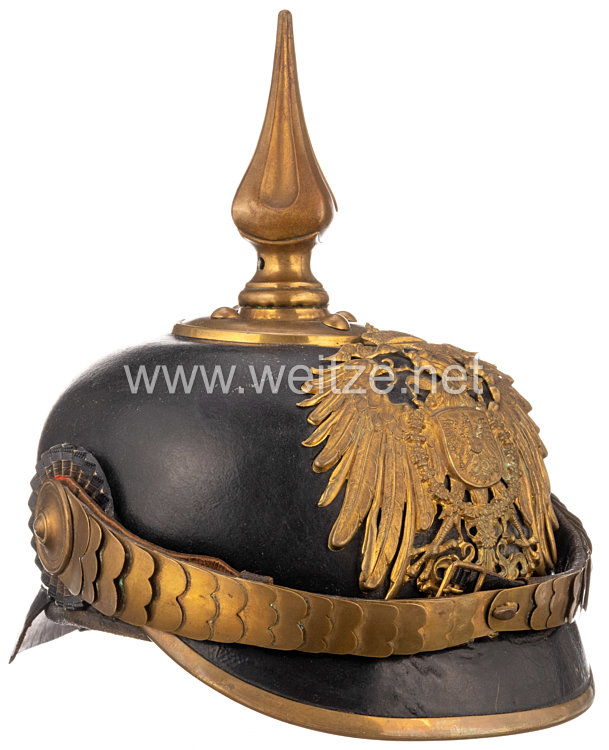
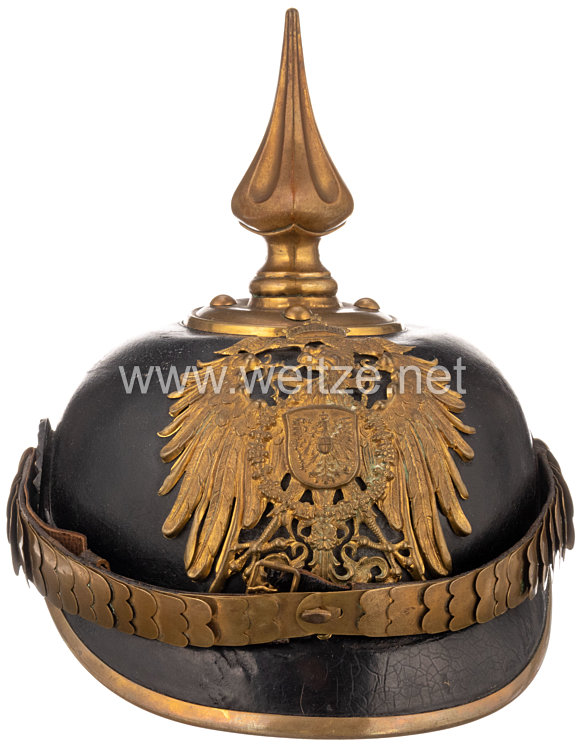
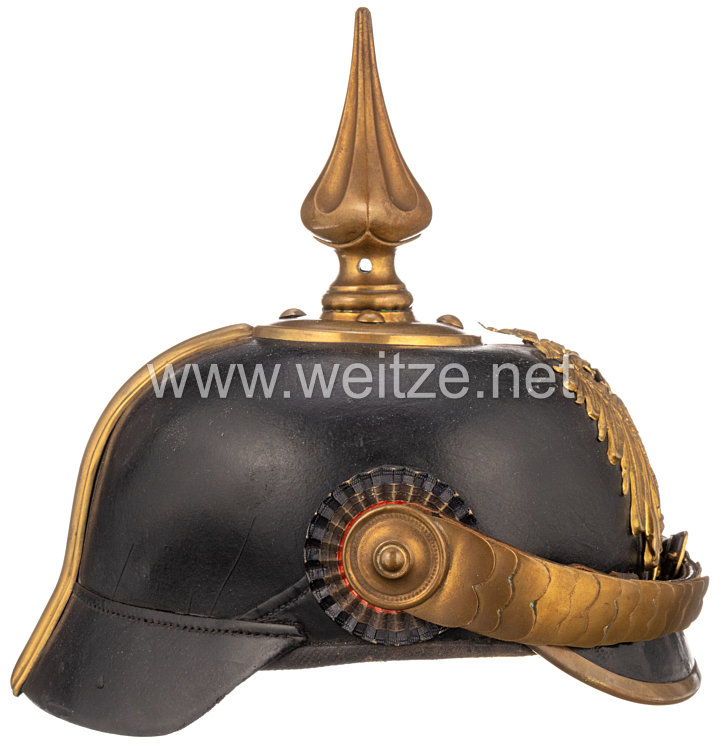
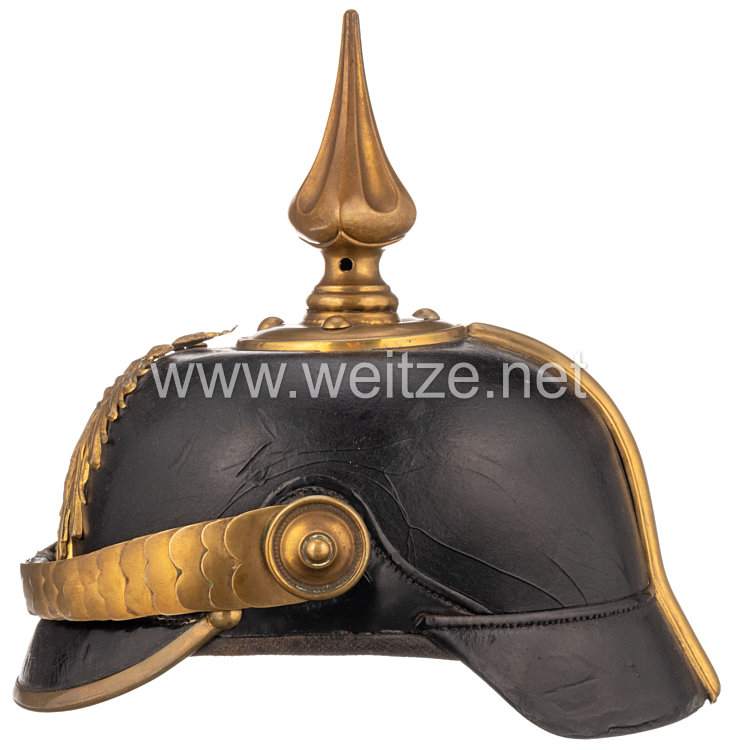
German Empire Pickelhaube for Middle-Rank Civil Servants in the Imperial Territories of Alsace and Lorraine

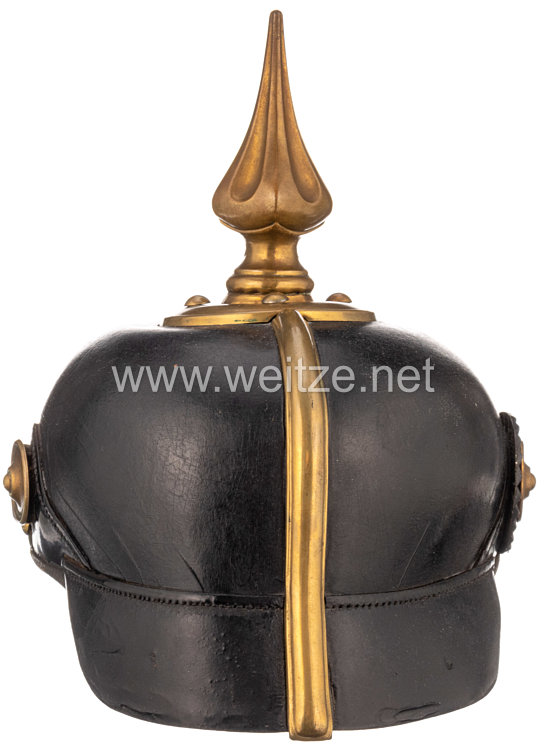
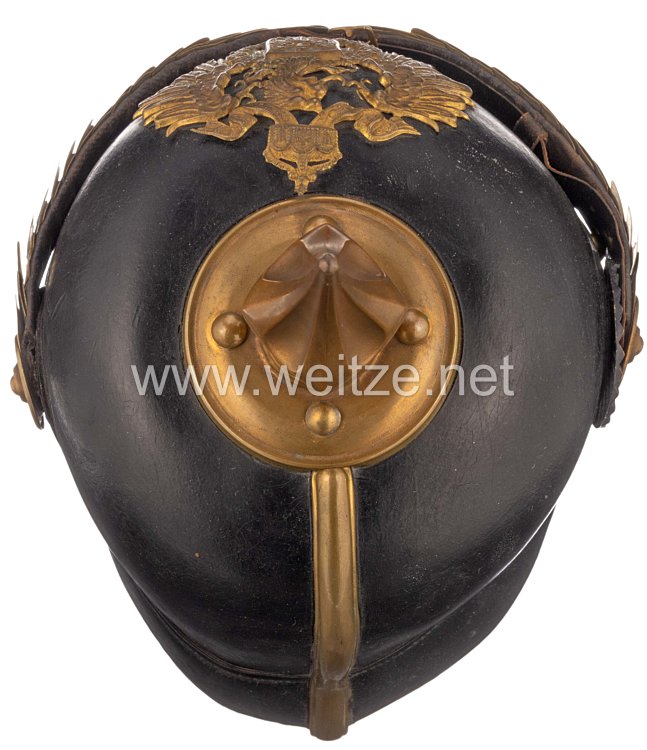
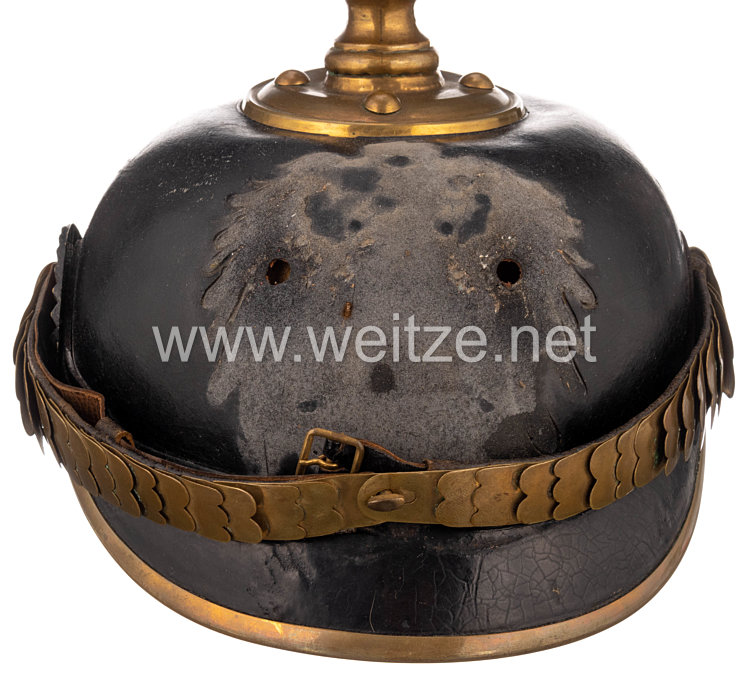
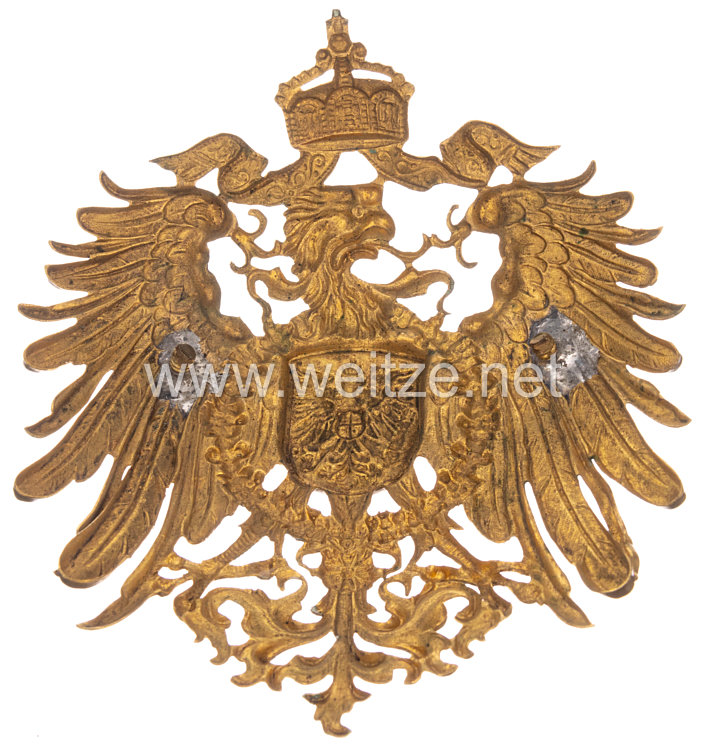
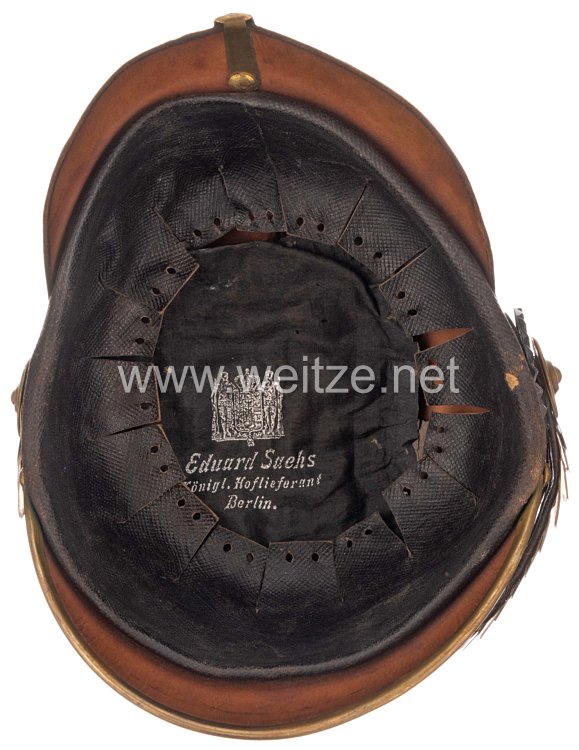
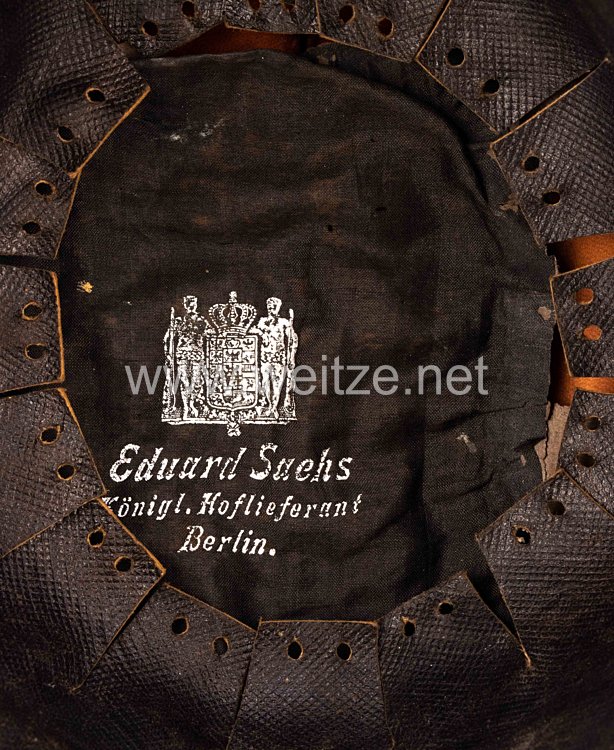
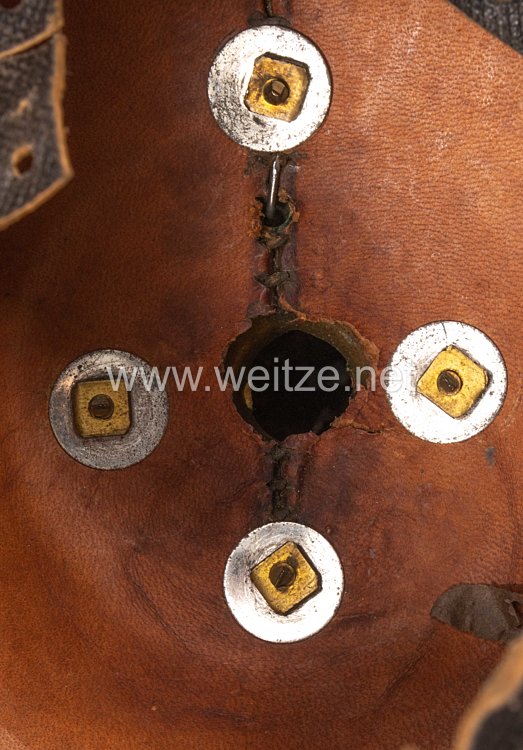
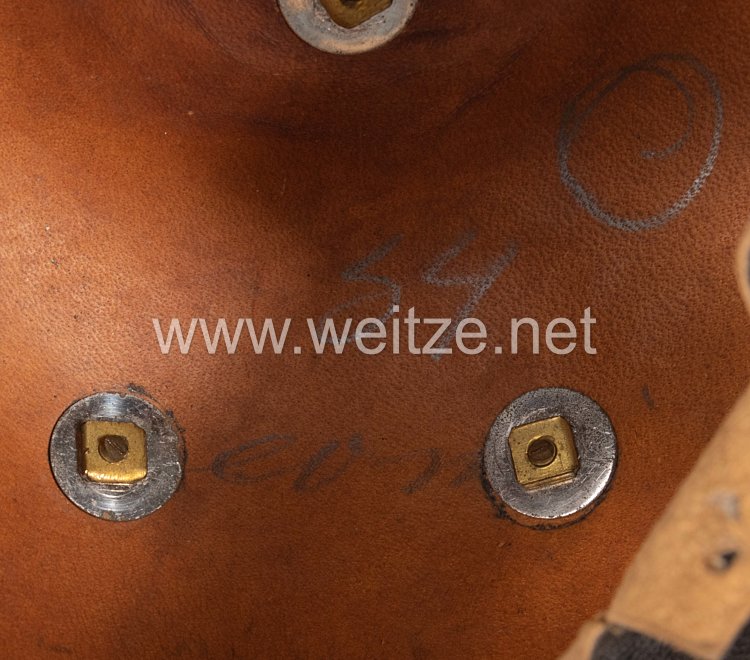
Circa 1900. Leather helmet, complete with all fittings. Front features the eagle of the German Empire. Flat scale chinstraps on rosettes, right side with the Imperial cockade in lacquered sheet metal officer's version. Fixed service spike for civil servants on round base with ball-head screws. Interior with officer-grade lapped leather lining, black silk lining with maker mark “Eduard Saehs Königl. Hoflieferant Berlin.”, visors unlined. Size 52. Condition 2. 

443152
1.600,00

German Empire Pickelhaube for Middle-Rank Civil Servants in the Imperial Territories of Alsace and Lorraine

The Pickelhaube for mid-level civil servants in the Imperial Territory of Alsace-Lorraine represents a fascinating chapter in German administrative history around the turn of the century. Following the Franco-Prussian War of 1870-71, the formerly French territories of Alsace and Lorraine were incorporated as an Imperial Territory (Reichsland) directly under the German Empire and received a special administrative status.

The Pickelhaube, whose name derives from its characteristic spike, had been the symbol of Prussian and later pan-German military and state power since the 1840s. While originally conceived as military headgear, a complex system of variants for various civil servant groups developed throughout the 19th century. This differentiation reflected the strict hierarchy of the German civil service system.

The present specimen features the Eagle of the German Empire as its front emblem, clearly indicating affiliation with the Imperial administration. Unlike the state eagles (such as the Prussian or Bavarian eagle), the Imperial eagle symbolized direct subordination to the central authority of the Empire. This was particularly significant in the Imperial Territories, which did not possess the status of a federal state but were considered common property of all German states.

The fixed service spike mounted on a round base with ball-head screws is a characteristic feature for civil servants. Unlike the removable spikes of military Pickelhauben, which could be replaced with plume holders during parades, the civil servant spike remained permanently mounted. This emphasized the civilian yet authoritative character of the wearer's function.

The equipment with flat scale chains on rosettes and the Imperial cockade in lacquered metal finish for officers indicates a mid-level civil servant of elevated status. The cockade in Imperial colors of black-white-red had been prescribed for all German troops and officials since 1897, replacing the previously common state colors. The execution in lacquered metal rather than simple cloth marked a higher rank within the bureaucratic hierarchy.

The tongued leather lining in officer quality and black silk lining testify to high-quality craftsmanship. The manufacturer's mark “Eduard Saehs Königl. Hoflieferant Berlin” (Royal Court Supplier Berlin) indicates a renowned producer. Court suppliers enjoyed special prestige and were permitted to bear the Prussian royal coat of arms. The Saehs firm belonged to the established Berlin manufacturers of military and official headgear during the Wilhelmine era.

The administration of the Imperial Territory of Alsace-Lorraine presented the German Empire with particular challenges. The population was culturally and linguistically French, while the German administration attempted to integrate the territory. Civil servants in the Imperial Territories therefore had an especially sensitive function. They represented German state authority in a politically contested area and had to balance between integration and authority.

Size 52 corresponds to a head circumference of 52 centimeters and was a common size for adult men. The standardized size designation demonstrates the professionalization of uniform production in the late 19th century. The unlined visors were typical for this period and differed from later models.

Around 1900, the time of this specimen's creation, the German Empire was at the height of its power. Emperor Wilhelm II shaped policy with his personal rule, and the Imperial Territories were largely pacified, although the population's loyalty remained limited. The Pickelhaube during this time was not merely functional head protection but a symbol of state authority and German order.

The civil servant Pickelhaube disappeared with the end of World War I and the collapse of the monarchy in 1918. The Weimar Republic abolished monarchical symbols, and Alsace-Lorraine returned to France. Today, such helmets are important testimonies to German administrative history and the complex political conditions in the Empire.

These artifacts provide valuable insights into the material culture of imperial bureaucracy and the ways in which state power was visually represented and reinforced through uniform regulations and insignia. They remain significant objects of study for understanding the administrative structures and cultural politics of the German Empire.