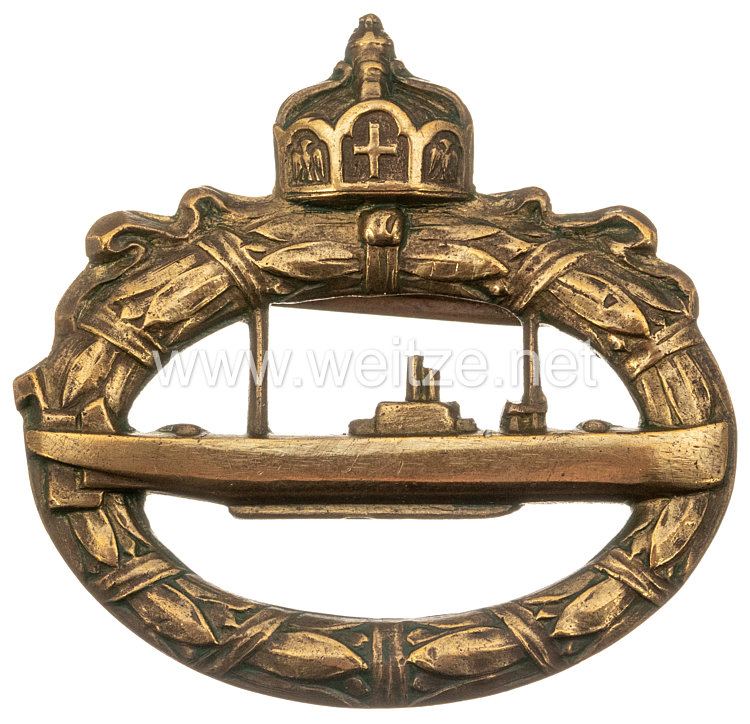
U-Boat War Badge 1918

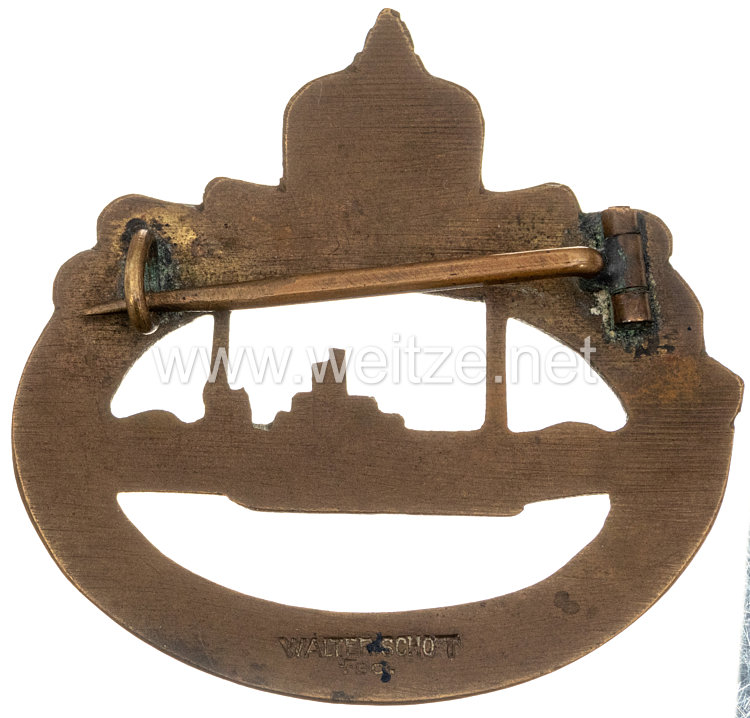
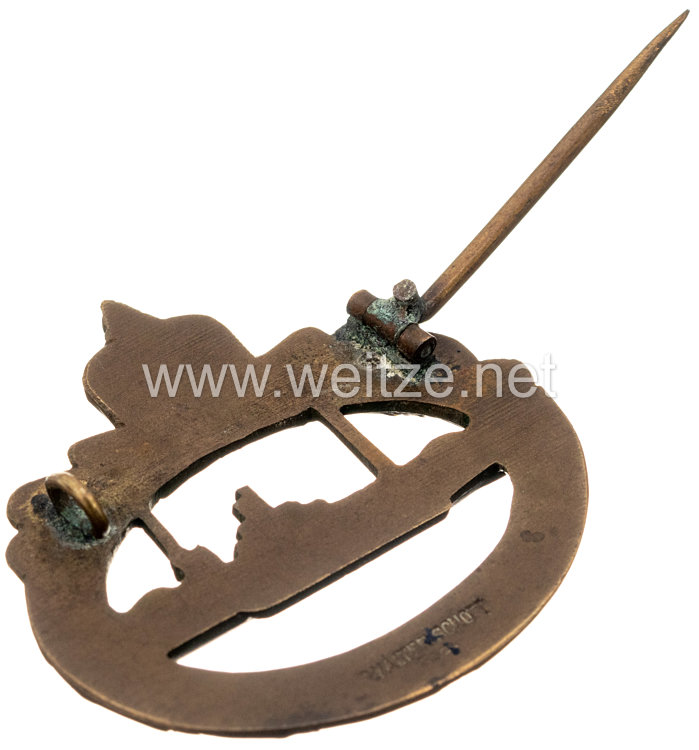
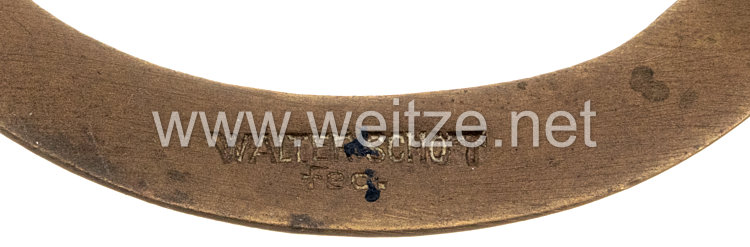
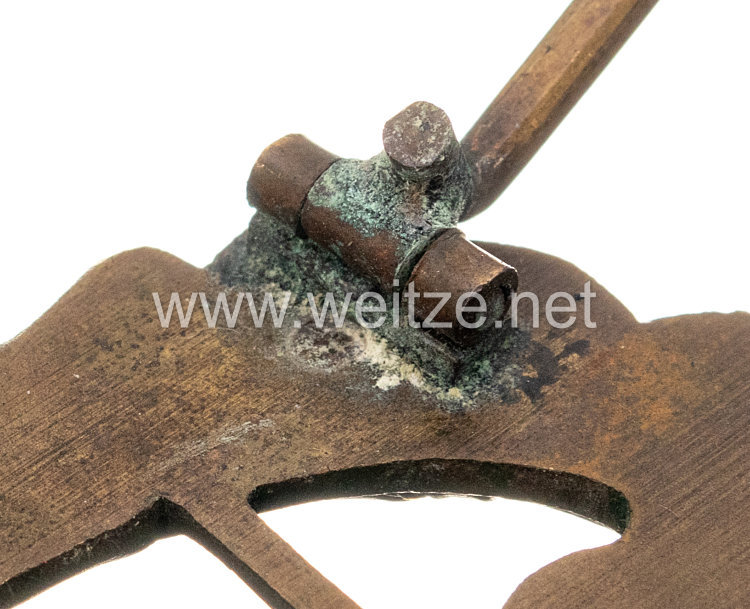
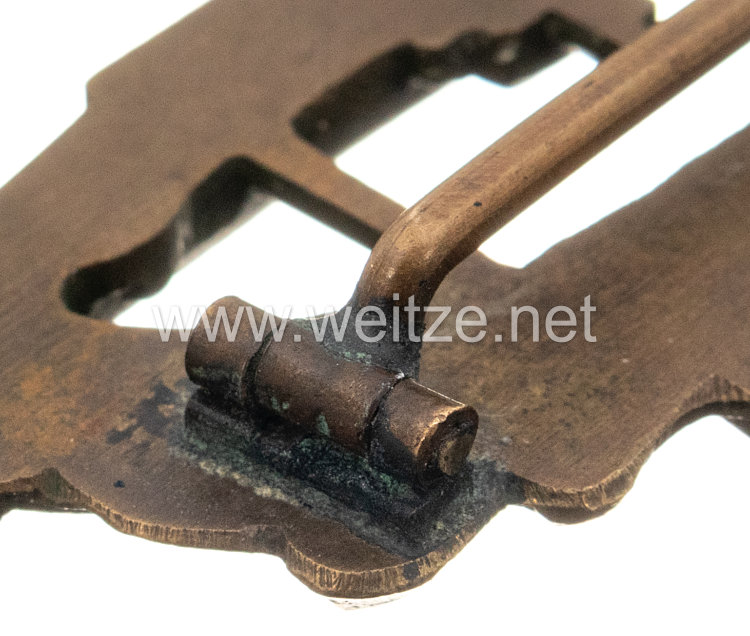
Non-ferrous metal with very fine patina, reverse marked “Walter Schot fec.”, thin needle. Lightly worn, Condition 2
400751

The U-Boot-Kriegsabzeichen 1918 – A Symbol of Imperial Germany's Undersea Campaign

This example of the U-Boot-Kriegsabzeichen 1918 (U-Boat War Badge 1918) stands among the most significant decorations of the Kaiserliche Marine (Imperial German Navy), bearing witness to one of the most dangerous forms of military service in the First World War. Crafted in Buntmetall (non-ferrous metal alloy) and displaying a very fine natural patina, the badge carries the reverse maker’s mark “Walter Schot fec.” — identifying it as a product of one of the recognized manufacturers of this coveted decoration.

Historical Context and Institution

The U-Boat War Badge was instituted on 1 February 1918 by Kaiser Wilhelm II during the final year of the Great War. Its creation came at the height of Germany’s unrestricted submarine warfare campaign, which had been launched in February 1917 with the strategic objective of severing Allied supply lines across the Atlantic. The badge was conceived as “a token of appreciation of war merits by U-boat crews” — formal recognition of the extraordinary hazards these men faced on a daily basis.

U-boat service during the First World War was exceptionally perilous. Crews targeted Allied merchant shipping operating under increasingly effective convoy protection, while facing severe losses from Allied anti-submarine defenses. Depth charges, mines, ramming, and gunfire all contributed to a casualty rate that made submarine duty among the most dangerous assignments in any navy. It was this extreme danger that prompted the creation of a dedicated badge of honor for those who survived and served with distinction beneath the waves.

Award Criteria

The badge was awarded to all ranks of U-boat personnel — officers, non-commissioned officers, and enlisted men alike. Recipients were required to have participated in war patrols against the enemy and to have accumulated a specified period of active open-sea service. Importantly, coastal waiting time did not count toward the sea service requirement; only time spent on the open sea in operational conditions qualified. Exceptions to the patrol requirements were granted for personnel who had been wounded in combat during U-boat operations.

Design and Physical Characteristics

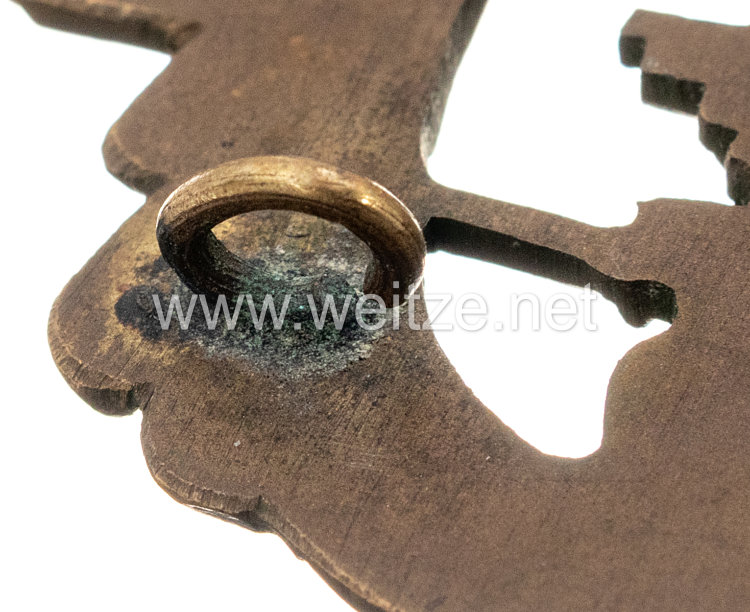
The badge takes the form of a horizontal oval consisting of a laurel wreath tied with a ribbon, with a relief depiction of a U-boat facing right in the center. Surmounting the wreath is the Imperial German Crown (Reichskrone of 1871). The badge measures approximately 49–50 mm in width and 47–48 mm in height. The reverse features a horizontal flat pin with a barrel hinge and round wire catch mechanism.

Typical materials for these badges included non-ferrous metal alloys, tombac (gilded brass alloy), or gilt bronze. Early examples often displayed traces of dark green lacquer. Over time, the badges develop a natural patina that typically ranges from greenish to olive-brown tones — a characteristic beautifully exemplified in the present specimen.

The Manufacturer: Walter Schot

Walter Schot (also encountered as Walter Schott) was one of several recognized manufacturers of the U-Boat War Badge. Other known producers included Wilhelm Deumer and Steinhauer & Lück. The marking “Walter Schot fec.” employs the Latin abbreviation “fec.” (for “fecit” — “he made it”), a traditional artisan’s mark identifying the creator. Walter Schot’s products continued to be purchased by veterans in the post-war period, as many former U-boat crew members sought replacement or presentation-quality badges from manufacturers after the Armistice.

Numbers and Rarity

The total number of U-Boat War Badges awarded during the First World War and the immediate post-war period is estimated at between 4,500 and 5,000. This relatively modest figure — reflecting the small number of submariners who met the qualification criteria — underscores the rarity and desirability of the badge among collectors today. The decoration was a single-class award, meaning there were no grades or levels; all qualified recipients received the same badge regardless of rank or the number of patrols completed beyond the minimum requirement.

Post-War History and Legacy

Following the end of the First World War in November 1918, the badge remained the personal property of its recipients and was non-returnable. Distribution continued after the cessation of hostilities, with manufacturers like Walter Schot producing examples for purchase by veterans, particularly officers. Beyond the standard-sized badge, miniature versions (known as “Prinzengröße”) and stickpins for civilian wear were also produced, allowing veterans to display their service in a variety of social settings.

The design of the 1918 badge served as the direct inspiration for its successor when the U-Boat War Badge was re-established on 13 October 1939 for the Second World War. However, the WWII version incorporated significant design changes: the Imperial Crown was replaced by a Nazi eagle with swastika, and the direction of the submarine was reversed to face left rather than right.

Among the notable recipients of the original WWI badge was Admiral Karl Dönitz, who would go on to command Germany’s U-boat forces during the Second World War. Dönitz wore his First World War U-Boat War Badge alongside his later decorations, a testament to the enduring prestige of this award across both conflicts.

Collector Significance

The present example, with its well-developed patina, clearly legible maker’s mark, and evidence of light wear consistent with period use, represents an important artifact of Imperial German naval history. As an award that recognized service in one of the most dangerous branches of the Kaiserliche Marine, the U-Boot-Kriegsabzeichen 1918 remains one of the most sought-after decorations from the First World War era among military collectors worldwide.