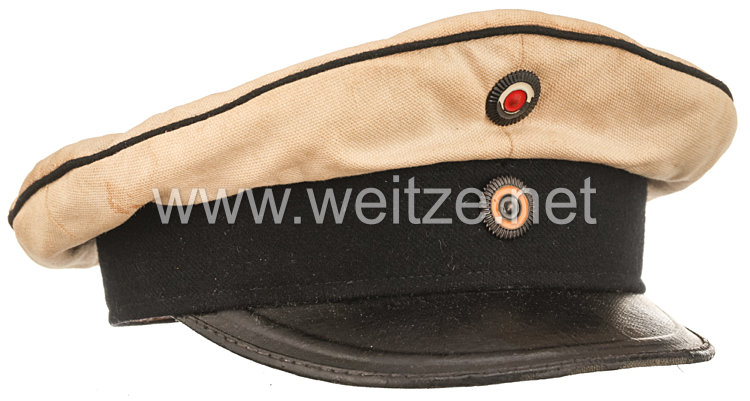
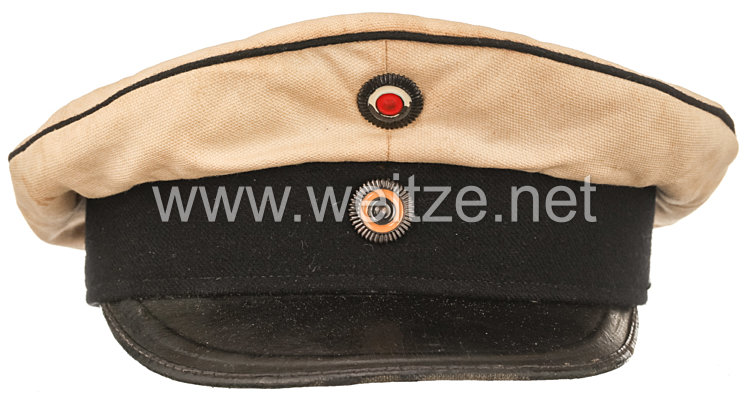
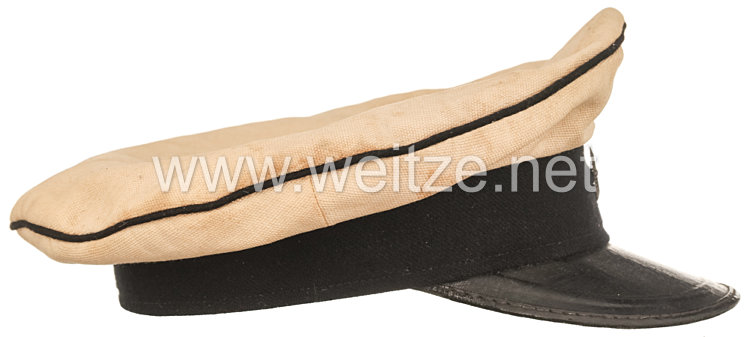
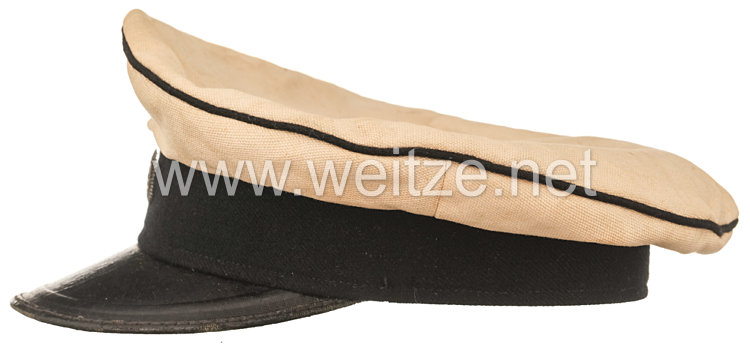
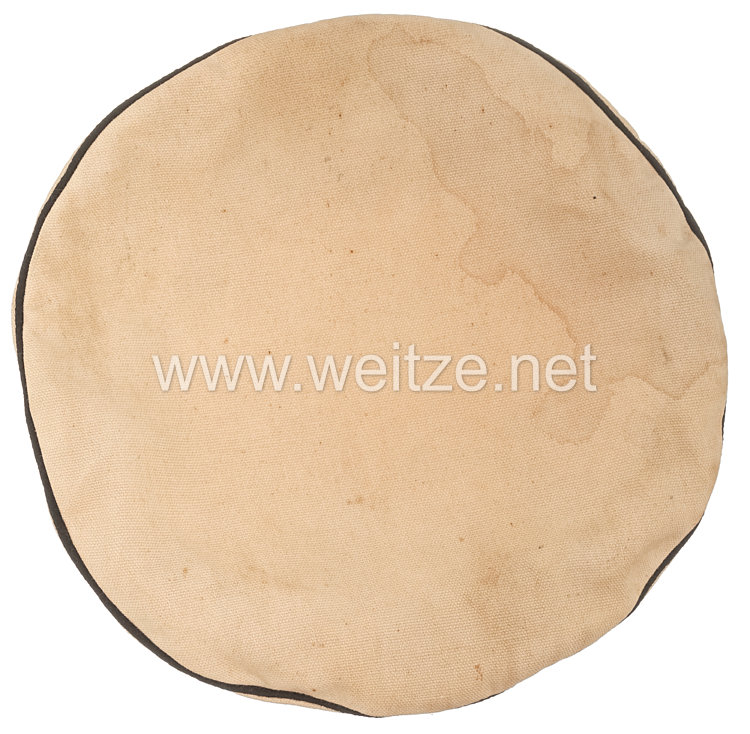
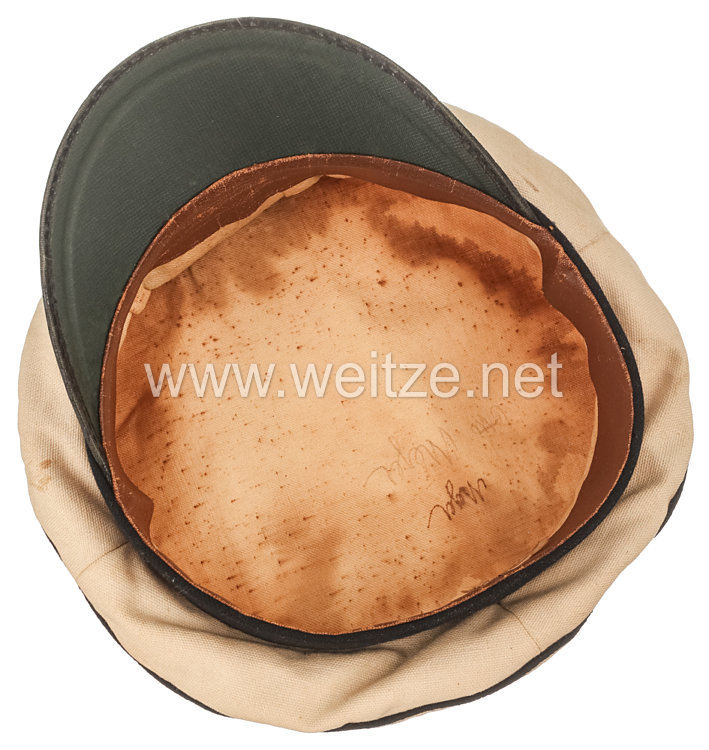
Prussian Visor Cap for a Non-Commissioned Officer of the Leib-Kürassier-Regiment Großer Kurfürst (Schlesisches) Nr. 1
The visor cap of the Leib-Kürassier-Regiment Großer Kurfürst (Silesian) Nr. 1 represents a significant piece of Prussian military history from the late Wilhelmine era. Manufactured around 1910 in Breslau, this garment embodies the rich tradition of one of the most prestigious cavalry regiments of the German Empire.
The Leib-Kürassier-Regiment Großer Kurfürst (Silesian) Nr. 1 was founded in 1691 and bore the honorary title of Brandenburg's Elector Friedrich Wilhelm, known as the Great Elector. Garrisoned in Breslau, the capital of the Prussian province of Silesia, the regiment belonged to the elite Guard Cavalry Division and enjoyed the highest esteem within the Prussian army. As one of the oldest cuirassier regiments, it embodied the continuity of Prussian-German military tradition from the 17th century until World War I.
This visor cap is an NCO version, recognizable by its quality and workmanship. The characteristic white color of the cloth was the distinguishing feature of the Silesian cuirassiers and differentiated them from other cuirassier regiments, which usually wore dark blue uniforms. This coloring was rooted in historical traditions and was precisely defined in Prussian clothing regulations.
The black cap band and black piping formed a striking contrast to the white cloth and corresponded to the regimental colors. The large black lacquered visor was typical for cavalry visor caps of this era and served both practical purposes and military aesthetics. The black lacquering protected the material from weather conditions and gave the cap an elegant, representative appearance.
Particularly noteworthy are the two cockades in enlisted quality, which are completely preserved. The Prussian cockade in black and white and the Reich cockade in black, white, and red were prescribed according to the uniform regulations of 1899. For NCOs, these cockades were manufactured in simpler execution than for officers, yet showed the same symbolic meaning: allegiance to the Prussian Kingdom and the German Empire.
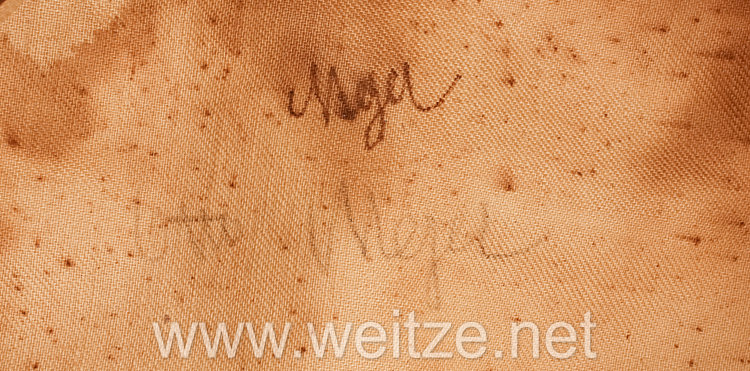
The interior fittings with brown sweatband and white lining correspond to the military manufacturing standards of the time. The sweatband served to absorb moisture and provide comfort, while the white lining completed the construction and provided additional protection. Size 56 was a common head size and indicates the standardized production of military headgear.
Around 1910, the visor cap was an integral part of the peacetime uniform of the Prussian cavalry. It was worn on duty and at less formal occasions, while the traditional cuirassier helmet with its characteristic eagle was prescribed for parades and special ceremonies. The visor cap offered significantly more comfort and practicality in everyday service.
The years around 1910 marked a time of relative peace for the German Empire, but political tensions in Europe were simultaneously growing. The Leib-Kürassier-Regiment Nr. 1 conducted its regular garrison duty during this phase, participated in maneuvers, and maintained its military traditions. The NCOs, to whose service uniform this cap belonged, formed the backbone of the regiment and were responsible for the training and discipline of the enlisted men.
The manufacture in Breslau around 1910 refers to the local military equipment suppliers who provided the garrison with uniform parts and equipment. Breslau, as a significant garrison city, was equipped with corresponding master tailor businesses that specialized in military clothing and had to meet the strict regulations of the Prussian military administration.
Only four years after this visor cap was made, World War I broke out. The Leib-Kürassier-Regiment Nr. 1 went to war in 1914 and fought on various fronts. The traditional white uniform parts were quickly replaced by field-gray equipment in the field, but the peacetime uniforms remained as symbols of a bygone era.
The preserved visor cap is an authentic testimony to Wilhelmine military culture and documents the high craftsmanship quality of Prussian military effects. Despite age-related discoloration and stains, it provides an immediate impression of the material culture of the imperial army and the importance that uniforming and military appearance held in the German Empire.