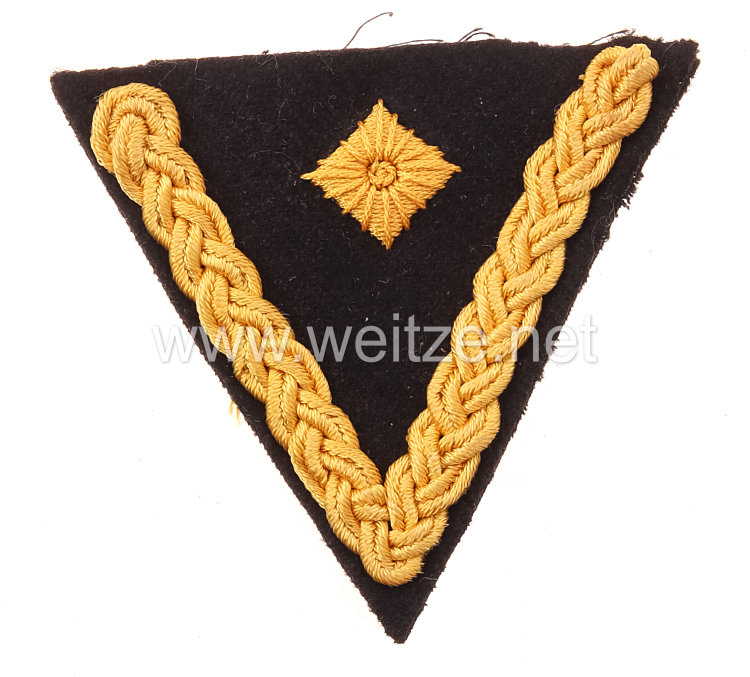
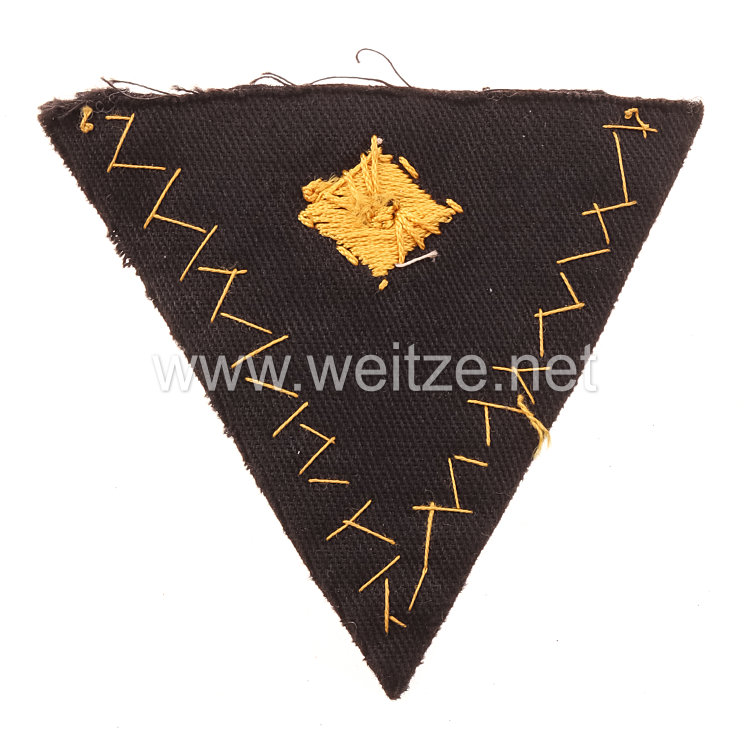
Kriegsmarine Sleeve Insignia for a Matrosenobergefreiter with More Than 6 Years of Service

Hand-embroidered version for the blue uniform. Condition 2.
443851
65,00

Kriegsmarine Sleeve Insignia for a Matrosenobergefreiter with More Than 6 Years of Service

The Kriegsmarine sleeve insignia for a Matrosenobergefreiter (Able Seaman) with more than 6 years of service represents a significant example of the rank insignia and service time decorations of the German Navy during World War II. This hand-embroidered version for the blue uniform embodies the precise hierarchy and promotion system of the Kriegsmarine, which served as the official naval force of the German Reich from 1935 to 1945.

The Kriegsmarine was officially established on June 1, 1935, after the German Reich rejected the provisions of the Treaty of Versailles. Under the High Command of the Kriegsmarine, a complex system of rank insignia and service decorations developed, building upon the traditions of the Imperial Navy but adapted to new political and military circumstances.

The rank of Matrosenobergefreiter (MOG) was the second enlisted rank in the Kriegsmarine, positioned between Matrosengefreiter and Matrosenhauptgefreiter. This rank was typically awarded after a certain period of service and corresponding proven performance. Promotion to Matrosenobergefreiter required not only the requisite service time but also demonstration of reliability, discipline, and professional competence.

The service time insignia of the Kriegsmarine were an essential component of the uniform system and were worn on the left forearm. According to Kriegsmarine uniform regulations, these badges were awarded at various levels: after 4, 6, 12, 18, 25, and more years of service. The badge described here for more than 6 years of service thus represented the second level and displayed two diagonal stripes on the sleeve.

The hand-embroidered execution is of particular significance. While machine-woven insignia were produced for general issue, hand-embroidered specimens were often of higher quality and were either privately procured or manufactured by specialists. These badges were applied to dark blue cloth for the blue uniform (walking-out uniform), as opposed to white summer uniforms or field-gray work suits.

The blue uniform of the Kriegsmarine, officially designated as Blauer Anzug (Blue Suit), was the standard walking-out uniform for enlisted men and petty officers. It consisted of a dark blue jacket (jumper) with characteristic sailor's collar, trousers, and the typical sailor's cap. On this uniform, rank insignia and service time decorations were attached, making the wearer's position and experience immediately recognizable.

The rank insignia of enlisted grades were represented by various combinations of chevrons and stars on both upper sleeves. The Matrosenobergefreiter wore specific insignia that distinguished him from other ranks. The service time badges on the left forearm complemented this rank information and provided details about the duration of military service.

The manufacture of these insignia followed strict regulations laid down in the uniform orders of the Kriegsmarine. These regulations, which were regularly updated, specified precisely the dimensions, colors, materials, and correct attachment of all uniform parts and insignia. Compliance with these regulations was mandatory and was checked during inspections.

The base material for these badges was typically dark blue wool fabric, onto which the stripes were embroidered in golden-yellow or silver color. The quality of embroidery varied depending on the manufacturer and procurement method. Hand-embroidered specimens often showed finer workmanship and greater attention to detail than machine-manufactured versions.

In historical context, these sleeve insignia document not only the military organization but also the social structure within the Kriegsmarine. Service time was an important factor for status and respect within the military community. A Matrosenobergefreiter with more than 6 years of service had already accumulated considerable experience and was regarded as an experienced sailor.

Today, such original Kriegsmarine sleeve insignia are important military-historical documents. They provide researchers and collectors with insights into uniform practices, organizational structure, and daily life in the German Kriegsmarine. The condition, described here as “Condition 2,” suggests a well-preserved specimen with slight signs of use, which is quite remarkable for an object over 75 years old.

These insignia also reflect the broader system of military honors and recognition that characterized the German armed forces during this period. The careful gradation of service time recognition served multiple purposes: it rewarded longevity and experience, helped maintain morale, and provided a visible hierarchy within the enlisted ranks that complemented the formal rank structure.