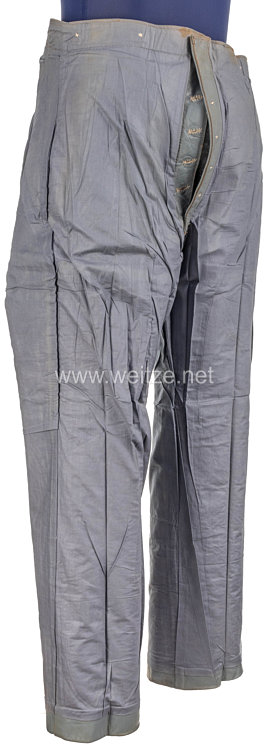
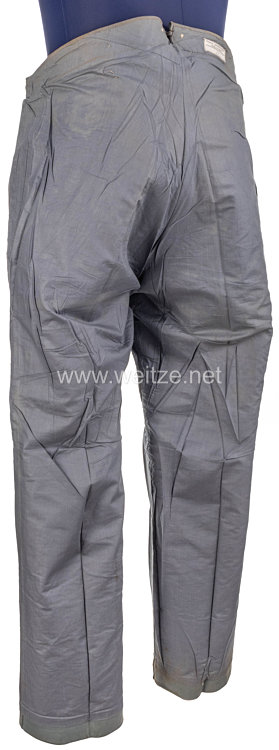
Kriegsmarine Gray Leather Trousers

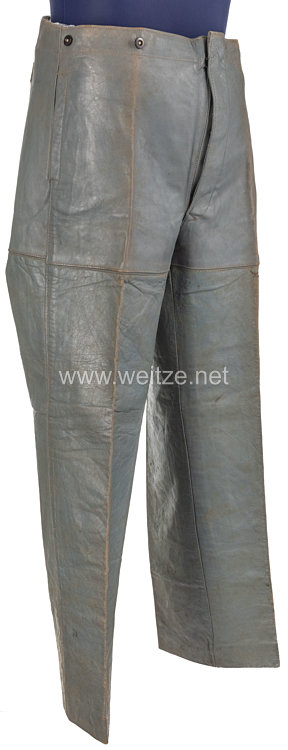
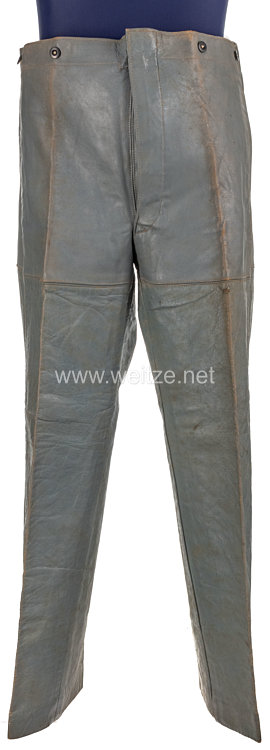
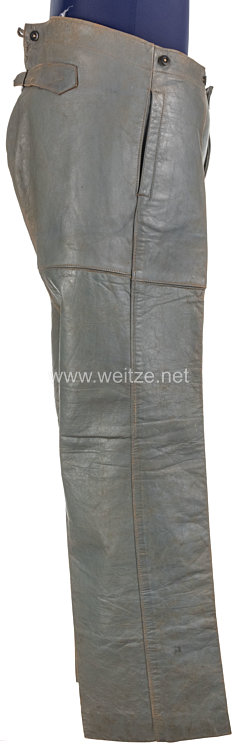
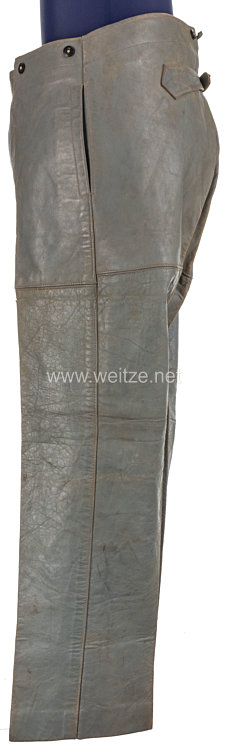
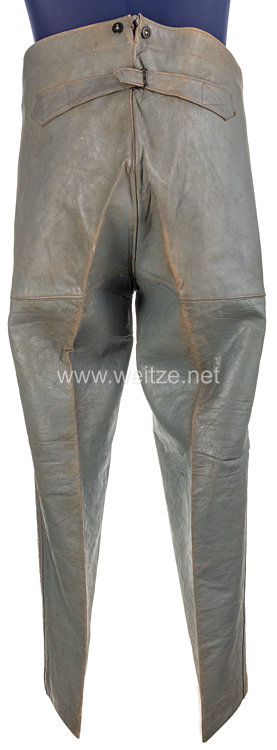
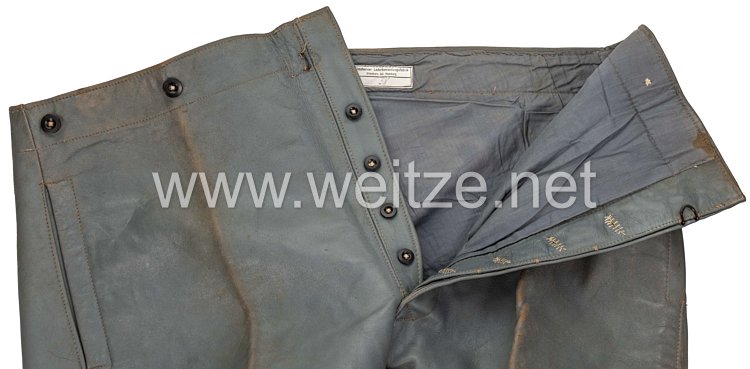
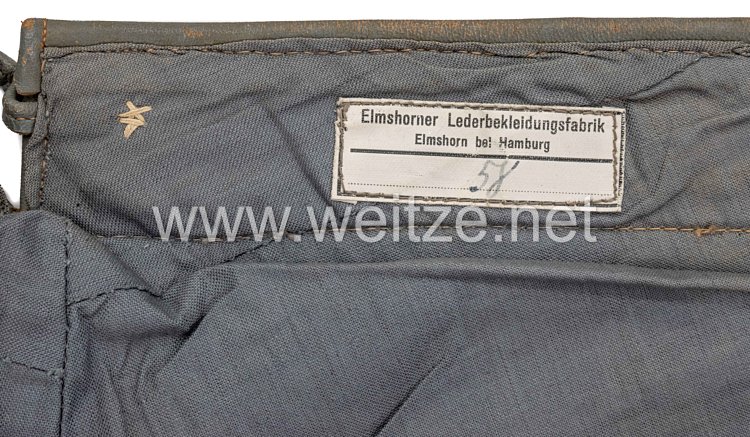
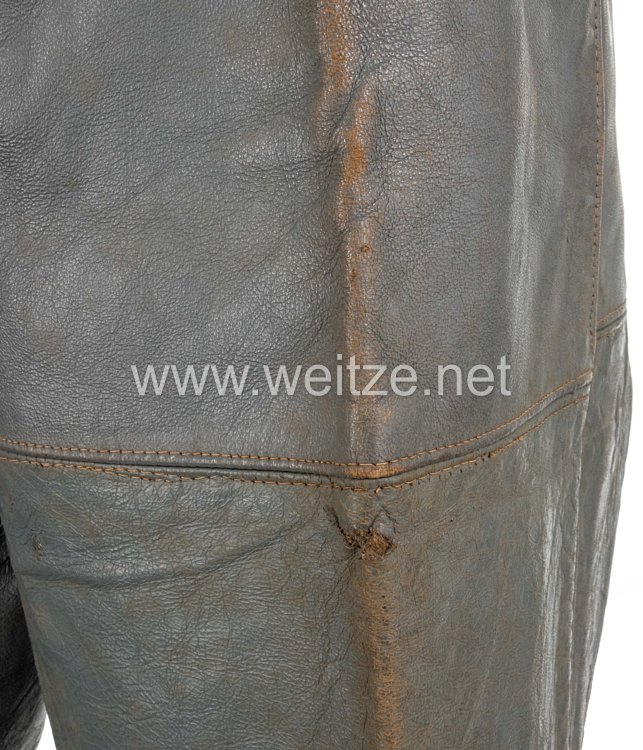
Gray leather trousers, heavily worn, two side pockets without flaps, interior gray linen lining and manufacturer’s label “Elmshorner Lederbekleidungsfabrik”. Heavy signs of wear, the leather still soft and supple. Waist circumference 100 cm, length 120 cm, condition 3
426549
450,00

Kriegsmarine Gray Leather Trousers

This grey leather trousers of the Kriegsmarine represents a remarkable example of functional protective clothing used by the German Navy during World War II. Manufactured by the Elmshorner Lederbekleidungsfabrik (Elmshorn Leather Clothing Factory), one of numerous suppliers of military equipment in the German Reich, this garment documents the practical requirements of maritime warfare and the industrial organization of armaments production.

The Kriegsmarine, founded in 1935 following Germany's official rearmament, required specialized clothing for various operational areas. Leather clothing played an important role, particularly for crew members of submarines, fast attack boats, and other units exposed to extreme weather conditions. The use of leather offered essential advantages: wind protection, relative water resistance, and durability under harsh conditions.

The Elmshorner Lederbekleidungsfabrik in Elmshorn, Schleswig-Holstein, was part of an extensive network of suppliers for the Wehrmacht. During the war years, numerous civilian production facilities were mobilized for military purposes. This factory produced various leather articles for the armed forces, with the grey coloring corresponding to the typical naval color palette and distinguishing itself from the darker tones of Army and Air Force clothing.

The technical features of these trousers are characteristic of military functional clothing of the period: two side pockets without flaps, a practical design allowing quick access, and a grey linen lining ensuring comfort and breathability. The measurements with a waist circumference of 100 cm and a length of 120 cm correspond to standard sizes for military clothing of that era.

Leather clothing in the Kriegsmarine was particularly used by the following units: U-boat crews, who were exposed to rough seas and freezing temperatures during entry and exit procedures and surface navigation; fast attack boat crews, whose open boats offered no protection from spray and wind; as well as sentries and crews of smaller vessels. The grey coloring was not only practical for maritime environments but also met camouflage requirements at sea.

The heavy wear marks on this specimen testify to actual field use. This distinguishes the piece from many depot finds that never entered active service. The fact that the leather remains soft and supple despite intensive use speaks to the quality of workmanship and possibly to regular maintenance by the wearer. Leather had to be regularly treated with fats during the war to keep it supple and water-resistant.

The historical context of production is significant: from 1942 onwards, raw material shortages in the German Reich intensified dramatically. Leather became a scarce commodity increasingly reserved for priority military purposes. The production of high-quality leather clothing was severely restricted towards the end of the war, making earlier productions like this valuable pieces of equipment.

Maritime warfare placed extreme demands on personnel and material. U-boat crews reported hours-long watches in freezing temperatures, where appropriate protective clothing was vital for survival. Leather trousers offered a compromise between freedom of movement and protection that was not provided by rigid rubber or oilskin suits.

From a collection-historical perspective, these leather trousers represent an authentic testimony to maritime warfare 1939-1945. Unlike uniform pieces with rank insignia or decorations, which were more frequently preserved, functional work clothing like this is significantly rarer. Many such pieces were disposed of after the war's end, repurposed, or used until complete destruction.

The manufacturer's label from the Elmshorn factory enables a direct connection to the German armaments industry and its regional organization. The documentation of such suppliers contributes to understanding the industrial mobilization during the war and shows how even smaller regional businesses were integrated into the war economy.

This garment serves as material evidence of the daily realities faced by Kriegsmarine personnel. While official photographs and propaganda materials often showed idealized conditions, worn items like these leather trousers reveal the genuine hardships and practical necessities of naval service. The preservation of such authentic artifacts is crucial for future generations to understand the human dimension of historical events beyond official narratives.