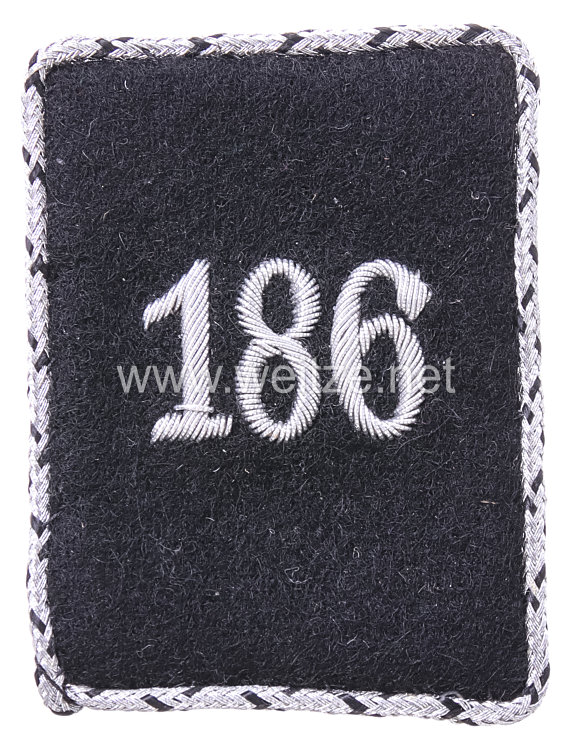
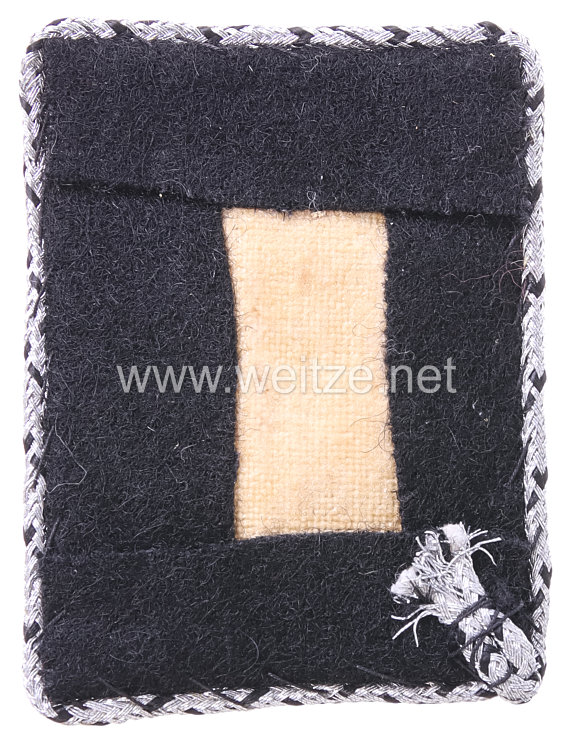
Technical Emergency Corps TeNo Single Collar Tab for a Gefolgschaftsführer

Collar tab hand-embroidered with metal thread “186”. Condition 2+.
388648
200,00

Technical Emergency Corps TeNo Single Collar Tab for a Gefolgschaftsführer

The presented collar tab of the Technische Nothilfe (TeNo) for a Gefolgschaftsführer with the hand-embroidered metal number “186” represents a significant artifact of the paramilitary organization that was founded during the Weimar Republic and existed until the end of World War II.

The Technische Nothilfe (Technical Emergency Service) was established on September 30, 1919 by Reich Defense Minister Gustav Noske as a response to strikes and unrest in the post-war period. Originally, the organization was intended to maintain vital infrastructure such as water, gas, and electricity plants during labor disputes. Over the years, the TeNo evolved into an important technical assistance organization for disaster relief and civil emergencies.

After the Nazi seizure of power in 1933, the TeNo was gradually integrated into the National Socialist system. From 1936 onwards, it was organizationally subordinated to Reichsführer-SS Heinrich Himmler, although it largely maintained its technical independence. The organization became an important component of civil defense and played a central role in air raid protection and the removal of bomb damage during World War II.

The rank insignia and uniforms of the TeNo followed a strictly hierarchical system. The Gefolgschaftsführer was a middle-ranking leadership position within the organization, comparable to a platoon leader in military structures. The collar tabs served as the most important identifying feature for rank and affiliation of TeNo members.

The hand-embroidered execution in metal thread present here indicates high-quality craftsmanship. While simple enlisted ranks often wore collar tabs made of woven or printed material, the insignia for leadership personnel were frequently crafted in more elaborate handwork. The embroidery with metal thread gave the insignia a special luster and emphasized the wearer's position.

The number “186” on the collar tab is of particular significance. Such numbers typically identified the local group or specific unit to which the wearer belonged. The TeNo was divided into numerous local units distributed throughout the German Reich. Each of these units received its own identification number, which was worn on the collar tabs. This enabled quick identification of the origin and responsibility of TeNo members, which was of great practical importance during cross-regional operations.

The uniforming of the TeNo went through several developmental phases. During the Weimar period, members initially wore a rather simple work uniform. With the integration into the National Socialist system, the uniform became increasingly militarized and aligned with the design of other NS organizations. The characteristic dark blue uniform with its specific insignia became a recognizable symbol of the organization.

During World War II, the importance of the TeNo increased considerably. The organization was significantly involved in air raid protection, cleared bomb damage, restored supply systems, and rescued people trapped in rubble. TeNo units were also deployed in occupied territories, where they performed similar tasks. The technical expertise of the members made them indispensable helpers in managing war-related infrastructure damage.

After the end of World War II in 1945, the TeNo, like all other NS organizations, was dissolved by the Allies. Its functions were partially taken over by newly founded disaster relief organizations. In the Federal Republic of Germany, the Technisches Hilfswerk (THW) was later established, which in its civilian orientation shows certain functional parallels to the original conception of the TeNo, but is organizationally and ideologically completely independent.

From a collecting-historical perspective, TeNo collar tabs are today sought-after objects for militaria collectors and history enthusiasts. They document a specific aspect of German history between 1919 and 1945. Particularly specimens in good condition with clear rank insignia and numbers are of historical value, as they provide insights into the organizational structure and uniform system of this technical assistance organization.

r