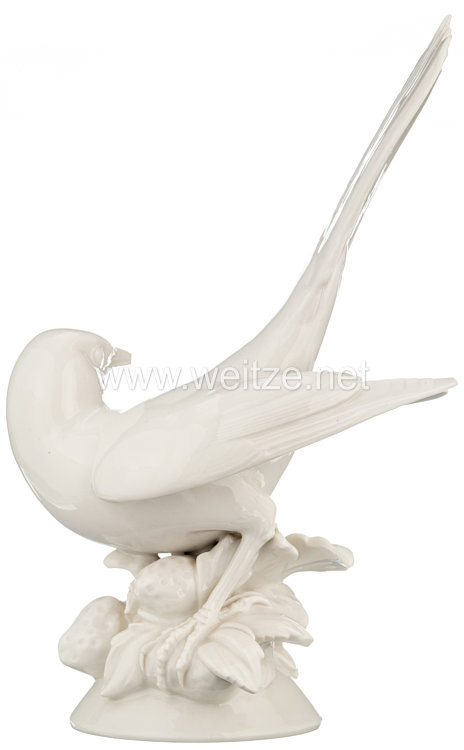
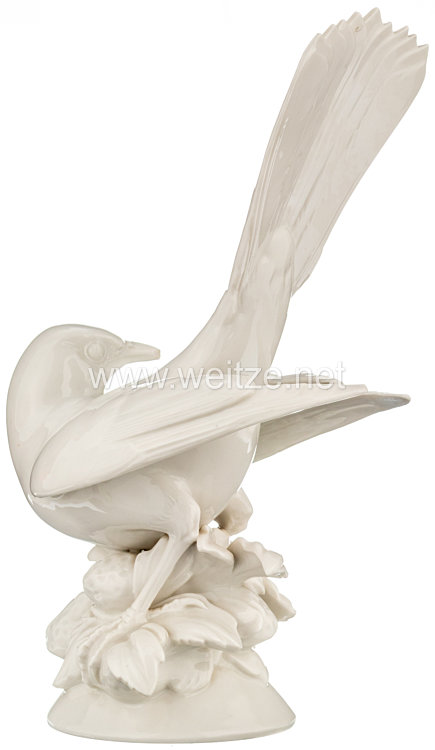
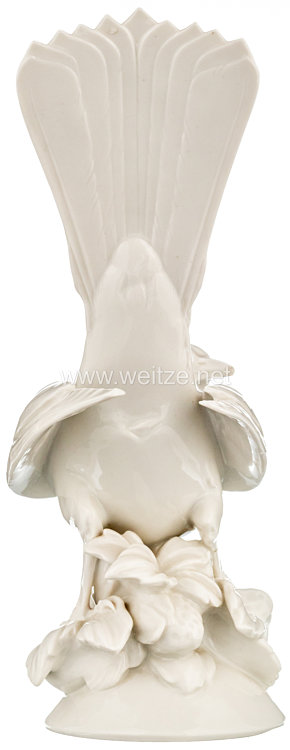
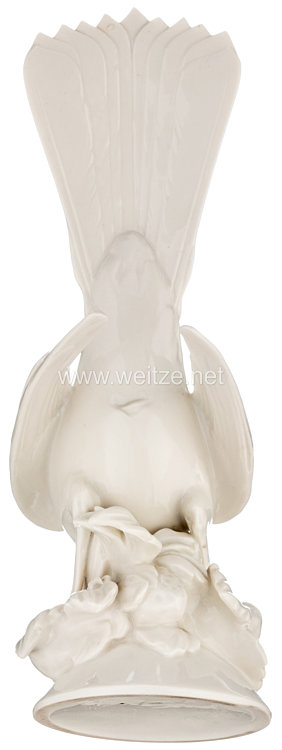
SS Porcelain Manufactory Allach - Blackbird

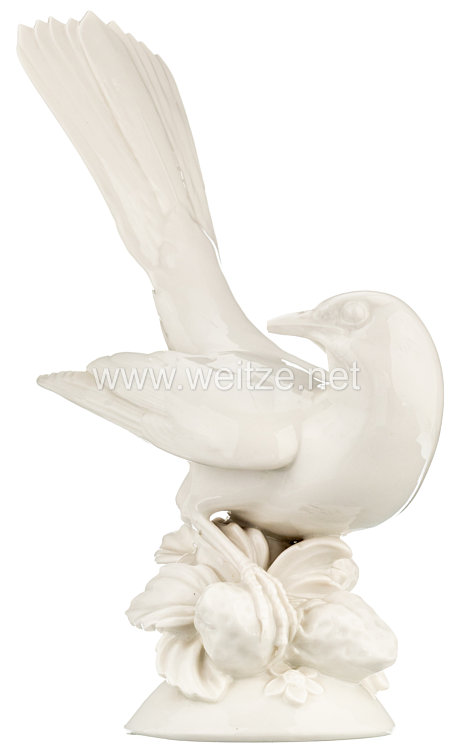
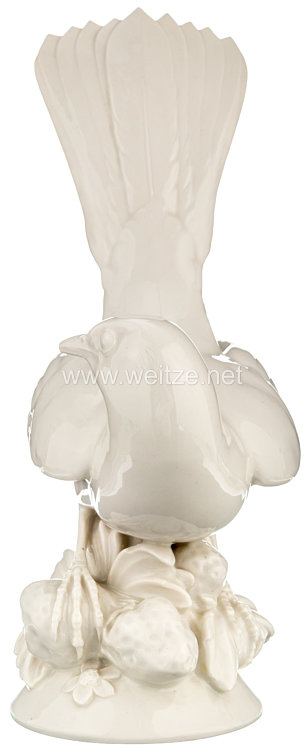
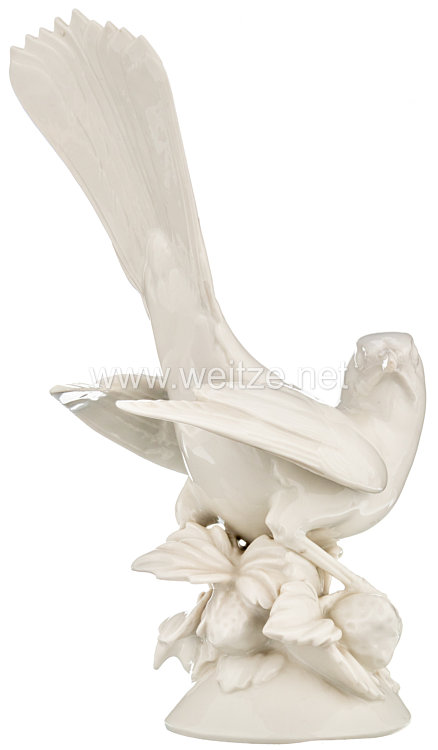
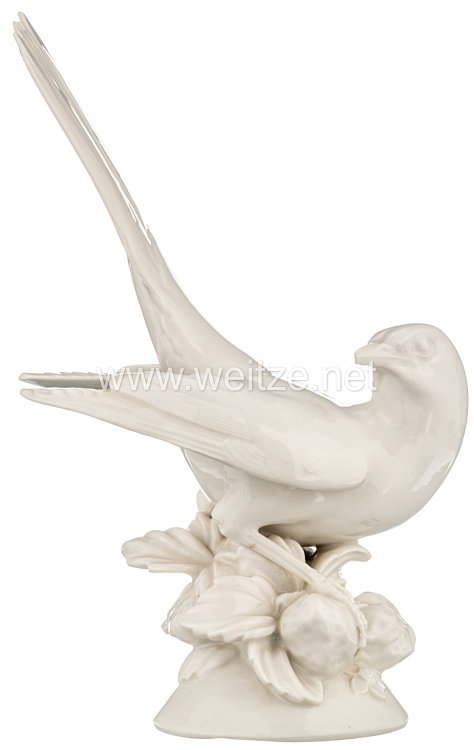
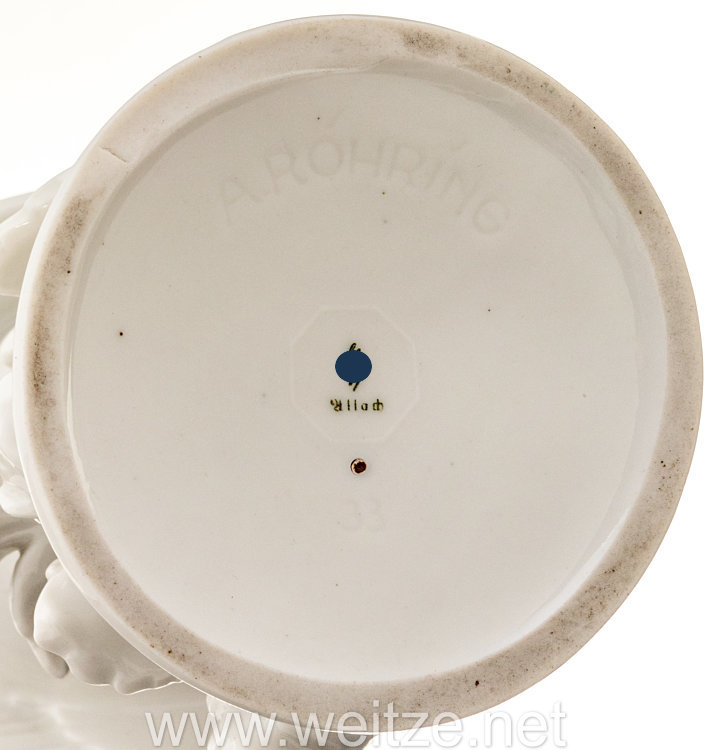
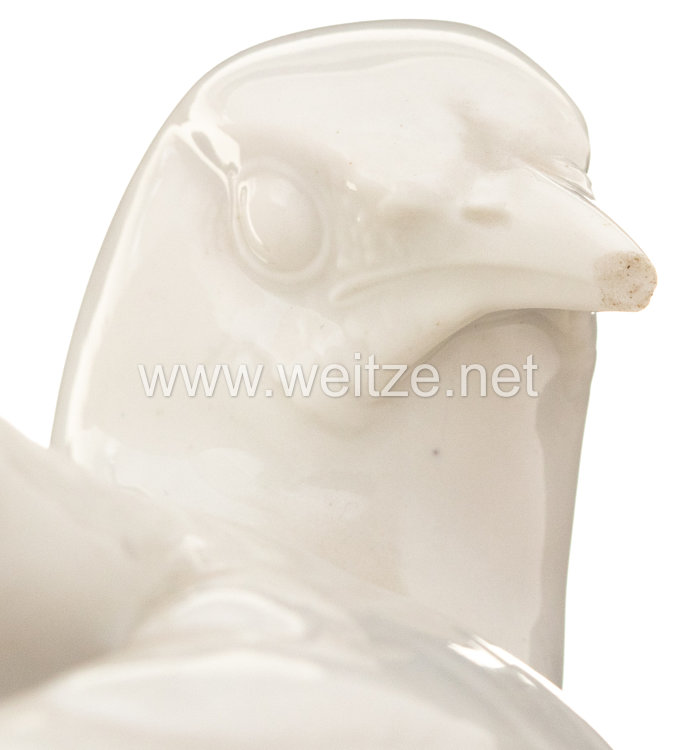
Designed by Adolf Röhring, model number "33". White, glazed porcelain. Base with signature, model number and manufacturer's mark. Very minor damage to beak and plumage. Height approx. 24 cm. Condition 2.
190948
1.650,00

SS Porcelain Manufactory Allach - Blackbird

The Porzellan Manufaktur Allach was established in 1935 in Munich-Allach by industrialist Franz Nagy and porcelain artist Karl Diebitsch. In 1936, the factory was acquired by the SS under Heinrich Himmler's direction as part of his vision to create works representing Germanic culture and Aryan ideals. Himmler personally invested 45,000 Reichsmark and controlled 45 percent of output. The factory became one of Himmler's favorite projects.

On October 1, 1937, production was relocated to an abandoned World War I gunpowder facility at the SS training camp adjacent to Dachau concentration camp. In 1939, the General SS formally took over the company, expropriating Nagy and placing it under the Main Office for Administration and Economy in Berlin. Beginning in 1940, forced labor from Dachau concentration camp was employed: initially 10 prisoners (1 skilled, 9 auxiliary), expanding to over 90 by 1943. During the war years, approximately 25-30 civilian workers and 50 concentration camp prisoners produced both decorative porcelain and utilitarian items. The artistic director was Theodor Kärner.

Adolf Röhring, born in 1911 in Schönwald, was a trained porcelain modeler who worked at Rosenthal before joining Allach around 1935-1936. Model 33 (Amsel/Blackbird) was his second design for the factory, introduced in 1938. The Amsel is described as one of the rarest of all Allach animal figures and difficult to find undamaged. Birds were among the more popular early production items.

Model 33 was produced in two main variants: white glazed (most common) and painted or colored (significantly rarer and commanding higher prices). The white glazed version corresponded to the neoclassical ideal of purity preferred by the SS aesthetic program. Production records show: 1938 saw 28 white examples and 0 colored; 1939 produced 115 white examples and 0 colored. Total production numbers after 1939 are unknown as official production lists from 1939 onwards do not survive.

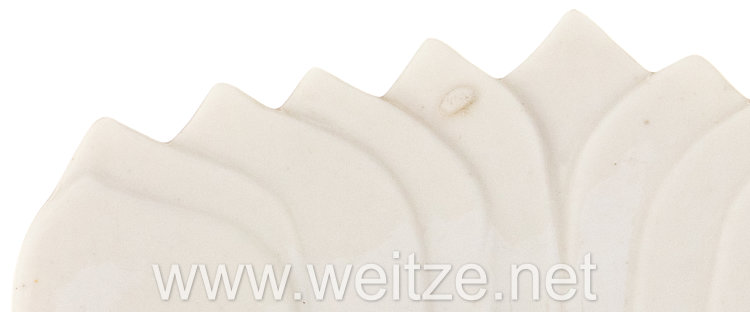
The porcelain figure depicts a blackbird perched on a round base decorated with strawberries and leaves, with head turned and tail feathers erect. The figure is noted for acute attention to detail and strong modeling. Birds are prone to damage, particularly to beaks and tail feathers. The height measures approximately 24 to 25 centimeters (approximately 10 inches tall). The base is marked with the artist signature “A. Röhring” or “Adolf Röhring,” model number “33,” and the Allach manufacturer's mark (stylized SS runes with “Allach” name, typically in green underglaze paint within an octagonal border, or impressed or embossed).

The Amsel was part of Allach's program of decorative animal figurines intended to represent Germanic culture and aesthetic values under SS ideology. Heinrich Himmler was known to be a bird enthusiast and gifted many bird figures to SS officials and friends. Two-thirds of Allach production went to SS, police, and Wehrmacht with substantial discounts. Items were sold through showrooms in Berlin, Posen, Warsaw, and Lemberg (not through general retail). The factory produced approximately 240 different porcelain and ceramic models total between 1936 and 1945.

The Allach factories were shut down in April 1945 with the fall of the Third Reich when U.S. forces liberated Dachau on April 29, 1945, and were never reopened under their original structure. Molds were destroyed or confiscated by Allied forces. Adolf Röhring continued his career as a porcelain modeler, establishing “Adolf Röhring, Porzellan Atelier” in Neustadt bei Coburg in 1950 (operating until 1974 under his name, then until 1981 under his wife's name). Today, Allach porcelain remains controversial due to its association with the SS and use of concentration camp forced labor. Pieces are sought by specialized collectors of historical ceramics and Third Reich militaria, commanding high prices due to rarity, artistic quality, and limited production years. The Amsel/Blackbird Model 33 is particularly prized as one of the rarest Allach animal figures. Museums, including the United States Holocaust Memorial Museum, hold Allach pieces as historical evidence of Nazi cultural programs and forced labor.

r