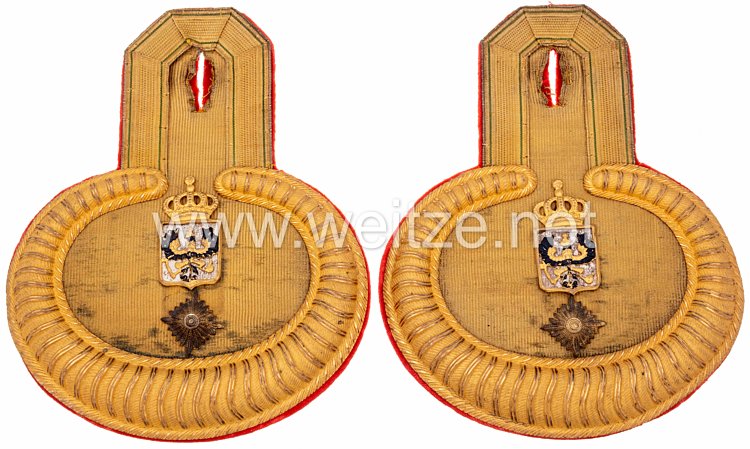
Prussia Pair of Epaulettes for an Official
These Prussian epaulettes for a civil servant from around 1900 represent a significant chapter in German uniform history. In the German Empire (1871-1918), Prussia was not only the largest federal state but also significantly shaped the military and civil administrative culture of the entire Reich.
Historical Context and Significance of Civil Servant Epaulettes: In the Prussian state system of the late 19th and early 20th centuries, not only military personnel wore uniforms but also a wide variety of civil servants. This included administrative officials, forestry officials, postal workers, railway officials, and many other professional groups. The uniforming served to represent state authority and to clearly identify rank within the hierarchy.
Construction and Design: The golden fields and crescents of these epaulettes display the typical construction of high-quality civil servant insignia. The golden braids with green insets are characteristic of certain administrative branches. In the Prussian system, colors were strictly regulated and denoted specific service affiliations. Green insets were frequently found among forestry, domain, and agricultural administration officials.
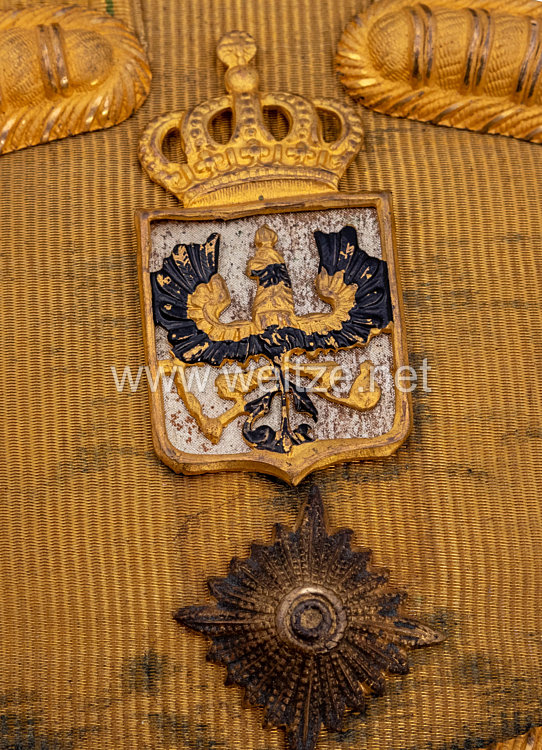
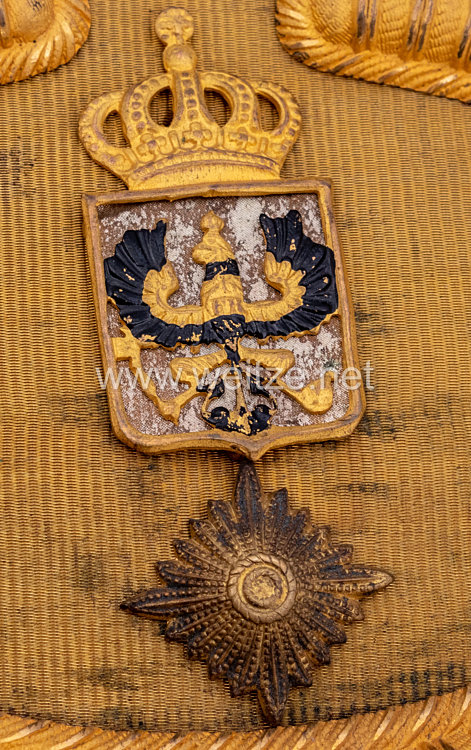
The applied civil servant eagle differs from the military eagle in its specific execution. The Prussian civil servant eagle was manufactured according to precise regulations and was usually smaller and less martial in design than its military counterpart. The present rank star indicates an elevated civil service grade, whereby the number and arrangement of stars in Prussian service were precisely regulated.
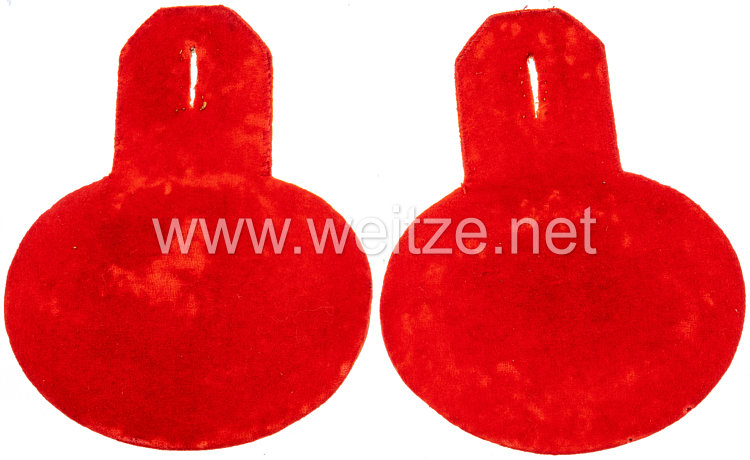
The red cloth backing formed the base of the epaulette and was executed in different colors depending on the purpose. Red was one of the most common colors and was found in various administrative branches.
Legal Foundations and Regulations: The design of civil servant epaulettes in Prussia was precisely regulated by various Supreme Cabinet Orders (Allerhöchste Kabinetts-Ordres, AKO) and service regulations. As early as under King Frederick William III (1797-1840), comprehensive uniform regulations for civil servants were issued. These were revised several times during the 19th century and adapted to changing requirements.
The period around 1900, when these epaulettes were created, fell during the reign of Emperor Wilhelm II (1888-1918), who was known for his preference for military uniforming and representation. During this epoch, the uniforming of the Prussian civil service reached its peak.
Manufacturing and Craftsmanship: Epaulettes of this quality were produced by specialized passementerie makers and insignia manufacturers. Significant producers such as firms in Berlin, Breslau, or Königsberg manufactured according to strict regulations and using high-quality materials. Gold embroidery was often executed in genuine metal wire work, using gold-plated silver wire or genuine gold thread.
Wearing and Use: Epaulettes were worn in pairs on the shoulders of the uniform and fastened with buttons or hooks. They were part of parade uniforms and were worn for representative occasions, official duties, and ceremonial events. The everyday uniform could feature simplified shoulder boards depending on service regulations.
End of an Era: With the end of World War I and the collapse of the monarchy in 1918, these rank insignia lost their official function. The Weimar Republic largely abolished monarchical insignia and introduced new, republican rank badges. The magnificent civil servant epaulettes of the Imperial era became historical testimonies of a bygone epoch.
Collector Value and Historical Significance: Today, such epaulettes are sought-after collector's items that offer important insights into the hierarchy and representational culture of the Prussian state system. They document the connection between craftsmanship, state authority, and social order in the German Empire. The stated condition grade 2 (good) makes these epaulettes a valuable historical document.