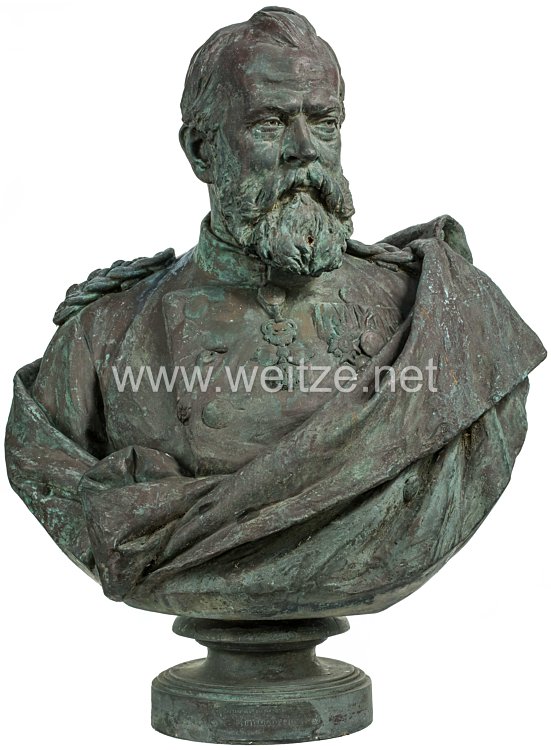
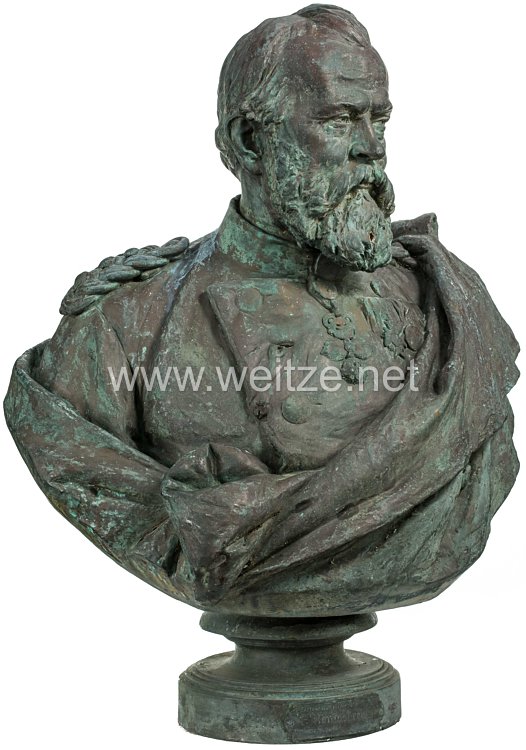
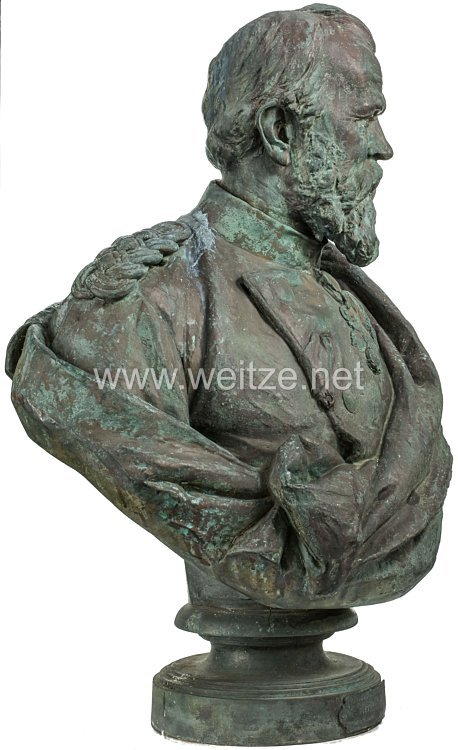
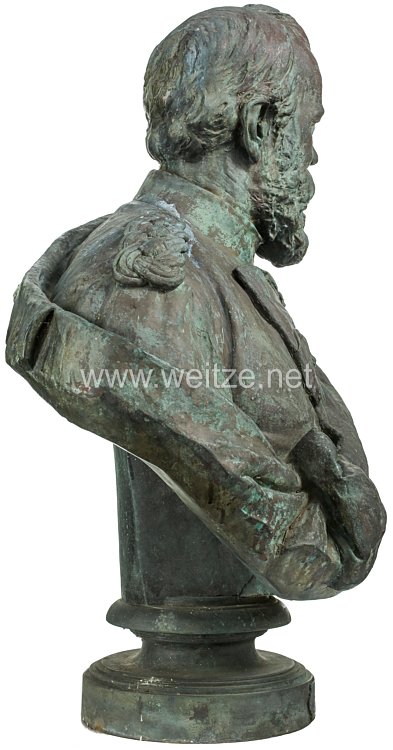
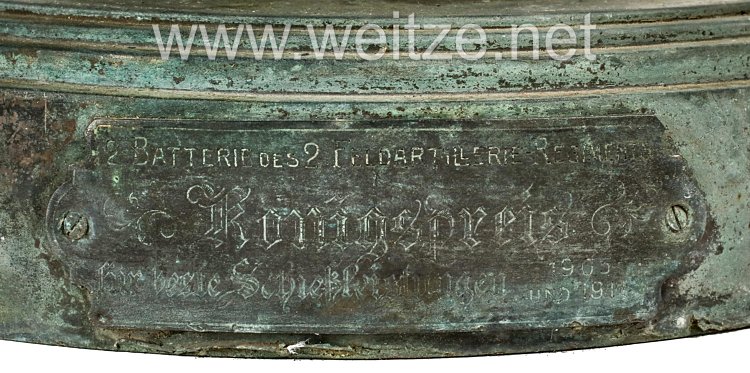
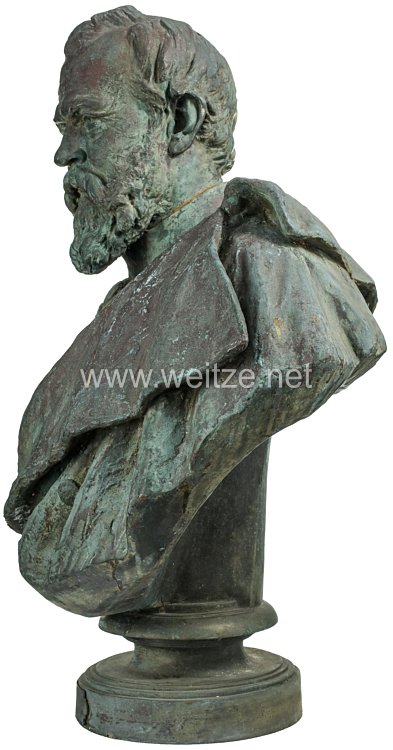
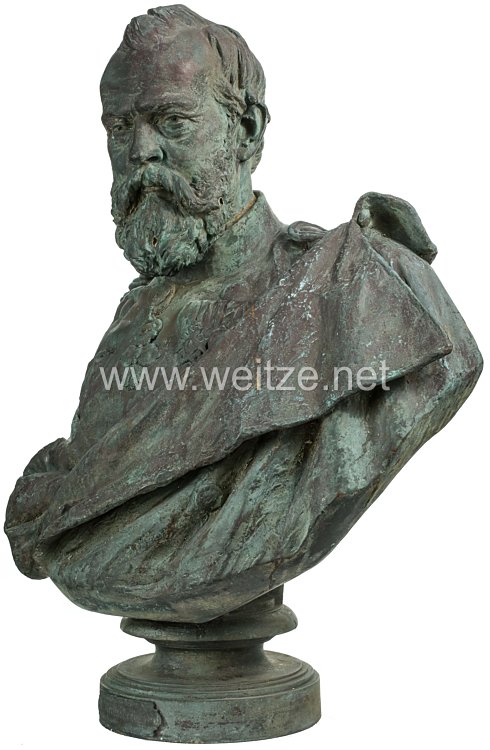
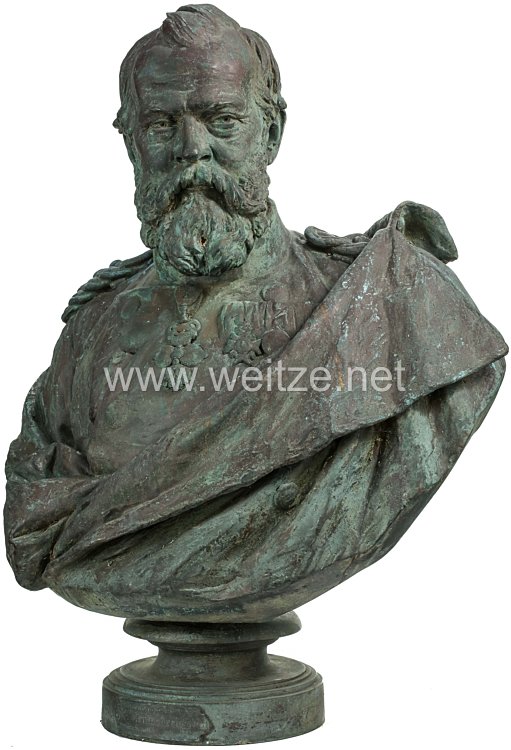
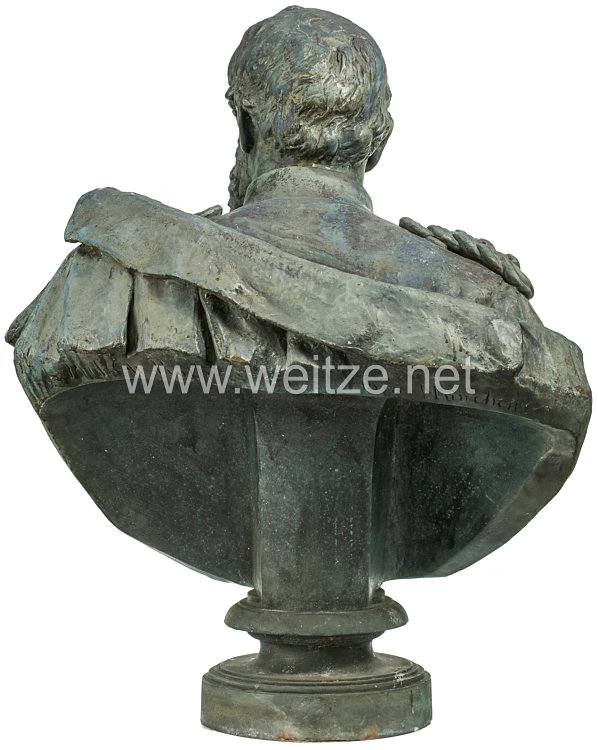
Among the military awards of the Kingdom of Bavaria, the Königspreis für beste Schießleistungen (King’s Prize for Best Shooting Performance) occupies a distinctive place. While many military prizes took the form of wearable badges or modest trophies, the present monumental bronze bust of Prinzregent Luitpold of Bavaria represents an extraordinary testament to Bavarian military tradition. Standing approximately 86 centimeters tall and weighing an estimated 40 to 50 kilograms, this large ceremonial prize object was awarded to the 2nd Battery of the 2nd Field Artillery Regiment Horn for outstanding marksmanship in the years 1905 and 1911.
The Königspreis System in Bavaria
The Bavarian Army conducted its own shooting competitions parallel to the Prussian Kaiserpreis system. Like Saxony and Württemberg, Bavaria awarded the Königspreis (King’s Prize) to units that achieved the best results in annual competitive marksmanship tests. The Bavarian Königspreis bore the royal crown rather than the imperial crown, distinguishing it from its Prussian counterpart. Such shooting prizes were an important instrument in the 19th and early 20th centuries for fostering marksmanship proficiency within the armed forces, while simultaneously serving as prestigious distinctions for entire units.
The 2nd Field Artillery Regiment Horn
The Royal Bavarian 2nd Field Artillery Regiment “Horn” was founded on October 11, 1824, and was stationed in Würzburg from 1827 onward. The regiment was named after General Carl von Horn (1847–1923), a Bavarian Generaloberst (Colonel General) who served as War Minister from 1905 to 1912. The regiment had a distinguished history spanning nearly a century, participating in the campaigns of 1848, 1866, 1870–71, and World War I. Following the end of the war, the regiment was dissolved in 1919. Its tradition was carried forward in the Reichswehr from August 24, 1921, by the 1st Battery of the 7th (Bavarian) Artillery Regiment in Würzburg. Later, in the Wehrmacht, the tradition was continued by the II. Abteilung of Artillery Regiment 93.
Prinzregent Luitpold of Bavaria
Prince Luitpold of Bavaria (1821–1912) was one of the defining figures of late 19th-century Bavarian history. From 1869, he served as Inspector General of the Bavarian Army, and in 1876 he was appointed Generalfeldzeugmeister (General of Ordnance) with the rank of Field Marshal. Following the incapacitation of King Ludwig II in 1886, Luitpold assumed the conduct of state affairs as Prince Regent, an office he held until his death in 1912. His regency is widely regarded as a “Golden Age” for Bavaria, particularly for the cultural flourishing of Munich. The bust depicts him in his capacity as General of Infantry, wearing his uniform with large decorations — a portrayal that reflects his deep connection to the army.
The Sculptor Christoph Roth
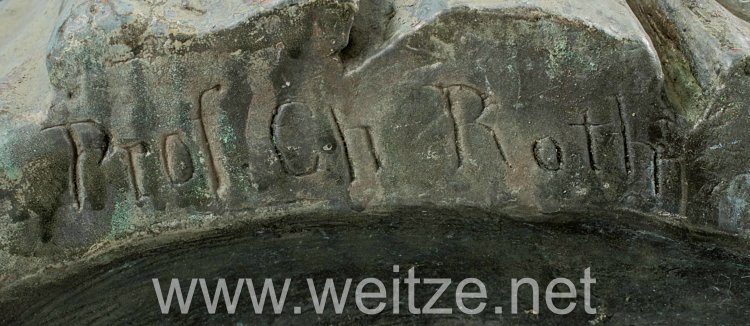
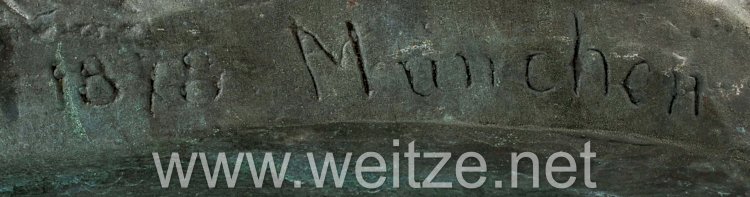
The creator of this bust, Professor Christoph Roth (1840–1907), was a Munich sculptor and art professor renowned for his anatomically inspired realistic works. Roth was no stranger to military portraiture: in 1883, he created marble busts of the Bavarian generals Ludwig von der Tann and Jakob von Hartmann for the Bavarian Army Museum. The present bust bears his signature on the reverse: “Prof. Ch. Roth 1878 München”, while the front plaque records the award years of 1905 and 1911.
Physical Description
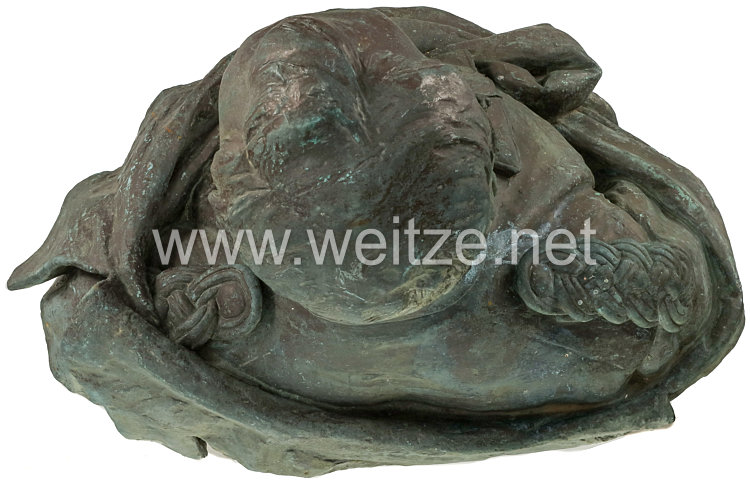
The bust is hollow cast and bronzed, displaying a fine bronze patina. It presents a very detailed depiction of the Prinzregent in uniform as General of Infantry with large decorations. The pedestal bears a plaque inscribed: “2. Batterie des 2. Feldartillerie-Regiments Königspreis für beste Schießleistungen 1905 und 1911”. The piece survives in untouched, uncleaned condition with typical signs of age and patina.
Significance for Collectors
This bust combines several attributes that make it a remarkable collector’s piece. Its sheer size and craftsmanship set it apart from the more commonly encountered wearable shooting badges or small trophies — this is a monumental ceremonial prize object that would have held a place of honor in the battery’s quarters. It interweaves the history of a distinguished Bavarian regiment with the person of Prinzregent Luitpold and the work of a recognized Munich sculptor. The fact that the plaque records two award years — 1905 and 1911 — attests to the sustained excellence of the 2nd Battery in competitive marksmanship. As a document of the Bavarian Königspreis system, which operated in parallel to the better-known Prussian Kaiserpreis, this object illuminates a chapter of South German military history that often receives less attention among collectors than its Prussian counterparts. The untouched, unrestored condition with natural patina lends the piece an additional dimension of authenticity that is increasingly valued in today’s collecting world.