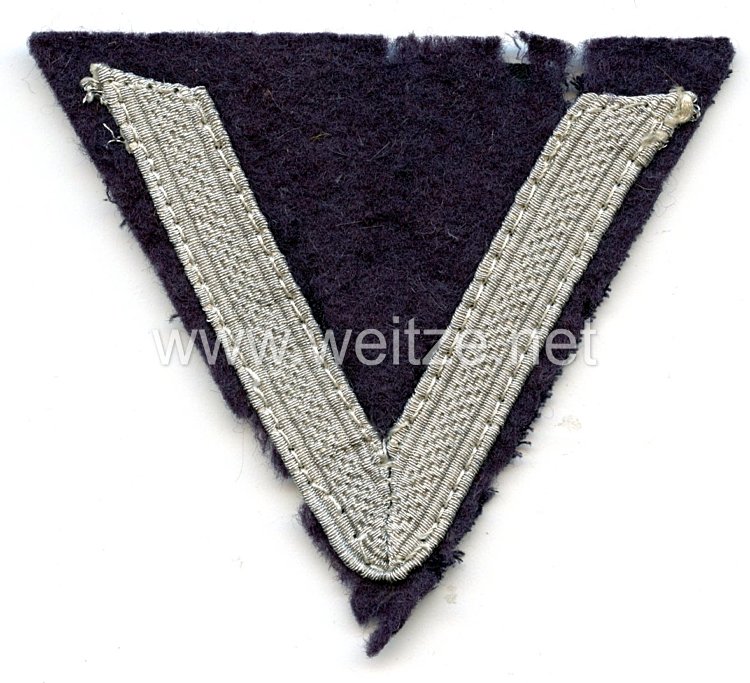
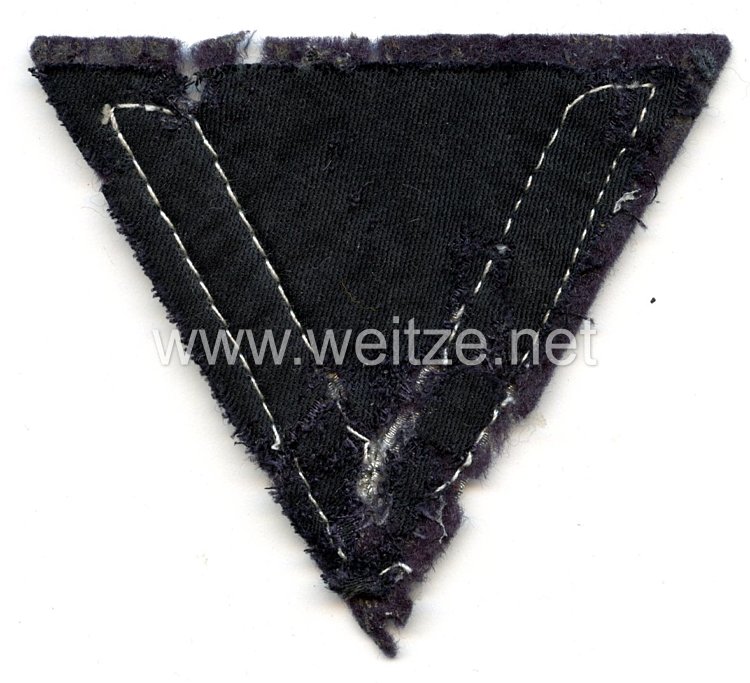
Luftwaffe Sleeve Insignia Private First Class

, Condition 3.
439845
10,00

Luftwaffe Sleeve Insignia Private First Class

The sleeve rank insignia of the Gefreiter (Lance Corporal) of the Luftwaffe represents a significant aspect of the military rank identification system of the German Wehrmacht during the Third Reich from 1935 to 1945. These service rank badges were not merely functional identification markers within the military hierarchy, but also expressions of the complex organizational and administrative structures of the National Socialist armed forces.

The Luftwaffe, officially founded on February 26, 1935, and under the command of Reich Marshal Hermann Göring, developed an independent system of rank insignia that differed from those of the Army (Heer) and Navy (Kriegsmarine). The rank of Gefreiter represented the first promotion level above the simple soldier (Flieger) and was part of the enlisted ranks.

The Luftwaffe's sleeve insignia were worn according to the Luftwaffe Dress Regulations and were subject to strict regulations regarding their placement, design, and manner of wear. The Gefreiter's badge typically consisted of an angled chevron attached to the lower sleeve of the uniform jacket. The design was executed in the characteristic light blue or silver-gray color of the Luftwaffe on a dark background, with various versions existing depending on the uniform type.

The materials and manufacturing techniques of these badges varied considerably, especially during the course of the war. Early examples, manufactured between 1935 and 1941, were characterized by high-quality workmanship, with machine-woven or hand-embroidered details on cloth backing. The threads used were often made of rayon or cotton, with aluminum threads also employed for officers and in peacetime.

As the war progressed and material shortages increased, production standards changed significantly. From 1942 onwards, simplified versions with lower-quality materials were increasingly produced. This led to a great variety of designs, which are of particular interest to collectors today as they reflect the economic development and production conditions during World War II.

The rank of Gefreiter was typically awarded after a service period of six months to one year, depending on the soldier's performance and the recommendations of his superiors. The Gefreiter already had certain privileges over the simple Flieger but remained in the lowest hierarchical level of enlisted ranks. Above the Gefreiter followed the ranks of Obergefreiter (Senior Lance Corporal), Hauptgefreiter (Chief Lance Corporal), and finally the non-commissioned officer grades.

The sleeve insignia were worn on various uniform types, including the Fliegerbluse (flight blouse), the Waffenrock (service tunic), and other service uniforms. The exact positioning was prescribed: the badge was attached to the left upper arm at a specific height above the elbow. Different regulations could apply for certain work and special uniforms.

From a historical perspective, these seemingly simple rank badges offer important insights into the organizational structure of the Luftwaffe. They document not only military hierarchies but also industrial production, resource allocation, and the importance that the Nazi regime attached to external representation and symbolism. The Luftwaffe, as the most modern branch of service, placed particular emphasis on a distinctive visual identity.

For military historical research, original badges are of considerable value as they represent authentic primary sources. The examination of manufacturing techniques, material composition, and wearing patterns allows conclusions about production locations, time periods, and sometimes even specific military units. However, the market for such objects is also characterized by numerous post-war forgeries, making careful authentication necessary.

The condition of such historical badges is usually evaluated according to a standardized system, taking into account factors such as fabric preservation, color intensity, completeness, and signs of wear. This evaluation is important for both collectors and museums to determine the historical and material value of the object.