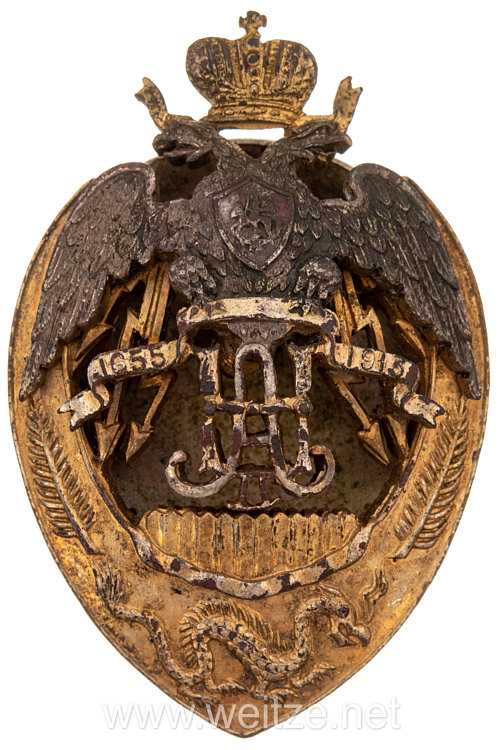
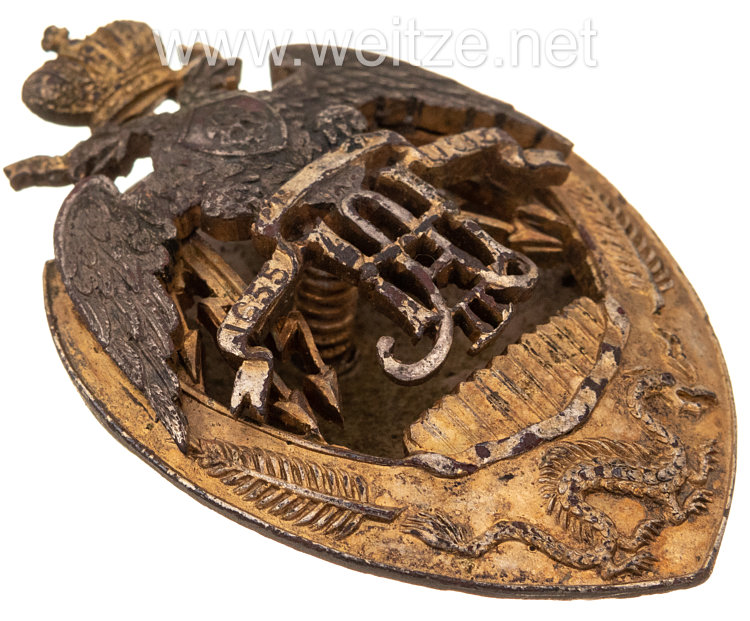
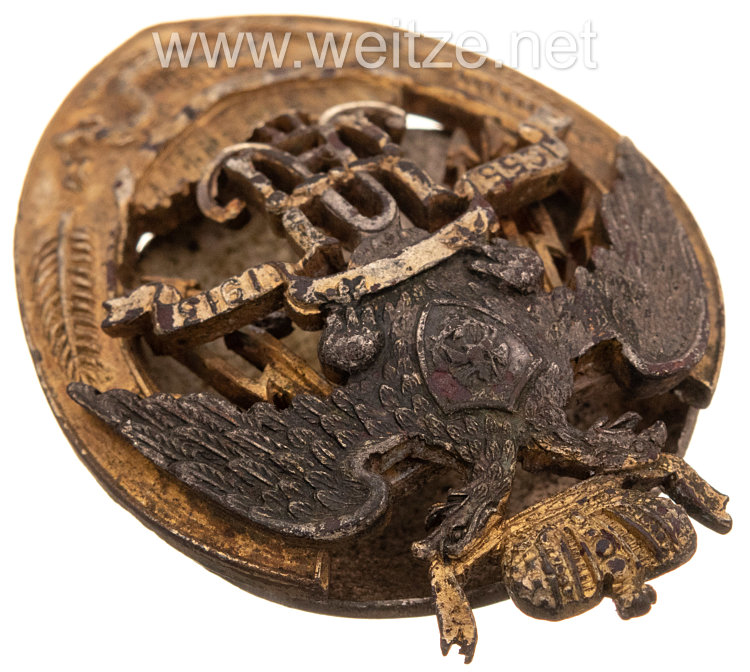
Tsarist Russia Badge for Members of the Zabaykalsky Cossack Host
A fine original.
The Badge for Members of the Zabaykalsky Cossack Host represents a fascinating testament to the late Imperial Russian military tradition. This specimen, manufactured around 1915, represents the proud history of one of the most significant Cossack formations of the Russian Empire, whose homeland lay in the vast territories beyond Lake Baikal.
The Zabaykalsky Cossack Host (Trans-Baikal Cossack Host) was officially founded in 1851 when Tsar Nicholas I recognized the necessity of securing the Far Eastern frontiers of the expanding empire. The Cossacks of this region played a crucial role in the development and defense of Siberian and Far Eastern territories. Their headquarters was located in Chita, and they controlled a vast area strategically positioned between Lake Baikal and Manchuria.
The military organization of the Zabaykalsky Host followed the traditional Cossack system, whereby men were obligated to spend a considerable portion of their lives in military service. In return, they received land rights and special privileges. By the early 20th century, the Host comprised several cavalry regiments, artillery batteries, and border guard units, distinguished by exceptional horsemanship and adaptability to harsh climatic conditions.
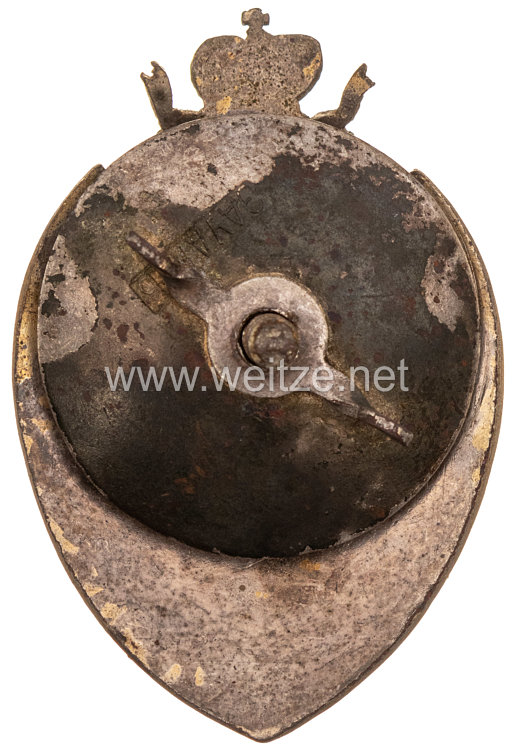
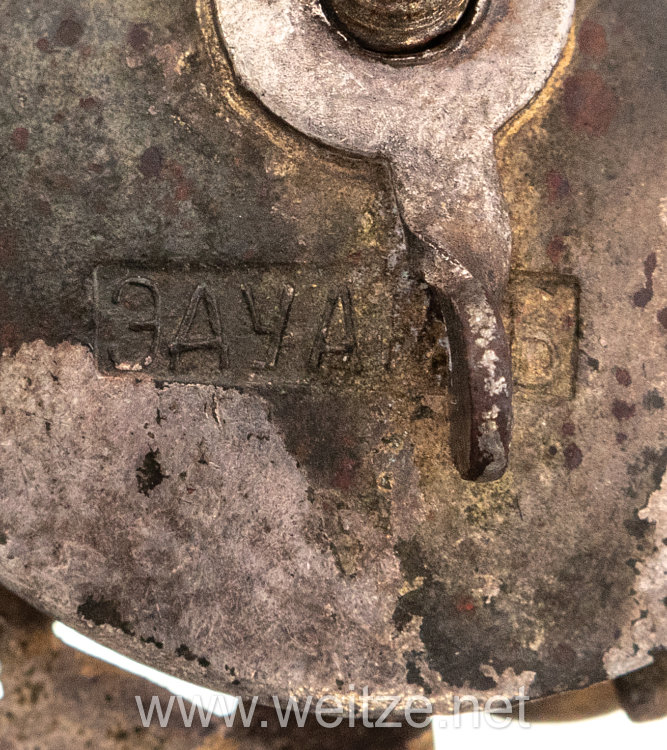
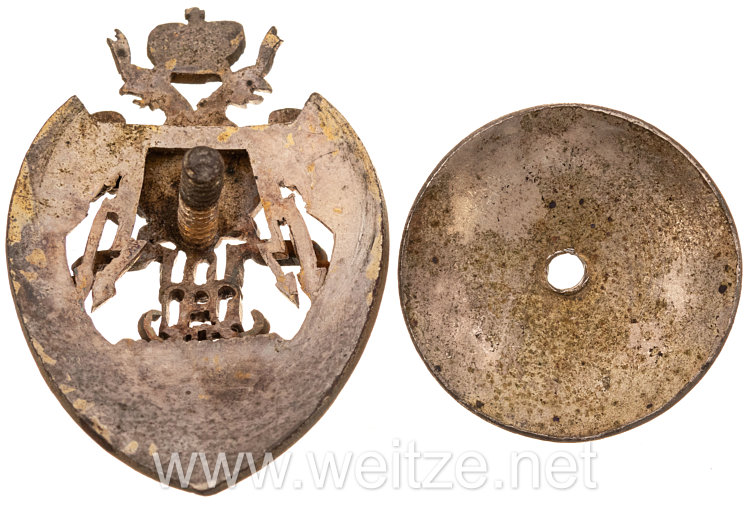
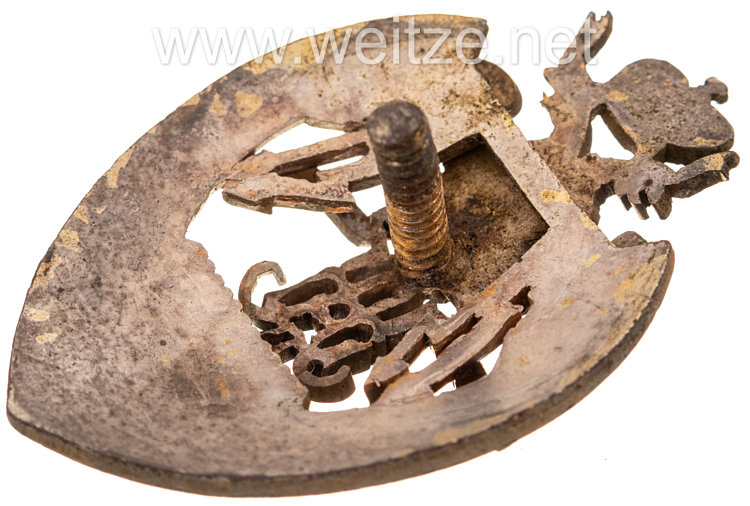
The present badge was manufactured by “Eduard,” a well-known workshop for military decorations in Tsarist Russia. The use of partially gilded base metal with a silvered reverse corresponds to the quality standards of military badges of this era. The screw-disc attachment was typical for cap badges or uniform decorations of the period.
The year 1915, the approximate date of manufacture of this piece, was a critical moment in Russian history. World War I was raging, and the Russian Empire found itself in a desperate struggle against the Central Powers. The Zabaykalsky Cossacks were deployed on various fronts, although their primary task traditionally remained border security in the Far East. The Sino-Russian border and growing Japanese ambitions in the region required a constant military presence.
Such badges served multiple purposes: they were symbols of belonging and pride, means of identification, and expressions of the special status of Cossacks within the Russian military structure. The Cossacks enjoyed considerable autonomy and maintained their own traditions, uniforms, and symbols that distinguished them from regular army units.
The Revolution of 1917 marked the end of the Tsarist order and thus the end of traditional Cossack hosts as official military formations. Many Zabaykalsky Cossacks fought during the Russian Civil War on the side of the White Army against the Bolsheviks. The Trans-Baikal region became an important theater of this conflict, as various factions, including Japanese intervention forces, fought for control.
After the consolidation of Soviet power, the Cossack formations were dissolved and their special privileges abolished. Many former Cossacks fled into exile, particularly to Manchuria, where they preserved their traditions in emigrant communities. Badges such as the present example became important mementos of a vanished world.
Today, such badges are valuable historical artifacts that provide insight into the complex military and social structure of the late Tsarist Empire. They document not only military organization but also regional identities and the special role that Cossacks played in Russian expansion and border security. The Zabaykalsky Cossack Host represents the Far Eastern dimension of this history, often overshadowed by the better-known Don and Kuban Cossacks, but no less significant for understanding Russian imperial history.
The craftsmanship evident in this badge, with its combination of gilding and silvering techniques, reflects the pride these warriors took in their appearance and identity. The manufacturer's mark “Eduard” on the screw disc provides authentication and connects the piece to the network of specialized workshops that served the military market of Imperial Russia. These artisans produced everything from simple identification badges to elaborate decorations, their work now serving as tangible links to a transformed world.