WHW - Netherlands - WHN Winterhulp - Green Collection Tin

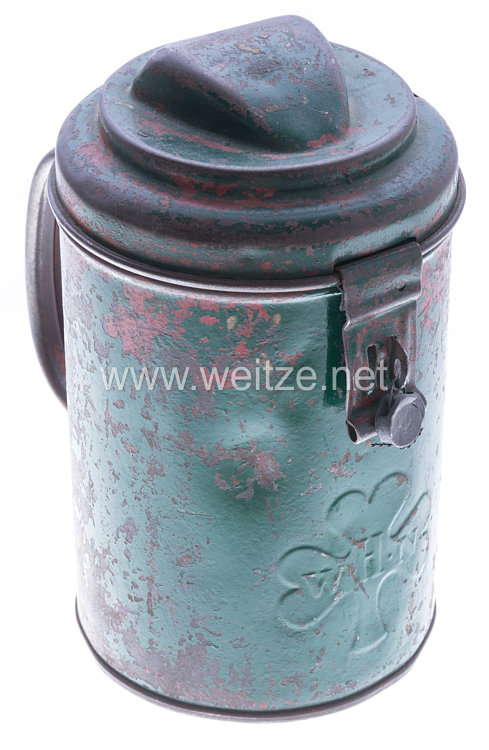
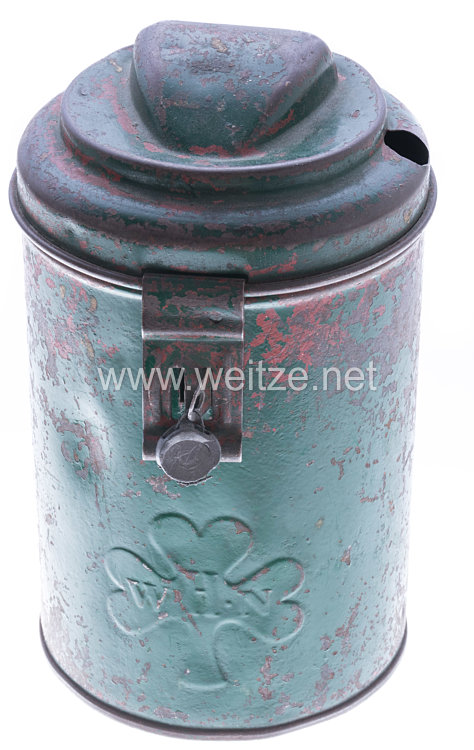
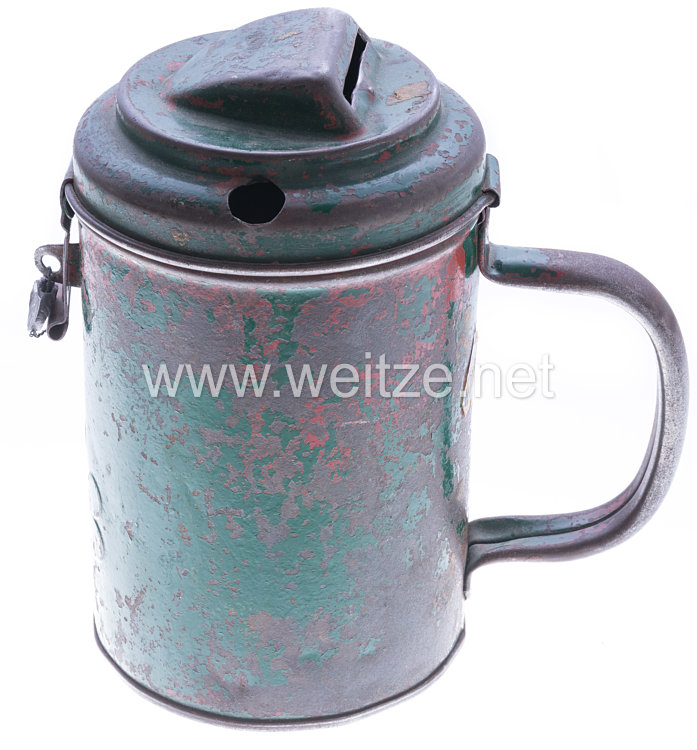
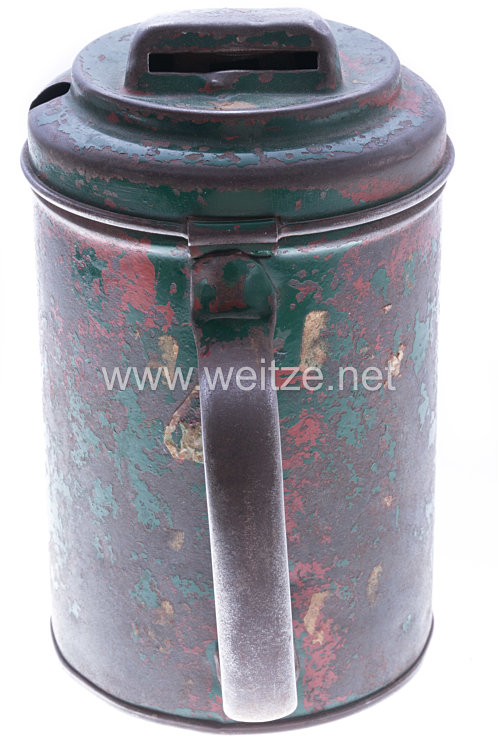
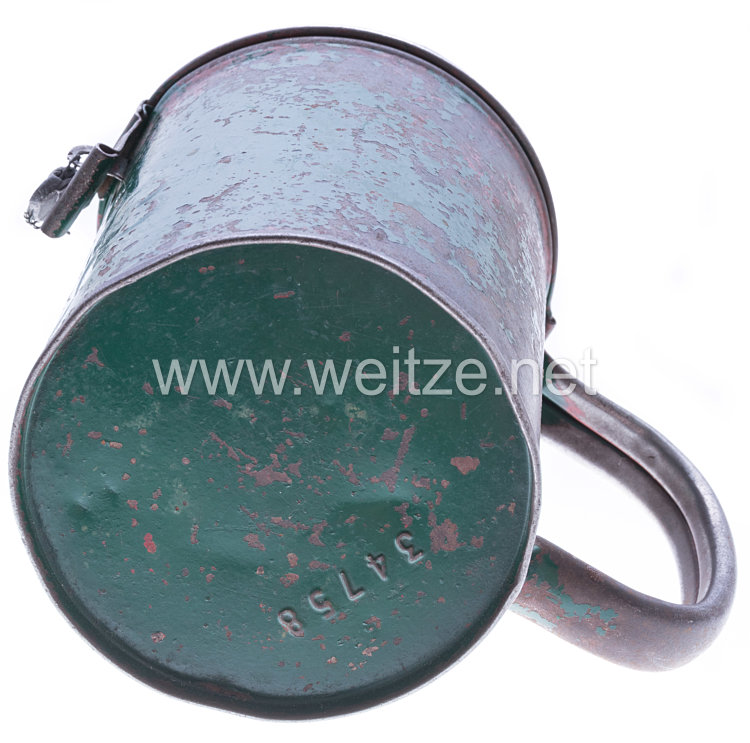
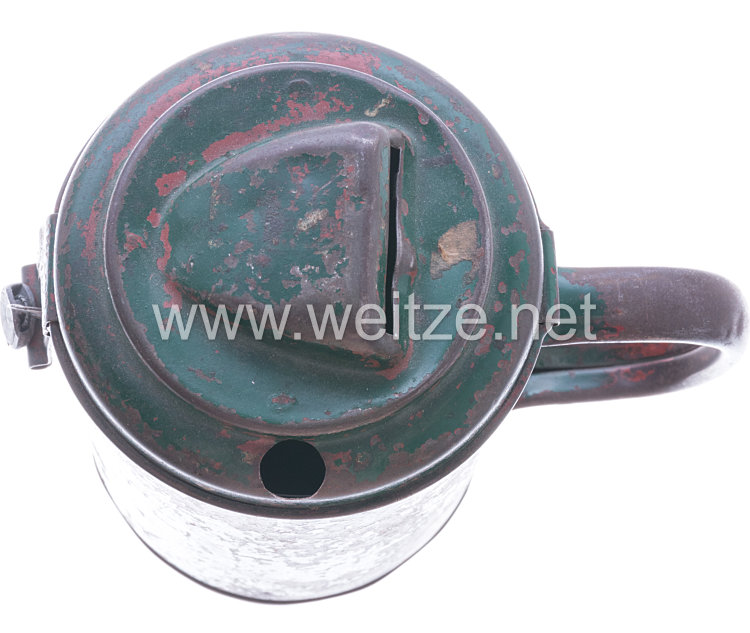
front with cloverleaf emblem and WHN, numbered on bottom, seal still intact; used, good condition.
318743
200,00

WHW - Netherlands - WHN Winterhulp - Green Collection Tin

WHN Collection Box from the Netherlands during German Occupation (1940-1945)

This green collection box bearing the characteristic cloverleaf symbol and the inscription WHN (Winterhulp Nederland) represents a significant artifact from the Dutch occupation period during World War II. These collection boxes were used as part of the Winterhulp Nederland organization, which was structured after the German model of the Winterhilfswerk (WHW).

Following the German invasion of the Netherlands in May 1940, occupation authorities under Reichskommissar Arthur Seyss-Inquart established a comprehensive system to control Dutch public life. The Winterhulp Nederland was founded in 1940 as the Dutch variant of the German Winterhilfswerk. While the German WHW had existed since 1933 and served as an important National Socialist propaganda instrument, the Dutch version was primarily used to coordinate charitable activities while simultaneously ideologically influencing the population.

The cloverleaf symbol on the collection box was the official emblem of Winterhulp Nederland and was intended to establish a connection to Dutch identity, while the organization was actually under German control. The collection boxes were used by authorized collectors who went door-to-door or solicited donations in public places. The numbering on the bottom served for control and traceability, as each box was assigned to a specific collector. The preserved seal indicates that the box was sealed after filling to prevent tampering.

The green coloring was typical of many WHN collection boxes and distinguished them from the often red-and-white German WHW boxes. The material was typically tin plate, as metals were rationed during the war and needed for the armaments industry. The practical construction with an opening for inserting coins and a sealed removal opening at the bottom corresponded to the standard design of such collection containers.

During the occupation, Winterhulp Nederland organized various collection campaigns, especially during the winter months from October to March. The collected funds were officially intended to benefit needy Dutch families, but a considerable portion flowed into the German war economy and administration. The organization was closely connected with the NSB (Nationaal-Socialistische Beweging), the Dutch National Socialist party under Anton Mussert.

For the Dutch population, participation in WHN collections presented a moral dilemma. On one hand, many people wanted to help fellow citizens in need; on the other hand, supporting the organization meant indirect collaboration with the occupation regime. As the war progressed and occupation hardships increased, resistance to such collections grew.

After the liberation of the Netherlands in 1945, Winterhulp Nederland was immediately dissolved. Many persons associated with the organization were held accountable during denazification proceedings. The collection boxes, badges, and other WHN materials were largely destroyed or melted down. Today, these objects are historical witnesses to a dark period of Dutch history.

From a museological and historical perspective, preserved WHN collection boxes are important documents of everyday life under German occupation. They illustrate how the National Socialists attempted to instrumentalize established welfare structures for their purposes and control the civilian population in occupied territories. The numbering and sealing demonstrate the bureaucratic system through which the occupation power monitored even seemingly charitable activities.

Such collection boxes are today displayed in Dutch museums such as the Verzetsmuseum (Resistance Museum) in Amsterdam or regional history museums, where they serve as educational tools about the occupation period and contribute to critical examination of this historical era.