Hessen Saber for Infantry Officers, Execution as Presentation Piece
The Hessian Infantry Officer's Sabre – A Testament to Imperial Military Tradition
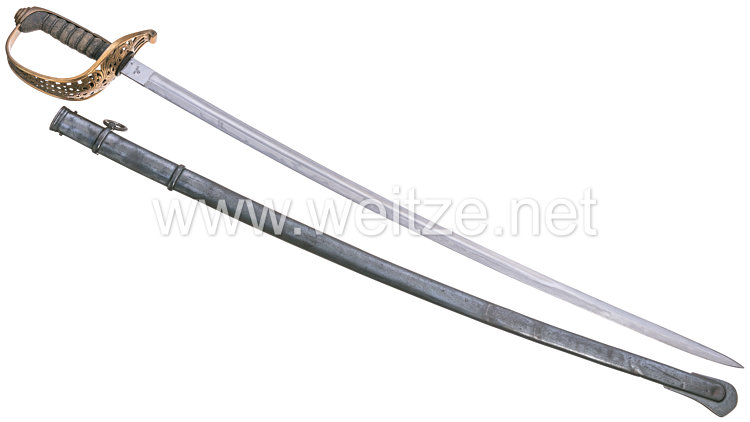
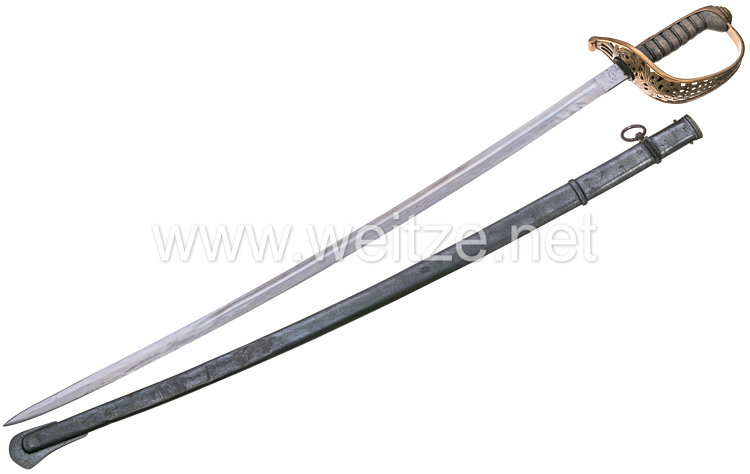
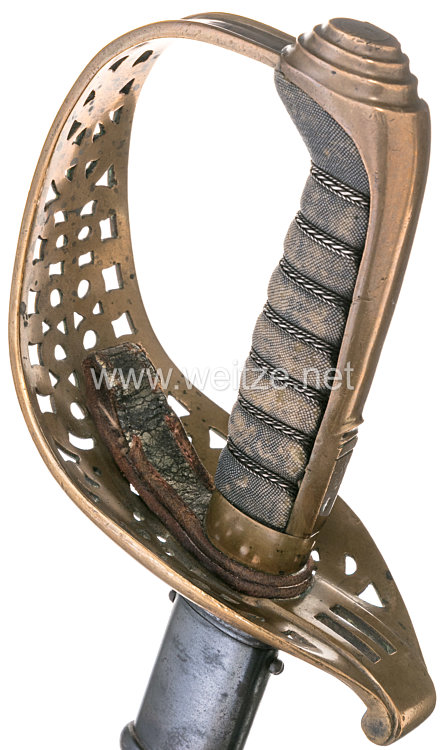
This sabre represents a characteristic type of edged weapon carried by infantry officers of the Grand Duchy of Hesse during the late Imperial period. Designated as a Kammerstück (chamber piece), it is a high-quality execution that an officer privately acquired and retained in his personal possession, as opposed to purely service-issued weapons.
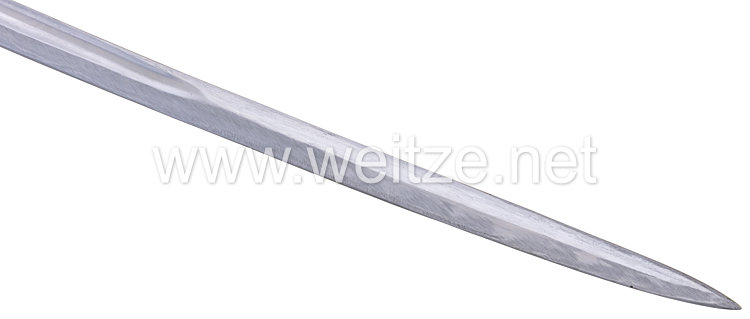
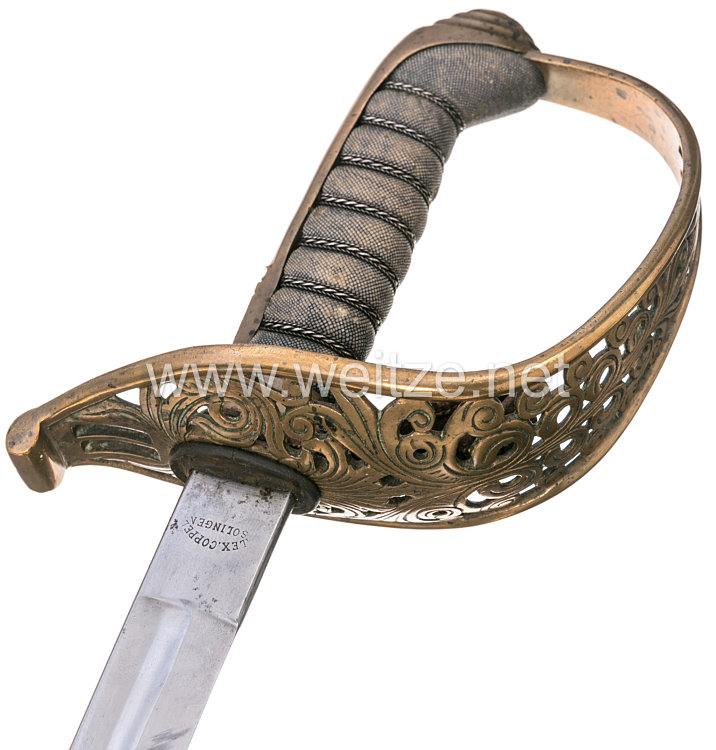
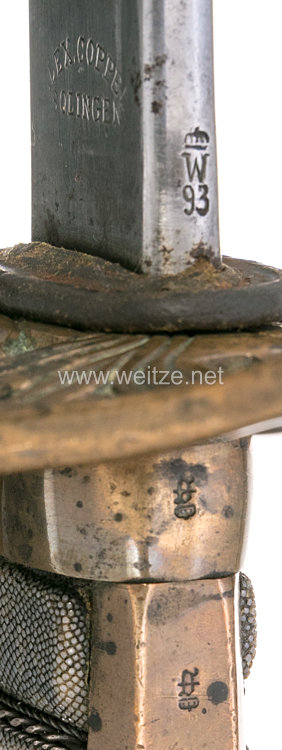
The slightly curved blade with fuller follows the typical design of German infantry officer sabres as standardized from the 1880s onwards. The fuller served not only to reduce weight but also increased the blade's stability while maintaining flexibility. The firm Alexander Coppel of Solingen was among the renowned blade manufacturers of the German Empire. Solingen, known for centuries as a center of blade production, supplied both civilian and military customers throughout the Reich and beyond.
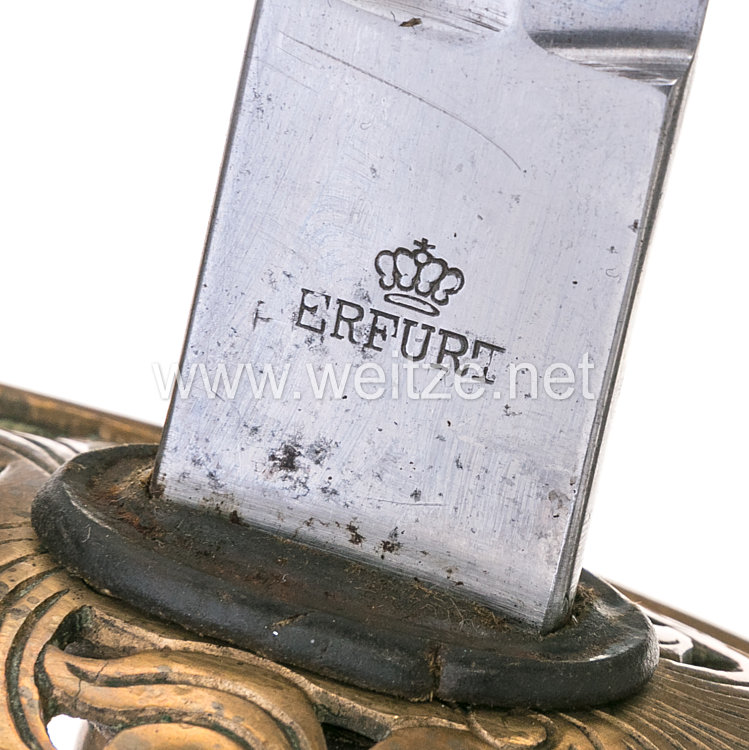
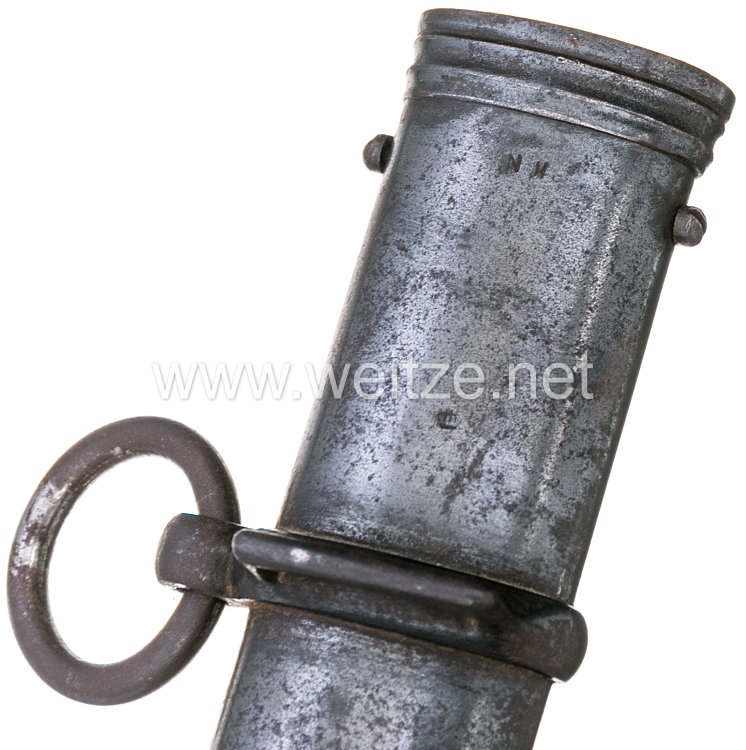
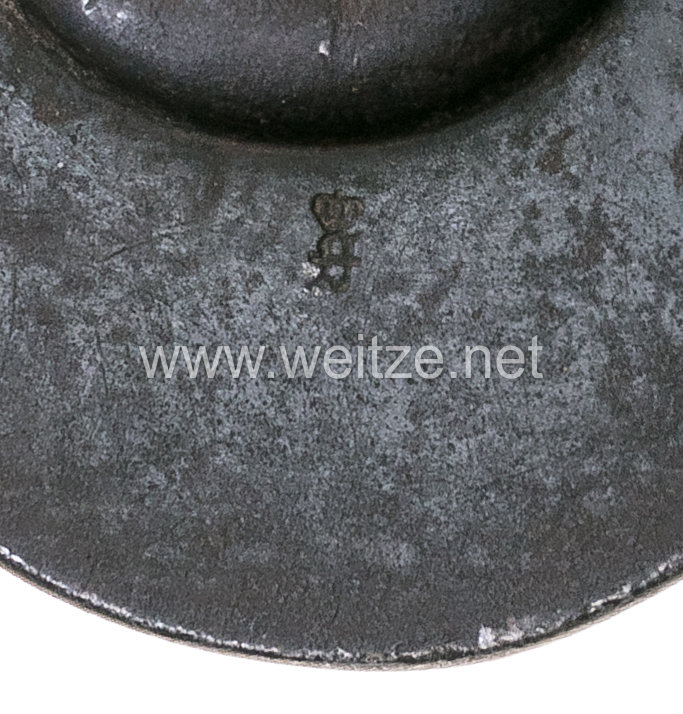
The arsenal mark “Erfurt” indicates a connection to the Erfurt weapons office, which functioned as one of the important military inspection and procurement centers of the German Reich. The acceptance mark “W 93” most likely refers to the year 1893 and identifies the responsible weapons inspector. Such stamps were part of the strict quality control system that the Reichswehr established for all military equipment.
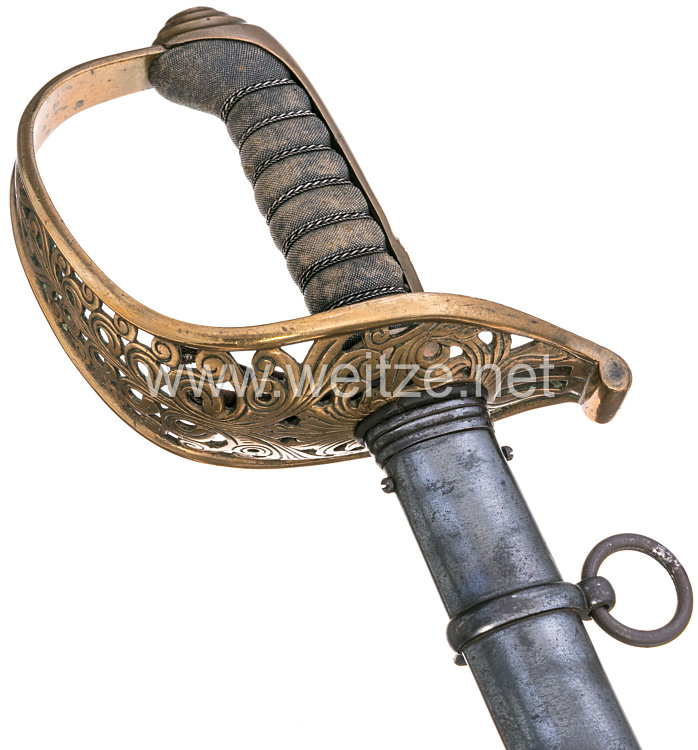
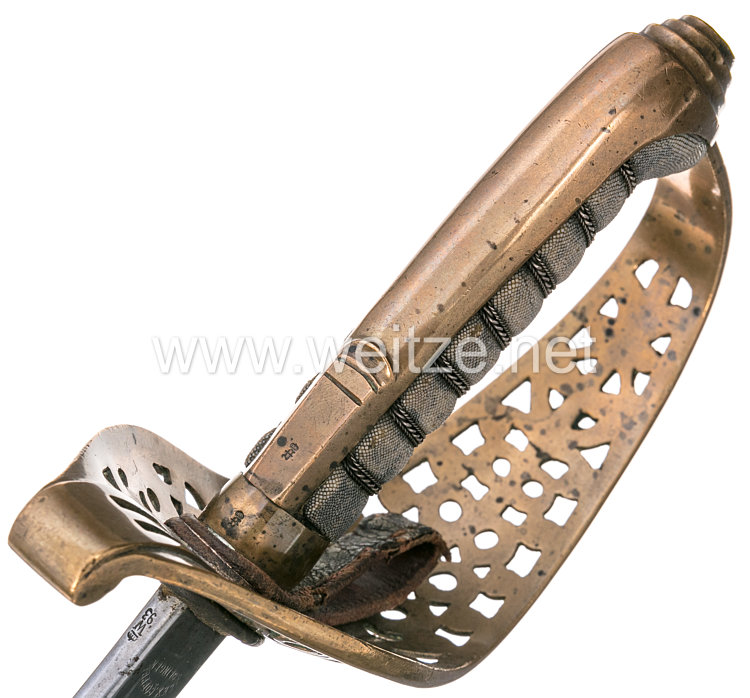
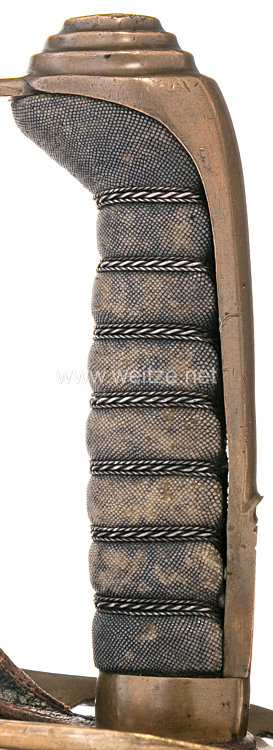
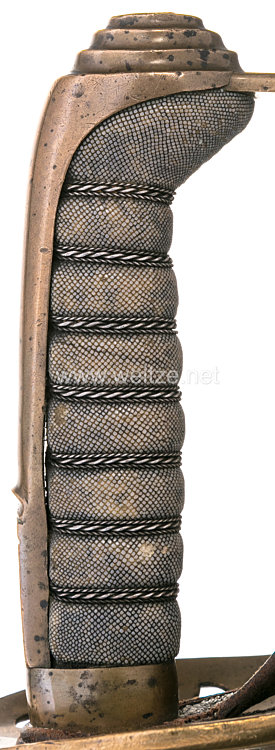
The brass hilt with its pierced guard shows the artful design typical of Hessian officer sabres. The pierced work was not merely decorative but also reduced the weight of the hilt. The various control stamps document the multi-stage quality inspection and acceptance by military inspectors. The shagreen grip (ray skin/galuchat) with its characteristic granular surface provided secure handling even under adverse conditions. The intact wire wrapping, usually made from brass wire, additionally reinforced the grip and prevented the hand from slipping.
The sword knot (portepee) was an important rank insignia and simultaneously served to secure the weapon to the wearer's wrist. The dress leather protected the officer's uniform from damage by the sabre. These details underscore the practical orientation of the weapon despite its representative function.
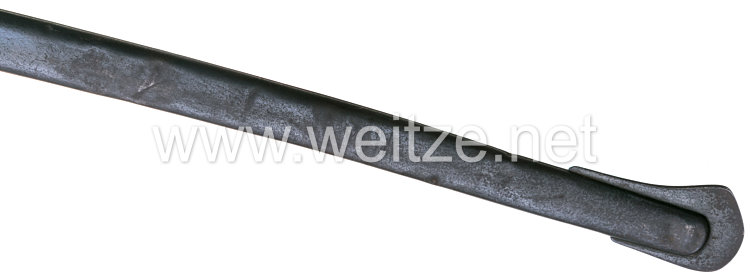
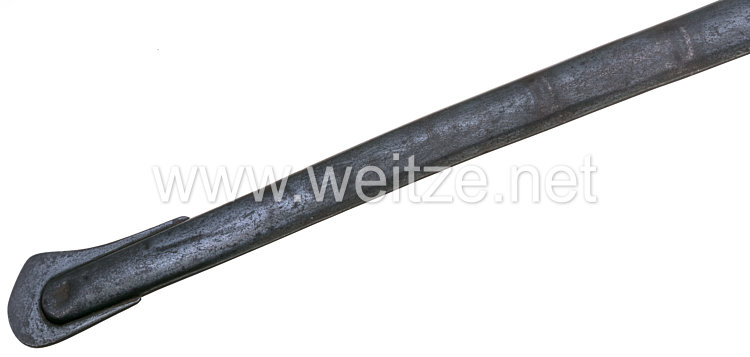
The blued steel scabbard with originally two suspension rings corresponds to the standard execution for infantry officers. Blueing – a surface treatment to prevent corrosion – gave the scabbard its characteristic dark coloration. The suspension rings enabled attachment to the belt, with the different positioning of the rings determining the carrying angle of the sabre.
As part of the military tradition of the Grand Duchy of Hesse-Darmstadt, which joined the German Empire in 1871, Hessian units retained certain peculiarities in their equipment and uniforms. The Hessian contingents in the Imperial Army were known for their professionalism and fought in numerous engagements of the late 19th and early 20th centuries.
Such sabres increasingly became ceremonial weapons, while modern firearms dominated the battlefield. Nevertheless, the officer's sabre remained an indispensable status symbol and part of the parade uniform until the end of World War I and the dissolution of the monarchy in 1918.
Preservation as a Kammerstück means that this sabre was part of an officer's personal equipment and possibly remained with him throughout his entire service career. Such pieces were often proudly cherished and passed down from generation to generation, underlining their historical and familial significance.
The craftsmanship evident in this piece reflects the high standards of German military equipment production during the Wilhelmine era, when attention to detail and quality were paramount considerations even as industrial mass production became increasingly common.