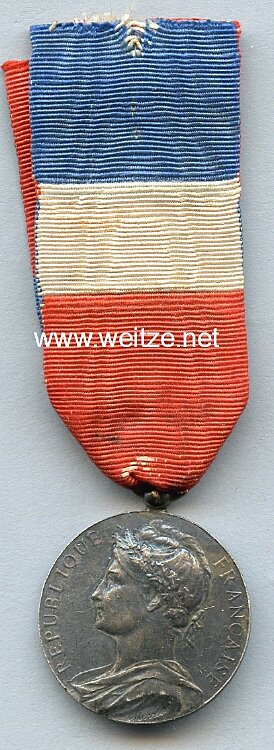
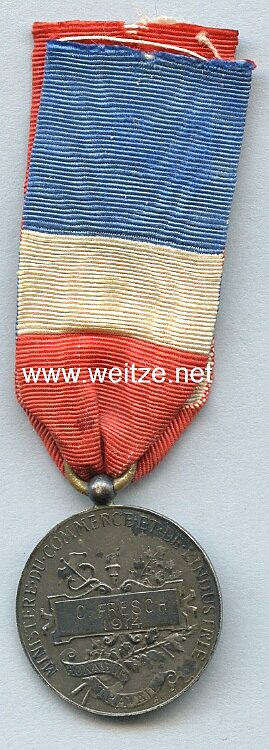
France Médaille du Commerce et de l'Industrie 1914

On original ribbon.
156343
25,00

France Médaille du Commerce et de l'Industrie 1914

The Médaille du Commerce et de l'Industrie (Medal for Commerce and Industry) is a significant French decoration awarded in recognition of outstanding achievements in the fields of commerce and industry. This particular medal from 1914 represents a special historical moment, as it was created on the eve of World War I and reflects French economic policy during the Belle Époque and the beginning of the war economy.

The origins of this decoration date back to the second half of the 19th century, when France was undergoing a phase of intense industrialization. After the Franco-Prussian War of 1870-71 and the establishment of the Third Republic, the French government recognized the need to systematically acknowledge and promote economic achievements. The Médaille du Commerce et de l'Industrie was officially established by decree to honor individuals who distinguished themselves through exceptional merit in commercial or industrial fields.

The medal was typically awarded in three classes: Bronze, Silver, and Gold, with each level representing different degrees of recognition and years of service. The design of the medal followed classical French heraldic traditions and typically displayed on the obverse the female allegory of the French Republic, Marianne, surrounded by symbols of commerce and industry such as cogwheels, the caduceus of Mercury, or cornucopias.

The year 1914 marks a decisive turning point in European history. In the summer of that year, World War I broke out, shaking the entire economic and social order of Europe. Medals awarded in this year therefore hold special historical significance, as they symbolize both the economic achievements of the pre-war period and the transition to a war economy. Many recipients of this decoration later played important roles in converting French industry to war production.

The ribbon of the medal, mentioned in the object description as an “old ribbon,” is an authentic element that confirms the historical provenance of the piece. French decoration ribbons followed strict heraldic conventions, and the ribbon of the Médaille du Commerce et de l'Industrie was typically designed in specific colors that emphasized the civilian nature of the award. The preservation of the original ribbon significantly increases the historical and collectible value.

The awarding practice of this medal was subject to clear guidelines. Candidates had to demonstrate that they had made significant contributions to French commerce or industry over an extended period. This could be through innovation, exceptional business management, job creation, or the promotion of French exports. The award was granted by the Ministry of Commerce and Industry, and the names of recipients were published in the Journal Officiel, the official gazette of the French Republic.

From a collector's perspective, specimens from 1914 are particularly interesting. They represent not only the craftsmanship quality of the pre-war period but also a historical moment of transition. The metal composition, striking technique, and artistic execution of these medals reflect the standards of the French mint, which was internationally recognized for its high quality.

The Médaille du Commerce et de l'Industrie existed in various forms until modern times and was eventually integrated into the system of the Ordre national du Mérite. However, historical specimens from the period before World War I remain sought-after collectibles that provide important insights into French economic history and the system of state recognitions.

This decoration documents the appreciation that the French Republic showed to its economic actors and the conviction that industrial and commercial progress was essential for national strength and prosperity. At a time when Europe stood on the brink of a devastating war, this medal underscores the importance that civilian achievements held for the state.