Reich Labor Service (RAD) Photo Album, Member of an RAD Aviation Squadron in Nantes
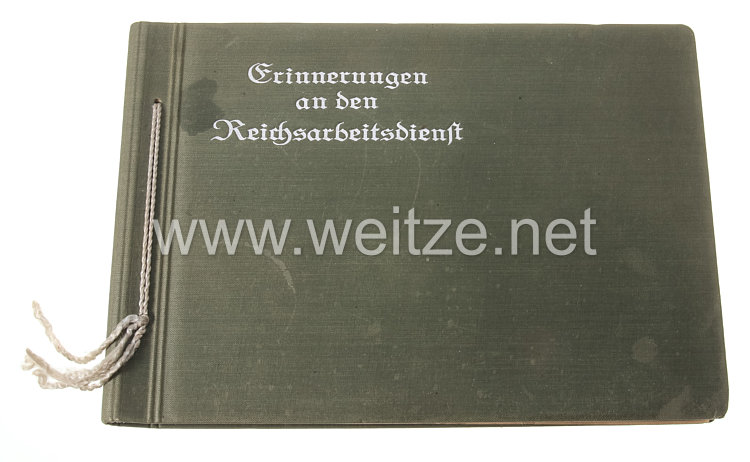
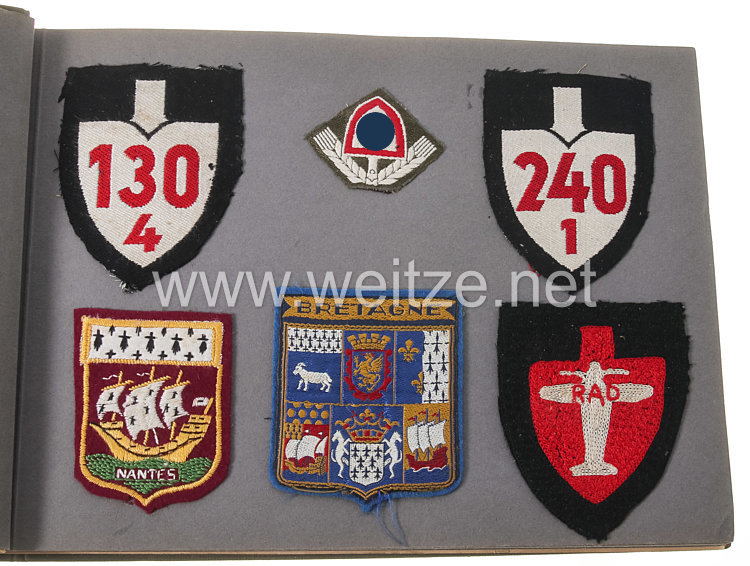
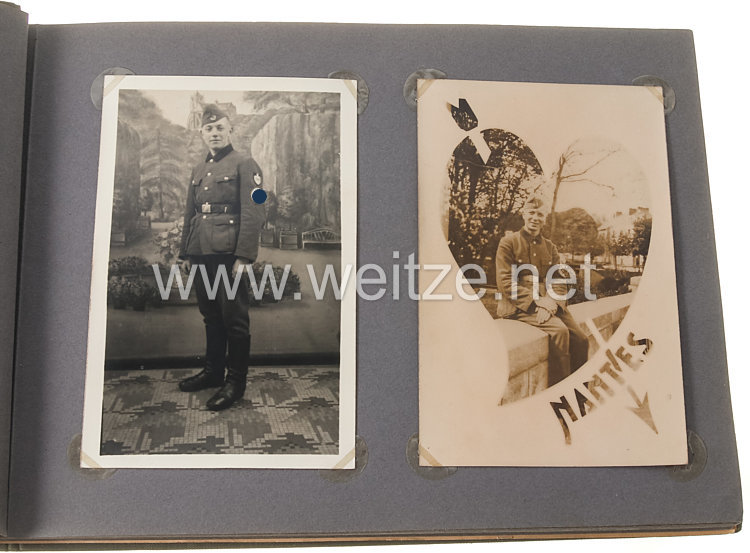
This Reichsarbeitsdienst (RAD) photo album documents the experiences of a labor serviceman who served in an RAD aviation unit in Nantes, France, during World War II. The green album, inscribed with “Memories of the Reich Labor Service,” contains approximately 60 photographs along with original sleeve badges and cloth patches that trace the bearer's service path.
The Reichsarbeitsdienst was established in 1935 through the Reich Labor Service Law as a paramilitary organization and became mandatory for all young Germans aged 18 to 25. Originally conceived to combat unemployment and undertake public works projects, the RAD increasingly developed into an instrument of National Socialist indoctrination and military preparation. From 1939 onward, the RAD was increasingly deployed for war-essential projects.
The sleeve badges documented in the album, “4/130” and “1/240,” refer to specific RAD units. Unit 4/130 was stationed in Ziesar (Brandenburg), while unit 1/240 was based in Waldesch near Koblenz-Karthause in the Rhineland. These designations followed a systematic numbering system, where the first number indicated the group and the second the superior division.
Particularly noteworthy is the “RAD-Flieger” badge, which indicates membership in a specialized unit. The RAD aviation squadrons were increasingly established from 1943 onward and were responsible for various tasks, including transport flights, courier services, and support in construction work at airfields and military installations. These units were part of the expansion of RAD responsibilities during the war.
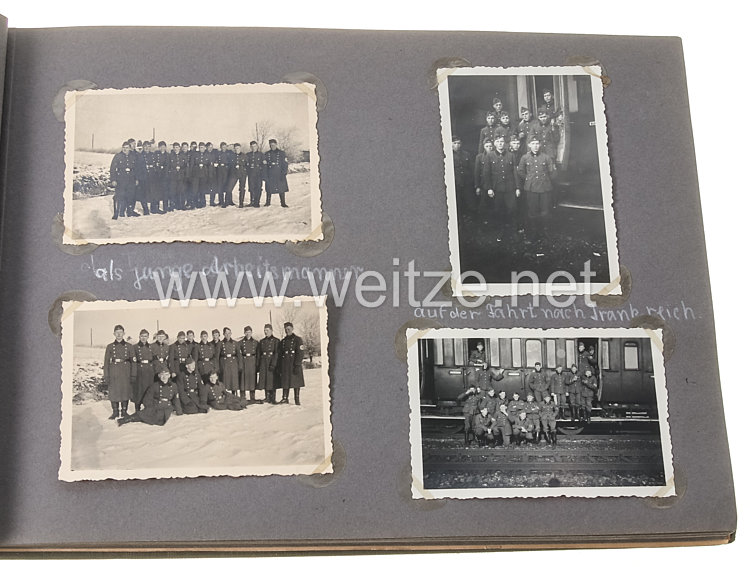
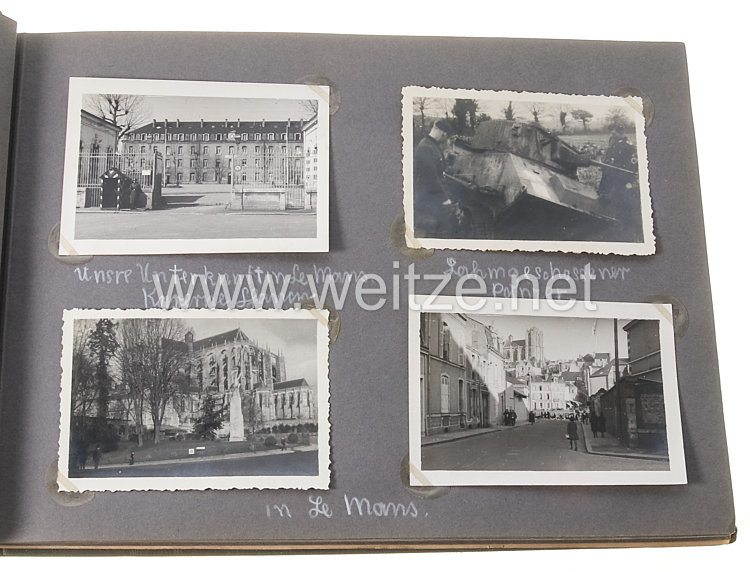
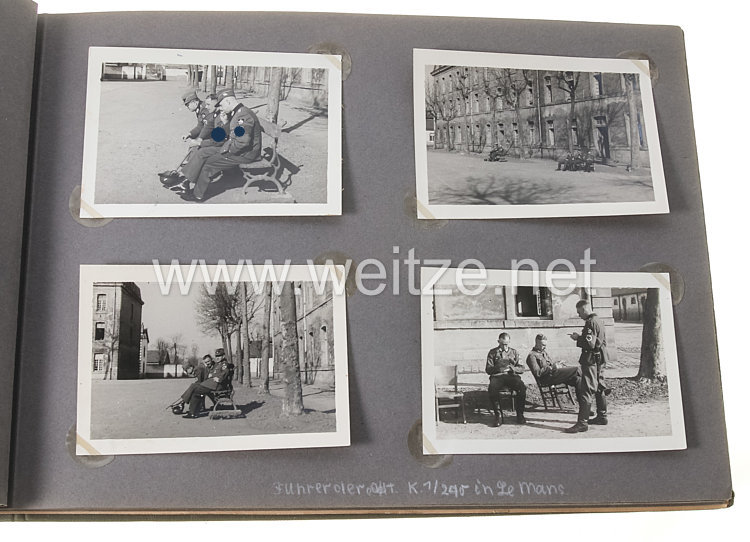
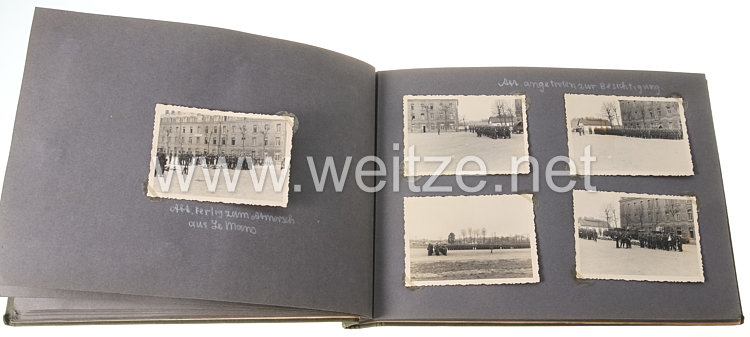
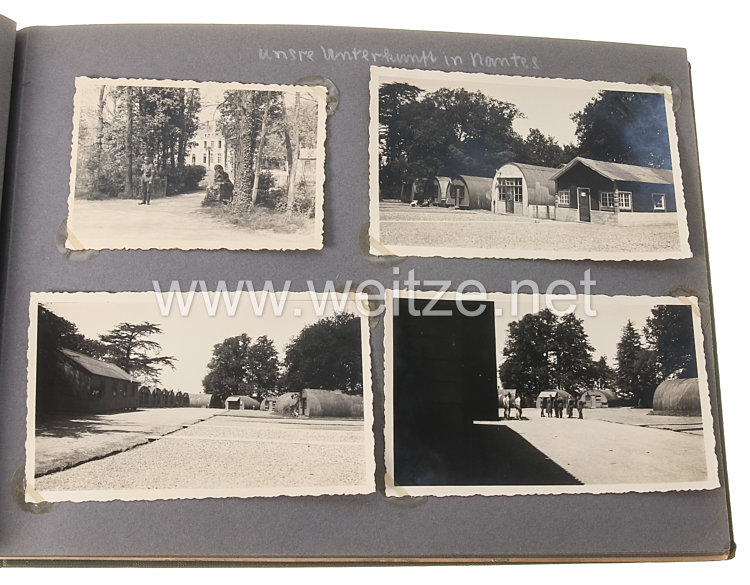
The photographs document the transfer to France, initially with a stopover in Le Mans, a city in western France that served as an important transportation hub during the German occupation. The final posting was in Nantes, the largest city in Brittany at the Loire estuary. Nantes was strategically important and housed various German military and labor service units.
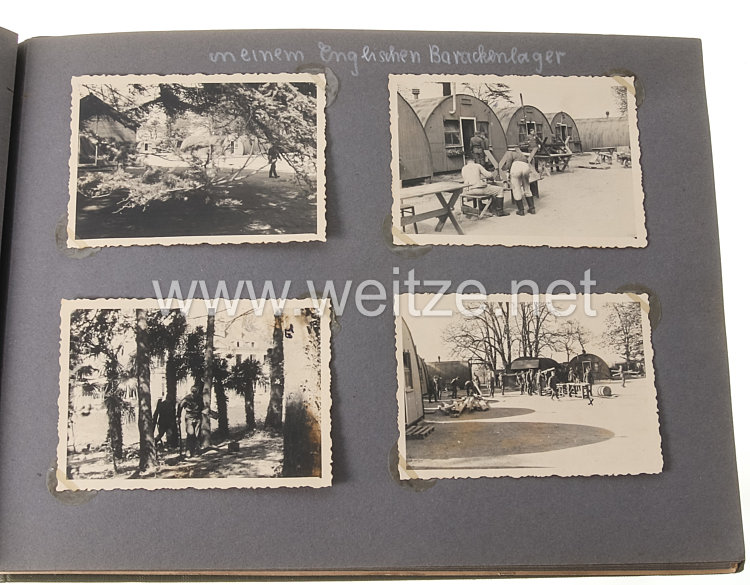
The quartering in an “English barracks camp” likely refers to accommodations from the interwar period or French military installations. RAD units in France were primarily engaged in constructing and maintaining fortifications, particularly the Atlantic Wall. This defensive system stretched from the Spanish border to Norway and was intended to prevent an Allied invasion.
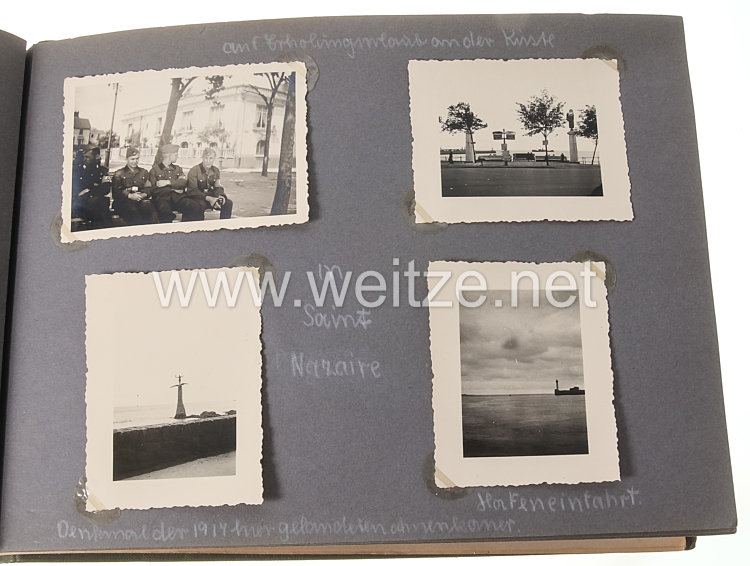
The mention of St. Nazaire is of particular historical significance. This Atlantic coast port was the site of important U-boat bunkers and was heavily fortified. RAD units were substantially involved in constructing these installations. St. Nazaire was the target of several Allied operations, including the famous commando raid in March 1942.
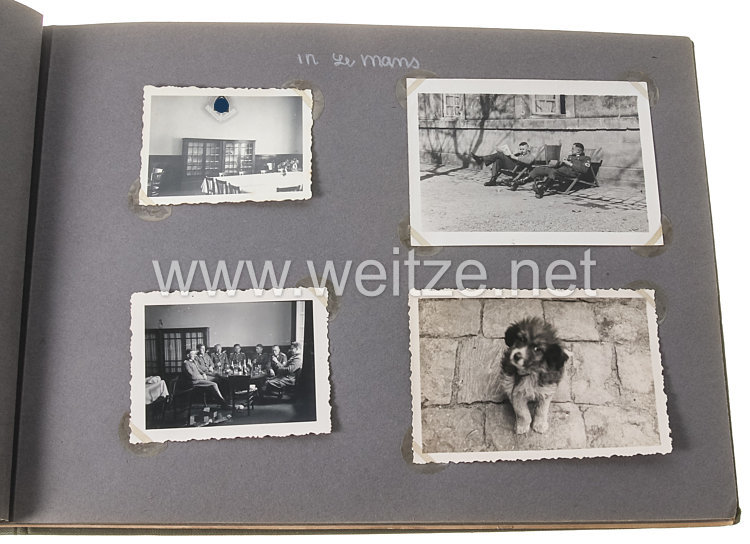
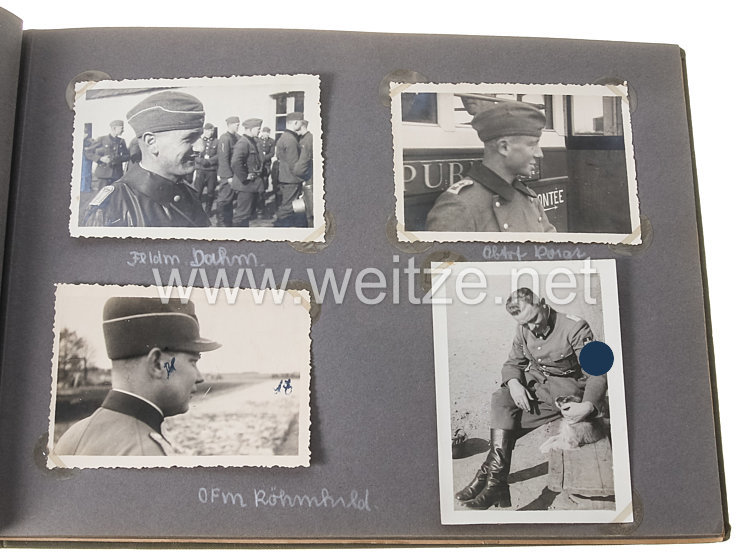
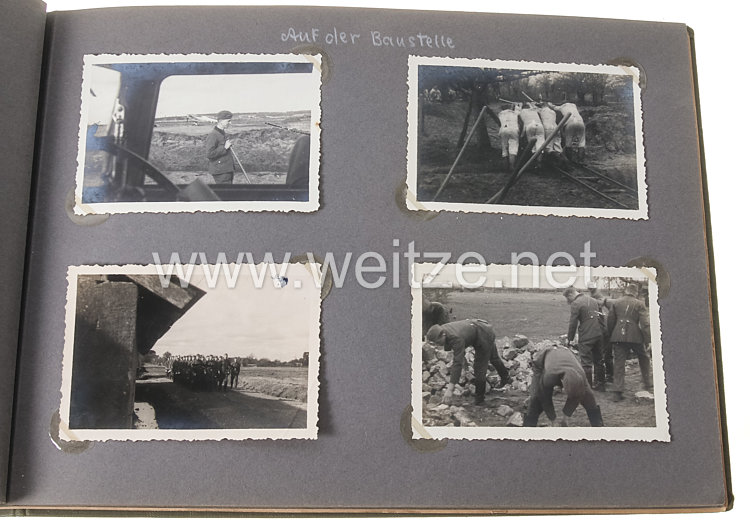
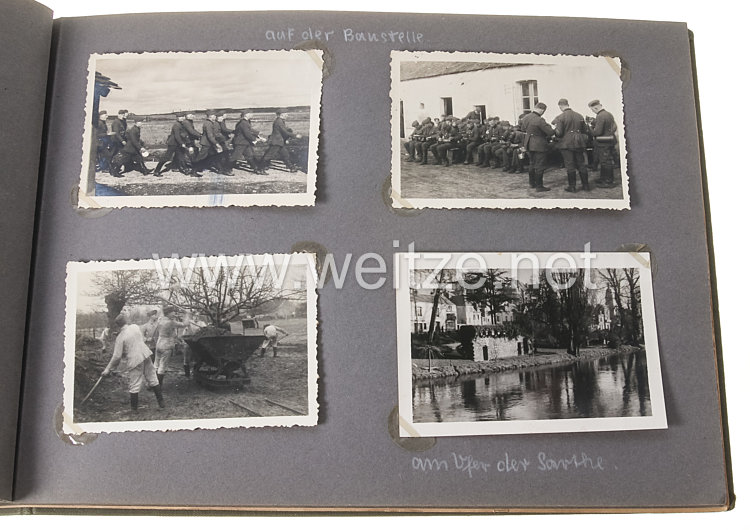
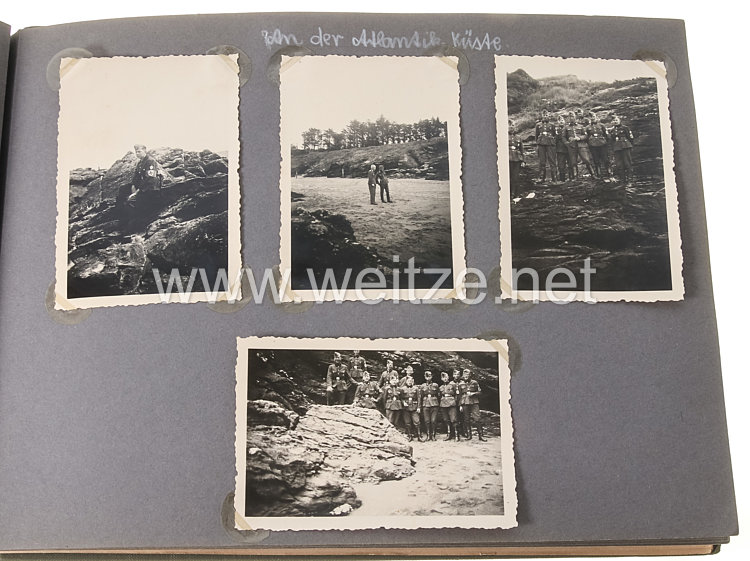
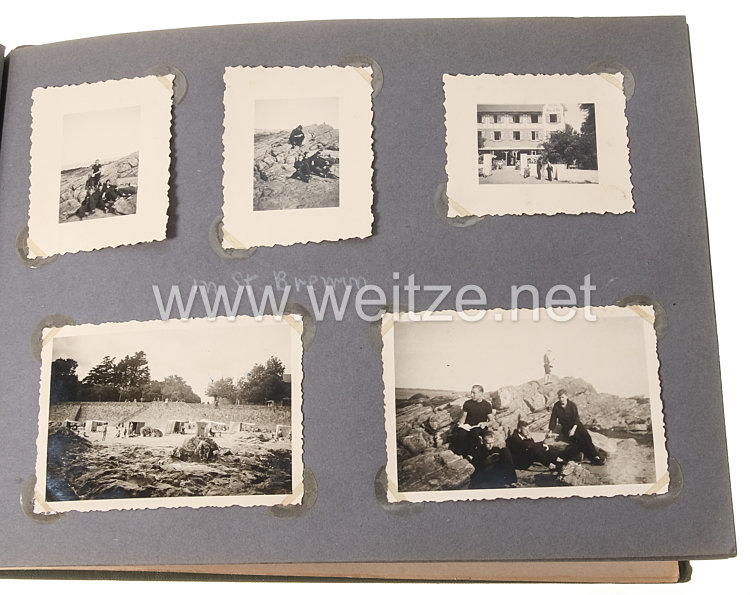
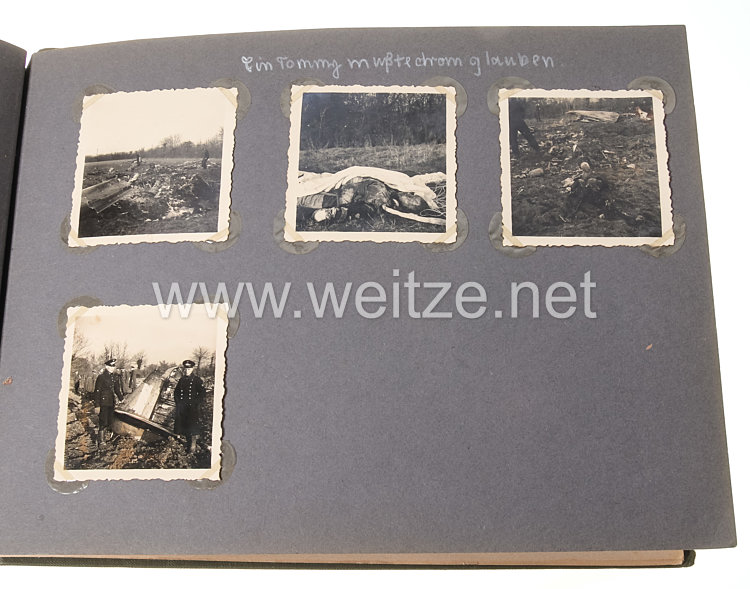
The photographs show various aspects of RAD daily life: work assignments at construction sites, leisure time on the Atlantic coast, but also the reality of war through images of destroyed tanks and downed aircraft. This mixture of routine and wartime events was characteristic of the experiences of many RAD members in occupied territories.
The Reichsarbeitsdienst in France at times comprised several tens of thousands of male and female labor service members who were involved in both military projects and civilian infrastructure work. The organization was subordinate to Reich Labor Leader Konstantin Hierl and was strictly hierarchically structured.
Such photo albums represent important historical sources today, as they provide authentic insights into the daily life and perspective of ordinary labor servicemen. They document not only military and construction activities but also social aspects and the personal perception of events by their owners. The inclusion of original insignia and patches adds material authenticity to the photographic documentation, making these albums valuable artifacts for understanding the organization and deployment of the Reich Labor Service during the occupation of France.