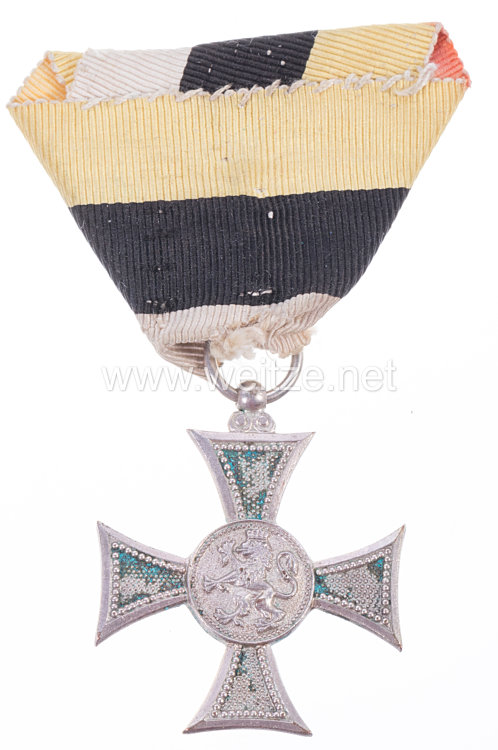
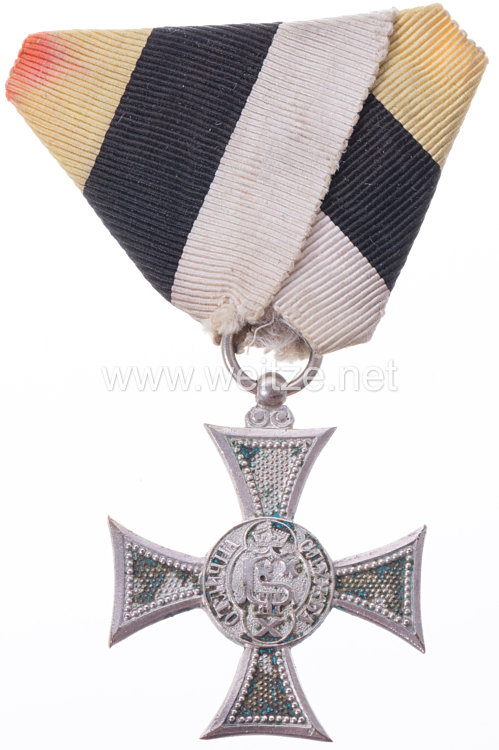
Kingdom of Bulgaria Boris III Long Service Decoration for Officers 2nd Class for 10 Years
The Officer's Long Service Award 2nd Class for 10 Years of the Kingdom of Bulgaria under Tsar Boris III represents a significant part of Bulgarian military decorations during the interwar period and World War II. This decoration was awarded in recognition of long and faithful service by officers of the Bulgarian armed forces and reflects the military tradition and honor system of the Kingdom.
Historical Background: Following World War I and the humiliating provisions of the Treaty of Neuilly-sur-Seine (1919), Bulgaria was forced to drastically reduce its armed forces. Nevertheless, under King Boris III, who ruled from 1918 to 1943, the country endeavored to maintain a professional and loyal officer corps. Service awards played an important role in promoting morale and retaining qualified officers in the armed forces.
The Bulgarian awards system underwent several reforms and expansions throughout the 1920s and 1930s. Service awards for officers were granted in various classes, with the duration of active service being the primary criterion. The 2nd Class for 10 Years of Service represented a middle tier in this hierarchical system and honored officers who had already dedicated a considerable portion of their professional lives to military service.
Design and Symbolism: The decoration takes the form of a cross, executed in silver-plated metal. This cross form follows European traditions of military decorations and symbolizes Christian values as well as chivalric virtues such as bravery, loyalty, and devotion to duty. The silver plating distinguishes the 2nd Class from higher classes, which may have been gold-plated, and reflects the hierarchical system of awards.
The triangular ribbon is characteristic of Bulgarian military decorations of this era. The ribbon colors were typically in Bulgarian national colors of white, green, and red, although specific service awards could also feature their own color combinations. The ribbon was usually worn on the uniform, with the decoration itself displayed on formal occasions.
Award Practices: The bestowal of this decoration followed strict criteria and regulations. Officers not only had to complete the required period of service but also demonstrate impeccable service without serious disciplinary violations. Awards were typically made by higher military commanders or, in special cases, by the Tsar personally. Documentation was maintained in personnel files and award certificates were issued.
Historical Significance: During Boris III's reign, Bulgaria found itself in a complex geopolitical situation. The country sought to regain territories lost in World War I and navigated between the European great powers. The Bulgarian armed forces played a central role in these national aspirations, and the loyalty of the officer corps was of critical importance. Awards such as this served not only as recognition but also as a means of binding and motivating the military elite.
During World War II, Bulgaria joined the Tripartite Pact in 1941 and participated in the occupation of parts of Yugoslavia and Greece. Bulgarian officers, many of them holders of service awards, faced difficult moral and military decisions. Following the death of Boris III in 1943 under mysterious circumstances and the Soviet invasion in 1944, the Kingdom of Bulgaria came to an end.
Collector Value and Preservation: Today, these decorations are sought-after objects for collectors of military antiques and historians. The indicated Condition 2 suggests a well-preserved decoration with only minor signs of wear. Complete preservation with the original triangular ribbon significantly increases both historical and material value. Such pieces offer important insights into Bulgarian military affairs during the interwar period and serve as material witnesses to a bygone era.
The Officer's Long Service Award 2nd Class remains a fascinating object of study for understanding the military culture, honor system, and political history of Bulgaria under King Boris III. These decorations provide tangible connections to the individuals who served in the Bulgarian armed forces during a tumultuous period in European history and represent the values and traditions that the Kingdom sought to uphold during its final decades of existence.