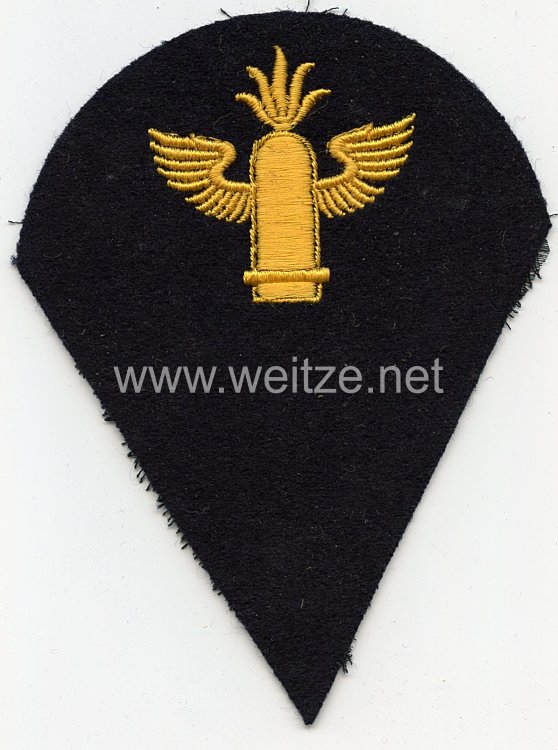
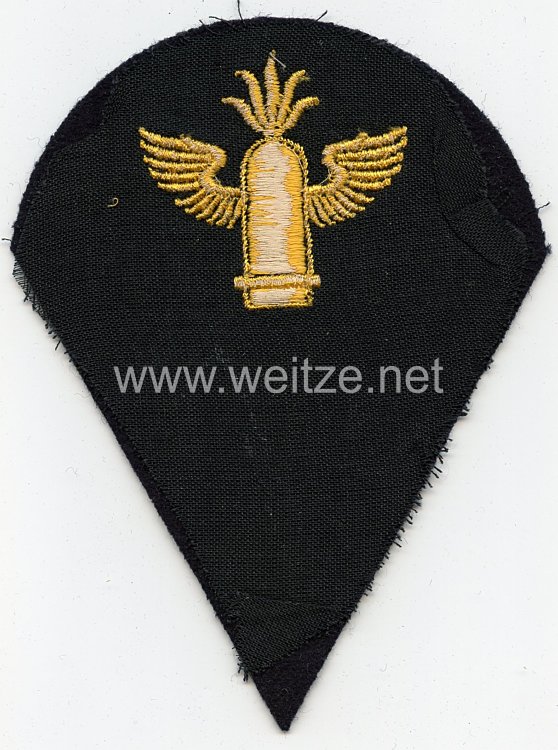
Kriegsmarine Enlisted Ranks Sleeve Insignia Naval Artillery Career Path

Version for blue collar uniform, condition 2.
376641
15,00

Kriegsmarine Enlisted Ranks Sleeve Insignia Naval Artillery Career Path

Kriegsmarine Sleeve Badge for Enlisted Naval Artillery Personnel

The sleeve badge for the naval artillery branch represents a significant element of uniform identification in the German Kriegsmarine during World War II. These specialized career branch badges served for immediate identification of naval personnel's technical assignment and were an integral component of the complex uniform system of German naval forces between 1935 and 1945.

The Kriegsmarine, officially established on June 1, 1935, replaced the heavily restricted Reichsmarine imposed by the Treaty of Versailles. The development of a modern naval force was accompanied by the creation of a comprehensive uniform system that clearly distinguished different service branches, ranks, and career paths. The career branch badges were worn on the left upper sleeve and indicated the wearer's technical assignment through their specific design.

The badge of the naval artillery branch was characterized by a distinctive symbol: a stylized exploding grenade or crossed gun barrels, typically executed in yellow or gold embroidery on dark blue background. The color yellow was traditionally assigned to artillery as the branch color, a convention adopted from army practice. Naval artillerymen were responsible for operating, maintaining, and deploying ship artillery, anti-aircraft guns, and coastal artillery – a highly specialized and war-critical function.

The version for the Colani refers to wearing on the Colani suit, a special working and shipboard uniform of the Kriegsmarine. The Colani was a practical overall or two-piece work suit, usually made of blue drill fabric, worn during shipboard and dockyard work. This uniform was named after its characteristic design and represented an alternative to the formal dress uniform.

The production of such badges was carried out by various specialized manufacturers, including established uniform effects companies such as BeVo (Bandfabrik Ewald Vorsteher) from Wuppertal, which produced woven badges, as well as numerous embroidery workshops that manufactured hand-embroidered or machine-made badges. Quality varied depending on manufacturer and production period; early war years typically showed higher-quality workmanship, while later war years often featured simplified versions.

The Kriegsmarine's wearing system was strictly regulated. The dress regulations precisely specified which badges were to be worn on which uniform and at which position. For enlisted ranks of the naval artillery branch, the career badge was mandatory and enabled both superiors and comrades to immediately classify the wearer within the Navy's organizational structure.

The naval artillery itself played a central role in the Kriegsmarine. From the heavy guns of battleships like the Bismarck or Tirpitz to the medium artillery of cruisers and the anti-aircraft defenses on all ship types – naval artillerymen were indispensable. Equally significant were the coastal batteries protecting strategically important harbors and coastal sections, such as the massive gun emplacements of the Atlantic Wall.

The training to become a naval artilleryman was demanding and included technical understanding, ballistic knowledge, fire control procedures, and practical operation of complex weapons systems. Training facilities such as the naval gunnery schools and anti-aircraft schools provided this specialized knowledge.

After the war ended in 1945, the Kriegsmarine was dissolved, and its uniforms and badges became historical objects. Today, such sleeve badges are collector's items and study objects for military historians. They document organizational structure, the craftsmanship of uniform effects production, and the visual culture of military organizations in the first half of the 20th century.

The preservation of such objects in various conditions – from unworn to heavily worn – provides valuable information about manufacturing techniques, material use, and actual wearing practices. A condition grade 2 in collector nomenclature typically denotes a well-preserved, possibly worn but undamaged piece with normal signs of use.

r