Bund Deutscher Militäranwärter (BDMA)
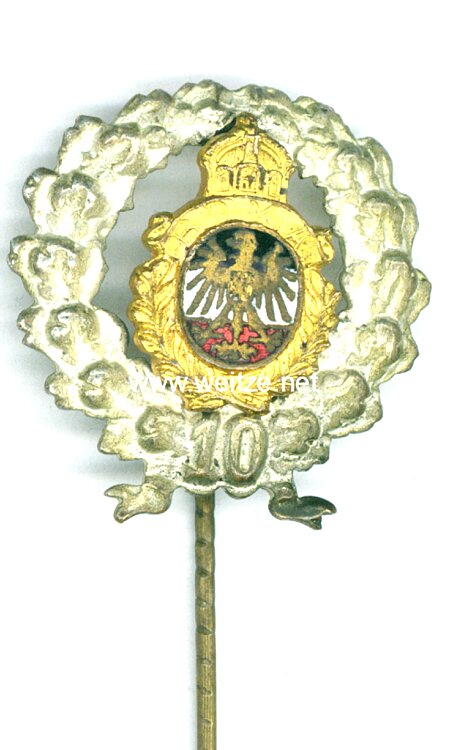
The Silver Honor Pin of the Bund Deutscher Militäranwärter (BDMA)
The silver honor pin for 10 years of membership in the Bund Deutscher Militäranwärter (League of German Military Aspirants, BDMA) represents a fascinating chapter in German military history during the Weimar Republic and early 1930s. This award documents the efforts of young men to prepare for military careers despite the severe restrictions imposed by the Treaty of Versailles.
Historical Background of the BDMA
The Bund Deutscher Militäranwärter was founded during the Weimar Republic, a period when Germany faced massive military restrictions imposed by the Treaty of Versailles of 1919. The Reichswehr was limited to only 100,000 men, and many traditional military structures had been dissolved. In this context, numerous defense leagues and organizations emerged dedicated to pre-military training and the preservation of military traditions.
The BDMA specifically targeted young men aspiring to officer careers or other military professions. The organization provided its members with a platform for comradeship, physical training, and preparation for military service. While it stood alongside other defense leagues of the era, it distinguished itself through its specific focus on future military personnel.
The Honor Pin and Its Symbolic Value
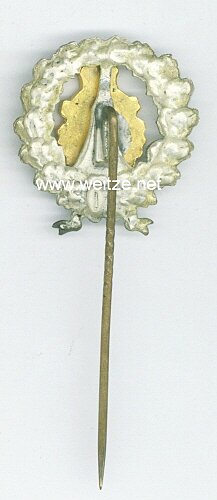
The silver honor pin described here was awarded for 10 years of membership, making it a significant distinction. The multi-part construction demonstrates craftsmanship quality and the importance attached to such badges during that period. The long pin on the reverse allowed wearing on civilian clothing, typical for organizations outside the official armed forces.
Such honor pins served multiple purposes: they were visible signs of belonging and commitment, they strengthened esprit de corps within the organization, and they established a hierarchy of merit among members. The award after ten years of membership underscores the wearer's loyalty and long-term dedication.
Material Characteristics and Manufacturing
The multi-part construction of this pin is characteristic of high-quality badges from the Weimar era. Typically, such awards were assembled from various metal parts that were soldered or riveted together. The use of silver or silver-plated material emphasized the honorable character of the award and distinguished it from simpler membership badges.
Such badges were usually manufactured by specialized firms that focused on military and paramilitary awards. These manufacturers often emerged from traditional order-making establishments that transferred their expertise from the Imperial era into the Weimar Republic.
Context of Defense Leagues in the Weimar Republic
The BDMA existed within a complex network of defense leagues that shaped the political and social life of the Weimar Republic. Organizations such as the Stahlhelm, the Reichsbanner Schwarz-Rot-Gold, or the Kyffhäuserbund represented different political orientations and social classes. The BDMA concentrated on the practical preparation of its members for military careers.
These organizations filled a gap created by the restrictions on the Reichswehr. They offered young men opportunities for physical and character development according to military ideals, even when immediate integration into the armed forces was not possible.
Collector Value and Historical Significance
Today, such honor pins are sought-after collectibles that provide insight into the complex military culture of the interwar period. The stated condition 2 indicates a well-preserved specimen, which enhances both historical and material value. Such objects are important sources for researching the paramilitary culture of the Weimar Republic and the mentality history of this turbulent epoch.
The preservation of such badges enables historians and collectors to understand the diversity and complexity of Germany's military and paramilitary landscape between 1918 and 1933. They document continuities and ruptures in German military culture and show how military traditions were maintained even under adverse political circumstances.