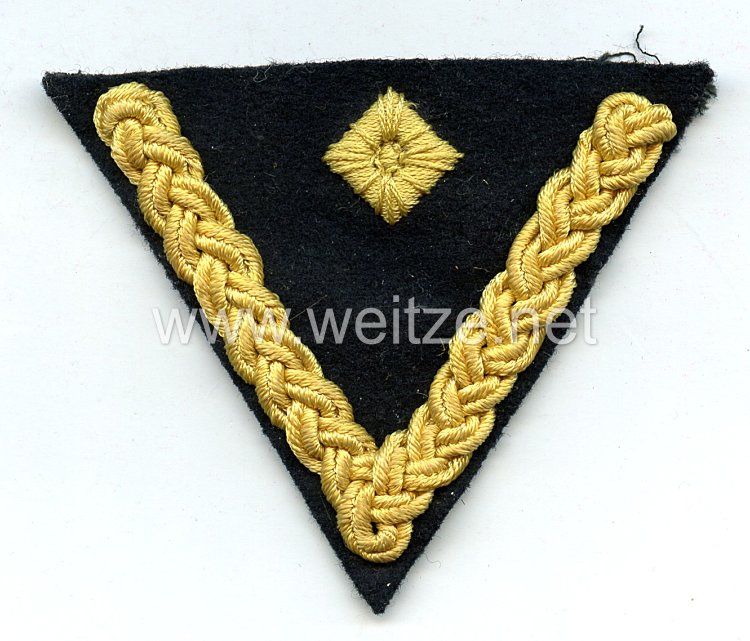
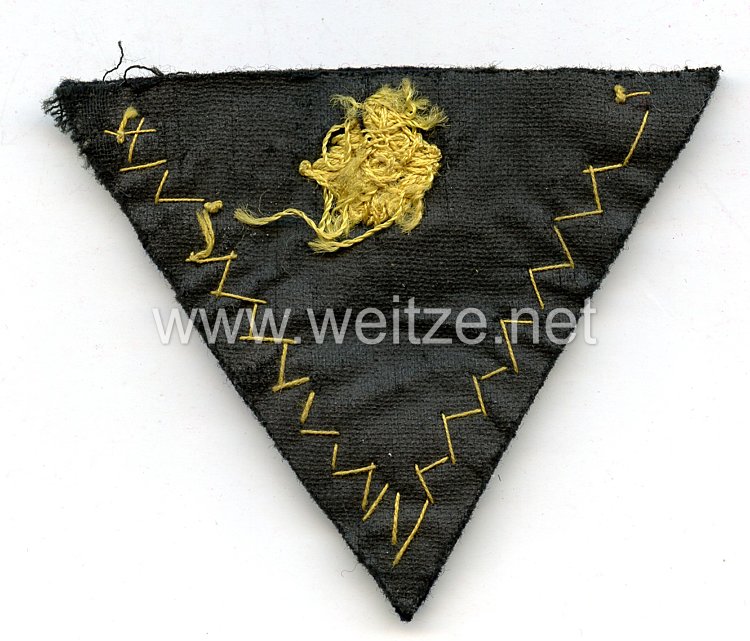
Kriegsmarine Sleeve Insignia for a Matrosenobergefreiter with More Than 6 Years of Service
The Kriegsmarine sleeve insignia for a Matrosenobergefreiter (Able Seaman First Class) with more than six years of service represents a fascinating testament to the complex rank insignia system of the German Navy during World War II. This hand-embroidered version for the blue uniform embodies the strict hierarchical order and the importance placed on length of service in the Kriegsmarine.
The Kriegsmarine, officially founded on June 1, 1935, developed a differentiated system of rank insignia that differed significantly from the Reichsmarine of the Weimar Republic. The rank of Matrosenobergefreiter was part of the enlisted ranks and represented an important step in a military career. The additional designation of years of service through special insignia was a characteristic feature of the Wehrmacht and specifically the Kriegsmarine.
According to the Uniform Regulations for the Kriegsmarine of October 1, 1936, which was supplemented and refined several times, enlisted ranks wore their rank insignia on the right upper arm of the uniform. The system distinguished between different types of uniforms: the blue dress uniform, the white summer uniform, and various working and shipboard suits. The hand-embroidered version described here was intended for the blue uniform, which was considered the representative dress uniform.
The representation of service time was accomplished through service time insignia that were attached below the actual rank insignia. After six years of service, a sailor received a special chevron that documented this longer affiliation with the Navy. This regulation followed the principle that experience and loyalty to service should be especially honored. The system of service time insignia had a long tradition in the German Navy and was continued from the Imperial Navy through the Reichsmarine to the Kriegsmarine.
The hand-embroidered execution is of particular interest. While machine-manufactured insignia were used for general issue, hand-embroidered variants existed in parallel, often made by naval personnel themselves or by specialized embroidery businesses in naval bases. These pieces were distinguished by higher quality and finer workmanship. They were frequently preferred for dress and parade uniforms as they conveyed a more polished appearance.
The rank of Matrosenobergefreiter was positioned in the hierarchy above the simple sailor (Matrose) and the Matrosengefreiter (Able Seaman). These gradations were not merely symbolic but were associated with concrete responsibilities and pay. A Matrosenobergefreiter had already completed several years of naval service and possessed substantial experience in his specialty, whether as a gun captain, radio operator, machinist, or in another maritime specialty field.
The blue uniform, for which this insignia was intended, consisted of dark blue cloth and was typically worn at official occasions, shore leave, and during the cooler seasons. It differed significantly from the white summer uniform and the various shipboard suits. The uniform regulations of the Kriegsmarine were precise and strictly enforced, with the correct placement of rank insignia regularly inspected.
The technical execution of such insignia followed standardized specifications regarding size, color, and placement. The embroidery was usually done with yellow or golden wool fiber on dark blue base fabric for the blue uniform. The chevrons or angles for service time were precisely defined in their form and had to be attached at a specific distance from the actual rank insignia.
In the context of naval history, such sleeve insignia document not only the formal hierarchy but also the social reality aboard warships. The enlisted ranks formed the backbone of the Kriegsmarine and were indispensable for operational daily life. Their experience and technical skill were essential for the functionality of the increasingly complex warships of World War II.
Today, such original insignia are important military historical collectibles that provide insight into the material aspects of naval history. They complement written and photographic sources and enable a tangible connection to the history of the German Navy. The preservation and scientific documentation of such objects contributes to understanding the military culture and organization of this era.