England World War I, Wire Cutters
British Wire Cutters of the First World War – An Indispensable Tool of Trench Warfare
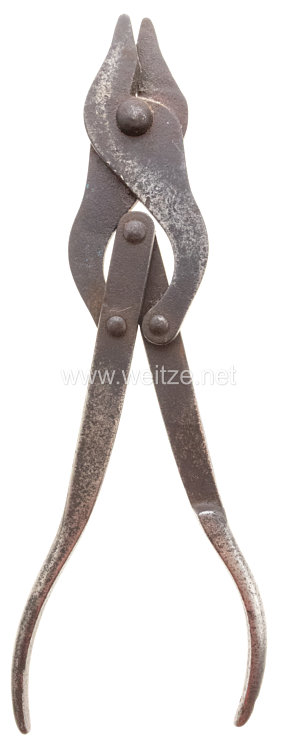
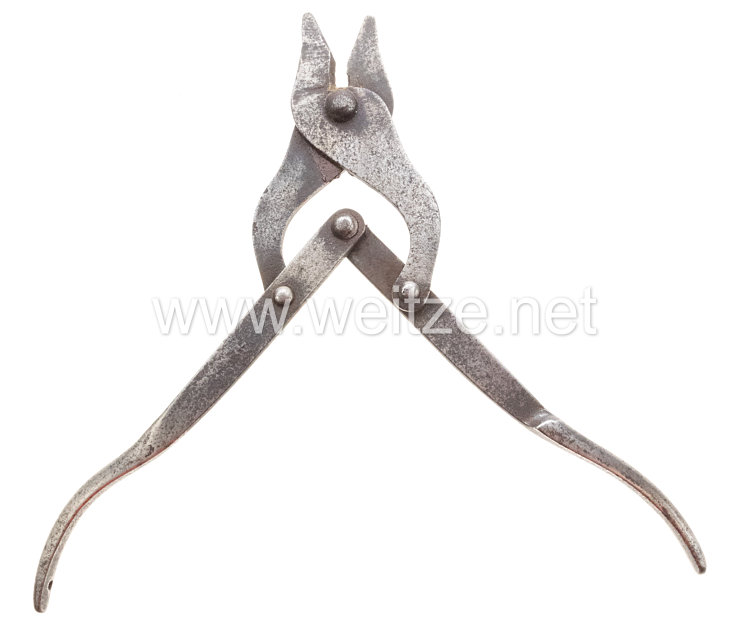
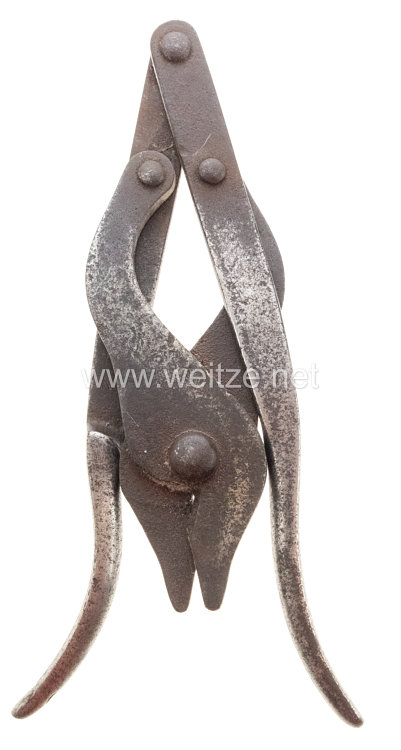
This folding iron wire cutter represents an essential piece of equipment used by the British Armed Forces during the First World War (1914-1918). Although the inscription is barely recognizable due to intensive use, this very condition testifies to the harsh reality of trench warfare on the Western Front.
Development and Military Necessity
With the establishment of positional warfare from autumn 1914, barbed wire entanglements became a characteristic feature of the battlefields in France and Flanders. These obstacles, often staggered several meters deep, were designed to slow enemy attacks and protect defenders from infantry assaults. The British Army quickly recognized that specialized tools for overcoming these obstacles were vital for survival.
British wire cutters were produced in various designs, with the folding variant offering particular advantages. Its compact construction allowed it to be carried on the belt or in equipment without significantly restricting the soldier's freedom of movement. The construction from robust iron ensured the necessary cutting force to sever even multiply twisted barbed wire.
Tactical Employment
Wire cutters were primarily used during night patrols, raiding parties, and before planned offensives. Pioneer units and specially trained soldiers were tasked with cutting lanes through enemy wire entanglements under cover of darkness. This dangerous work usually had to be performed under enemy fire and the illumination of flares that lit up No Man's Land like daylight.
During major offensives such as the Battle of the Somme (1916) or the Battle of Passchendaele (1917), artillery preparation was supposed to destroy the wire obstacles. In practice, however, this often proved insufficient, and the attacking infantry found themselves facing largely intact obstacles. In such situations, wire cutters became life-saving tools.
Production and Marking
British military tools typically bore manufacturer's marks, dates, and frequently the characteristic Broad Arrow, the property mark of the British Crown. The inscriptions were usually stamped or impressed. The heavily worn condition and barely recognizable inscription of this specimen suggest intensive front-line use – possibly over several years and through different hands.
Materials and Construction
The use of iron corresponded to the industrial capabilities and military requirements of the time. The material had to be robust enough to withstand repeated use, yet still portable by soldiers. The folding construction was a practical solution that combined cutting power with portability. The leverage action of the cutters enabled even thicker wire to be severed with human strength.
Life in the Trenches
For soldiers in the trenches, wire cutters were more than just a tool – they could mean the difference between life and death. When wounded in No Man's Land, they could help free oneself from wire entanglements. On patrols, they were indispensable for penetrating enemy territory. The traces of intensive use on this specimen tell of countless deployments under the harshest conditions.
Historical Significance
Objects like these wire cutters are important material witnesses to the First World War. They illustrate the technical and tactical challenges of modern industrial warfare and the daily life of soldiers. Trench warfare revolutionized warfare and made simple tools essential survival equipment.
The British Army produced millions of such equipment items during the war. Many were lost or destroyed, others were scrapped after the war's end. Surviving specimens, especially those with clear signs of use, are today important collector's items and museum objects that establish a direct connection to the experiences of soldiers from 1914-1918.
This specific specimen, with its heavily worn condition and barely legible inscription, is an authentic testimony of that era – a silent monument to the millions of soldiers who fought and died in the trenches.