Waffen-SS Black Panzer Trousers for Enlisted Men

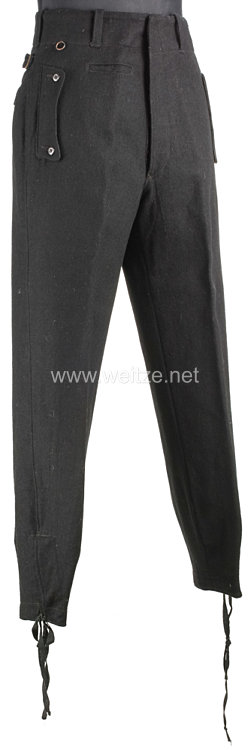
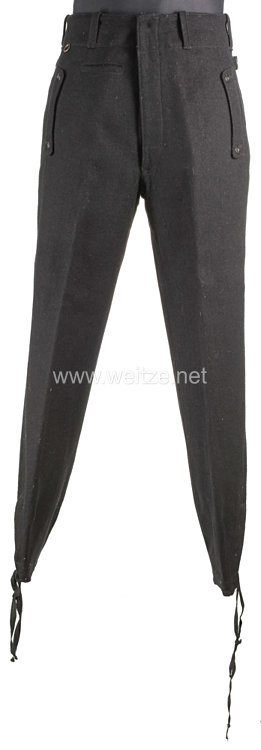
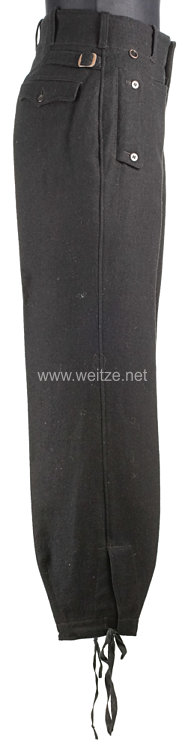
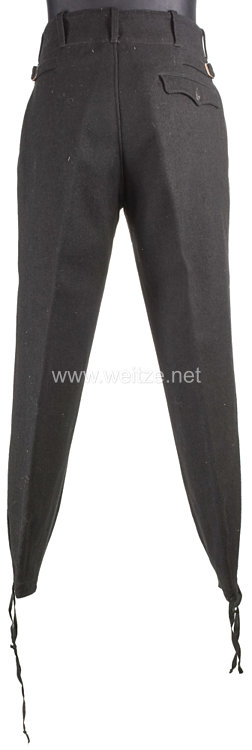
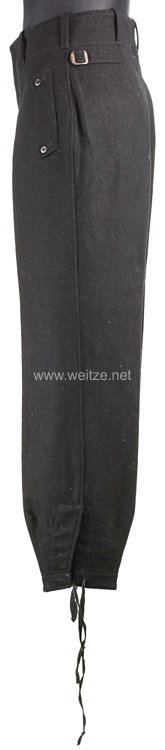
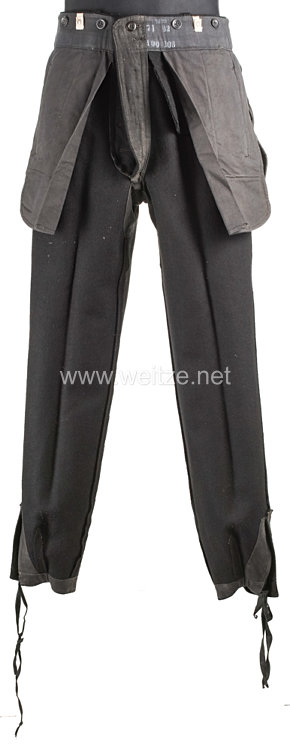
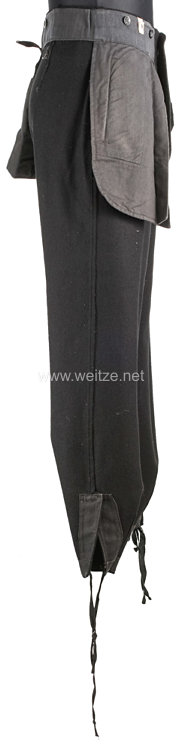
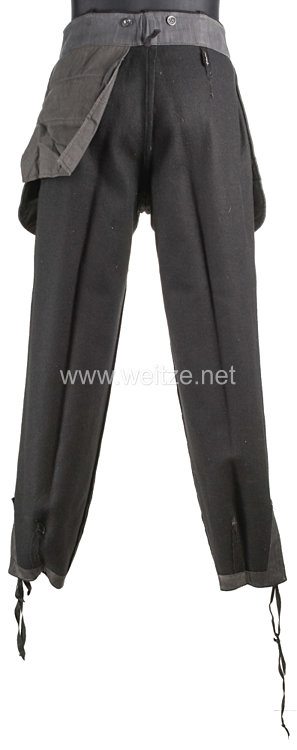
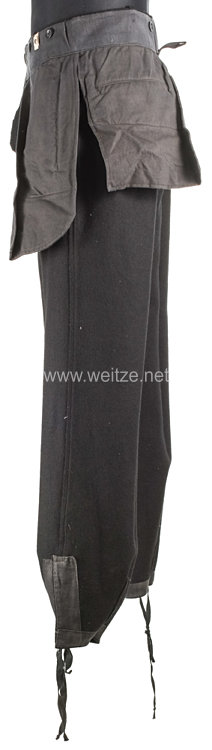
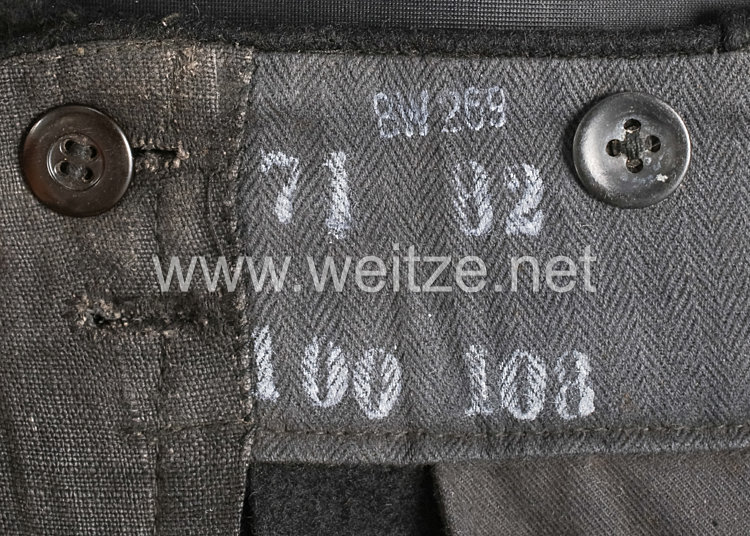
Chamber piece, circa 1942. Black panzer trousers in the typical cut of Waffen-SS panzer trousers: the hip pockets each with 2 buttons, rear right with 1 back pocket, complete with black Bakelite buttons. Interior with black lining and fine chamber stamp “BW”. Waist circumference 80 cm, inseam length 104 cm. Minimally worn in good condition.

351639
7.500,00

Waffen-SS Black Panzer Trousers for Enlisted Men

The black tank trousers of the Waffen-SS represent a characteristic piece of equipment for German tank crews during the Second World War. This specialized uniform component was developed for enlisted men of the armored forces and differed significantly in cut and design from regular field trousers.

The development of tank uniforms began in the late 1930s when the Wehrmacht recognized the special requirements of tank crews. The confined working environment inside tanks, contamination from oil and lubricants, and mechanical stresses required specialized clothing. The black color was chosen because it made dirt and stains less visible and offered practical advantages for tank service.

The typical cut of Waffen-SS tank trousers was characterized by several distinctive features. The hip pockets were closable with two buttons each, preventing accidental opening during work in the cramped tank interior. The back pocket on the right side provided additional storage space for personal items or documents. This functional design took into account the practical needs of tank crews.

The use of black Bakelite buttons was typical of wartime production from approximately 1940-1942. Bakelite, an early plastic, was increasingly used as a substitute for metal since strategic materials were needed for weapons production. These buttons were robust, corrosion-resistant, and cost-effective in mass production.

The depot stamp “BW” on the inner lining indicates origin from a military clothing depot. Such stamps were part of the military administrative system and served for tracking and inventory management of equipment items. Depot stamps varied depending on the responsible authority and location.

The manufacture around 1942 falls within a phase of intense military operations on the Eastern Front. At this time, German armored divisions were involved in extensive combat operations, and the demand for specialized tank uniforms was correspondingly high. The textile industry in the German Reich produced military clothing on a large scale, with increasing material shortages and rationing affecting production.

The black inner lining was not merely an aesthetic decision but also served practical purposes. It increased the durability of the trousers and provided additional protection against the harsh working conditions inside tanks. The construction with complete lining was characteristic of uniform pieces from the early to middle war period, before material shortages led to simplified production methods.

The measurements with a waist circumference of 80 cm and leg length of 104 cm correspond to the standardized sizes of Wehrmacht clothing. The clothing office had developed detailed size charts to enable efficient mass production and distribution. This standardization was part of the comprehensive military logistics system.

The minimal wear of this specimen is remarkable, as tank uniforms were typically subject to heavy stress. Many uniform pieces showed clear signs of use after a short time due to harsh tank service. A well-preserved piece could indicate various circumstances: limited deployment time, use as a reserve uniform, or warehouse stock.

The historical classification of such uniform pieces requires a differentiated approach. They are witnesses to military history and the textile technology of their time, but simultaneously inseparably connected with the criminal character of the Nazi regime and the war crimes of the Waffen-SS. The scholarly examination of such objects serves historical understanding and the processing of this dark period.

Today, such uniform pieces are subjects of military-historical collections and research. They document the material culture of the Second World War and offer insights into production methods, logistics, and soldiers' daily life. Provenance research and responsible handling of such objects are essential aspects of their museum and scientific treatment.

The preservation of such artifacts in appropriate institutional contexts allows for educational purposes and serves as tangible evidence of historical events. Museums and research institutions maintain strict ethical guidelines for the display and interpretation of such materials, ensuring they contribute to historical understanding rather than glorification.

r