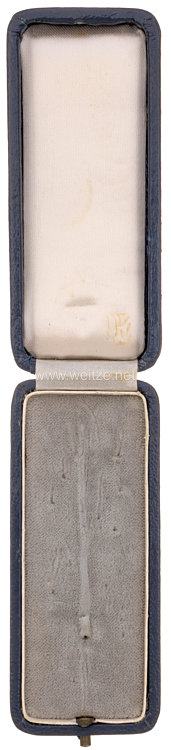
Mecklenburg-Schwerin Golden Gift Pin with Diamonds of Grand Duke Friedrich Franz II von Mecklenburg (1823 - 1883)

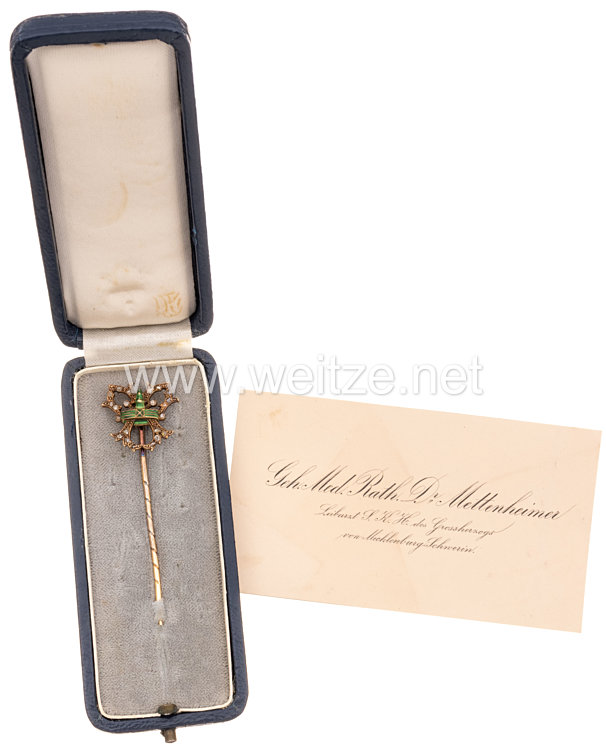
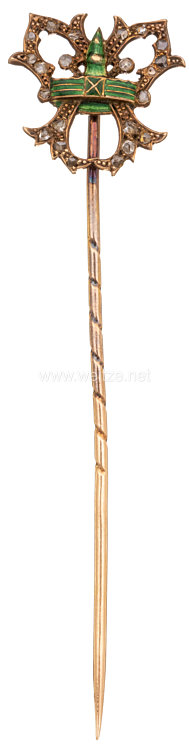
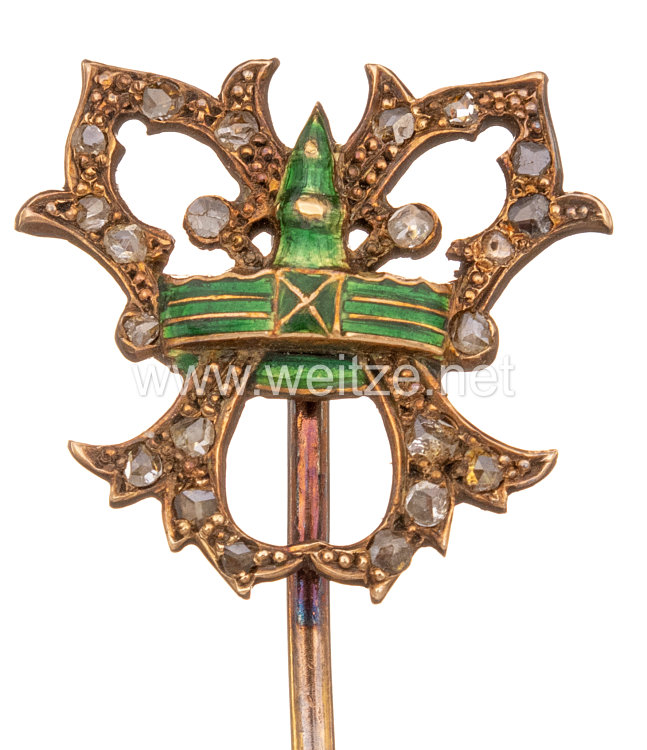
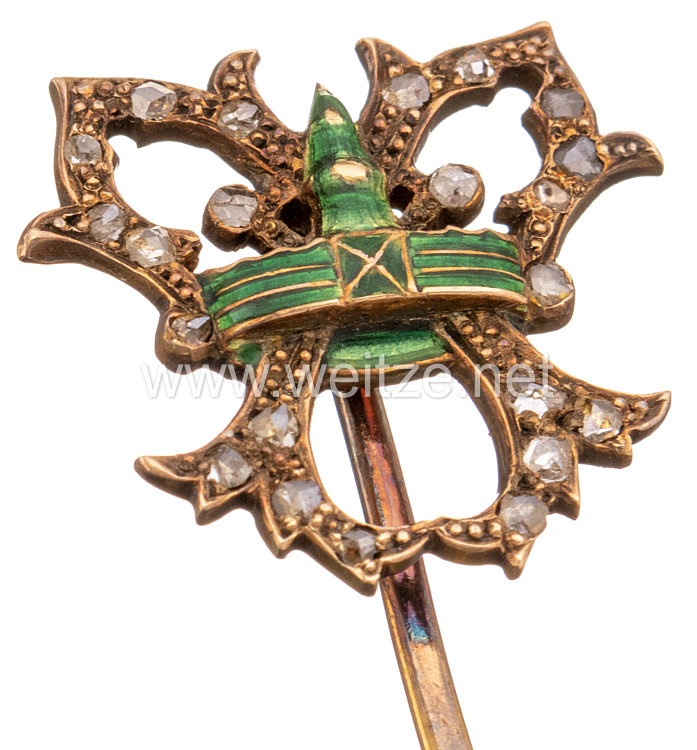
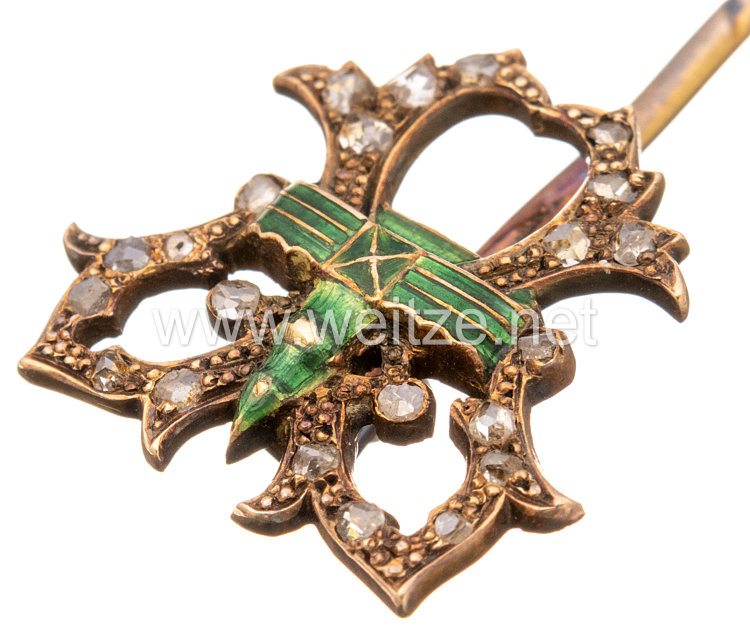
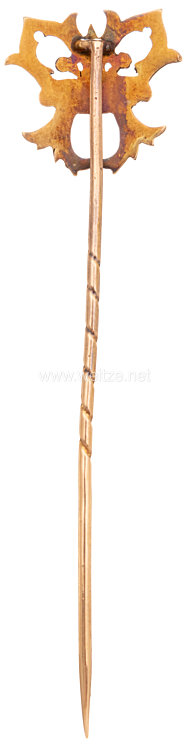
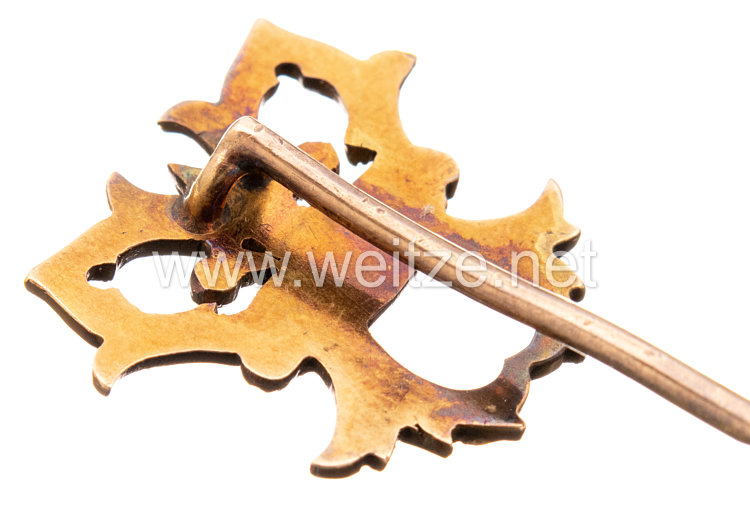
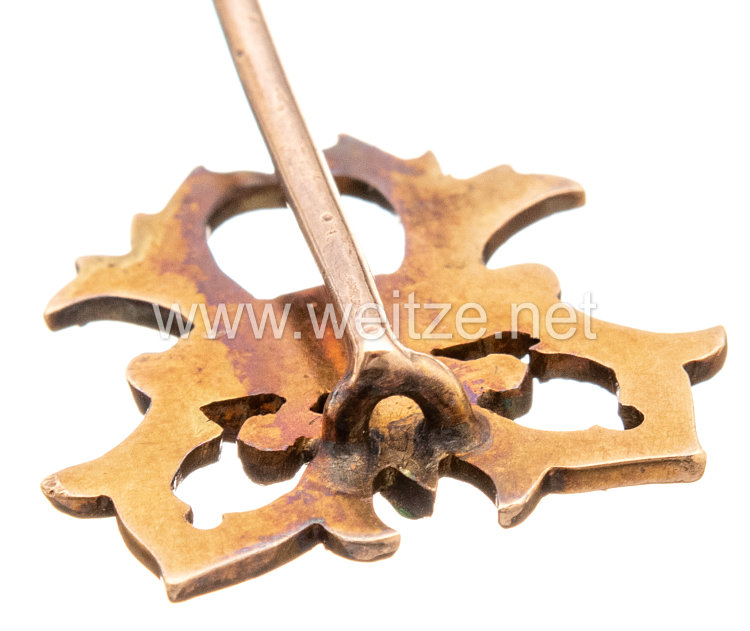
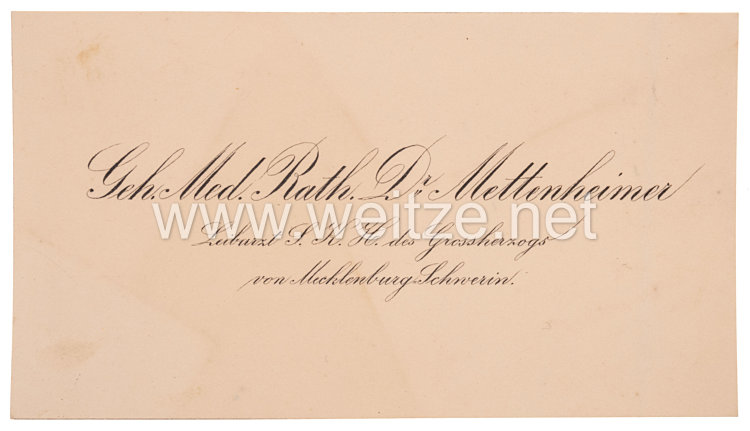
Golden pin with the cipher “F F” set with small diamonds, above it in the center the “Wendish Crown”, enameled in green. Lightly worn, in very fine condition. This is a gift from the Grand Duke to his personal physician Privy Medical Counselor Dr. Mettenheimer (1824 - 1898). Dr. Mettenheimer was honored multiple times for his work; Grand Duke Friedrich Franz III bestowed upon him the title of nobility on May 27, 1895. Accompanied by a visiting card “Privy Medical Counselor Dr. Mettenheimer Personal Physician to His Grand Ducal Highness the Grand Duke of Mecklenburg-Schwerin.” Condition 2.
417438
2.850,00

Mecklenburg-Schwerin Golden Gift Pin with Diamonds of Grand Duke Friedrich Franz II von Mecklenburg (1823 - 1883)

The Golden Gift Pin with Brilliants from Grand Duke Friedrich Franz II of Mecklenburg-Schwerin represents a significant tradition of courtly honors in the German Empire of the 19th century. Such personal gifts from reigning princes constituted a special form of recognition that differed from official state orders and decorations.

Friedrich Franz II (1823-1883) ruled the Grand Duchy of Mecklenburg-Schwerin from 1842 until his death. His reign was characterized by modernization efforts and economic prosperity. The Grand Duke was regarded as an enlightened ruler who promoted infrastructure development, particularly railways, and cared for the welfare of his subjects. The bestowal of personal gift pins on distinguished personalities of his court expressed his appreciation for exceptional services.

This pin displays the cipher “FF” (Friedrich Franz) in an artistic execution set with small diamonds. The use of brilliants emphasizes the high value and special significance of this honor. Above the cipher sits the Wendish Crown in green enamel, a characteristic symbol of the Mecklenburg ruling houses. The Wendish Crown refers to the historical roots of the region and the connection to the Slavic tribes that once inhabited this area.

The personal physicians of German princely courts in the 19th century occupied an elevated position. They were not only responsible for the medical care of the ruling family but also enjoyed the special trust of their princely patients. The position of court physician was associated with great prestige and was usually only awarded to particularly qualified and trustworthy medical practitioners. Privy Medical Councillors formed the apex of the medical hierarchy and were honored for their extraordinary contributions to healthcare.

The practice of bestowing personal gifts by reigning princes had a long tradition in the 19th century. While official orders were regulated by state statutes and subject to specific criteria for bestowal, personal gift pins offered the monarch the opportunity to express individual recognition. These objects were often adorned with the personal insignia of the ruler – monograms, crowns, or coats of arms – and were typically commissioned from court jewelers.

The artistic craftsmanship of such jewelry pieces reached its zenith in the 19th century. The combination of goldsmithing, enameling, and gemstone setting required the highest level of artisanal skill. The green enameling of the Wendish Crown, for example, was a technically demanding process in which pulverized glass was fused onto the metal at high temperatures. The use of brilliants to set the cipher testifies to the appreciation for the bearer and the financial expenditure the Grand Duke devoted to such personal honors.

The historical context of the Grand Duchy of Mecklenburg-Schwerin in the 19th century is of particular interest. The relatively small territory in northern Germany preserved its independence until the founding of the German Empire in 1871 and beyond. The Mecklenburg grand dukes maintained close connections with other German princely houses and with the Prussian royal house. Friedrich Franz II was known for his cultural interests and his promotion of science and arts.

The visiting card preserved with the pin documents the official title of the bearer and his position at court. Such documents are important historical sources that can authenticate and establish the provenance of courtly honors. The ennoblement by Grand Duke Friedrich Franz III in 1895 underscores the outstanding position and exceptional merits of the bearer.

Gift pins of this type were customarily worn on civilian clothing, particularly on the lapel of the frock coat. They served as a visible sign of the special relationship to the ruler and the associated social standing. In the courtly ceremonial of the 19th century, every decoration had its fixed place and significance.

The preservation of such historical objects today provides insight into courtly culture and the honorific practices of the 19th century. They document not only artisanal skill but also social structures and personal relationships in an epoch characterized by strict hierarchies and symbolic representation.