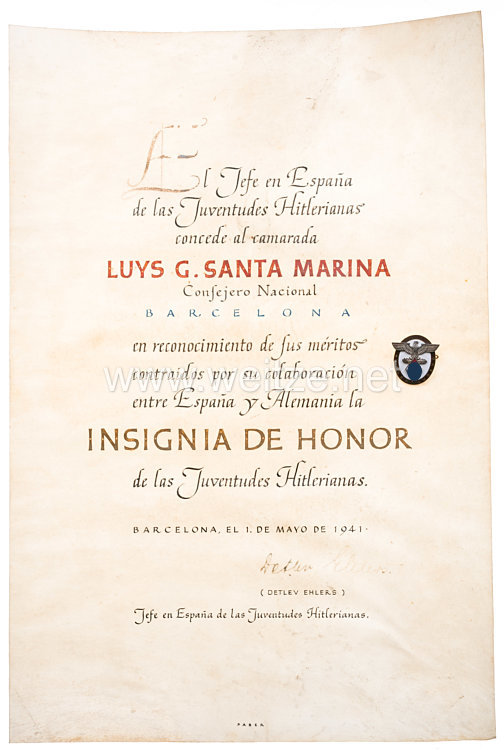
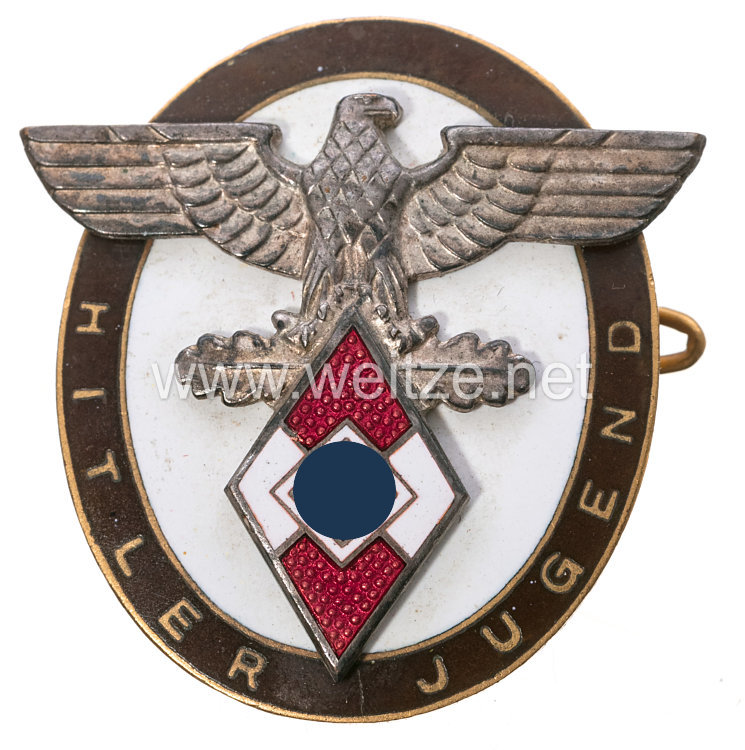
The Hitler Youth Honor Badge for Meritorious Foreigners represents an extremely rare and historically significant document of the Nazi youth organization and its international relations. This special decoration was awarded during World War II to foreign individuals who had distinguished themselves in promoting relations between the Hitler Youth and foreign youth organizations.
The Hitler Youth (HJ) was founded in 1926 and developed from 1933 into a state organization for educating German youth in the National Socialist spirit. From 1936, membership was practically mandatory. The organization encompassed nearly all German youth between 10 and 18 years of age by 1945, reaching a peak of approximately 8.7 million members.
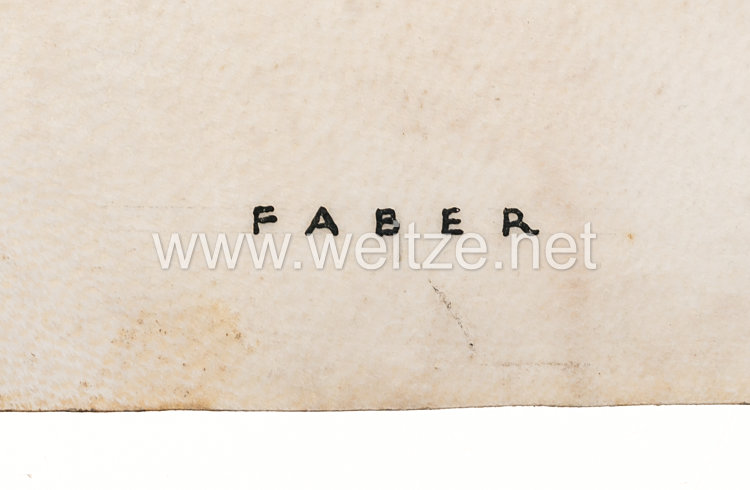
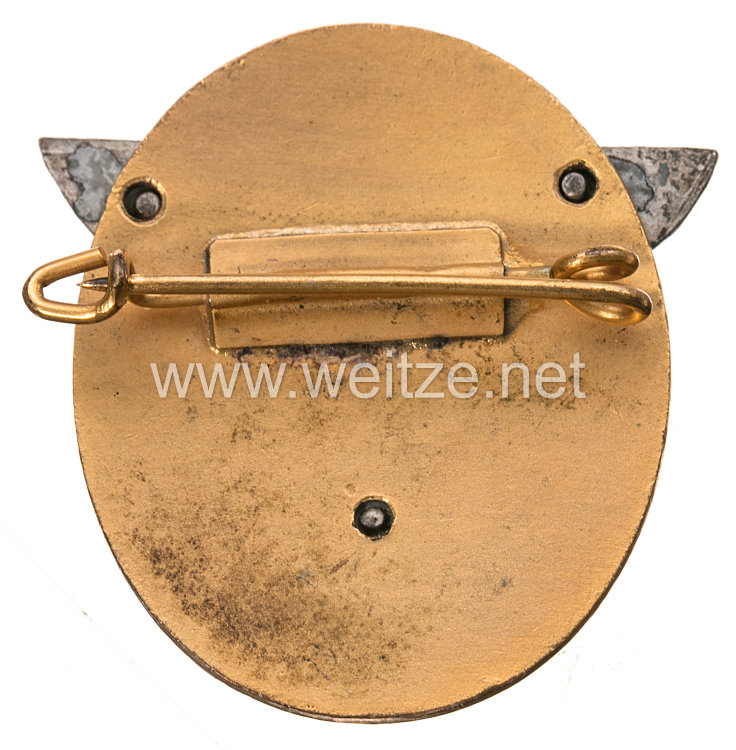
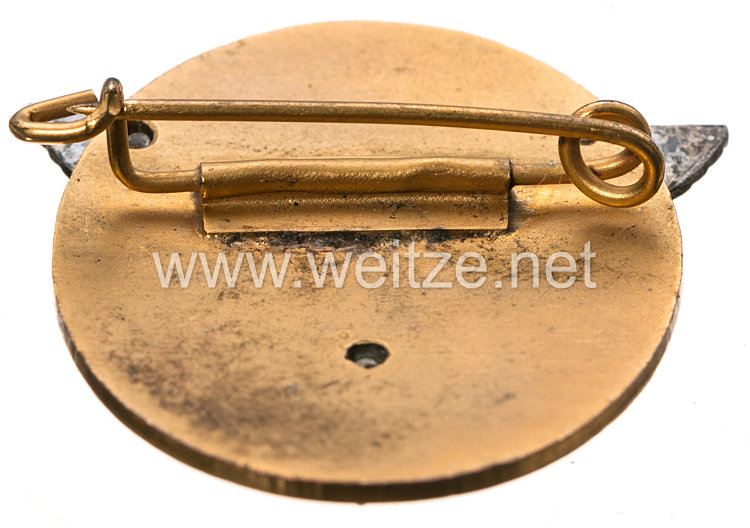
The honor badge described here displays the characteristic design of such NS decorations: a gilded and enameled base metal construction with applied sovereign eagle and enameled HJ emblem. The reverse attachment was accomplished by means of a horizontal pin bar with three retention rivets. The absence of a manufacturer's mark is not unusual for such pieces, as various manufacturers were employed for production.
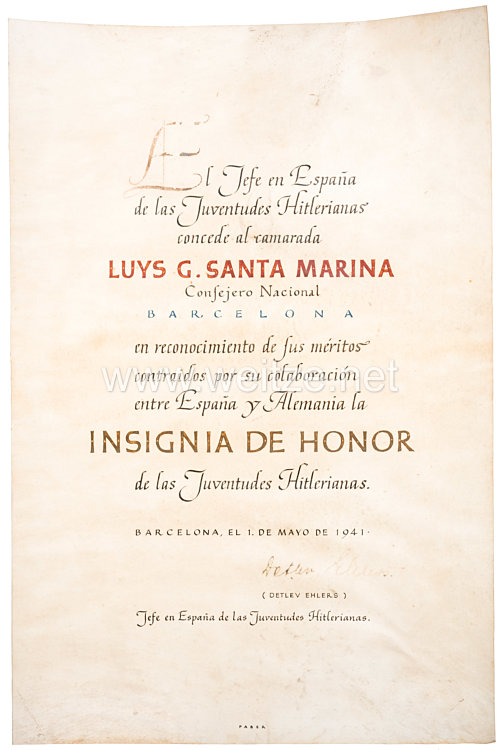
Particularly noteworthy is the accompanying award certificate, handwritten on parchment and issued by Detlev Ehlers, Leader of the Hitler Youth in Spain. The award was presented on May 1, 1941, in Barcelona in recognition of services to Spanish-German cooperation.
The historical context of this award is closely linked to relations between Nazi Germany and Franco's regime in Spain. Following the Spanish Civil War (1936-1939), in which Germany and Italy supported the nationalist side under General Francisco Franco, close relationships developed between both regimes. The Falange EspaƱola, the Spanish fascist party, played a central role in this relationship.
During this period, the Hitler Youth maintained connections with various foreign youth organizations, particularly with fascist and authoritarian movements in Europe. A German community existed in Spain, and the HJ organization was represented there to ensure the ideological education of German youth abroad and to cultivate relationships with Spanish organizations.
The year 1941 marks a particular moment in time: Germany was engaged in World War II, had conquered large parts of Europe, and was on the eve of the attack on the Soviet Union in June 1941. Spain under Franco had adopted an officially neutral but Germany-friendly position. Many Spanish volunteers fought in the Blue Division on the Eastern Front.
The awarding of such decorations to foreign politicians and functionaries served multiple purposes: it was intended to strengthen international relations, demonstrate ideological solidarity, and create personal loyalties. For recipients, such honors were signs of recognition for their political stance and commitment to cooperation with Nazi Germany.
The handwritten execution of the certificate on parchment emphasizes the ceremonial and official character of the award. Parchment certificates were used for particularly important decorations and were meant to symbolize dignity and permanence. The size of 22.5 x 49 cm corresponds to the format of representative documents of this type.
After the end of World War II, all organizations of the NSDAP, including the Hitler Youth, were banned and dissolved by the Allies. Decorations and documents of these organizations were largely destroyed or confiscated. This explains the rarity of such complete ensembles today.
From a historical perspective, such objects are important testimonies to Nazi foreign policy and the ideological networking of fascist movements in Europe. They document the systematic efforts of the NS regime to cultivate international relations through youth organizations and to honor and bind foreign sympathizers.
For scholarly research, such documents offer valuable insights into the functioning of NS foreign policy at various levels, the role of symbols and rituals in totalitarian systems, and the concrete relations between Germany and Spain during World War II. The connection to a Spanish Falange politician underscores the ideological affinity between both regimes during this period.
The Hitler Youth's international activities extended beyond Spain to numerous countries where German communities existed. These efforts were part of a broader strategy to maintain influence over German nationals abroad and to foster relationships with like-minded authoritarian movements throughout Europe and beyond.