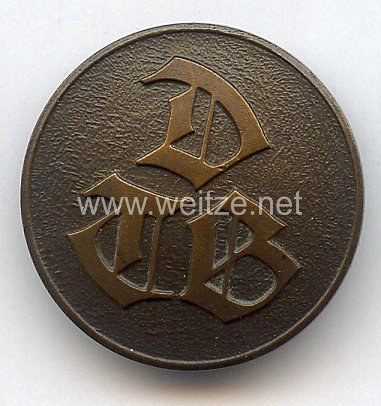
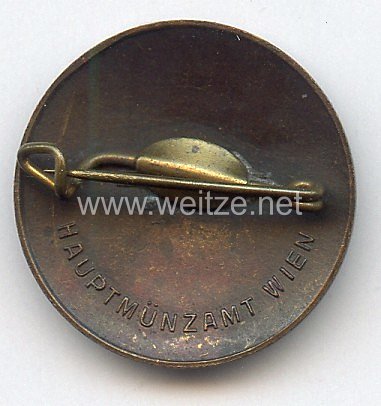
Austria - German Gymnasts' League (DTB)

Membership badge 1st pattern, pin-back, maker: Hauptmünzamt Wien, condition 2.
319637
30,00

Austria - German Gymnasts' League (DTB)

Historical Context: German Gymnastics Federation (DTB) Membership Badge - Austria

This membership badge of the German Gymnastics Federation (Deutscher Turnerbund - DTB) of Austrian manufacture represents a significant chapter in German-Austrian gymnastics and associational history. Produced by the Main Mint of Vienna (Hauptmünzamt Wien), one of the most renowned minting establishments of the Monarchy and later Republic, this badge documents the close connection between the gymnastics movement and national identity formation in the German-speaking world.

The Gymnastics Movement and Its Origins

The German gymnastics movement was founded at the beginning of the 19th century by Friedrich Ludwig Jahn (1778-1852). Jahn, known as “Father of Gymnastics,” combined physical exercise with patriotic ideals during the Napoleonic occupation. His vision was to strengthen German youth physically and morally through systematic gymnastics. The first gymnastics ground was opened in 1811 at Berlin's Hasenheide, beginning a movement that rapidly spread throughout all German-speaking territories.

The German Gymnastics Federation

The German Gymnastics Federation was founded in 1868 in Weimar and developed into the umbrella organization of German gymnastics clubs. The organization pursued the goal of uniting numerous local gymnastics clubs under a common organizational and ideological roof. The DTB propagated the “Four Fs”: Fresh, Pious, Cheerful, Free (Frisch, Fromm, Fröhlich, Frei) - a motto reflecting Jahn's original ideals.

In Austria-Hungary, a parallel development existed. Austrian gymnasts felt connected to the pan-German gymnastics movement, which was particularly pronounced in the German-speaking areas of the Monarchy. Relations between German and Austrian gymnastics clubs were traditionally close, characterized by mutual visits, joint gymnastics festivals, and ideological exchange.

Membership Badges and Their Significance

Membership badges played a central role in the associational culture of the 19th and 20th centuries. They served not only to identify members but also symbolized belonging, pride, and community. Wearing such badges at official occasions, gymnastics festivals, and events was obligatory and demonstrated commitment to the movement's ideals.

The first form of a badge typically designates the original version used at the introduction or beginning of a particular period. Such first forms are of particular interest to collectors and historians as they reflect the original design concept and initial symbolism.

The Main Mint of Vienna as Manufacturer

The Main Mint of Vienna, founded in 1194 and thus one of the world's oldest continuously operating minting establishments, enjoyed an excellent reputation for precision and quality. The establishment produced not only coins but also orders, decorations, and association badges. Commissioning the Main Mint for the production of membership badges testified to the high importance that commissioners attached to their insignia.

The technical execution of such badges usually involved stamping or striking, with details worked out with great care. The use of enamel work and various metal alloys was common to emphasize the symbolism in color and relief.

Historical and Political Context

The relationship between Austrian and German gymnastics clubs was always politically connoted. Particularly in the context of the Greater German idea - the notion of unifying all German-speaking territories - gymnastics clubs played a significant role. They were frequently carriers of national and later nationalist ideas.

After World War I and the collapse of the Austro-Hungarian Monarchy, the framework conditions changed fundamentally. The Treaty of Saint-Germain in 1919 expressly prohibited Austria's annexation to Germany, but cultural and sporting connections remained. The gymnastics movement in Austria maintained its connections to German gymnastics.

Collector Value and Historical Significance

Today, such membership badges are important historical documents providing insight into associational culture, social organization, and ideological currents of their time. They document the significance of physical culture, national identity, and community formation in late 19th and early 20th century society.

For collectors of military and paramilitary antiques as well as for social historians, these objects are of particular interest as they illustrate the intersection of sport, politics, and society. The quality rating “Condition 2” indicates a well-preserved specimen, which additionally enhances its documentary and collector value.