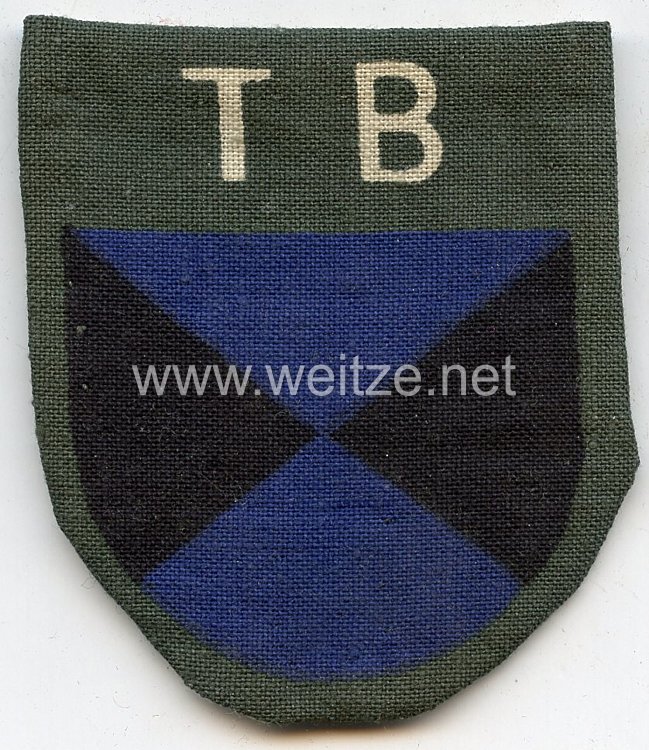
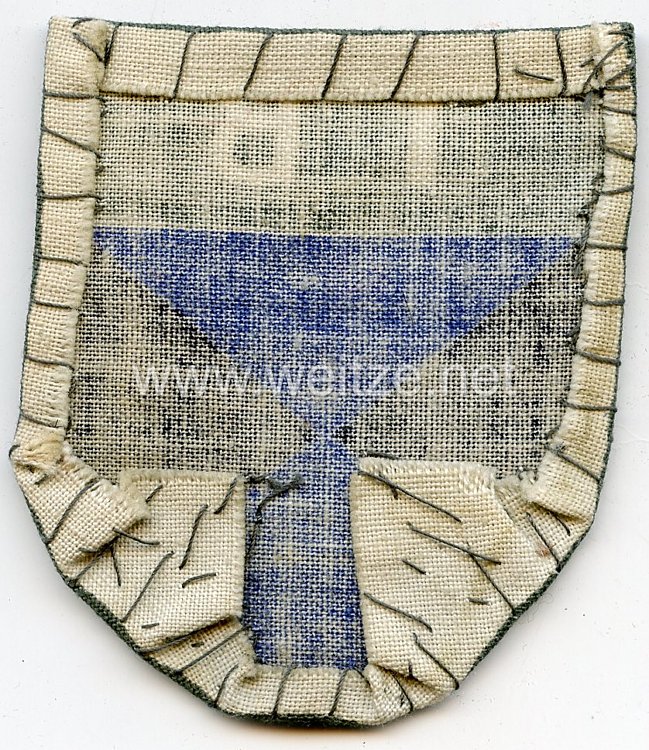
Wehrmacht Heer Sleeve Shield for Terek Cossack Volunteers

3rd Model, inscription “TB”, printed variant, worn condition, Condition 2+.
439436
200,00

Wehrmacht Heer Sleeve Shield for Terek Cossack Volunteers

The sleeve shield for Terek Cossack volunteers represents a significant artifact from the complex history of collaboration during World War II. These badges were worn by Cossack volunteer units fighting on the German side, specifically by members of the Terek Cossacks from the North Caucasus region.

The Terek Cossacks originally came from the region around the Terek River in the northern Caucasus, an area between the Black and Caspian Seas. Their history as a warrior community dated back to the 16th century. After the October Revolution of 1917 and the subsequent Russian Civil War, many Cossacks fled into exile to escape Soviet power or were integrated into the Soviet system, often under considerable repression.

Following the launch of Operation Barbarossa on June 22, 1941, the Wehrmacht saw the various Cossack groups as potential allies against the Soviet regime. The Cossacks' motivation for collaboration was multifaceted: anti-Soviet sentiment, hope for restoration of traditional privileges, revenge for suffering during collectivization and Stalin's purges, as well as pragmatic survival considerations while in captivity.

The third model of the sleeve shield bearing the inscription “TB” (Terek Brigade or Terek Battalion) represents a later developmental phase of these badges. The Wehrmacht introduced systematic identification markings for various volunteer formations to identify and organizationally register them. The printed execution indicates standardized production, likely from 1943/44 onwards, when several Cossack units were established on a larger scale.

The organization of Cossack formations within the Wehrmacht occurred gradually. Initially, smaller units were established as auxiliary troops, later larger formations emerged. In 1943, the 1st Cossack Division was formed under Major General Helmuth von Pannwitz, uniting various Cossack groups including Terek Cossacks. This division fought mainly in the Balkans against partisans.

The sleeve badges served multiple purposes: they were intended to emphasize the ethnic and regional identity of the wearers, strengthen esprit de corps, and enable distinction between different Cossack groups. Simultaneously, they were part of the German propaganda strategy that proclaimed the “liberation” of peoples from Bolshevism.

The wearing of these sleeve shields was regulated in German uniform regulations. They were typically worn on the right upper arm of the uniform jacket, below the national cockade or other badges. The printed cloth execution allowed for easy sewing onto the uniform.

The fate of the Terek Cossacks and other collaborating Cossack units was tragic. Toward the war's end, many attempted to surrender to the Western Allies to avoid Soviet captivity. However, under the Yalta agreements, many Cossacks were forcibly repatriated to the Soviet Union. This repatriation, known as the “Tragedy of Lienz” in May/June 1945, led to mass executions and deportations to Gulags.

From a historical perspective, the existence of such badges raises important questions about collaboration, national identity under occupation, and the complex motivations of individuals in extreme wartime situations. Research has shown that reasons for cooperation with German occupiers extended far beyond simple ideological agreement.

Today, such sleeve badges are important military-historical documents that remind us of a dark and controversial chapter of history. They document Nazi Germany's attempts to instrumentalize non-German peoples for its war aims, as well as the desperate decisions of people trapped between different totalitarian systems.

Authentication of such pieces requires detailed knowledge of manufacturing methods, materials, and stylistic characteristics of the various models. Reproductions and forgeries are common in the collector's market, making provenance and expert evaluation essential.

r