RAD Honor Dagger for Leaders with Damascus Blade and Presentation Inscription from the Estate of Obergeneralarbeitsführer Wilhelm Busse

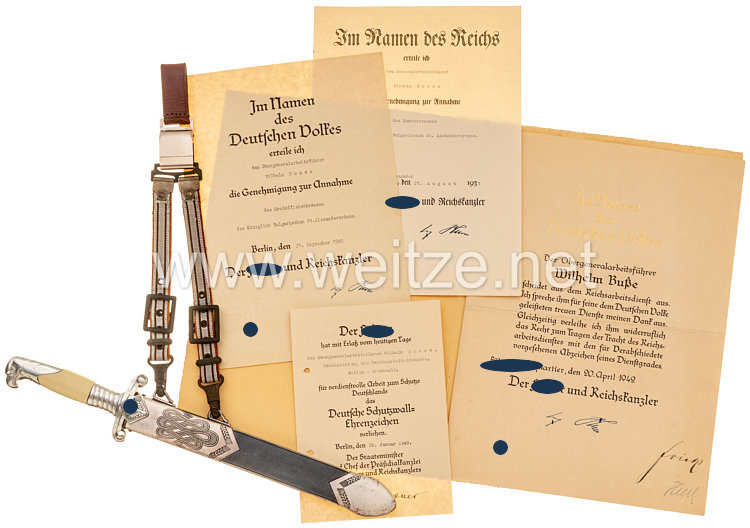
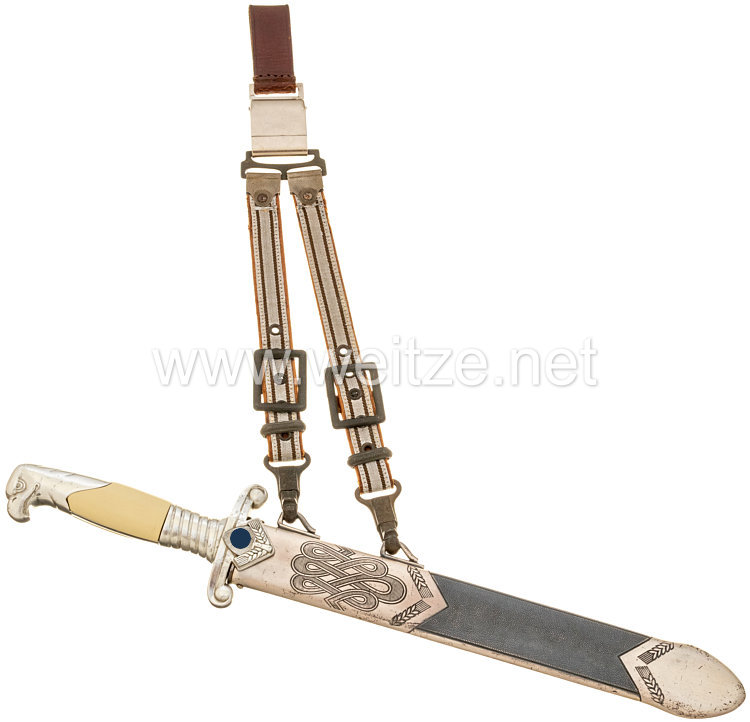
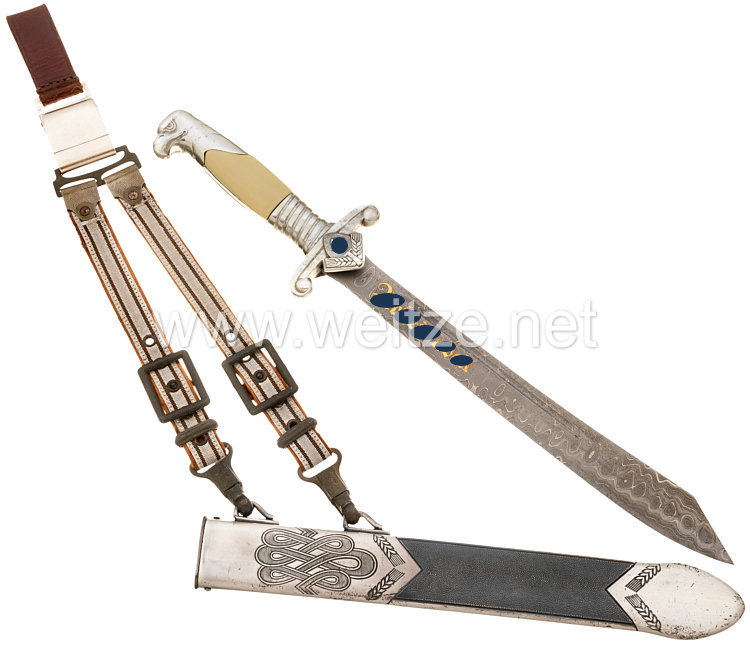
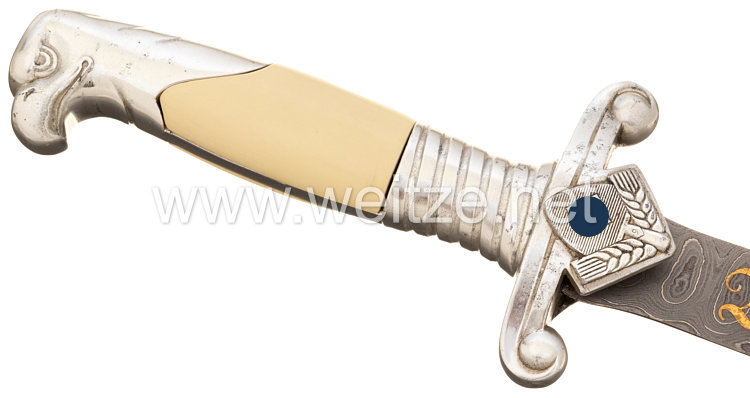
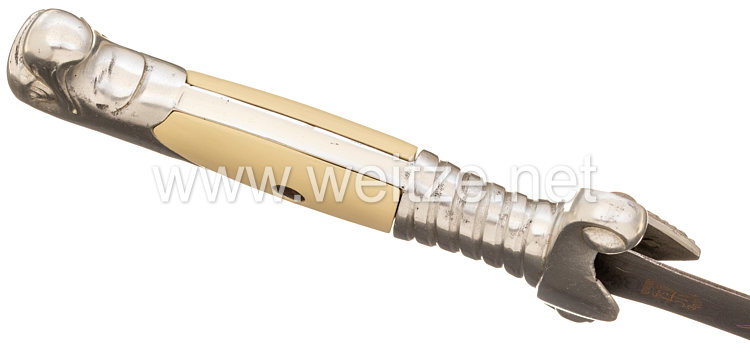
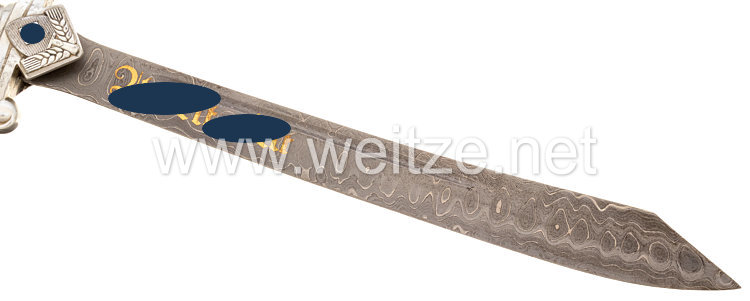
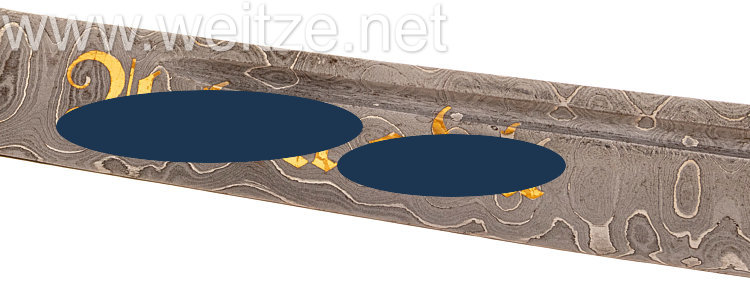
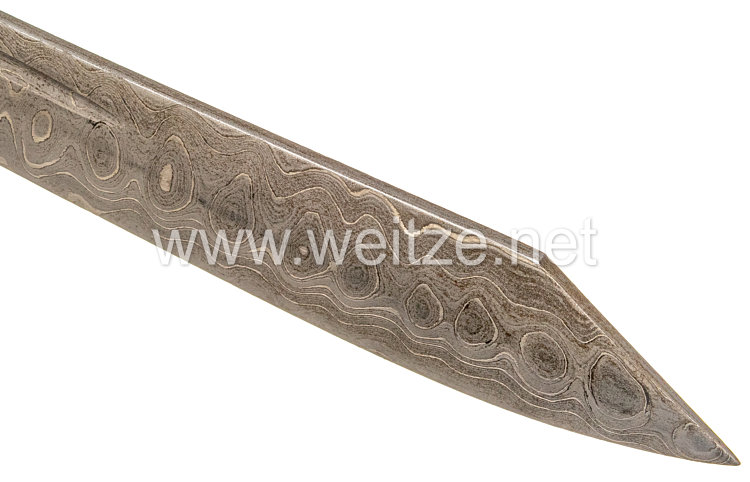
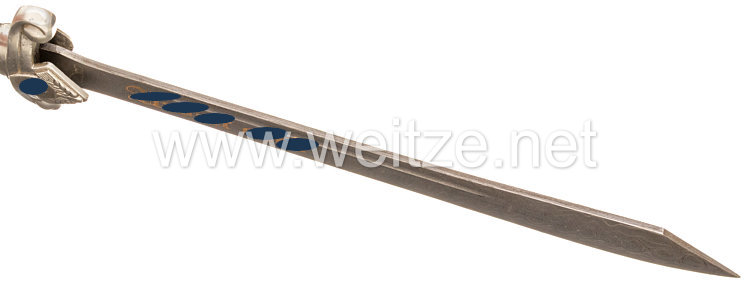
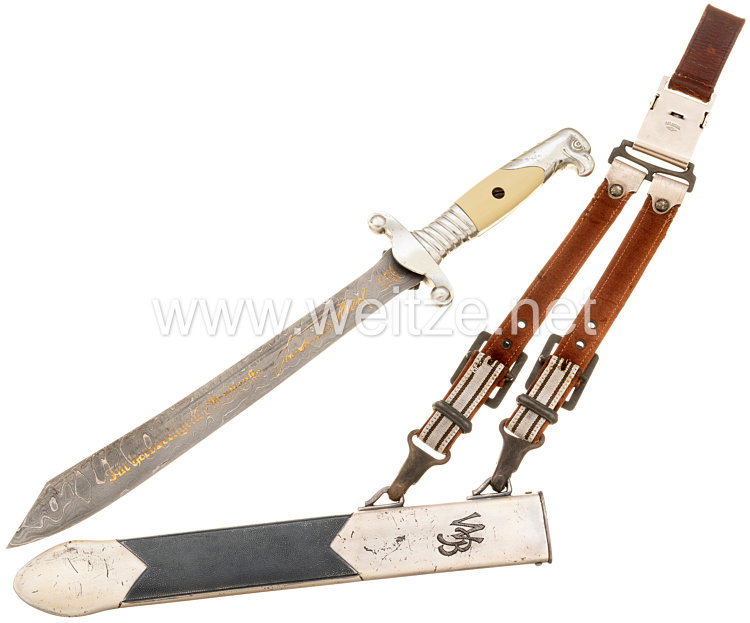
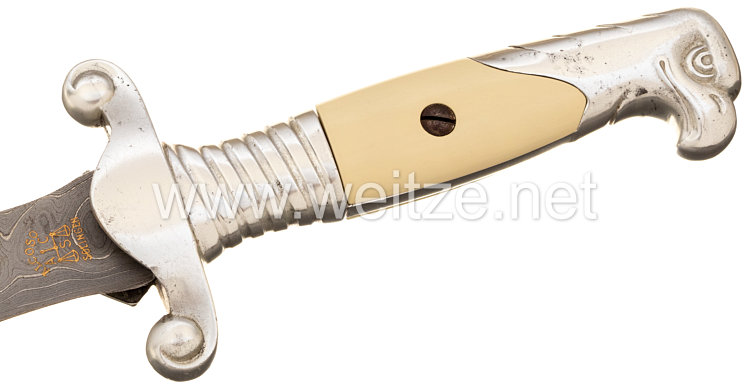
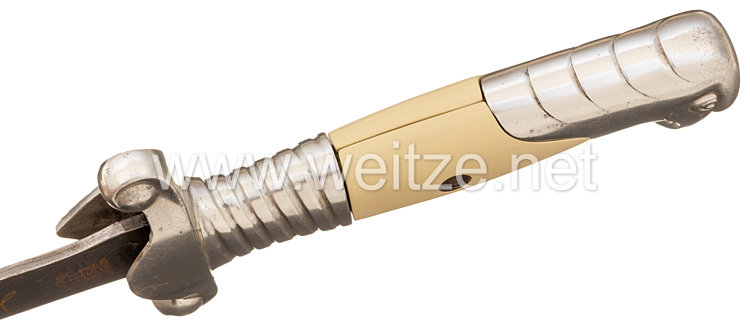
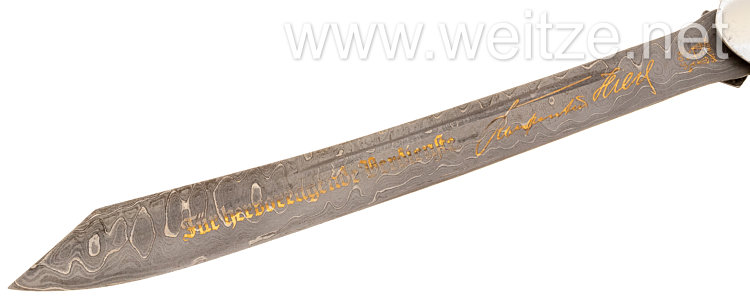
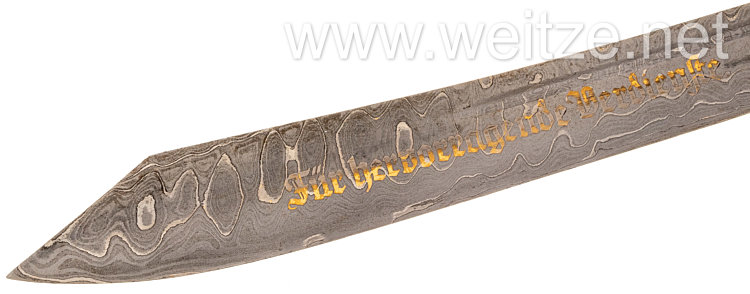
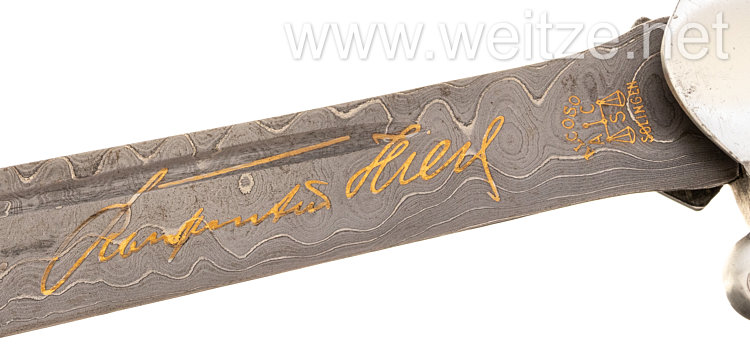
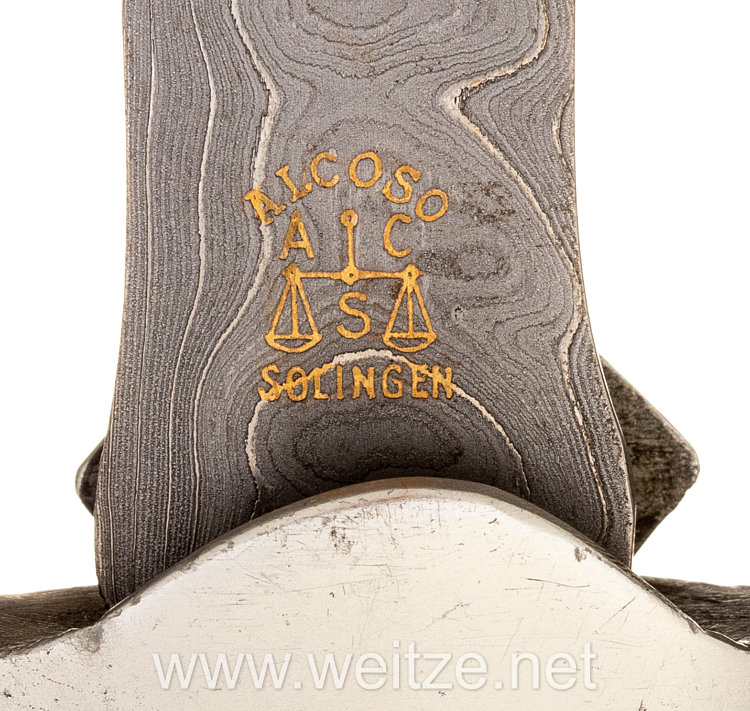
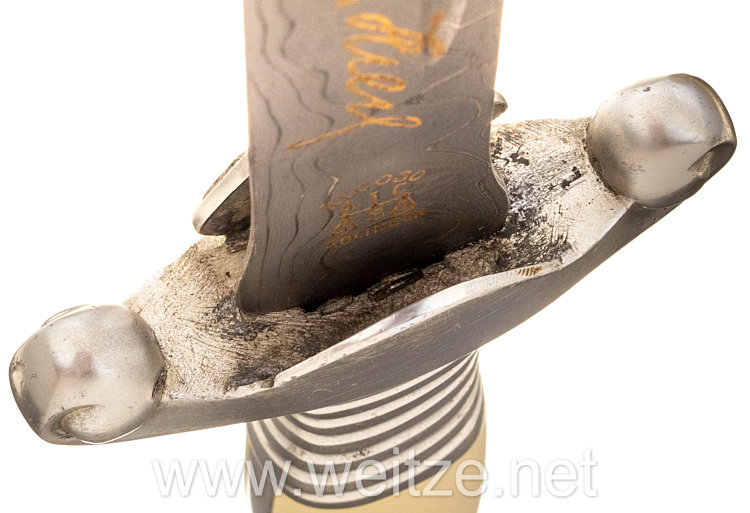
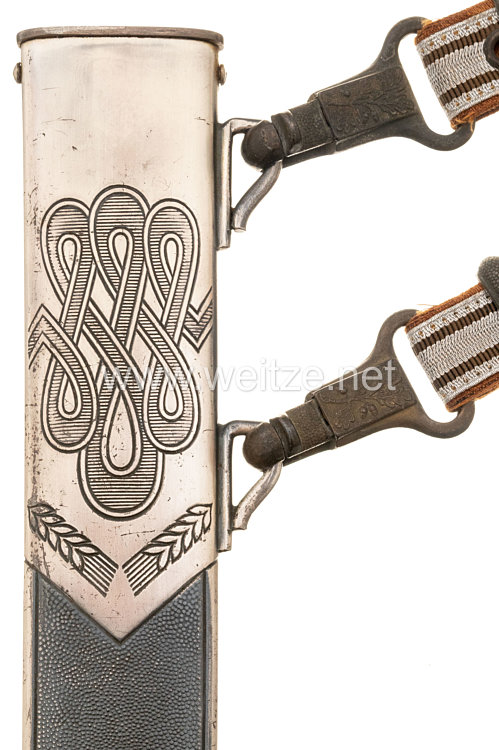
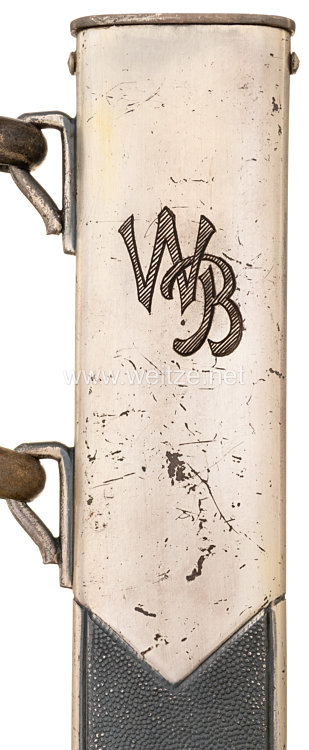
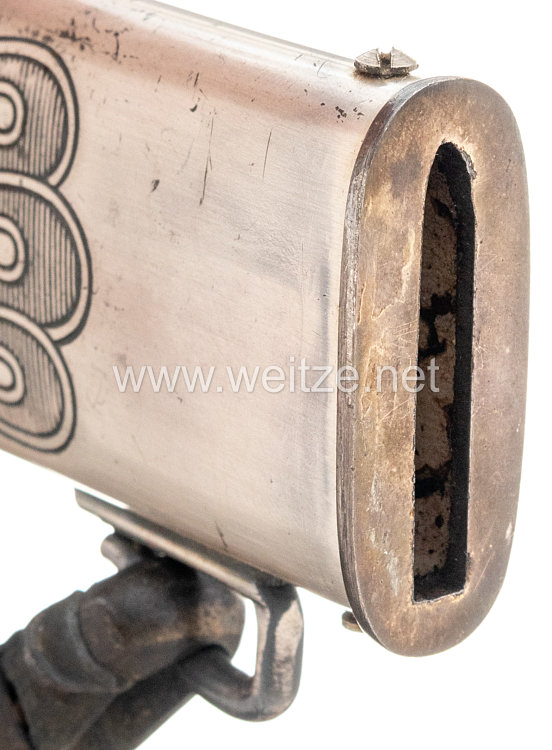
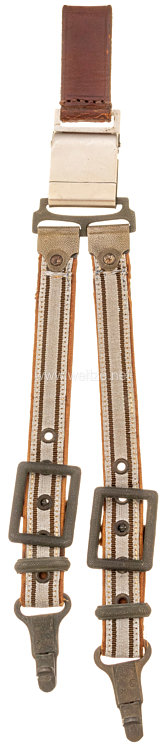
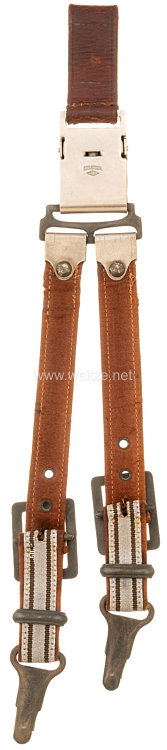
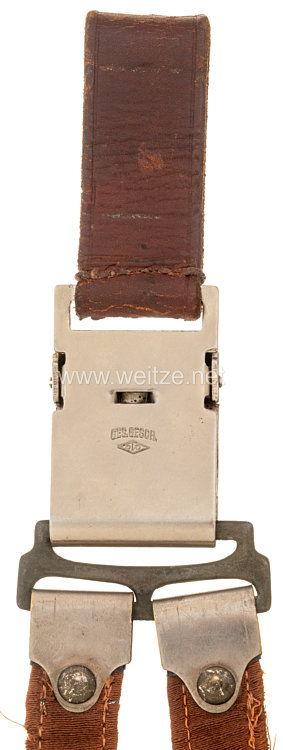
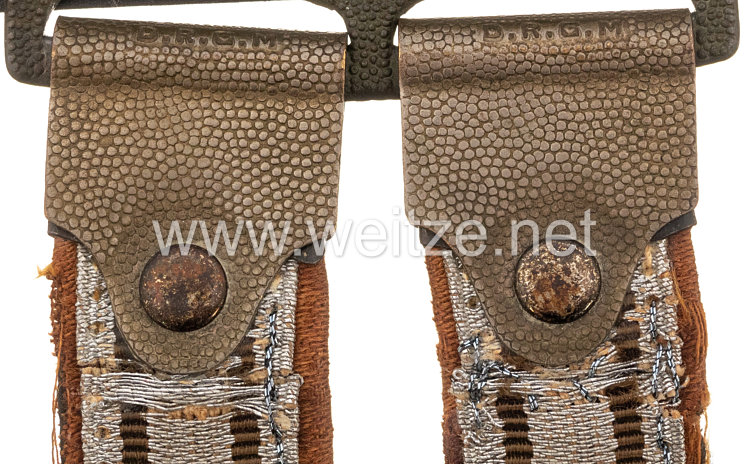
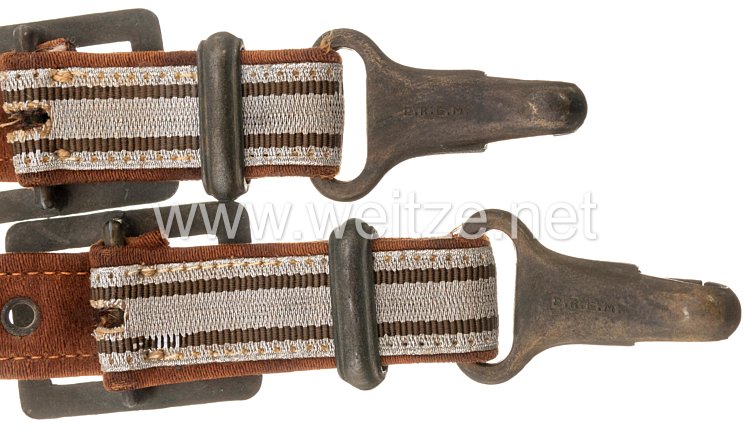
This is a luxury production by Alcoso, Solingen. The hilt fittings of aluminum, white plastic grip scales as ivory imitation, screw-mounted on reverse. The scabbard silver-plated with original patina, reverse side with very fine owner's engraving “W B”. The blade of finest quality genuine Damascus steel, obverse with gilt motto “Arbeit adelt” (Work Ennobles). Reverse with gilt inscription “Für hervorragende Verdienst. Konstantin Hierl” (For Outstanding Service. Konstantin Hierl), maker “Alcoso A C S Solingen”. Complete with the special hanger for RAD generals in luxury version. The buckles marked on reverse: “D.R.G.M.”, the brown leather belt loop with nickel-plated slider, marked on reverse “Ges. gesch. OLC”. Lightly worn, in very fine condition.
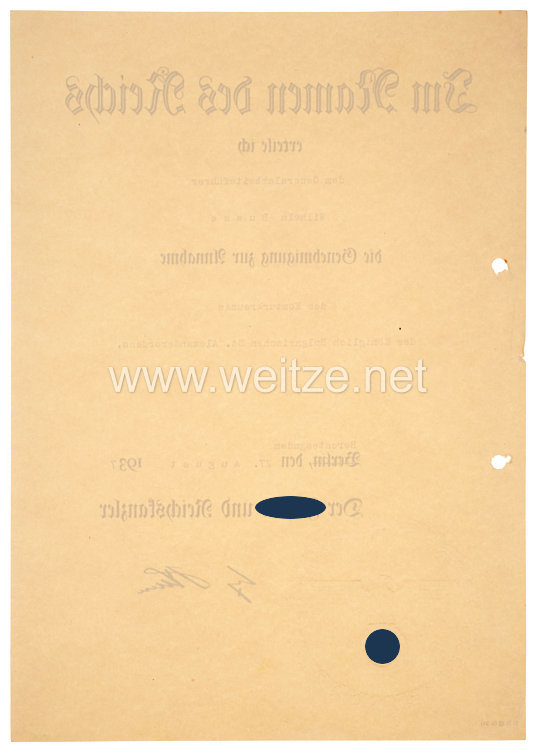
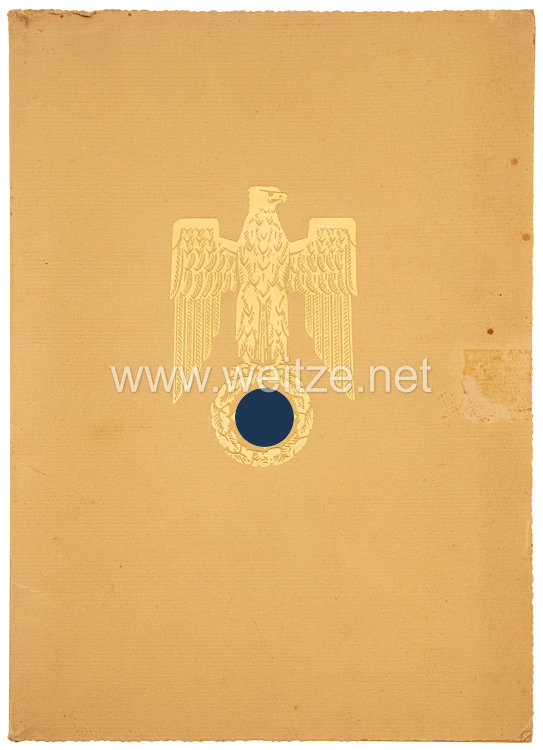
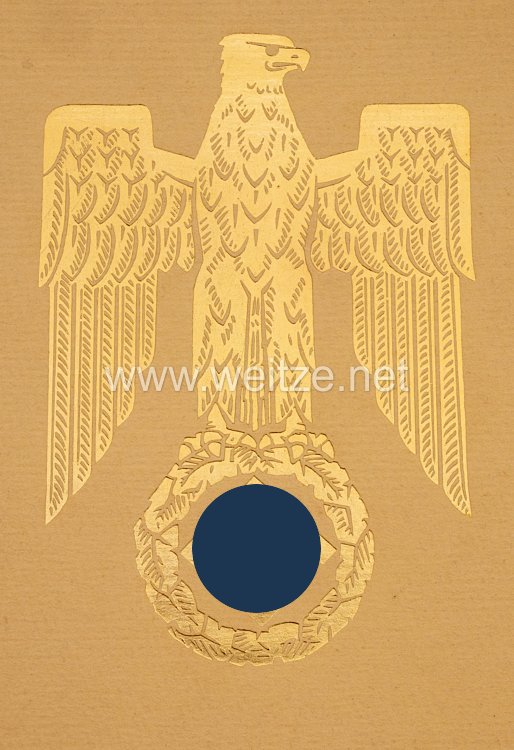
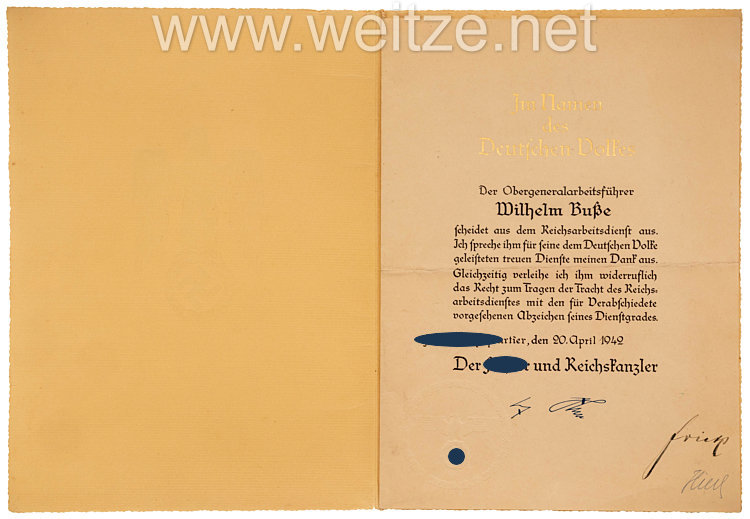
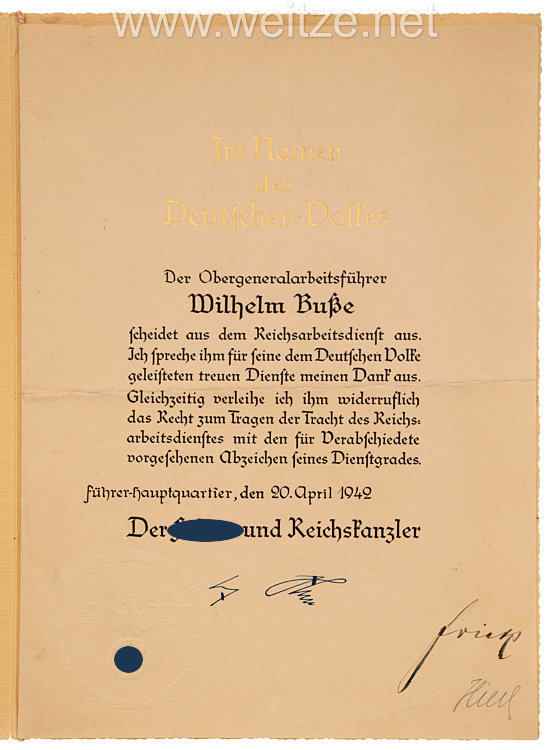
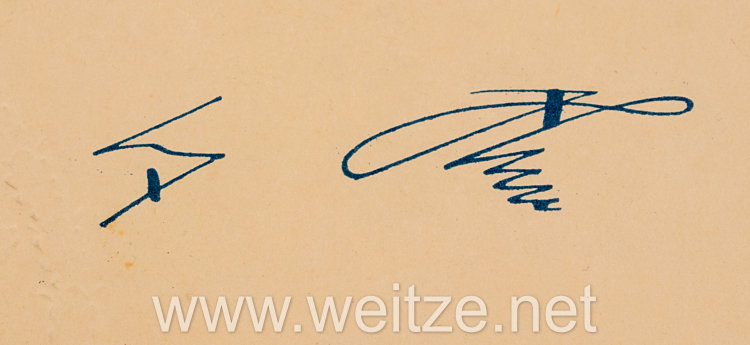
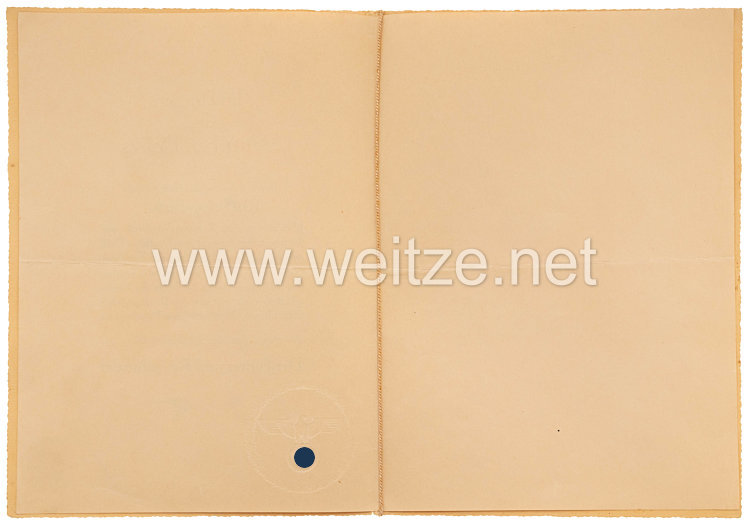
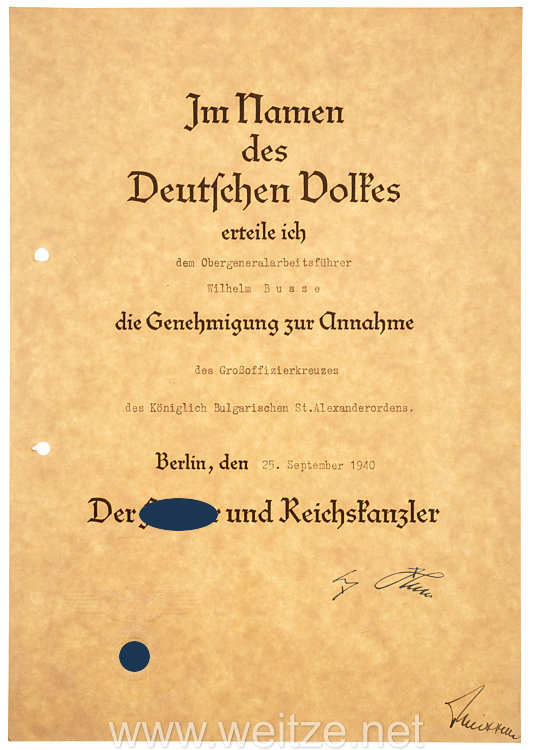
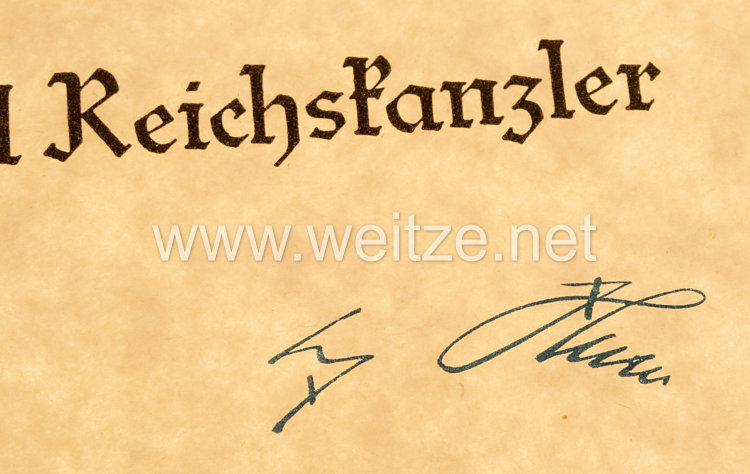
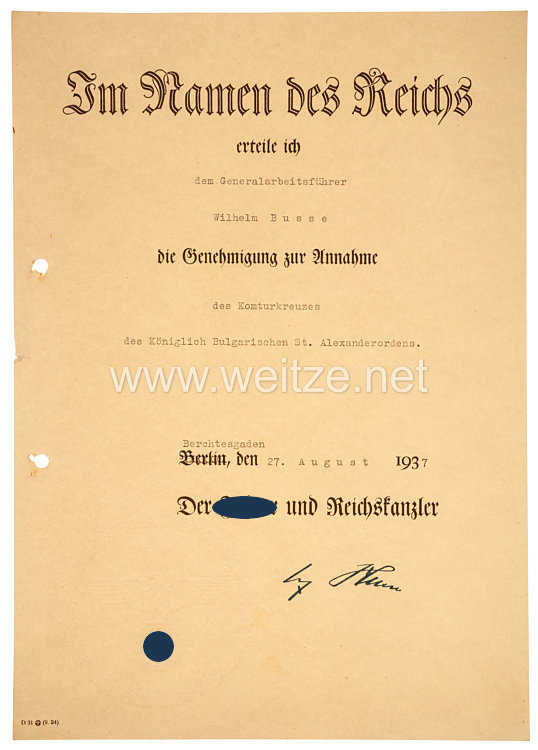
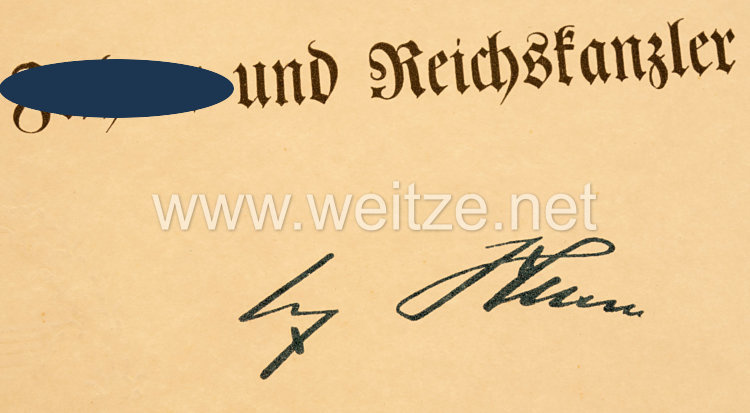
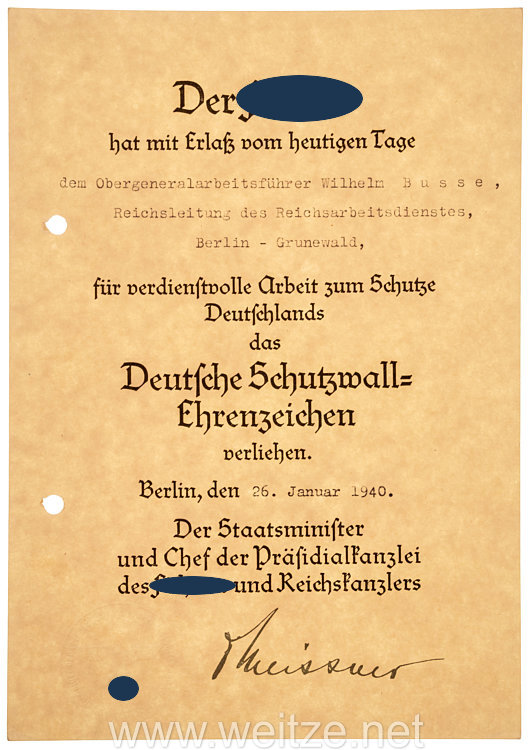
Together with the following documents: Authorization certificate for acceptance of the Commander's Cross of the Royal Bulgarian Order of St. Alexander, issued Berchtesgaden, 27 August 1937, with facsimile signature “Adolf Hitler”, furthermore the authorization certificate for acceptance of the Grand Officer's Cross of the Royal Bulgarian Order of St. Alexander, dated Berlin, 26 September 1940. Award certificate for the West Wall Medal, issued to “Obergeneralarbeitsführer Wilhelm Busse, Reichsleitung des Reichsarbeitsdienstes, Berlin-Grunewald”, dated Berlin, 26 January 1940. Large discharge certificate from the Reichsarbeitsdienst with the right to continued wearing of the uniform. Issued Führer Headquarters, 20 April 1945, with facsimile signature “Adolf Hitler” as well as original signatures “Frick” and “Hierl”. The document is folded once, complete in the special envelope with gold-embossed national eagle.
Extremely rare, in over 30 years this is the first RAD honor dagger with presentation inscription we have been able to offer.

Wilhelm Busse, born 20 March 1878 in Berlin, died 9 December 1965 in Kiel. Busse was a naval officer in World War I with deployment in the Mediterranean, he was retired as Kapitän zur See in 1920. In the Third Reich, Busse began a career with the RAD and rose to Obergeneralarbeitsführer (equivalent to a Lieutenant General of the Wehrmacht). Simultaneously, from 19 July 1939 he was placed at the disposal of the Kriegsmarine, in 1944 he received the patent as Konteradmiral z.V.
407436

RAD Leader’s Honor Dagger with Damascus Blade and Presentation Inscription – A Pinnacle of Reich Labor Service Edged Weaponry

Among the rarest categories of Third Reich edged weapons stands the RAD Ehrendolch für Führer (RAD Leader’s Honor Dagger), Model 1937/1938, in its most exalted form: a luxury presentation variant with a genuine damascus steel blade and gilded personal dedication from Reichsarbeitsführer Konstantin Hierl to Obergeneralarbeitsführer Wilhelm Busse. Manufactured by the renowned Solingen firm Alcoso, this piece represents the apex of craftsmanship and institutional prestige within the Reich Labor Service.

The Reichsarbeitsdienst – Origins and Purpose

The Reichsarbeitsdienst (RAD), or Reich Labor Service, was established on 26 June 1935 through the Reich Labor Service Law as compulsory service for all German males between 18 and 25 years of age. The organization had its roots in the voluntary labor services of the Weimar Republic but was transformed under National Socialist rule into a paramilitary compulsory organization. The RAD’s mission was to employ young men in public works projects, primarily in agriculture and construction, before their military service. On 11 July 1934, the predecessor organization NSAD had been renamed Reichsarbeitsdienst, which Konstantin Hierl would control as its chief until the end of World War II. Hierl was named Reichsarbeitsführer on 26 June 1935.

The RAD Leader’s Dagger – Classification and Variants

The initial pattern of the RAD dagger was introduced in 1934 and was worn by both enlisted men and officers. Later, a second pattern was issued that was regulated exclusively for officers. By default, the first pattern became known as the enlisted man’s or “EM” version. The EM variant can be found in earlier solid nickel alloy or later nickel-plated steel. The leader’s version was initially silver-plated, while later versions featured aluminum fittings.

The leader’s dagger was reserved for officers and senior non-commissioned officers; ordinary labor service men did not carry service daggers. Leader ranks began with Truppführer and extended upward to Reichsarbeitsführer. The dagger was worn with the walking-out uniform and on special occasions.

Physical Description of This Exemplar

This luxury example features aluminum hilt fittings with white celluloid grip plates (ivory imitation) screwed on the reverse – standard materials for the 1937/1938 pattern. The silvered scabbard retains its original toning and bears the owner’s engraved initials “W B” on the reverse.

What elevates this piece to the extraordinary is its genuine damascus steel blade. Standard production RAD daggers used regular steel; damascus was reserved for luxury presentation pieces. The blade’s obverse carries the gilded motto “Arbeit adelt” (Labor Ennobles), while the reverse displays the gilded inscription “Für hervorragende Verdienste” (For Outstanding Service) followed by the gilded facsimile signature of “Konstantin Hierl”. This inscription format is documented on presentation RAD hewers and signifies an award for exceptional performance at the highest organizational level. The manufacturer’s marking reads “Alcoso A C S Solingen.”

The ensemble is complete with the special RAD general’s hanger in luxury execution. The fittings bear the designation “D.R.G.M.” (Deutsches Reichsgebrauchsmuster – German Reich Utility Patent) on the reverse, while the brown leather belt loop with nickel-plated slide is marked “Ges. gesch. OLC” on the reverse.

The Manufacturer – Alcoso, Solingen

Alcoso was the trade name of Alexander Coppel & Co. KG, Stahlwarenfabrik, a major manufacturer of edged weapons located in Solingen. In 1936, the firm was “Aryanized,” and by 1940 the brand trademark initials were changed from ACS to AWS. Since this dagger still bears the “A C S” designation, it dates to the period before this change.

The Recipient – Obergeneralarbeitsführer Wilhelm Busse

Wilhelm Busse was born on 20 March 1878 in Berlin and died on 9 December 1965 in Kiel. During the First World War, he served as a naval officer in the Mediterranean and was retired in 1920 with the rank of Kapitän zur See (Captain at Sea). Under the Third Reich, Busse embarked upon a career in the RAD, eventually rising to Obergeneralarbeitsführer, a rank equivalent to a Generalleutnant (Lieutenant General) in the Wehrmacht. Simultaneously, from 19 July 1939 he was placed at the disposal of the Kriegsmarine, and in 1944 received the patent as Konteradmiral z.V. (Rear Admiral of the Reserve).

Busse joined the NSDAP on 1 December 1930 (membership number 389,464). As the most senior NSDAP functionary within the RAD, he was appointed President of the RAD legal court in 1934.

The Accompanying Documents

The dagger is accompanied by a significant group of documents: a certificate authorizing acceptance of the Commander’s Cross of the Royal Bulgarian Order of St. Alexander (Berchtesgaden, 27 August 1937), a further authorization for the Grand Officer’s Cross of the same order (Berlin, 26 September 1940), an award certificate for the Schutzwall-Ehrenzeichen (West Wall Medal, Berlin, 26 January 1940), and a large formal discharge certificate from the Reichsarbeitsdienst with the right to continue wearing the uniform, bearing the original signatures of “Frick” and “Hierl.”

The Presenter – Konstantin Hierl

Konstantin Hierl (24 February 1875 – 23 September 1955) was the head of the Reich Labour Service and a Reichsleiter of the Nazi Party. After 1945, Hierl was arrested and interned. He was tried before a denazification tribunal and on 21 August 1948 was found guilty as a “major offender.” He received a sentence of three years in a labor camp but was immediately freed on the basis of time served. On appeal, his conviction was upheld on 22 December 1949.

Rarity and Collector Significance

The combination of a genuine damascus steel blade, gilded inscriptions, and a personal presentation dedication from Hierl places this dagger in the uppermost echelon of RAD collectibles. Damascus blades were not found on standard-production daggers and were exclusively crafted for special presentation pieces. The dealer who offered this piece confirmed it was the first RAD honor dagger with presentation inscription he had been able to offer in over 30 years, underscoring the extreme rarity of such examples. After 1945, many of these daggers were taken by Allied soldiers as war souvenirs or destroyed. Today they are collectors’ items whose possession and trade in Germany are regulated by the Criminal Code, particularly regarding the display of unconstitutional symbols, with the historical and museum context being of particular importance.

r