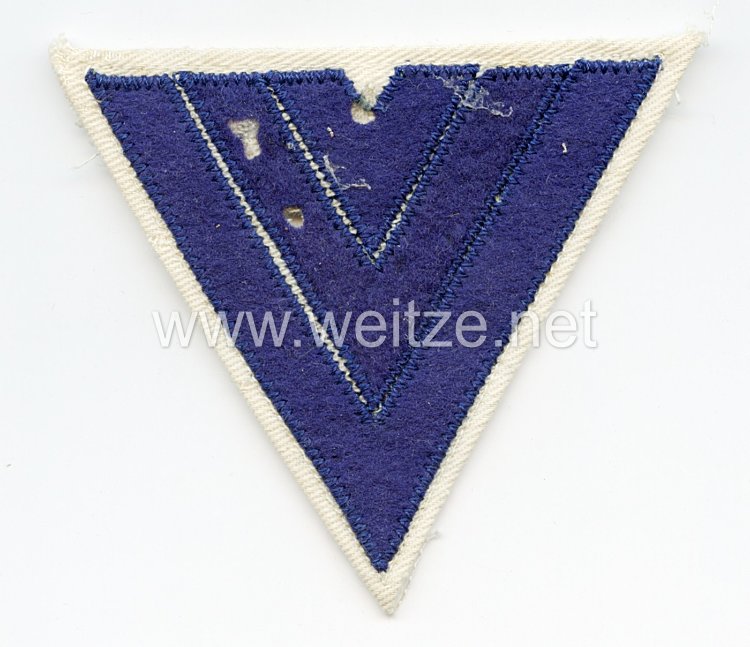
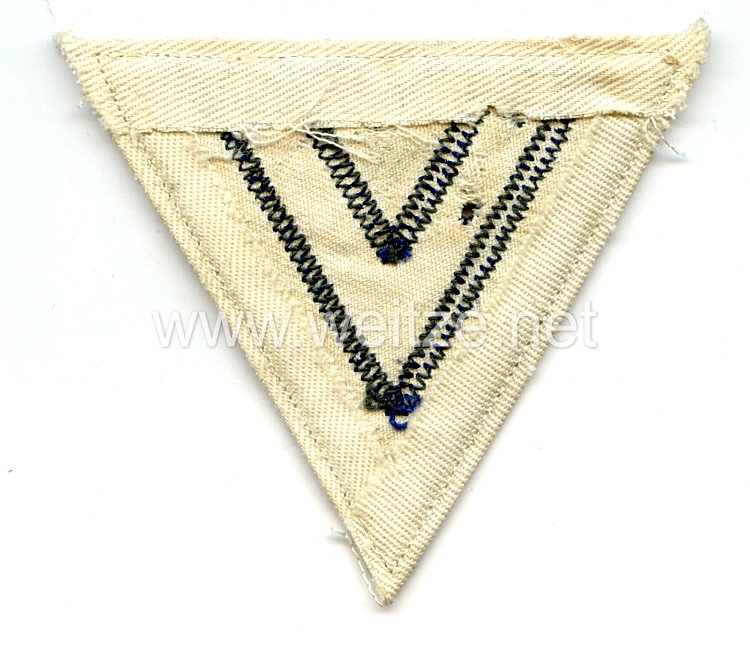
Kriegsmarine Sleeve Insignia Hauptgefreiter

for the white blouse. Damaged, condition 3.
433436
15,00

Kriegsmarine Sleeve Insignia Hauptgefreiter

The sleeve badge for Hauptgefreiter (Leading Seaman) of the Kriegsmarine represents a significant element of German naval uniforms during World War II. These rank insignia were worn on the white summer blouse and served to clearly identify service rank within the maritime armed forces of the German Reich.

The Kriegsmarine was officially established on June 1, 1935, after National Socialist Germany openly disregarded the provisions of the Treaty of Versailles. The organization of rank structures and associated uniform regulations were detailed in the Anzugsordnungen (dress regulations) of the Kriegsmarine. These regulations precisely specified which insignia were to be worn on which uniform components.

The rank of Hauptgefreiter (later war period: Oberstabsgefreiter) formed an important part of the petty officer hierarchy. It was positioned between the simple Gefreiter (Able Seaman) and Obergefreiter (Leading Seaman First Class). The sleeve badge for this rank typically consisted of embroidered or woven chevrons attached to the left upper arm. On the white summer uniform, worn in warmer climates or during summer months, these badges were particularly important for maintaining military hierarchy.

The white blouse of the Kriegsmarine was part of the summer uniform and was primarily worn by enlisted men and petty officers. This uniform was mainly used in southern waters, the Mediterranean, and at ceremonial occasions during warm seasons. The combination of white blouse and dark trousers with corresponding rank insignia was characteristic of the German navy's maritime tradition.

The manufacture of these sleeve badges was carried out by various Army Clothing Offices and private manufacturers who worked according to the navy's exact specifications. Materials varied depending on availability and the phase of the war: early badges were made from high-quality materials such as gold wire or artificial silk, while later war years increasingly required substitute materials. The coloring – typically dark blue or black on white background for summer uniforms – had to comply with official specifications.

The wearing regulations of the Kriegsmarine were strictly enforced. The sleeve badge was usually sewn approximately 10 to 12 centimeters above the lower sleeve edge on the left arm. The correct attachment and maintenance of these badges was part of military discipline and was regularly inspected. Each sailor was responsible for the proper condition of his uniform items.

The preservation condition of such historical uniform pieces varies considerably. Damage occurred through various factors: intensive use during service, improper storage over decades, moisture, insect damage, or mechanical stress. At condition grade 3 on the usual collector's scale (ranging from 1 for excellent to 5 for heavily damaged), significant signs of wear, possibly thread loss, discoloration, or minor material damage are to be expected.

From a collector-historical perspective, Kriegsmarine sleeve badges are today sought-after objects of militaria research. They document not only the rank structure and uniform history of the German navy but are also testimonies to individual service biographies. Each badge was worn by a naval soldier and is thus part of the personal history of a person during one of the most dramatic periods in German history.

The scientific significance of such objects lies in their function as material primary sources. They supplement written documents and photographic records, enabling a more comprehensive understanding of daily military life. Museums and historical archives preserve such uniform items as important educational resources that can convey history vividly to subsequent generations.

Research into these military-historical objects requires interdisciplinary knowledge from textile history, military history, and material sciences. Only through careful documentation and contextualization can such artifacts reveal their full value as historical sources.

r